Upper Mustang Trek – 14 Days | Nepal Lion Tours
Discover Upper Mustang on a 14-day trek through ancient Tibetan-style villages, dramatic desert landscapes, hidden monasteries and the unique culture of Nepal’s Himalayan rain-shadow region.
Upper Mustang Trekking - 14 Days

Tour Highlights
The 14-day route is as much a cultural journey as a walking one, with every landmark tied to the old Kingdom of Mustang.
- Lo Manthang – 3,770 m / 12,369 ft: The walled capital of the former Mustang kingdom, with roughly 150 houses, four major monasteries and a 14th-century four-storey palace at its centre.
- Upper Mustang Restricted Area – 4,100 m / 13,451 ft max: A permit-only region you spend about ten days inside, reached only with a licensed guide; the trail from Kagbeni north passes checkpoints into Nepal’s Last Kingdom.
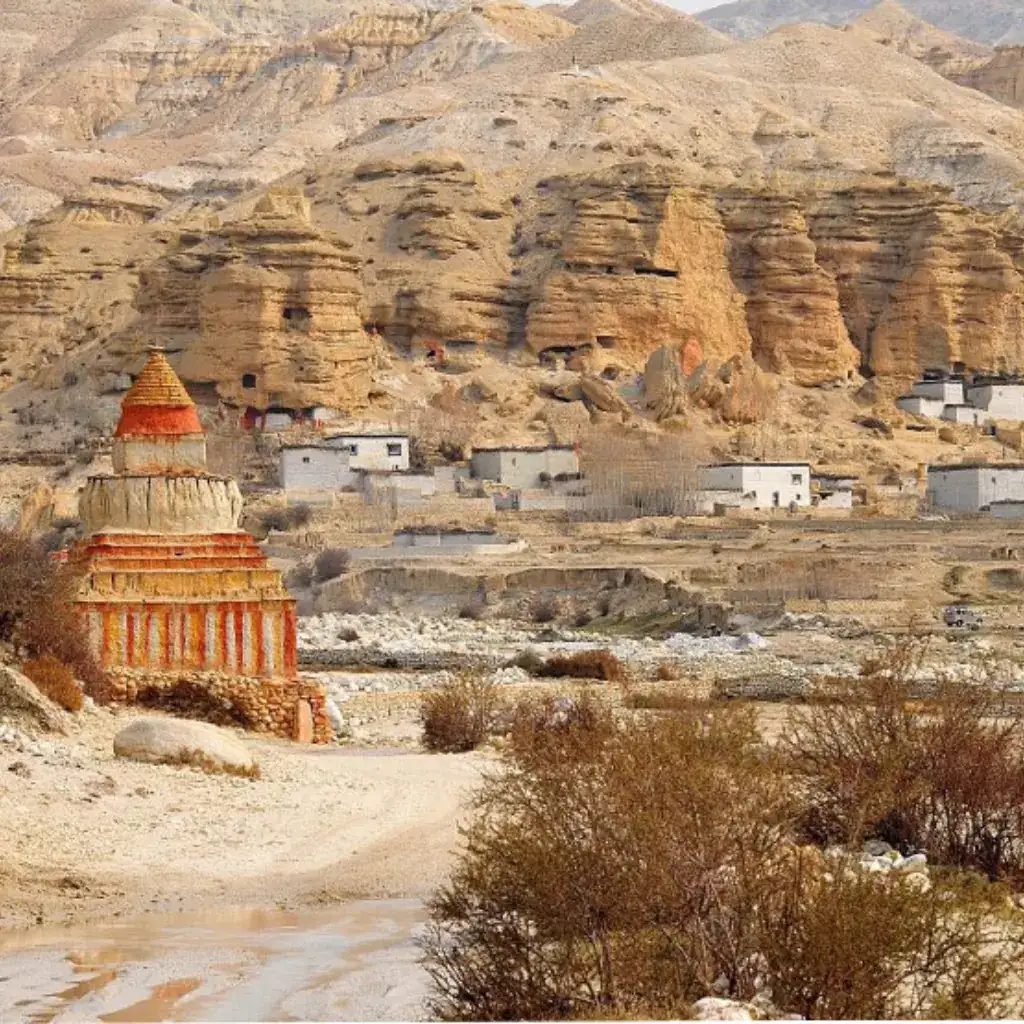
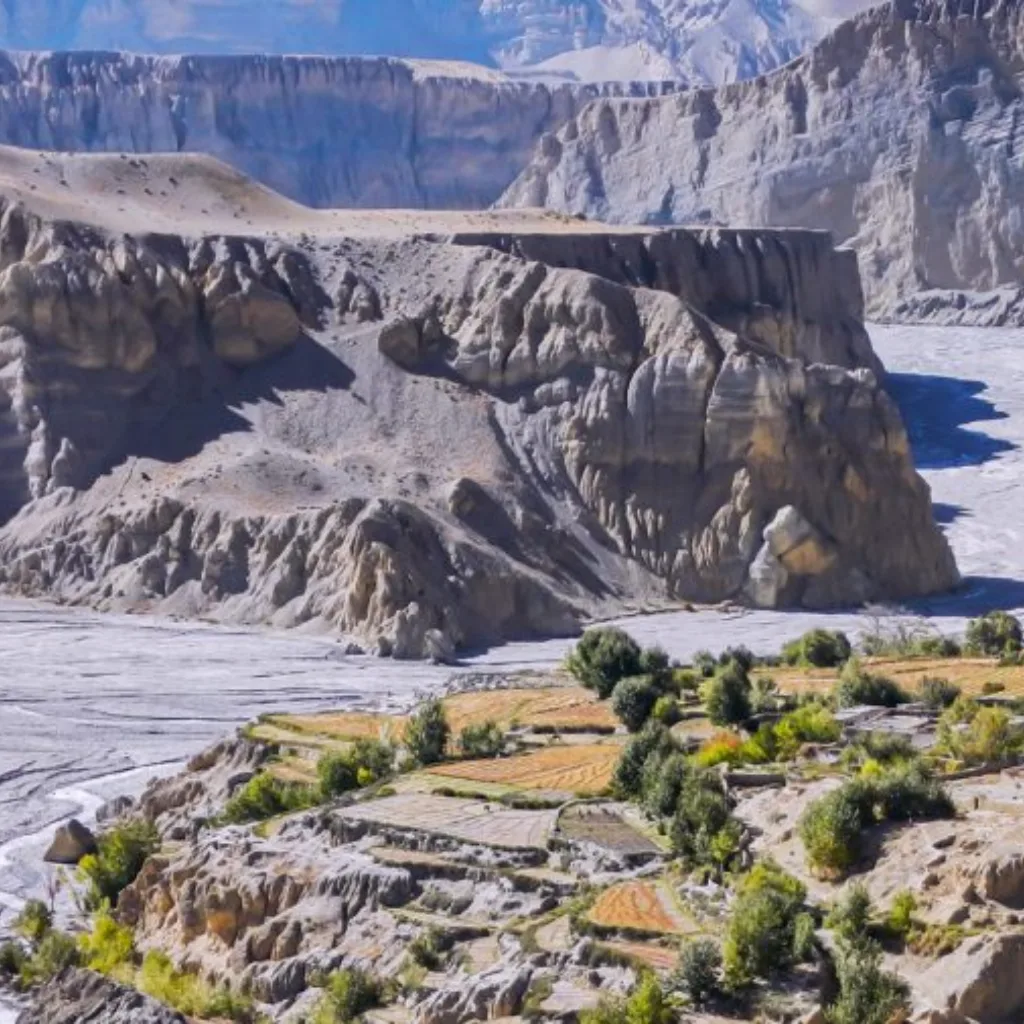
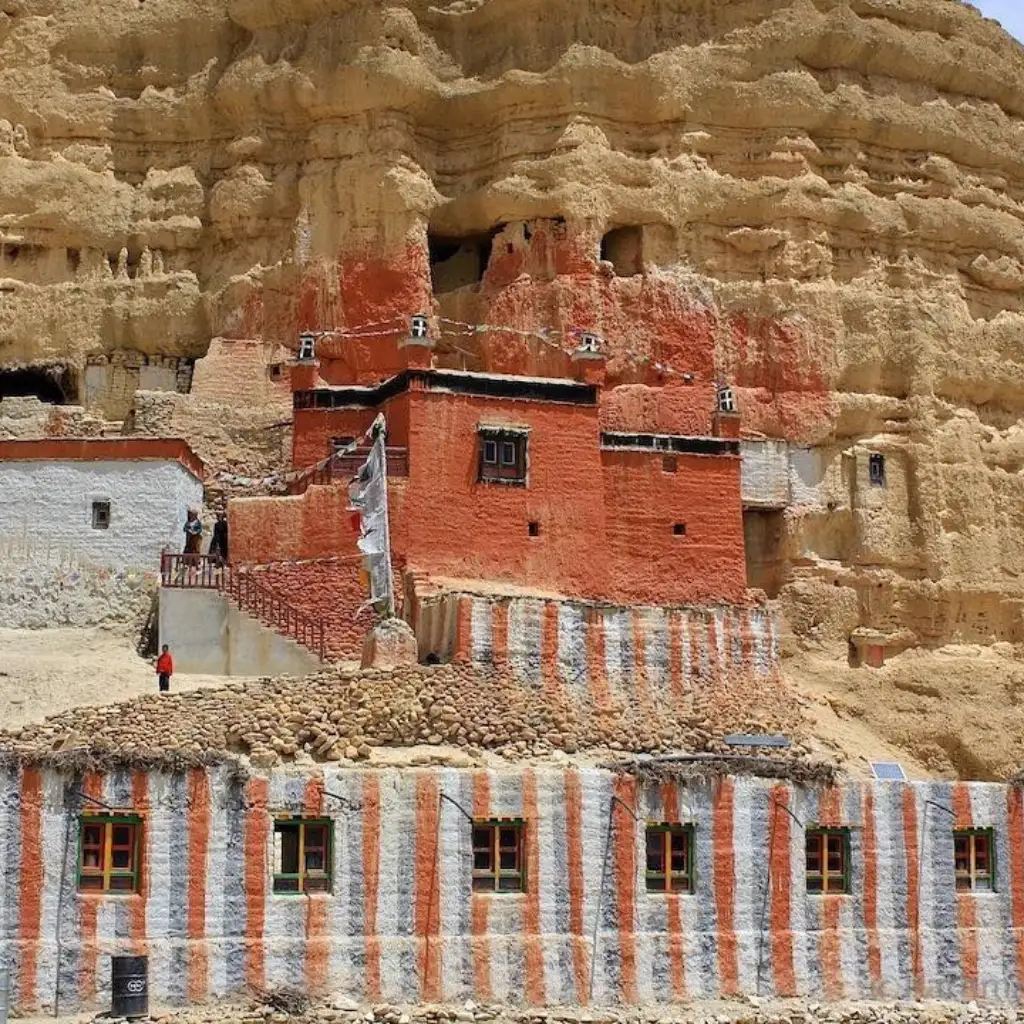
- Desert canyons and sky caves: Sandstone cliffs banded in red and ochre, with Jhong Sky Cave — a 2,500-year-old human settlement with more than 44 compartments — and cliff monasteries such as Nyphu Cave.
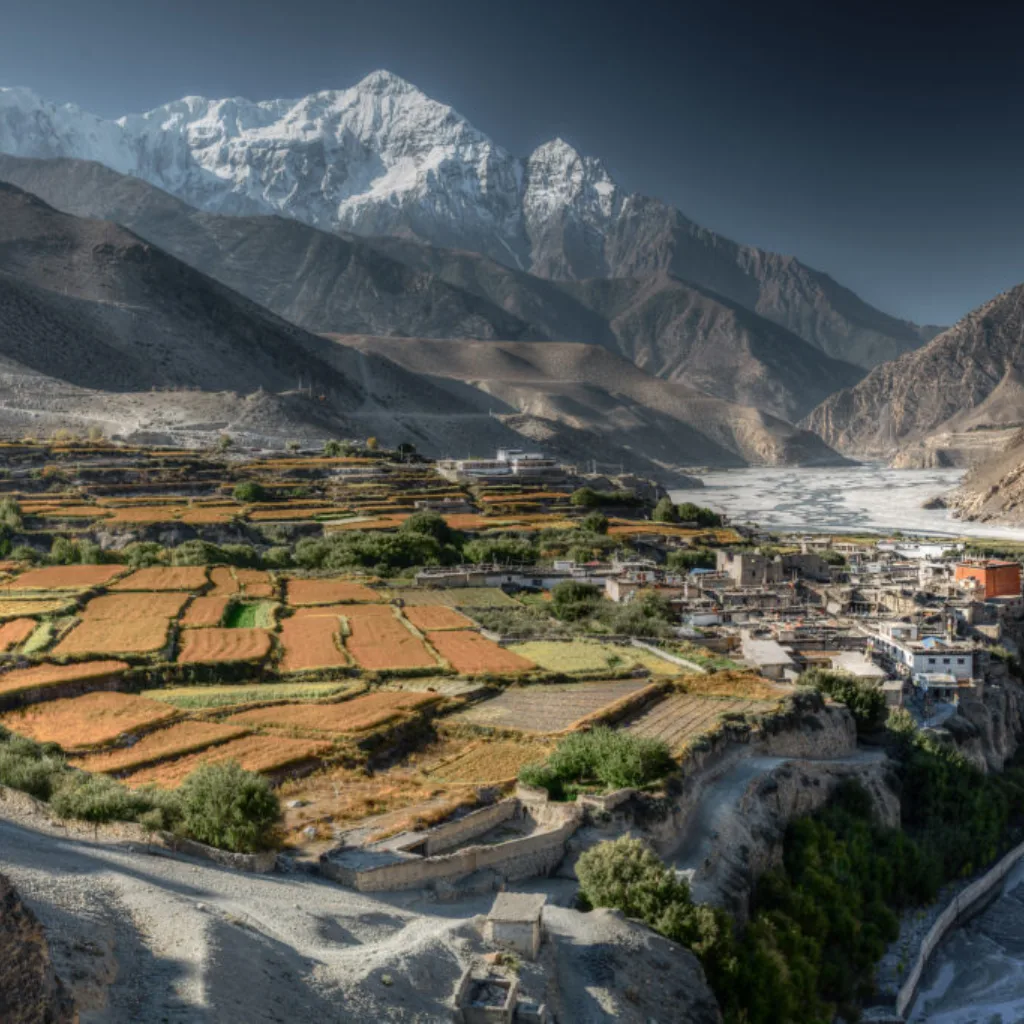
- Kali Gandaki River and gorge: The world’s deepest gorge, sliced between Annapurna and Dhaulagiri, followed for much of the walking and flown over on the Jomsom flights.
- Monasteries of the Plateau: Ancient temples including Ghar Gompa, the region’s oldest Tibetan Buddhist monastery, and the great gompas of Chhosar and Lo Manthang.
- Yamda La, Nyi and Dhi passes – 3,850–4,100 m: The high points of the route, each opening south views across Nilgiri, Tilicho, Annapurna I and the Dhaulagiri massif.
- Traditional villages: Kagbeni, Tangbe, Chele, Ghami, Charang and Chuksang — mud-brick and whitewashed settlements where buckwheat, barley and apple orchards surround narrow alleys.
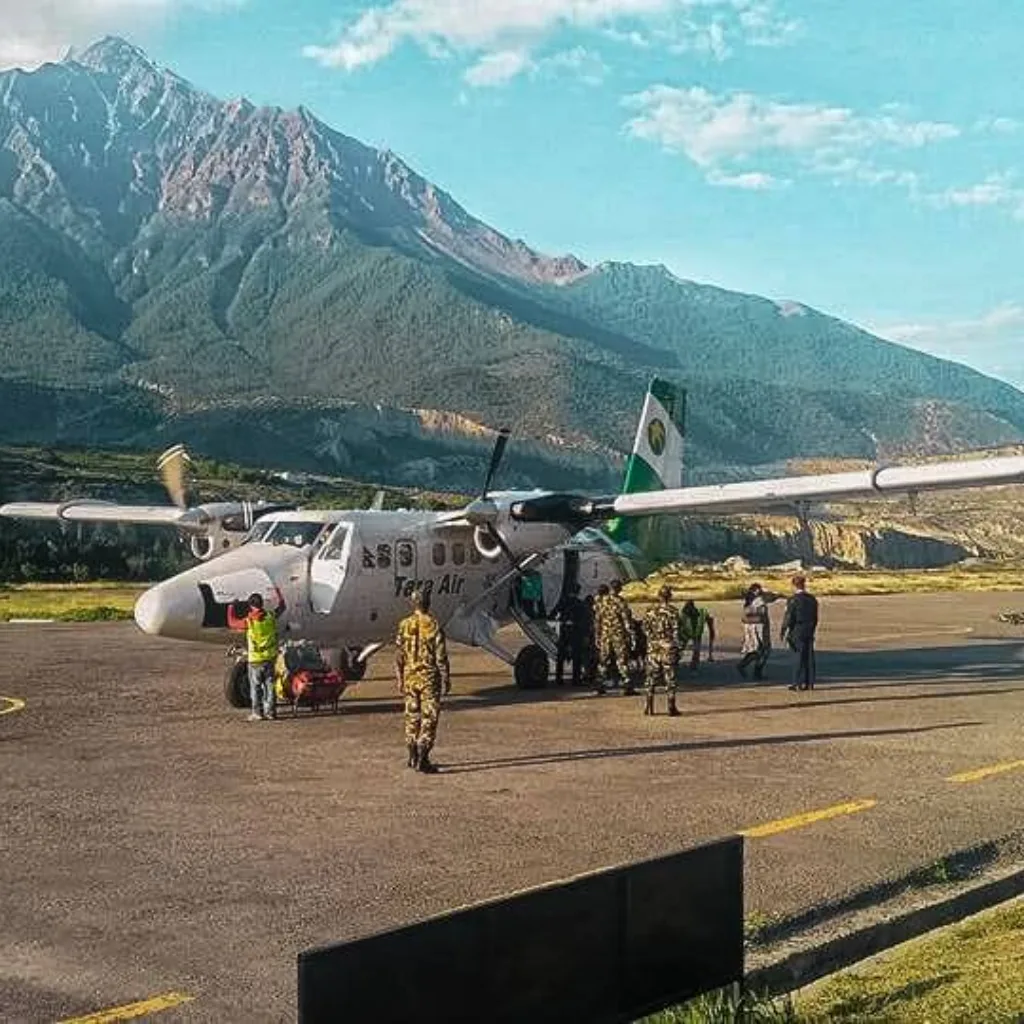
- Flights along the gorge: The Pokhara–Jomsom and Jomsom–Pokhara flights run between the Annapurna and Dhaulagiri ranges, an airborne highlight on both ends of the trek.
- A moderate, uncrowded, restricted trek: Ten walking days, gentle altitude progression and low visitor numbers make this one of the most characterful moderate treks in Nepal.
Upper Mustang Trek Overview
The Upper Mustang Trek is a 14-day restricted-area trek in Nepal’s Mustang region, travelling deep into the high Himalayan rain shadow beyond the Kali Gandaki. The route flies into the district headquarters of Jomsom, then walks north through Kagbeni, Chele, Ghami, Charang and other fortified villages to the walled capital of the former Kingdom of Mustang, Lo Manthang, before returning to the same high trail. Graded moderate, the trek calls for good fitness and a taste for altitude rather than technical skill, and its reward is a desert landscape of sandstone canyons, sky caves, whitewashed villages and Tibetan-Buddhist monasteries that feels a world away from greener Nepali valleys.
Starting and ending in Kathmandu, this Upper Mustang trekking package covers the drive to Pokhara, the short flights to and from Jomsom, roughly ten days under the restricted-area permit, a full day in Lo Manthang visiting its ancient monasteries and cave sites, and the scenic road return to the capital. The route climbs gradually from the Kali Gandaki riverbed to passes around 3,950–4,100 m, with the southern Annapurna and Dhaulagiri ranges towering over the canyon.
With Nepal Lion Tours, the Upper Mustang long trek starts from USD 2,185 per person and includes your licensed English-speaking guide, the ACAP permit and Upper Mustang Restricted Area Permit, hotels and teahouses, meals during the trek, the flights and transfers, and a welcome or farewell dinner in Kathmandu.
Guide’s Note — Nepal Lion Tours
Upper Mustang is the trek we recommend to travellers who want culture and landscape rather than summit views. From our experience operating Upper Mustang departures, the moment that stays with guests longest is usually the first view of Lo Manthang from Lo La pass — a walled medieval city sitting in a bare ochre valley, exactly as it has for centuries. The permit system keeps the trail uncrowded, so you genuinely travel through working Tibetan villages rather than tourist staging posts.
— Nepal Lion Tours Lead Trekking Guide
What Makes the Upper Mustang Trek Special?
The defining experience is visiting Nepal’s last walled kingdom, Lo Manthang, a city of roughly 150 houses ringed by high mud walls, dominated by a 14th-century palace and four major monasteries. Because the region is a restricted area it cannot be trekked independently — every visitor travels with a licensed guide and agency, which has preserved both the culture and the stillness of the landscape.
The scenery is the second reason. The trail crosses the rain-shadow desert behind the Annapurnas, where the annual rainfall is a fraction of Nepal’s southern valleys. You walk through canyons banded in red and ochre, past cliff villages and man-made sky caves used by early inhabitants, along fields of buckwheat and barley, and below snow ridges such as Nilgiri, Tilicho, Annapurna I and Dhaulagiri, all visible from the pass tops.
Why Choose the Upper Mustang Trek?
Few treks offer this combination of history and remoteness. The restricted permit caps visitor numbers, so the trail stays quiet even in the peak season. The route is moderate rather than high-exposure — although the passes reach around 4,100 m, there is no technical terrain, and because you stay on the same trail inbound and outbound, navigation and acclimatisation are simpler than on one-way expeditions. The flights into Jomsom cut out several days of road travel, and the altitude progression from the Kali Gandaki valley is gentle enough for fit trekkers who have never been above 4,000 m.
Who Is This 14-Day Upper Mustang Trek Suitable For?
- Culture-focused travellers drawn to Tibetan Buddhism, monasteries and living medieval towns
- Experienced walkers wanting a moderate-altitude trek with a strong sense of exploration
- Trekkers who dislike crowds — the restricted permit keeps numbers low
- Photographers chasing desert canyons, sky caves and whitewashed villages
- Return visitors to Nepal looking beyond the classic Everest and Annapurna circuits
- Couples and small private groups travelling on their own dates
- Lovers of off-beat destinations keen on the least-visited corner of the Himalaya
- Adventurers who value history — the region was a kingdom only absorbed into Nepal in the 18th century
A reasonable base level of fitness and daily walking is required, because most trekking days run 4–7 hours and the high passes demand steady pacing. No previous technical experience is needed.
Quick Facts
| Trek Fact | Details |
|---|---|
| Trek Name | Upper Mustang Trek |
| Duration | 14 days / 13 nights |
| Region | Mustang, Gandaki, Nepal |
| Maximum Altitude | 4,100 m / 13,451 ft at Dhi Pass |
| Difficulty | Moderate |
| Main Highlight | The walled city of Lo Manthang and its monasteries |
| Start / End | Kathmandu to Kathmandu |
| Route | Kathmandu – Pokhara – Jomsom – Kagbeni – Chele – Ghami – Charang – Lo Manthang – Dhrakmar – Ghiling – Chuksang – Jomsom – Pokhara – Kathmandu |
| Typical Walking | 4–7 hours per day (one sightseeing day at Lo Manthang) |
| Best Season | Spring and Autumn |
| Price From | USD 2,185 per person |
| Accommodation | Hotels in Kathmandu, Pokhara and Jomsom, teahouse lodges on the trail |
| Guide | Licensed English-speaking trekking guide |
Upper Mustang Trek Route and Elevation
The route is essentially a single high route up and back along the Kali Gandaki watershed. From Kathmandu you drive to Pokhara, fly to Jomsom at the district headquarters, walk north through Kagbeni and the restricted-area checkpoints to Lo Manthang, enjoy a full day there, then return along the same trail to Jomsom before flying back to Pokhara and driving to Kathmandu.
Upper Mustang Trek Route at a Glance
| Day | Trek Route | Altitude | Highlights |
|---|---|---|---|
| Day 01 | Drive Kathmandu to Pokhara | 1,400 m / 4,593 ft to 820 m / 2,690 ft | Prithvi Highway, Phewa Lake, Lakeside |
| Day 02 | Fly to Jomsom, trek to Kagbeni | Jomsom 2,714 m; Kagbeni 2,800 m / 9,186 ft | Kali Gandaki gorge flight, start walking |
| Day 03 | Trek Kagbeni to Chele | 3,050 m / 10,007 ft | Permit checkpoint, Tangbe, desert start |
| Day 04 | Trek Chele to Syangmoche | 3,475 m / 11,401 ft | Colorful canyons, Nilgiri and Tilicho views |
| Day 05 | Trek to Ghami via Yamda and Nyi passes | Nyi Pass 4,010 m / 13,156 ft | Yamda La 3,850 m, poplar forest, Ghami |
| Day 06 | Trek Ghami to Charang | 3,830 m / 12,566 ft | Tibetan villages, high upland |
| Day 07 | Trek Charang to Lo Manthang | Lo Manthang 3,770 m / 12,369 ft | Lo La 3,950 m, first view of the walled city |
| Day 08 | Day trip at Lo Manthang | Lo Manthang 3,770 m / 12,369 ft | Monasteries, palace, Chhosar, sky caves |
| Day 09 | Trek Lo Manthang to Dhrakmar | Dhrakmar 3,800 m / 12,467 ft | Ghar Gompa, Dhi Pass 4,100 m |
| Day 10 | Trek Dhrakmar to Ghiling | 3,860 m / 12,664 ft | Plateau wind, southern panorama |
| Day 11 | Trek Ghiling to Chuksang | 3,050 m / 10,007 ft | Chungsi cave, Samar, Tetang |
| Day 12 | Trek Chuksang to Jomsom | Jomsom 2,714 m / 8,904 ft | Leave the restricted area, Jomsom |
| Day 13 | Fly Jomsom to Pokhara | 820 m / 2,690 ft | Gorge flight, Phewa Lake evening |
| Day 14 | Drive Pokhara to Kathmandu | 1,400 m / 4,593 ft | Scenic return along the highway |
Upper Mustang Trek Elevation Profile
The profile is gentle for a trek reaching 4,000 m. It begins at 2,714 m (8,904 ft) in Jomsom and the first night at 2,800 m (9,186 ft) in Kagbeni, then climbs steadily through the desert villages — 3,050 m at Chele, 3,475 m at Syangmoche, around 3,520 m at Ghami and 3,830 m at Charang — before the pass crosses to Lo Manthang at 3,770 m (12,369 ft). The highest points are the passes themselves: Yamda La at 3,850 m, Lo La at 3,950 m and Dhi Pass at 4,100 m (13,451 ft).
What that shape means physically: because you spend nine consecutive days above 2,700 m and often above 3,000 m, acclimatisation is gradual and generally comfortable — there is no violent single-day leap. The rhythm is moderate: most days are 4–7 hours on good compact trails, with the passes climbed steadily since mornings. The out-and-back shape means the same ground twice, which many trekkers enjoy as it lets you revisit viewpoints in changing light. Nepal Lion Tours provides a trekking map and elevation profile ahead of departure.
How to Get to the Upper Mustang Trek
Access to Upper Mustang is via Pokhara and Jomsom. You drive to Pokhara, fly to Jomsom at the valley head, start walking, and reverse the process at the end — the flights are the essential part of the itinerary.
Kathmandu to Pokhara: Flight or Road?
| Option | Approx. Travel Time | Best For |
|---|---|---|
| Domestic flight | Around 35 minutes | Travellers short on time |
| Private vehicle / tourist bus | 6–7 hours* | Scenic drive, budget-conscious travellers |
| Private car | Around 6–7 hours* | Flexible or private travel |
*Road times are approximate and affected by traffic, weather and road construction.
The standard itinerary drives the Prithvi Highway from Kathmandu to Pokhara in about 6–7 hours, a scenic run along the Trishuli River valley with a lunch stop. A flight of roughly 35 minutes is the faster alternative for travellers short on time, and flights are generally dependable on this route. Most packages use the road out; if you prefer the morning flight to save a day, it can be arranged with your Nepal Lion Tours consultant.
Pokhara to Jomsom: The Gorge Flight
From Pokhara you take the short flight to Jomsom, the district headquarters of Mustang, which threads through the Kali Gandaki Gorge between the Annapurna and Dhaulagiri massifs. The aircraft follows the river between two of the world’s highest peaks — a genuinely spectacular approach on clear days. Jomsom sits at 2,714 m (8,904 ft) on the wide riverbed, with a small airport, lodges and a timeless frontier-town feel.
Guide’s Note — Nepal Lion Tours
From our experience operating Upper Mustang departures, the Jomsom flight is the point where the tour’s character changes — the green foothills vanish and you land on a wide dusty riverbed with snow peaks on both sides. We recommend building some flexibility into your plans around this leg, because the gorge flights can be delayed by wind and weather in the afternoon. Our team monitors conditions and schedules the morning departure, the time of day when the air over the gorge is calmest.
— Nepal Lion Tours Lead Trekking Guide
Jomsom to the Trail and the Restricted-Area Checkpoint
From Jomsom you walk uphill alongside the Kali Gandaki River to Kagbeni in about three hours. Kagbeni is the historic gateway to upper Mustang, a walled village of mud-brick alleys and a Buddhist monastery perched at the river confluence. North of Kagbeni the restricted Upper Mustang permit is checked, and from here the trail enters the true desert plateau. A private vehicle handles the transfers within the itinerary and your guide confirms the trailhead and checkpoint with local officials before you set off.
Returning to Pokhara After the Trek
After your night back in Jomsom, an early morning flight to Pokhara follows the same gorge between Annapurna and Dhaulagiri, an equally memorable send-off. From Pokhara you either drive the scenic highway back to Kathmandu in roughly 6 hours (as in the standard itinerary) or add the short Kathmandu flight at extra cost if your schedule is tight.
A Practical Tip for International Travellers
Do not book an international flight for the same day you return to Kathmandu. The Jomsom–Pokhara and drive legs can be delayed by wind and traffic, so keep at least a full day between landing in Kathmandu and your departure. The access is otherwise straightforward — two flights, one road transfer, no long overland slogs — but the flexible buffer keeps the ending stress-free.
Upper Mustang Trek Difficulty, Fitness & Altitude
The Upper Mustang Trek is graded moderate, and it is a genuinely appropriate grade. There is no technical climbing, no glacier travel and no rope work — the demands are endurance, steady pacing and altitude tolerance. Because the trail is a valley-and-plateau route rather than a steep ascent, most days are less punishing than the profiles of Everest or Annapurna Circuit treks, and the altitude gain is distributed across nine high nights.
Where the Effort Actually Is?
The physical load concentrates in the pass crossings and the longer valley days. Yamda La at 3,850 m (12,631 ft) and the climb to Nyi Pass at 4,010 m (13,156 ft) on the way to Ghami are the route’s first serious breathing points, and Dhi Pass at 4,100 m (13,451 ft) is the single highest crossing of the itinerary. The Day 4 walk to Syangmoche and the Day 12 return to Jomsom are the longest in hours, and the midday Kali Gandaki wind in the open plateau can make exposed sections tiring on the way back.
Between those, the trail links villages at walking-pace altitudes, with the cultural stops — monasteries, cave sites, village lanes — breaking every hour. Most days run 4–7 hours, and on the Lo Manthang day trip the effort is optional walking around the walled city and its excursion sites.
Guide’s Note — Nepal Lion Tours
From our experience operating Upper Mustang departures, what surprises most trekkers is not the altitude but the Day 4 walk to Syangmoche — the canyon trail is longer and more exposed than the profile suggests, and the midday sun reflects hard off the red cliffs. The passes themselves are manageable if you start them steadily in the cool morning hours. The one section that tugs at the legs is the open-plateau descent into Jomsom on Day 12, where the wind and the long, flat distance sap energy, so save a little for the last stretch.
— Nepal Lion Tours Lead Trekking Guide
How to Prepare for the Upper Mustang Trek
- Build walking endurance: Work up to comfortable 4–6 hour walks several times a week before departure; sustained effort matters more than speed.
- Practice steady uphill and downhill: Include hills and stairs so the pass crossings and valley descents feel natural under pack.
- Strengthen your legs: Squats, lunges and step-ups prepare the legs for a long, low-grade climb spread over days.
- Get used to the pace mindset: Upper Mustang rewards walking slowly and steadily — practise rest stops and mindful hydration habits.
- Prepare for cold mornings: Pass tops in spring and autumn are cold at dawn; practise layering and an early start.
- Pack your comfort gear: A warm sleeping bag liner, quality boots and walking poles make the nine mountain nights far more restful.
How Difficult Is the Upper Mustang Trek Compared with Longer Treks?
Compared with the Annapurna Circuit (14–18 days) or Everest Base Camp (12–14 days), Upper Mustang is physically gentler. Its maximum of around 4,100 m sits well below the passes of those treks, the daily distances are moderate, and the altitude is reached incrementally over nine high nights rather than in long pushes. It is harder than the Poon Hill treks (which stay near 3,210 m) because of the restricted permit and the sustained plateau walking, but a fit trekker comfortable at 3,500 m should manage Upper Mustang without great difficulty.
Altitude, Acclimatization & Safety
The trek’s overnight altitudes range from 2,714 m in Jomsom to 3,860 m in Ghiling, and the passes cross up to 4,100 m — firmly in the range where altitude should be treated with respect. The out-and-back route and nine consecutive high nights make the acclimatisation naturally progressive, and Nepal Lion Tours adds a full rest day at Lo Manthang partway through to let the body settle at the plateau height.
Upper Mustang Trek Altitude Profile
- Kathmandu — 1,400 m / 4,593 ft: Arrival city, overnight before the drive west.
- Pokhara — 820 m / 2,690 ft: Lakeside city, overnight before and after the trek.
- Jomsom — 2,714 m / 8,904 ft: Start of the walking, district headquarters of Mustang.
- Kagbeni — 2,800 m / 9,186 ft: First night on the trail, gateway to the restricted area.
- Chele — 3,050 m / 10,007 ft: Desert village after the checkpoint crossings.
- Syangmoche — 3,475 m / 11,401 ft: Quiet stop among the first canyons.
- Ghami — ~3,520 m / 11,549 ft: One of the largest villages in the Lo region.
- Charang — ~3,830 m / 12,566 ft: High Tibetan settlement before the final pass.
- Lo Manthang — 3,770 m / 12,369 ft: The walled capital, two nights.
- Dhrakmar — 3,800 m / 12,467 ft: Red-cliff village beneath a crag of monasteries.
- Ghiling — 3,860 m / 12,664 ft: Highest overnight of the route.
- Yamda La — 3,850 m / 12,631 ft and Lo La — 3,950 m / 12,959 ft: The bounding passes.
- Nyi Pass — 4,010 m / 13,156 ft and Dhi Pass — 4,100 m / 13,451 ft: The route’s high crossings.
How the Body Adapts to Altitude
Above about 2,500 m the body breathes faster and produces more red blood cells to carry the reduced oxygen, but adjustment takes days. The route’s steady profile — spending the first trekking night at 2,800 m and climbing roughly 200–350 m a day — is the classic pattern that lets most trekkers acclimatise well. Practical habits complete the picture: drink more water than you think you need, eat at every meal even when appetite drops, walk at a conversation pace, rest at each village, and sleep fully.
Symptoms of Altitude Sickness to Watch For
Mild and common symptoms, usually settling with rest and hydration:
- Headache
- Loss of appetite
- Mild nausea
- Difficulty sleeping
- Fatigue or breathlessness on effort
More concerning symptoms that should be reported to your guide immediately:
- Severe headache not relieved by rest
- Vomiting or persistent nausea
- Clumsiness or unsteady walking
- Confusion, drowsiness or disorientation
- Persistent coughing or breathlessness at rest
The rule is unchanged: stop ascending, tell your guide, rest and hydrate; if symptoms persist or worsen, descend. At these altitudes most mild cases resolve with that response.
How Nepal Lion Tours Supports Altitude Safety
- Gradual route progression over nine high nights before any pass exceeds 4,000 m
- A full rest day at Lo Manthang to settle at the plateau height
- Experienced licensed guides monitoring condition, pace and hydration daily
- Early communication culture — any symptom, however minor, is reported and handled
- Health and safety back-up — travel insurance covering trekking and evacuation is confirmed before departure
Best Time to Trek Upper Mustang
Upper Mustang is classed spring and autumn for the primary season, and those are exactly the right windows. Because the region sits in a rain shadow, it is drier than almost anywhere else in Nepal, which extends the comfortable trekking season — but the same geography makes summer heat and winter cold more extreme at the plateau’s 3,500–4,100 m heights.
| Season | Months | Weather & Trail Conditions | Mountain Views | Overall |
|---|---|---|---|---|
| Autumn | Sep–Nov | Clear, calm, warm days; cool nights; dust-free trails | Excellent on clear days | Best overall |
| Spring | Mar–May | Mild days, active village life; occasional afternoon wind | Very good, morning panoramas | Highly recommended |
| Winter | Dec–Feb | Cold, crisp days; snow possible on passes; quiet villages | Good on clear days | Good with preparation |
| Monsoon | Jun–Aug | Rain-shadow keeps it drier than southern Nepal, but clouds and heat | Frequent cloud; still clearer than the south | Less suitable |
Autumn — September to November
Autumn is the clear winner. The monsoon has ended, the air is crisp and dry, and the passes — framed by Nilgiri, Tilicho, Annapurna and Dhaulagiri — are at their most photogenic. Days are warm in the sun and cool in the shade of the plateau, and the calm morning air is ideal for the Jomsom flights. October and November are the busiest months across Nepal, yet Upper Mustang’s restricted permit keeps the trail quiet by comparison.
Spring — March to May
Spring brings the most life to the plateau. Fields are being sown and irrigated, village lanes are busy, and monastery festivals may coincide with your dates. Days are mild, mornings are often crystal clear for the pass crossings, and afternoons bring only light wind compared with the dry season. April and early May are the peak spring windows for clear skies.
Winter — December to February
Winter is cold but possible: crisp sunny days, hard frosts overnight, and occasional light snow on the passes above 3,500 m. The villages are quieter and some teahouses close, so confirming availability matters, and the plateau wind can bite in exposed sections. It suits trekkers who thrive on cold and solitude and who pack serious warm layers.
Monsoon — June to August
Upper Mustang’s rain shadow means the monsoon is far less wet here than in Nepal’s southern valleys, but the season still brings afternoon clouds, heat and the occasional storm, and the flights into the gorge become less reliable. While parts of the plateau remain walkable, the views and comfort are better in spring and autumn.
Which Season Should You Choose?
If clear pass panoramas and flight reliability are your priorities, book autumn. If you prefer milder days, village life and the chance of a festival, choose spring. Winter works for cold-loving, experienced trekkers; the monsoon is the least rewarding window. Whichever you pick, check the mountain forecast before departure — conditions above the gorge can differ sharply from Pokhara.
Guide’s Note — Nepal Lion Tours
In the rain shadow the old saying applies more than anywhere: get early. From our experience, the clearest views and calmest air over the Kali Gandaki are in the mornings, which is exactly why this itinerary takes the Jomsom flights at dawn and crosses the passes in the first half of the day. In autumn, even a day with hazy southern valleys typically opens out to sharp snow panoramas by mid-morning on the plateau.
— Nepal Lion Tours Lead Trekking Guide
Upper Mustang Trek Permits & Regulations
Upper Mustang is one of Nepal’s few remaining restricted areas, so its permit regime is stricter than anywhere else in this itinerary family. Two documents govern the trek: the Annapurna Conservation Area Permit (ACAP) and the Upper Mustang Restricted Area Permit, both arranged by Nepal Lion Tours before you arrive.
Upper Mustang Trek Permits at a Glance
Requirement | Who Needs It? | Who Arranges It? |
|---|---|---|
Annapurna Conservation Area Permit (ACAP) | Foreign and SAARC trekkers entering the Annapurna Conservation Area | Nepal Lion Tours |
Upper Mustang Restricted Area Permit | All foreign trekkers north of Kagbeni | Nepal Lion Tours |
Annapurna Conservation Area Permit (ACAP)
The route south of the plateau — the approach through Kagbeni and the walk north along the Kali Gandaki — lies inside the Annapurna Conservation Area, so the ACAP applies alongside the restricted permit. The published fee is roughly NPR 3,000 for foreign nationals (about USD 22) and about NPR 1,000 (USD 7) for SAARC nationals, and it is confirmed at booking. Your card is presented at district checkpoints along with the restricted permit.
Upper Mustang Restricted Area Permit
The Upper Mustang Restricted Area Permit is the trek’s defining paperwork and it cannot be obtained independently — it is issued only through a registered agency with a licensed guide. The standard fee structure is USD 500 for the first ten days, then roughly USD 50 for each additional day; your 14-day itinerary spends approximately ten days inside the restricted zone, so the standard rate applies. You must carry your original passport plus a copy for permit processing, and the permit is validated at the checkpoint at Kagbeni and again on exit. Fees and rules are reviewed by the authorities and confirmed at booking.
Do You Need a Restricted-Area Permit?
Yes — this is the restricted-area trek of the whole family. Travelling north of Kagbeni into the old Lo region requires the Upper Mustang Restricted Area Permit, a licensed guide and agency registration, which is precisely why the region remains so uncrowded and culturally intact. The permit is checked on entry at Kagbeni and on exit near the end of the route, and crossing without it is not possible.
Who Arranges the Permits?
Nepal Lion Tours arranges both permits as part of your pre-trek preparation, and the permit fees are included in the package price. All you provide is a clear passport copy at booking. Because restricted-area rules and district fees are revised periodically, the current amounts are confirmed when you book and any change is passed on transparently.
Food & Accommodation on the Upper Mustang Trek
Upper Mustang blends standard Nepali teahouse lodging with a distinctive local flavour. Nights in Kathmandu, Pokhara and Jomsom use hotels, while the trail nights run through family-run lodges in working Tibetan villages, where rooms are simple, meals are warm and the hospitality is the highlight.
Teahouse Accommodation on the Upper Mustang Trek
Comfort | What to Expect |
|---|---|
Rooms | Twin-sharing basic rooms; mattresses, blankets and pillows provided |
Bathrooms | Shared facilities, typically squat toilets with simple washing areas |
Hot showers | Available at some lodges and in Jomsom for a small fee |
Electricity | Solar or mains power in most villages; charging often fee-based |
Dining room | Heated communal dining room — the social and cultural heart of the lodge |
Wi-Fi | Limited or intermittent; generally easiest in Jomsom and Lo Manthang |
Bedding | Mats and wool blankets supplied; your Nepal Lion Tours sleeping bag adds warmth |
Village lodges are simpler than on mainstream teahouse routes — Upper Mustang’s remoteness shows in its facilities — but they are clean, welcoming and centrally located, and staying in them is itself a cultural experience. Lo Manthang’s lodges sit inside or beside the walled city, putting the monasteries and palace on your doorstep.
What Food Is Available on the Upper Mustang Trek?
The food follows the classic teahouse menu with local accents. Expect dal bhat (rice, lentil curry and vegetables — the staple), momos, noodles and fried rice, pasta and soups, potatoes, eggs, breakfast items such as porridge, pancakes and toast, and the region’s small-production apples, apple juice and apple brandy. Lo Manthang and Jomsom add freshly baked Tibetan bread and the Loba people’s distinctive hospitality. Vegetarian options are standard; tell Nepal Lion Tours about vegan, gluten-free or allergy needs in advance so lodges can prepare.
What Food and Accommodation Are Included?
Included in the Trek Package | Usually Paid Separately |
|---|---|
Hotels in Kathmandu, Pokhara and Jomsom per itinerary | Extra hotel nights in Kathmandu or Pokhara |
Teahouse lodging during the trek (twin-sharing) | Private room upgrades |
Meals during the trek: breakfast, lunch and dinner | Alcoholic and bottled drinks, extra tea and snacks |
A cup of coffee or tea with meals | Hot showers where lodges charge |
Welcome or farewell dinner in Kathmandu | Accommodation, lunches and dinners in Kathmandu beyond the itinerary |
The position on Kathmandu hotels is simple: the itinerary covers the nights and meals stated in the package, and extra Kathmandu nights and city meals are arranged at cost by Nepal Lion Tours. Everything on the trek proper — rooms, three daily meals and tea or coffee — is included.
Drinking Water on the Trek
Mountain tap water is not safe to drink directly. Lodges sell boiled and filtered water, and some offer refill stations, so a reusable bottle cuts both plastic and cost. Purification tablets or a small filter are a useful back-up. In the dry plateau, hydration is especially important — you lose more through the air’s dryness than you expect, so drink regularly from the moment you leave Pokhara.
Staying Comfortable at Teahouses
- Carry a refillable water bottle and a purifier or tablets as back-up
- Bring your sleeping bag (provided) for warmth and hygiene
- Keep a power bank charged for evenings with limited mains power
- Take small cash in Nepali rupees for drinks, showers and snacks
- Layer clothing — plateau days can swing from cold dawn to warm midday
- Tell Nepal Lion Tours about dietary needs in advance
Why Book with Nepal Lion Tours?
Nepal Lion Tours is the kind of operator Upper Mustang was made for — a Kathmandu-based registered company that handles the restricted permits, the gorge flights and the lodge logistics, so you focus on the landscape and culture.
1. Local, licensed guides with restricted-area experience
Government-licensed guides who know the Upper Mustang villages, monasteries and pass routes from repeated departures, and speak English, Chinese, Korean or Hindi as well as Nepali. Your guide handles checkpoints, lodge bookings and daily pacing from Kathmandu to the final airport drop.
2. A registered trekking company you can verify
Based in Kathmandu with company and licence details on request, and experience on the region’s restricted routes.
3. Private departures from two trekkers
Your dates, your pace; solo and couple departures run as private rather than merged into anonymous fixed groups.
4. A complete restricted-area itinerary
The ACAP and Upper Mustang permits, the Jomsom flights, the Lo Manthang day trip, the cave sites and the gorge return, all arranged in one package.
5. Private transfers and straightforward logistics
Airport pickups, the Kathmandu–Pokhara road, the flights, the trailhead and checkpoint management are handled end to end.
6. Budget-friendly pricing without cutting the experience
Hotels, treks, flights, permits, guides and meals are priced transparently from USD 2,185, with per-person group discounts.
7. A local team you can contact before and during your trek
WhatsApp +977-9851039020 connects you to the same Kathmandu office before you fly and from the trail.
Book the Upper Mustang Trek
The permit system makes Upper Mustang a limited-availability experience, so dates fill early in the autumn and spring windows. Booking ahead secures your flights to Jomsom, your permit validation and your lodges in Lo Manthang.
Trek at a Glance
- Duration: 14 days / 13 nights (nine trekking days, a Lo Manthang day trip, two gorge flights)
- Price: From USD 2,185 per person (per-person discounts for 2+; luxury tier from USD 2,950)
- Difficulty: Moderate — steady plateau walking to 4,100 m, no technical climbing
- Maximum Altitude: 4,100 m / 13,451 ft at Dhi Pass
- Accommodation: Hotels in Kathmandu, Pokhara and Jomsom; teahouse lodges on the trail
- Meals: Breakfast, lunch and dinner during the trek; welcome or farewell dinner in Kathmandu
- Permits & Registration: ACAP and Upper Mustang Restricted Area Permit, arranged and included
- Transportation: Private transfers, Kathmandu–Pokhara road, Pokhara–Jomsom flights both ways, Pokhara–Kathmandu road
- Guide: Licensed English-speaking trekking guide throughout
- Cancellation: Free cancellation up to 14 days before departure (subject to booking terms)
Ready to Start Your Mustang Adventure?
Send us your preferred travel date and group size through the booking form or WhatsApp at +977-9851039020, and we’ll confirm permit availability, flights and the exact price for your dates. Solo, couple, friends or family — your route into Nepal’s last kingdom awaits. Choose your dates and start planning your Upper Mustang trek today.
Related Mustang and Annapurna Treks
Upper Mustang sits at the northern end of the Kali Gandaki valley, close to several other routes into the same region. If the desert plateau appeals, these options are worth comparing.
| Trek | Duration | Difficulty | Max Altitude | Best For |
|---|---|---|---|---|
| Ghorepani Poon Hill Luxury Trekking | 6 days | Easy–Moderate | 3,210 m | Short viewpoint classic with luxury lodges |
| Lower Mustang Trekking | 9 days | Moderate | 3,200 m | The Mustang region without the restricted permit |
| Annapurna Panorama View Trek | 9 days | Easy–Moderate | 3,210 m | Foothill scenery, villages and Poon Hill views |
| Annapurna Base Camp Trek | 10–12 days | Moderate | 4,130 m | Reaching the heart of the Annapurna amphitheatre |
| Upper Mustang Trekking | 14 days | Moderate | 4,100 m | The walled city and restricted plateau |
| Annapurna Circuit Trek | 14–18 days | Moderate–Challenging | 5,416 m | Long high-altitude circuit around the Annapurnas |
For travellers short on time, the Jomsom and Muktinath route and Lower Mustang provide a taste of the Kali Gandaki valley without the restricted permit. If you would rather ride than walk, Nepal Lion Tours also offers Upper Mustang by Jeep Tour across the same plateau. Combining Upper Mustang with a Chitwan Jungle Safari or extra Pokhara days builds an easy two-week-plus Nepal itinerary.
Trip Essentials
Packing advice, required equipment & gear recommendations
Essential
Upper Mustang Trek Packing List
Upper Mustang is a teahouse trek with a cold, dry, high-altitude climate, so the packing list balances moderate walking gear with serious warmth and sun protection. Nepal Lion Tours provides a down jacket, sleeping bag, duffel bag and trekking map ahead of departure.
Hiking Gear
- Daypack with rain cover and a secure zip
- Trekking boots, waterproof and well broken-in
- Trekking poles for the pass ascents and descents
- Reusable water bottle (1–2 litre) with purification tablets or a filter
- Headlamp or torch with spare batteries
- Sunglasses — the plateau light is intense even on overcast days
- High-SPF sunscreen and lip balm — the dry altitude sun burns fast
Clothing: Use Layers Rather Than Bulk
Base layers - Two or three sets of merino or synthetic baselayer tops - Thermal leggings and top for the cold mornings
Mid-layers - Fleece or softshell jacket for daytime plateau temperatures - Insulated vest for the coldest evenings
Outer layers - Waterproof and windproof shell jacket and trousers - Nepal Lion Tours down jacket for mornings at altitude
Trekking clothes - Two or three quick-dry trekking shirts - Convertible or regular trekking trousers - A pair of sturdy shoes or sandals for evenings in villages
Headwear and gloves - Warm beanie or hat plus a sun hat or cap - Lightweight gloves plus a warmer pair for the passes
Sleeping and Evening Comfort
- Sleeping bag (provided) — add a silk liner for hygiene
- Warm sleepwear — nights near 3,500–3,800 m are cold
- A down or fleece jacket for the dining room evenings
- Thick socks for walking and a spare pair for evening wear
Toiletries and Personal Health Items
- Toothbrush, toothpaste and a small towel
- Toilet paper and hand sanitiser (not standard at village lodges)
- Personal first-aid basics: plasters, blister care, mild painkillers
- Prescribed medication, carried in your daypack
- Diamox (acetazolamide) only after consulting your doctor
- Wet wipes for washing without a shower
- Moisturiser and lip balm against the dry air
- Ear plugs for shared-lodge nights
- A basic medical kit is also carried by your guide
Electronics
- Power bank charged for the plateau evenings
- Phone and charger plus a universal adapter
- Camera with spare batteries and plenty of storage
- Headlamp spare batteries
Documents and Money
- Passport (required for restricted-area permit checks) plus a photocopy
- Upper Mustang permit paperwork copy, carried with your passport
- Nepali rupees in cash — ATMs are absent above Jomsom
- Travel insurance documents and emergency numbers
- A credit or debit card for Kathmandu and Pokhara
How Much Should You Pack?
Light is right. Most trekkers manage with a duffel bag around 10–13 kg carried by vehicle and porter where booked, and a daypack under 5 kg on the trail. Nepal Lion Tours can arrange a porter for extra comfort on the longer days. Keep your daypack to water, layers, sun protection, snacks and your camera — the plateau is dry and the walk is gentle, so you will rarely want more than that.
Read Before You Book
Permits, terms, medical considerations & advisory guidelines
Advisory
What to Know Before Booking
A few things worth understanding before you confirm, so the experience matches expectations.
Accommodation and Facilities
Nights alternate between hotels in Kathmandu, Pokhara and Jomsom and simpler village teahouses for the plateau legs. Facilities in the villages are clean but basic — shared bathrooms, solar electricity, no consistent Wi-Fi — and Lo Manthang’s lodges sit within the walled city itself. “Moderate” reflects the terrain, not the accommodation; comfort comes from the hotel nights bookending the trek.
Food and Dietary Requirements
Teahouse kitchens serve dal bhat, momos, noodles, fried rice, soups and eggs, with breakfast items like porridge, pancakes and toast. Vegetarian food is standard, and vegan, gluten-free and allergy needs are handled with advance notice. Budget separately for extra drinks, bottled water and snacks; the included meals cover the day properly.
Altitude, Health and Insurance
The trek crosses 4,100 m, and although the profile is gentle, travel insurance covering trekking to at least this altitude and emergency helicopter evacuation is required by any responsible operator and confirmed before departure. Disclose health conditions to your guide, and report any symptom — the out-and-back route means descending is always possible.
Money and Tipping
Carry Nepali rupees in cash from Pokhara or Kathmandu — the plateau has no ATMs, and lodge extras are cash-only. Tipping your guide and porter is customary; roughly USD 8–10 per day for a guide and USD 5–6 per day for a porter is a sensible reference, discussed at booking. Budget for drinks, laundry and personal items separately.
Culture and Responsible Trekking
- Respect the numeries, monasteries and meditation sites — visit with your guide’s lead and ask before entering
- Photograph people and monks with permission only — this is a deeply devout region
- Dress modestly in the villages and religious sites
- Carry out non-biodegradable rubbish; the plateau has no waste system
- Buy local — apples, crafts and lodge meals directly support Upper Mustang families
- Follow your guide in village customs and restricted-site etiquette
Route Options
The standard 14-day route is the shared backbone; it can be extended with two extra days to include diversions such as Yara and Gomba villages, which the standard timing cannot cover. The route also pairs naturally with Lower Mustang, the Jomsom–Muktinath circuit or a jeep-based traverse of the plateau for travellers short on walking days.
Booking and Before You Arrive
Make sure you understand the following before confirming:
- The restricted-area permit is date-bound — your trek dates are registered with the district, so itinerary changes have a paperwork lead time.
- The Jomsom flights and gorge crossings are weather-sensitive; morning departures and a Kathmandu buffer day keep risk low.
- Hotels in Kathmandu beyond the itinerary nights are excluded and arranged at cost.
- Group discounts apply at 2+, 5+ and 10+ trekkers.
- The Day 13 flight and Day 14 drive are the standard return; an optional Kathmandu flight costs extra.
- Free cancellation applies up to 14 days before departure subject to the booking terms.
- Your passport must be valid and carried for permit registration.
A Few Final Tips
- Book autumn or spring for the best pass views
- Allow a day’s weather buffer around the Jomsom flights
- Walk at a steady plateau pace — faster gains nothing here
- Hydrate more than the dry air makes obvious
- Keep your international exit at least a day after your Kathmandu return
Day-by-Day Itinerary
Explore each day's route, trekking elevation, and activities
After breakfast, we leave our hotel early morning for a drive with scenic views along the road to Pokhara via Prithivi national highway. The drive could take roughly 6-7 hrs to reach Pokhara. We also have the option for a flight from Kathmandu to Pokhara for 35 minutes. You have choice to relax in Pokhara or have a sightseeing or walk around beautiful Phewa Lake. Overnight in Pokhara.
A short morning flight to Jomsom, the district headquarters of Mustang, through the world’s deepest Kali Gandaki Gorge with the glorious view of Annapurna and Dhaulagiri is exceptional. Jomsom is where your actual trek of foot begins. After checking out from the airport, you will start your 3 hours trek. You will trek uphill alongside Kali Gandaki River to reach Kagbeni.
You will get our permits checked then begin our trek on a trail alongside the Kali Gandaki River. Today you will pass by villages Tangbe and Chusang. Made with mud and white painted narrow alleys, you will pass through apple garden and colorful buckwheat field. You traverse several ridges to Tangbe village. This village is a labyrinth of narrow alleys amongst white washed houses, fields of buckwheat, barley, wheat and apple orchards.
Today’s walk is more into undulating trails with couple of steep climb and descents. Despite 6 hour walk the tremendous canyons with its unusual colour that opens out is extraordinary. In this bizarre the farming fields with rich red buckwheat and brilliant green and the south view offering you a panorama of Nilgiri, Annapurna, Tilicho Peak, and YakawaKang adds up to its magnificence.
We ascend to the Yamda La pass at 3,850m. On the way, we pass by a few teahouses, chortens and beautiful villages. We trek through poplar forests and barley fields and reach Nyi Pass at 4,010m. From here, we descend to Ghami which is one of the biggest villages in the Lo region. The village is beautiful with fields surrounding the entire village. Overnight in Ghami.
This day is the continuation of gaining high altitude through constant changing up and down. We have one other high passes to conquer ahead of us call Yamda La pass at 3,850m. We will pass by several villages which brings a tone of Tibetian lifestyle. After the two high passes, this region gives more Tibetian vibes, while below Syngbouche it is more of a Gurung and Thakali culture influence from lower Mustang and Manang area (District next to Mustang)
You begin your trek by descending to a canyon and cross a river before beginning our uphill trek to Lo La pass which at 3950m. From the top of the pass you can admire the beautiful Lo Manthang village. From the pass we descend to Lo Manthang which is a beautiful walled village. From here the views of the Himalayas including Nilgiri, Tilicho and Annapurna I, Bhrikuti Peak as well as Damodar Kunda (pond) is quite good. Overnight in Lo-Manthang.
Lo Manthang the capital city of Mustang contains about 150 houses and has some of the largest and finest Tibetan Buddhism gompas in Nepal. The city itself is absolutely fascinating place with four major ancient Monasteries which are impressive and an enormous 14th century palace imposing 4-storey building in the centre of the city.
After breakfast your leader will organize a jeep for Chhosar excursion.
• Nyphu Cave monastery built into the side of a soaring cliff.
• 2500 years old Jhong Sky Cave that has more than 44 compartments and gives u the pre historic settlement of humans.
• During afternoon if you are not exhausted you can walk to Thinkar summer palace or explore the extraordinary ancient monasteries inside the walled city itself which is exceptional.
You will take the upper highland trail to bid farewell to Lo-Manthang. This gives you splendid views of both Lo-Manthang and Charang Valley. You can also see the snow-capped mountains in the background. On the way, you can visit the oldest Tibetan monastery- Ghar Gompa.
From here, you will cross one of the last passes, Dhi Pass at 4100m. Onwards you will trek to Dhamkar.
From today the trail connects to the same path as we hiked up. For 14 days itinerary, you can’t extend via Yara Gomba due to the short time. If you wish to make an alternative circuit route, you may need to add two extra days. The journey in midday might be harassing due to the strong wind against us. However, the panoramic view of Nilgiri, Dhaulagiri is still worth on the south side.
You will continue your trek back. If you want you can visit some of the attractions you missed on the trek like the Chungsi Cave monastery. We can stop for lunch at Samar village once again. From here, we make our descent down to Tetang. This upper village of Chuksang lies between two hills. It gives you some escape from the fierce wind that Kali Gandaki valley is known for. Chusang is yet another beautiful village you will spend the night at.
Walking through the river valley, today you will exist the restricted area. You spend an exact ten days in a forbidden area. Leaving behind all the memories of Upper Mustang we are ready to set off for Pokhara. It is our last night in the Mustang area. This is the last camp before you leave this region. You may want to enjoy the last toss of local Marpha alcohol cider or apple brandy from the area with your guide support crew.
You will catch an early morning flight to Pokhara. It is a fantastic way to finish off your Upper Mustang trek. This flight takes you along the Kali Gandaki Gorge between the Annapurna and Dhaulagiri ranges.
Today you will take back the scenic drive back to Kathmandu which takes around 6 hrs. There is an option to have flight to Kathmandu from Pokhara on added extra cost as required.
Want to customize this itinerary?
Tailor duration, lodges, acclimatization days, or add private helicopter flights.
Inclusions & Exclusions
Everything that is covered and what you'll need to budget separately
What is Included
Fully covered in your package price
- Airport picks up & drop by private vehicle to hotel.
- Transportation from Kathmandu to Pokhara and Pokhara to Kathmandu.
- Flight from Pokhara to Jomsom and Jomsom to Pokhara.
- Necessary paperwork and Trekking Permits fee (ACAP permit & Upper Mustang Restricted Permit).
- Accommodation during trek and Meal (Breakfast, Lunch, Dinner and a cup of coffee or tea).
- Licensed English or Chinese or Korean or Hindi along with Nepali speaking Friendly trekking guide.
- Coverage of Guides including their Meals,
- Insurance, Salary, Lodging, transportation and other necessary equipment.
- First Aid Medical Kit (Carried by the guide).
Sleeping bag, down jackets and trekking map, if necessary. - Emergency Evacuation Assistance Service (The cost of the helicopter, hospital and necessary transport are not payable by the company).
- Welcome or farewell dinner in Kathmandu at a cultural restaurant (complimentary).
- A nation-wide operated Mobile SIM Card and a map of the trekking region.
- Porter (We can arrange porter for your trek).
- Private vehicle from Kathmandu to Pokhara and
- Pokhara to Kathmandu.
What is Excluded
Personal expenses & optional extras
- International airfare.
- Nepal Entry Visa fee: you can obtain a visa easily upon your arrival at Tribhuwan
- International Airport.
- Personal Travel insurance which has to cover emergency high-altitude rescue and evacuation compulsory.
- Personal expense (shopping, snacks, boil bottle water, hot and cold drinks, hot shower, Alcohol,
- Wi-Fi, telephone call, battery re-chargefee).
- Accommodation, Lunches and dinners in Kathmandu, except the farewell dinner.
- Emergency expenses such as expenses on charted helicopter.
- Additional costs or delays caused by out of management control, for example, landslide, weather condition, itinerary modification due to safety concerns, illness, change of government policies etc.
- Gratitude and tips for your guide, porter and driver.
Our Customer Reviews
Authentic experiences and feedback from our travelers
Write a Review
Share your adventure experience with other travelers
Thank You!
Your review has been submitted and is awaiting approval.
Please Wait
You've submitted several reviews recently. Please wait a few minutes before trying again.
Beatrice Dubois
Every turn seemed to offer a different frame, especially around Chuksang. Chuksang gave us the clearest view of the mountains on the whole trip. The day we did Kali Gandaki River and gorge was probably my favourite. The children loved the guide, and he was great with them. The teahouse stop near Chuksang had the best view from the dining room. We brought a small notebook and wrote something each evening, which I am glad we did. We had a clear morning at Chuksang, and it made the whole day. No complaints from us.
Greta Bergstrom
We were not sure about spending so long in a vehicle, but the scenery kept it interesting. The guide knew a lot about Jomsom and told us the kind of details you do not find in guidebooks. We almost skipped Monasteries of the Plateau because we were tired, and I am glad we did not. The roads were rough in places, but our driver knew them well. Our guide shared stories about growing up in the area, which added a lot. The villages along the way felt lived-in rather than staged for visitors. Would recommend it.
Freja Lambert
We were not sure about spending so long in a vehicle, but the scenery kept it interesting. I would recommend giving Ghiling more time rather than less. I would do A moderate, uncrowded, restricted trek again in a heartbeat. The jeep gave us access to villages that felt far away from the main road. It exceeded our expectations.
Paul Brandt
We were not sure about spending so long in a vehicle, but the scenery kept it interesting. The day around Chele had the best mix of effort and reward. Flights along the gorge was worth the early start. Every day seemed to have at least one moment that made us look at each other and laugh. We ordered too much on the first night and learned to share after that. The roads were rough in places, but our driver knew them well. We had one day of rain, and it made the rest of the trip feel even better. The weather forced one change, and the alternative plan was still good. The route had a good mix of well-known stops and quieter corners. Absolutely worth it, and I would go back tomorrow if I could.
Thomas Bergstrom
The jeep days covered a lot of ground and got us to places we would not have reached otherwise. Charang gave us the clearest view of the mountains on the whole trip. The guide made Traditional villages much more interesting with the background story. The coffee was not great, but the tea made up for it. There was a bit of waiting around on the first day, but it was nothing serious. The trip changed pace often, which kept it interesting. We were a bit tired by the end of most days, but in a good way. The local guide near Charang was especially good. The wind picked up in the afternoons, so early starts were worth it. The quiet parts were just as important as the big views. A proper adventure.
Elias Smit
This was our first proper trip together as a family in a few years, and it worked out well. The scale of Drakmar is hard to capture in a photograph. The 14-day route is as much a cultural journey as a walking one, with every landmark tied to... was the moment the trip really clicked for me. The booking details were accurate, and there were no surprise costs. We saw more of the country than we could have on foot.
Frequently Asked Questions
Essential information on preparation, route specifics, safety standards, and logistical details.