Tibet Tour 3 Nights 4 Days | Nepal Lion Tours
Experience the mystical beauty of Tibet in 3 nights and 4 days, exploring ancient monasteries, rich Tibetan culture, sacred landmarks, and stunning Himalayan landscapes.
Tibet Tour 3 Nights 4 Days

Tour Highlights
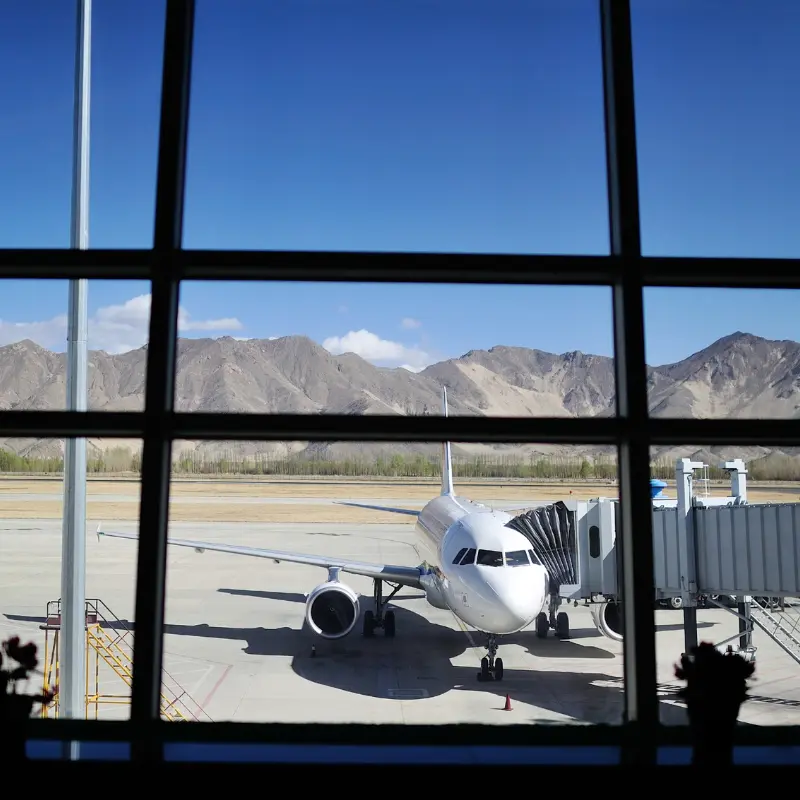
- The Himalayan flight itself: an hour of Everest-zone peaks below the wing as you climb out of Kathmandu and cross into Tibet — window seat compulsory.
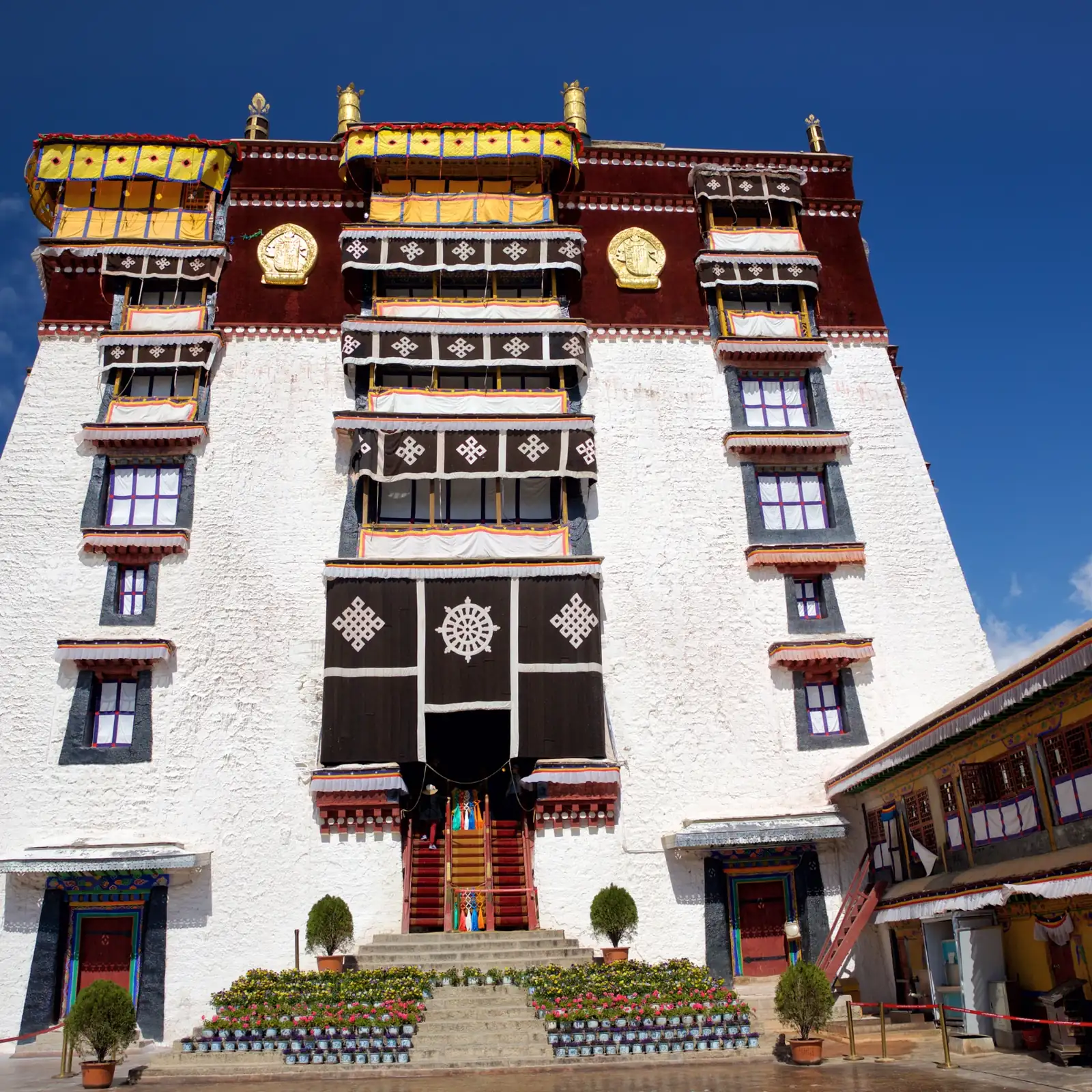
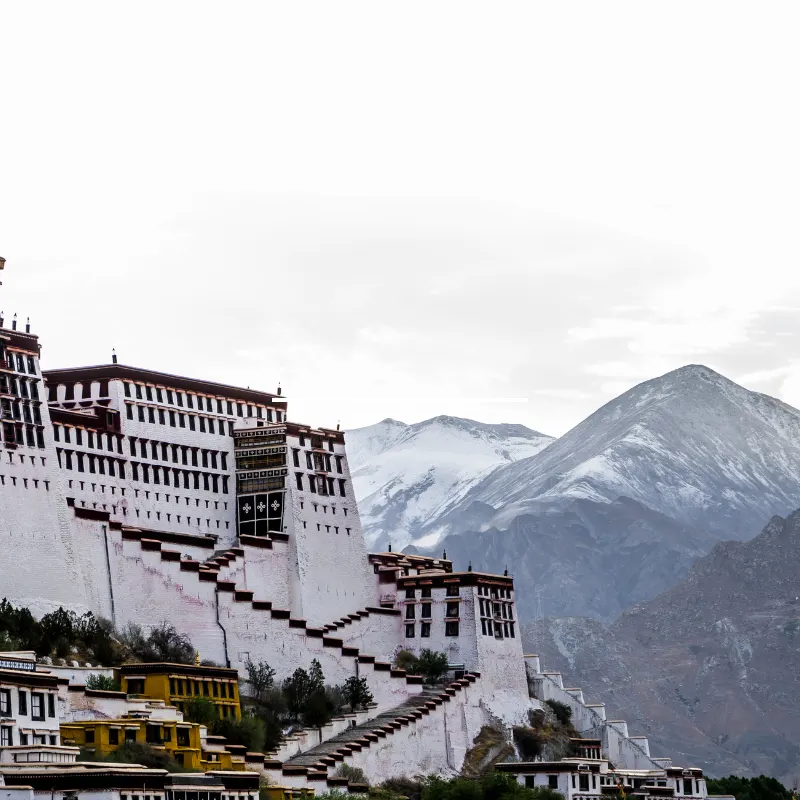
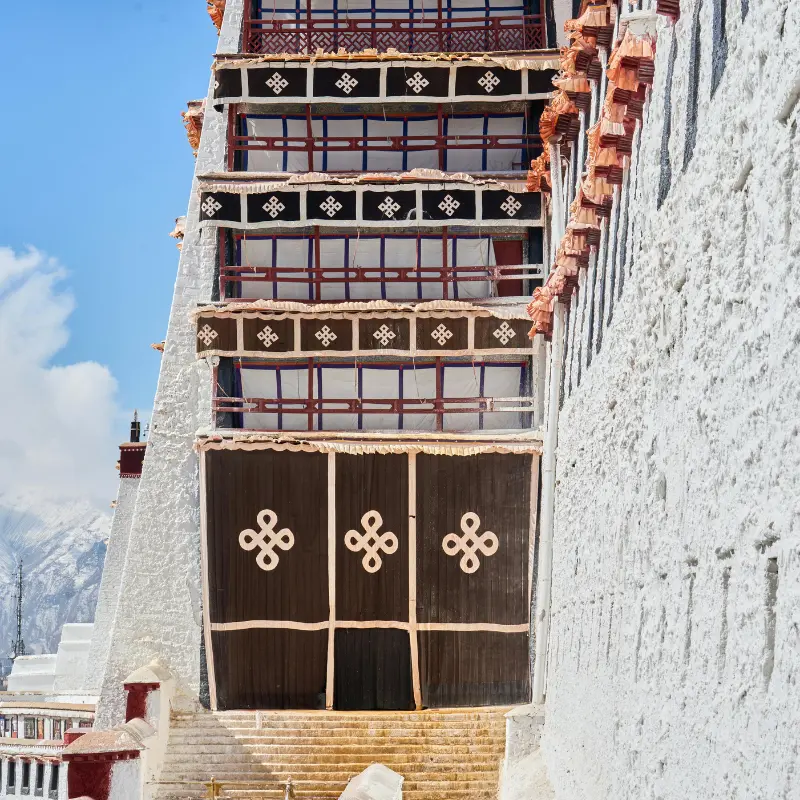
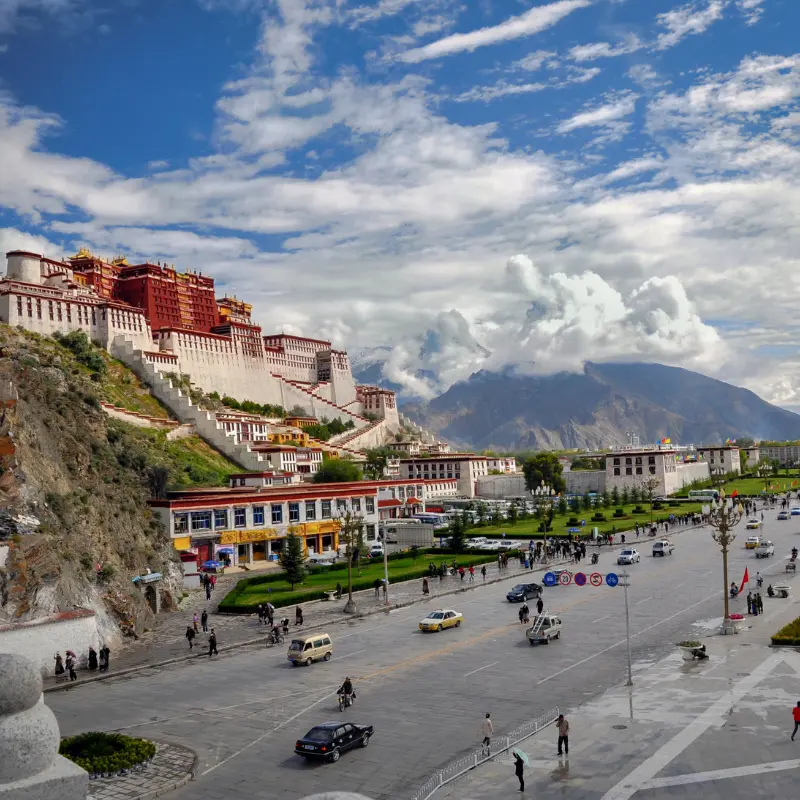
- Potala Palace: the towering white-and-red fortress of the Dalai Lamas, 1,000 rooms across 13 storeys, and the single most photographed building in Tibet.
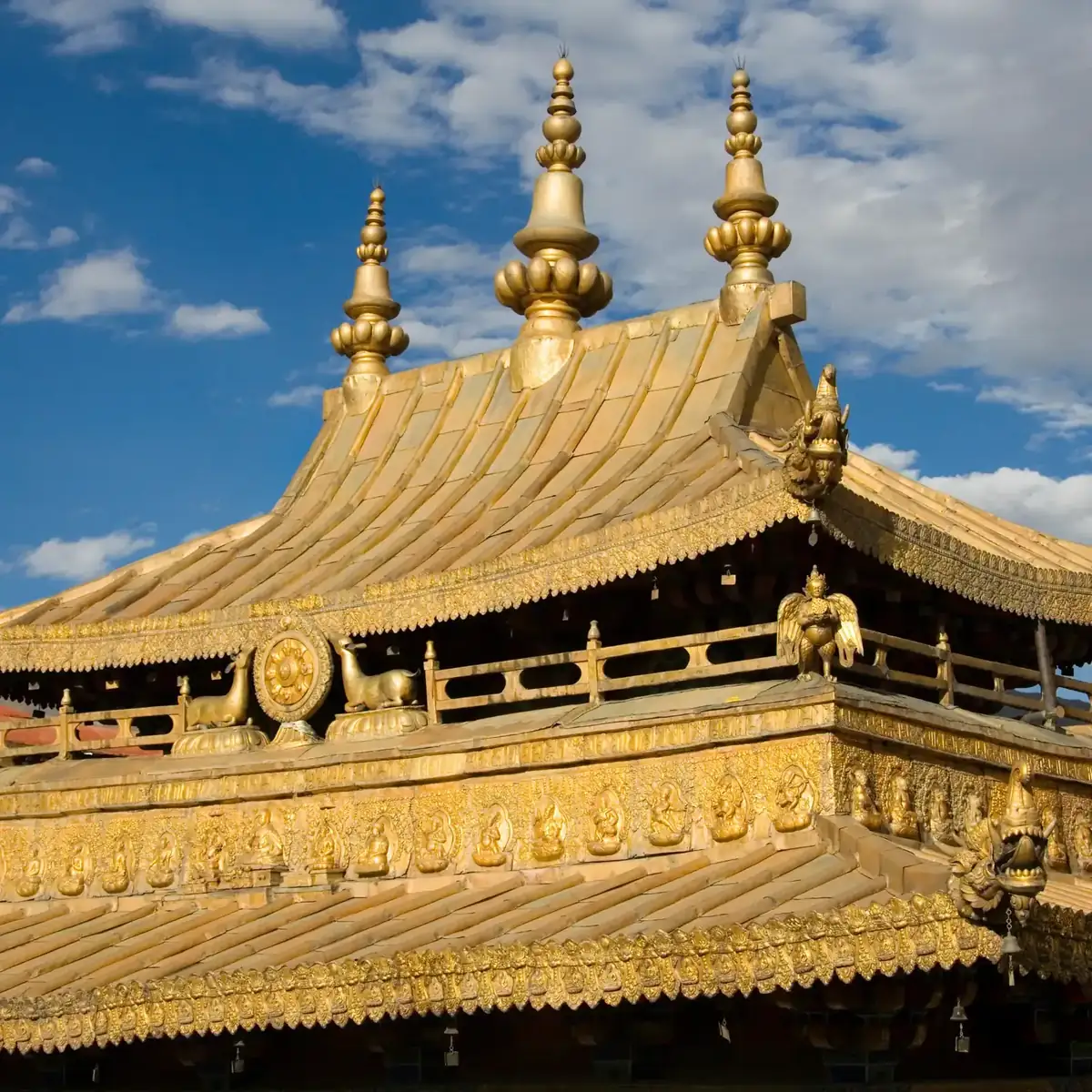
- Jokhang Temple: Lhasa’s holiest sanctuary, built in the 7th century around a monumental Sakyamuni Buddha statue, circled by pilgrims doing their prostrating kora.
- Barkhor Street: the centrifugal tide of pilgrims, butter lamps, incense and silver shops that wraps around the Jokhang — Lhasa’s old city at its most alive.
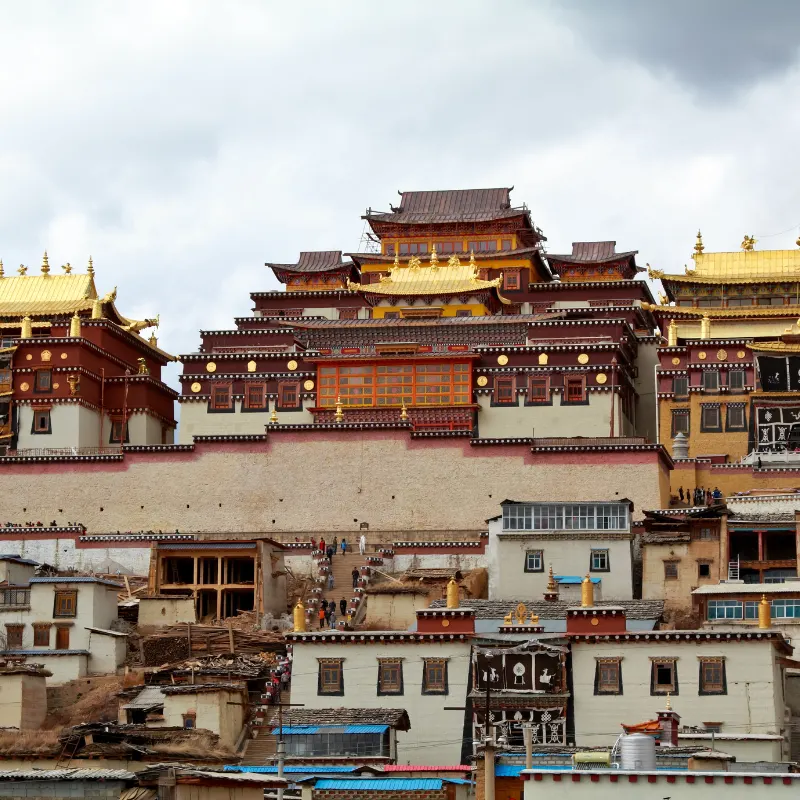
- Sera Monastery: hill-hugging college courtyards and, each mid-afternoon, the famously theatrical monastic debates.
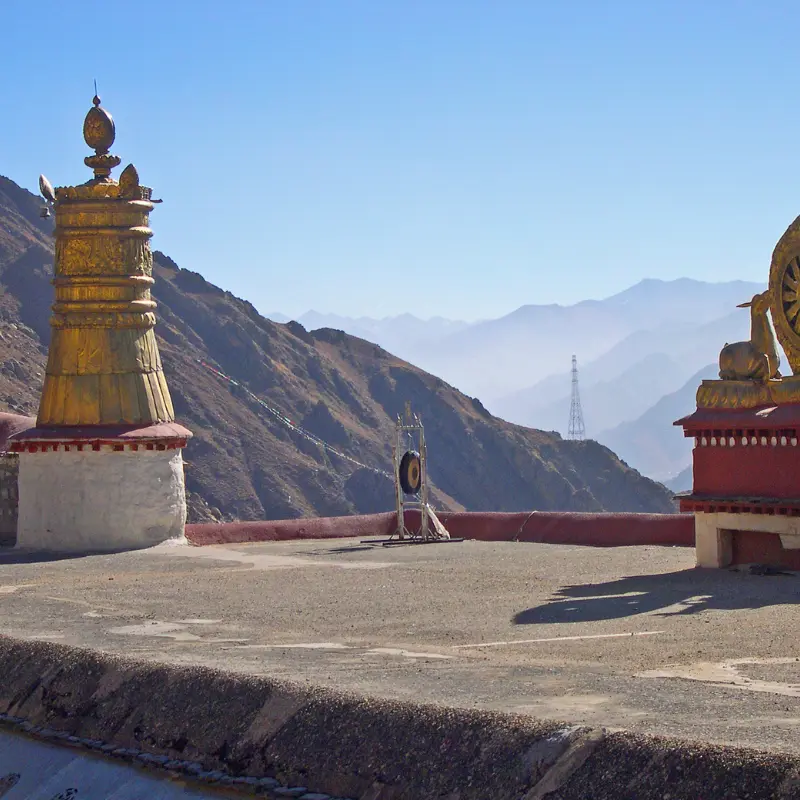
- Drepung Monastery: founded in 1416 and once the world’s largest monastery, a whitewashed city of halls and khakhang (assemblies) under the Gambo Utse ridge.
- Tibetan culture on the ground: butter tea, momos and thukpa, prayer flags, mani walls and the sound of chanting drifting across the valley.
- Acclimatisation-first design: a rest-on-arrival afternoon means you meet Lhasa’s 3,650 m on its own terms rather than racing through it.
Tibet Tour 3 Nights 4 Days Overview
The Tibet Tour 3 Nights 4 Days is the shortest, most direct introduction to the Roof of the World: a one-hour flight from Kathmandu across the Himalaya to Lhasa at 3,650 m, three nights in Tibet’s holy capital, and the sacred circuit of its greatest monuments — the Potala Palace, the Jokhang Temple with its towering Sakyamuni Buddha, the pilgrim-tide of Barkhor Street, and the great monastic universities of Sera and Drepung. There is no trekking and no long overland driving; the “walking” is gentle city sightseeing, and the real challenge is simply the altitude.
The rhythm is deliberately acclimatisation-friendly: arrive mid-morning, rest deeply for the afternoon, then sightsee on Days 02 and 03 before flying back to Kathmandu (or onward to China) on Day 04. The Tibet Travel Permit, an English-speaking Tibetan guide, twin-share hotel nights, daily breakfast, entrance fees and airport transfers are included, with the package starting from USD 550 per person.
With Nepal Lion Tours, this Lhasa sampler runs on a fixed itinerary with honest pricing and a single point of contact in both Kathmandu and Lhasa — for first-time visitors to Tibet, a calm, guided, and properly permitted first step onto the Tibetan Plateau.
What Makes the Tibet Tour 3 Nights 4 Days Special?
- Tibet without the 2,000-kilometre slog: you skip the long Friendship Highway drives and fly straight into Lhasa — the roof of the world is one short hop from Kathmandu.
- The UNESCO heart of Lhasa: Potala Palace (1,000 rooms across 13 storeys), the 7th-century Jokhang Temple and the incense-rich kora (pilgrim circuit) of Barkhor Street.
- Monks, debates and thangka halls: Sera Monastery, famous for its lively debating monks around 3–5 pm, and Drepung, once the largest monastery on earth (founded 1416).
- Permits handled for you: the Tibet Travel Permit — the essential document to board the flight and enter Tibet — is arranged by the operator and included in the price.
- A calm low-stress design: a rest day built into arrival for acclimatisation, hotels returned to each night, and a guide who knows the oxygen-thin rhythm of Lhasa.
Guide’s Note — Nepal Lion Tours — From our experience running the Kathmandu-Lhasa corridor, four days is exactly the right shape for a first taste: the Himalayan flight, a proper rest afternoon, and two unhurried sightseeing days fit the plateau’s rhythm comfortably. We insist on that Day 01 rest even when guests are eager to explore — patience on day one is repaid in energy on days two and three. — Nepal Lion Tours
What’s Tucked Into the Tour?
- Included: Transportation as per the itinerary (including the Kathmandu–Lhasa flights used by the tour — please confirm in writing at booking); the Tibet Travel Permit; an English-speaking Tibetan guide; twin-sharing hotel accommodation; sightseeing and monastery entrance fees; daily breakfast; and hotel–airport–hotel transfers in both Lhasa and Kathmandu.
- Not included: Your China Group Visa, travel insurance, lunch and dinner, personal expenses, drinks, tips, and any optional extras.
- Honest fine print: the listing’s transport line simply says “Transportation.” — we read it as covering the flights and ground transfers the itinerary actually uses, but confirm the round-trip airfare in writing when you book so there are no surprises.
Who Is This Tour For?
- First-time travellers to Tibet who want the essential Lhasa circuit in the shortest sensible time.
- Travellers already in Nepal for whom a four-day side-trip to the plateau is a perfect add-on before or after a trek.
- Cultural and spiritual travellers drawn to monasteries, pilgrimage streets and Tibetan Buddhism, not to long-distance trekking.
- Busy professionals who want a rewarding weekend-plus trip without burning two weeks on the road.
- Photographers and history lovers who want the Potala, Jokhang and Barkhor at their own pace with a local guide.
Quick Facts
Tibet Tour 3 Nights 4 Days at a Glance
| Field | Details |
|---|---|
| Tour Name | Tibet Tour 3 Nights 4 Days |
| Duration | 3 Nights / 4 Days |
| Group Size | 2–10 people (listing: “+2”) |
| Tour Type | Guided cultural and spiritual tour |
| Accommodation | Twin-sharing hotels in Lhasa |
| Max Altitude | 3,650 m / 11,975 ft (Lhasa) |
| Difficulty | Easy (listed) — high-altitude care needed |
| Best Season | Spring–Autumn (clearest May, June, Sep, Oct) |
| Transport | Kathmandu–Lhasa flights + airport transfers |
| Price From | USD 550 per person (Standard, twin share) |
| Start / End | Kathmandu → Lhasa → Kathmandu (or China) |
| Permits | Tibet Travel Permit included; China Group Visa excluded |
Tibet Tour 3 Nights 4 Days Route and Elevation
Tibet Tour 3 Nights 4 Days Route at a Glance
| Day | Route | Transport | Altitude (listed) | Night |
|---|---|---|---|---|
| Day 01 | Kathmandu → fly → Lhasa, arrival & rest | Flight + transfer (~60 km) | 1,350 m → 3,650 m | Lhasa hotel |
| Day 02 | Lhasa sightseeing: Potala, Jokhang, Barkhor | Private vehicle + walking | 3,650 m | Lhasa hotel |
| Day 03 | Lhasa sightseeing: Sera & Drepung monasteries | Private vehicle + walking | 3,650 m | Lhasa hotel |
| Day 04 | Lhasa → fly → Kathmandu (or onward to China) | Flight + transfer | 3,650 m → 1,350 m | — |
Tibet Tour 3 Nights 4 Days Elevation Profile
| Point | Metres | Feet | Tour Day |
|---|---|---|---|
| Kathmandu (start) | 1,350 m | 4,429 ft | Day 01 |
| Lhasa Gonggar Airport | ~3,600 m | ~11,810 ft | Day 01 |
| Lhasa city (overnights) | 3,650 m | 11,975 ft | Days 01–03 |
| Potala Palace summit | ~3,700 m | ~12,140 ft | Day 02 |
| Kathmandu (return) | 1,350 m | 4,429 ft | Day 04 |
How the Tour Days Unfold
- Day 01 — Kathmandu to Lhasa by flight: A morning flight of roughly one hour crosses the Himalaya to Lhasa Gonggar Airport, about 60 km (and an hour) from the city. A local representative meets you and transfers you to your hotel for a full rest afternoon — the standard, sensible way to meet 3,650 m.
- Day 02 — The heart of old Lhasa: A full day at the Potala Palace (be prepared for a long staircase ascent for the city’s best view), then the Jokhang Temple and the pilgrim circuit of Barkhor Street with its satellite shrines. Overnight Lhasa.
- Day 03 — The great monasteries: Morning at Drepung, founded in 1416 and once the world’s largest monastery; afternoon at Sera, known for its philosophical debates in the courtyards (typically around 3–5 pm). Overnight Lhasa.
- Day 04 — Return: Transfer to the airport, fly back to Kathmandu or onward to your destination in China (as arranged). The tour ends on your arrival in Kathmandu — or continues with your next adventure.
How to Get to the Tibet Tour 3 Nights 4 Days
Guide’s Note — Nepal Lion Tours — Because the tour is a flight-based loop, getting there is genuinely simple: travel to Kathmandu, hand us your passport copy in time for the permit and visa work, show up for a morning transfer, and the guide meets you at the Lhasa arrivals hall. The altitude is the only real “preparation”; everything else — permit, guide, hotels, transfers — is arranged before you fly. — Nepal Lion Tours
How to Reach the Start: Kathmandu First
- Fly into Tribhuvan International Airport (KTM) from Delhi, Bangkok, Dubai, Doha, Kuala Lumpur or beyond; most travellers arrive a day or two before the Tibet departure.
- Arrival timing rule: the earlier you land in Kathmandu, the smoother the permit paperwork — a same-day onward flight to Lhasa is not recommended.
- Kathmandu comfort stop: use the pre-departure day to confirm your passport copies, visa photos and a light layer for the plateau; Nepal Lion Tours will reconfirm pickup the evening before.
Flying from Kathmandu to Lhasa
- A one-hour Himalayan hop: morning flights climb over the snow range between the two valleys — historically Everest, Makalu and the Tibetan plain visible on a clear morning, views best from the left side heading out and right side returning.
- Arrival reality: Lhasa Gonggar Airport sits at about 3,600 m in a broad valley; the transfer to the city is roughly 60 km by road, gently climbing to Lhasa’s 3,650 m.
- Flight timing matters: departures are weather-sensitive in winter and monsoon; Nepal Lion Tours monitors the schedule and adjusts the hotel night if a flight slides.
The Overland Alternative on the Friendship Highway
- The classic Land Cruiser route (Kathmandu → Gyirong/Kodari border → Shigatse → Lhasa) takes 4–6 days and needs extra permits and more acclimatisation planning — a different, longer product from the flight-based 3-night tour.
- Why this short tour flies: for four days, flying is safer, faster and kinder to your body than two long trans-Himalayan road days.
- Note on the listing copy: the Trip Introduction text describes 4WD travel on the Friendship Highway — this 3N4D itinerary is the Lhasa-flight version, so treat the overland paragraph as general background, not this tour’s route.
Return and Departure
- Day 04 flight back to Kathmandu is the standard close, arriving early afternoon in the valley.
- Or onward to China: the itinerary also permits flying onward into mainland China (for example onward connections west or east); confirm your egress city and tickets when booking.
- Extend around the tour: because everything begins and ends in Kathmandu, a Chitwan safari or a Poon Hill trek slots neatly before or after.
Tibet Tour 3 Nights 4 Days Difficulty, Fitness & Altitude
Where the Effort Really Goes
- Walking is easy; altitude is the work. The daily walking is gentle city sightseeing — flat-ish pilgrim lanes, monastery courtyards, a museum-style wander through the Potala — but everything happens at 3,650 m, where the air holds barely two-thirds of sea-level oxygen.
- The biggest climb is Potala: the White and Red palaces sit on a hill, so expect a long staircase ascent of several hundred steps — done slowly, with breathers, it is fine for most fit travellers.
- Graded “Easy” with a caveat: physically this is a 2–4-hour-light-walking tour, but the listing’s “Easy” label undersells the elevation; pacing, hydration and rest matter more than muscle.
How to Prepare for the High-Altitude Days
- Rest on arrival (Day 01). The itinerary deliberately keeps the first afternoon free; treat it as your acclimatisation appointment rather than bonus sightseeing time.
- Hydrate, hydrate, hydrate: drink more water than feels natural, ease up on alcohol and caffeine, and eat lightly but regularly.
- Walk slowly, especially Potala’s stairs — slow and steady is the Tibetan way of climbing; our guides set a deliberately relaxed pace.
- Talk to your doctor about altitude medicine (Diamox/acetazolamide) if you usually struggle with height; bring any prescription and have your fitness honestly in mind.
How Easy Is This Compared with Nepal Mountain Treks?
| Factor | Level | Note |
|---|---|---|
| Daily walking | 2–4 light hours | City streets, temple courtyards, no packs |
| Highest point | ~3,700 m | Potala ascent (Day 02) |
| Sleeping altitude | 3,650 m | High — rest is part of the plan |
| Trekking | None | No remote trail, no multi-hour ascents |
| Compared with a Nepali trek | Similar altitude, far easier walking | Poon Hill reaches 3,210 m; EBC sleeps much higher |
The honest comparison: the walking is far easier than any Himalayan trek, but the sleeping altitude (3,650 m) matches or exceeds many trek nights. This is why the tour’s design — fly in, rest, sightsee, fly out — treats acclimatisation as its own activity.
Guide’s Note — Nepal Lion Tours — This is the tour where we are most honest about height: the walking is easy, but 3,650 m is genuinely high. In years of running these departures, every guest who followed the rest-on-arrival rule and kept drinking water sailed through; those who rushed have spent an afternoon with a headache. Slow wins in Lhasa, and our guides are trained to hold that pace. — Nepal Lion Tours
Altitude, Acclimatization & Safety
Tibet Tour 3 Nights 4 Days Altitude Profile
The tour sleeps at 3,650 m in Lhasa for three nights (fact-bar maximum 3,650 m), steps up to roughly 3,700 m at the Potala summit, and never goes higher. For comparison, Kathmandu is 1,350 m and Everest Base Camp treks sleep above 5,000 m — Lhasa is genuinely high, but not extreme, and a short stay with a rest day is the standard, well-proven format.
How the Body Adjusts at 3,650 Metres
At Lhasa’s height, mild shortness of breath on stairs, a light headache or tiredness in the first 24–48 hours are common and usually benign; the classic rules are to rest, drink water, avoid alcohol and not push through symptoms. Our fixed rest-on-arrival afternoon is designed exactly around this.
What to Watch For
- Symptoms to take seriously: persistent headache that worsens, nausea, vomiting, confusion, dizziness or breathlessness at rest — these are signs to descend or seek help, and Nepal Lion Tours keeps liaison points ready.
- Drugs and logistics: pack any personal medications, carry your passport, and know where your guide and the Lhasa clinic are — every member of the group gets the numbers.
- Weather layer: the plateau sun is fierce and the evening cold is real; sunburn and wind do more than altitude for many visitors.
How Nepal Lion Tours Supports Comfort and Safety
The tour runs with an English-speaking Tibetan guide, insured local partners, comfortable twin-share hotels (with oxygen available at most reception desks), and a WhatsApp line to our Kathmandu office that stays open through the trip. We also reconfirm flights the day before each departure, because on the plateau a stable plan is the best medicine.
Best Time for the Tibet Tour 3 Nights 4 Days
| Season | Months | Lhasa Character |
|---|---|---|
| Spring | Apr–May | Dry, warming days; blossoms and clear skies |
| Summer | Jun–Aug | Warmest and wettest; afternoon rain common |
| Autumn | Sep–Oct | Clearest and most stable; the classic pick |
| Winter | Nov–Mar | Cold, thin air, fewer crowds; cheaper rooms |
Autumn — September to October
- The classic Tibetan window: post-monsoon skies are their deepest blue, Potala at dawn is postcard-perfect, and daytime temperatures stay pleasant.
- Stable flying weather across the Himalaya route and monastery debates in full swing (Sera’s courtyard debates run through the season).
- Book ahead: autumn is the high season for the Kathmandu–Lhasa corridor, so flights and twin rooms fill early.
Spring — April to May
- Dry and warming: crisp mornings, blooming valley flowers and, by May, the run-up to the Saga Dawa festival month (Buddha’s birth, enlightenment and parinirvana, typically held around May–June on the lunar calendar).
- Good shoulder pricing with quieter monasteries than in autumn.
- A note: early April can still be cold and windy at 3,650 m — bring the warm layer regardless of the calendar.
Summer — June to August
- The warmest Lhasa with lively evenings on Barkhor; rain tends to fall in short afternoons rather than all day, and the plateau drains fast.
- Festival season: Shoton (Yogurt) Festival in late summer and the great thangka display at Drepung — a genuine once-a-year highlight if your dates align.
- Cloudier skies and occasional flight delays across the Himalaya; allow flexible margins.
Winter — November to March
- Sunny but thin and cold: day skies are often brilliant, nights drop well below freezing and the air is even more oxygen-poor.
- The quiet season: Potala and Jokhang are far less crowded, hotels are cheaper, and flights usually run on clearer winter days.
- Realistic ground truth: it works well for acclimatised travellers; less gentle for first exposure to height in freezing weather.
Which Season Suits You Best?
- For clearest views and comfortable sightseeing: September–October first, April–May second.
- For fleecy atmosphere and festival magic: June–August, especially around Shoton.
- For solitude and budget: November–March, accepting cold evenings and thin air.
- Whichever you choose, altitude preparation matters more than the weather.
Guide’s Note — Nepal Lion Tours — We run these Lhasa departures through every season, and the honest difference is small: autumn and spring give the clearest panoramas, winter the emptiest temples, summer the festivals. The constant is the altitude — rest on arrival, hydrate, and let the guide set the pace, and the season becomes a detail rather than a risk. — Nepal Lion Tours
Tibet Tour 3 Nights 4 Days Permits & Regulations
Tibet Tour 3 Nights 4 Days Permits at a Glance
| Document | Needed? | Who Arranges / Cost |
|---|---|---|
| Tibet Travel Permit | Yes — for every foreigner | Agency arranges (included) |
| China Group Visa (L) | Yes — entering via Kathmandu | Chinese Embassy Kathmandu; separate fee |
| Alien Travel Permit (AT) | No | Only for travel outside Lhasa city |
| Monastery & sight entry | Included | Folded into the tour price |
| Passport | Yes — 6+ months validity | Your own |
- Tibet Travel Permit: required to buy your Lhasa ticket and board the flight; Nepal Lion Tours applies with your passport details and it is included in the tour price. The original permit is presented at check-in and passed to the guide on arrival in Lhasa.
- China Group Visa (L): foreigners entering Tibet through Nepal need a Chinese Group Tourist Visa, normally processed in 3–4 working days at the Chinese Embassy in Kathmandu with your passport, photos and the tour invitation. This visa is a separate cost and is not listed among the tour’s inclusions — plan your Kathmandu days accordingly.
- No Alien Travel Permit needed for this tour: permits beyond the Tibet Travel Permit are only required once you leave Lhasa city (Gyangtse, Shigatse, Everest Base Camp, Namtso); this itinerary stays inside Lhasa, so the paperwork stops at the one permit.
China Visa for Entry
- The practical truth: for most nationalities the fastest route is the Chinese Embassy in Kathmandu; some travellers holding China onward visas or longer-validity China multi-entry visas can use those — check with your own consulate before arranging anything.
- Deadlines: start the visa application at least a week before your Tibet departure; last-minute Group Visa work is possible but stressful and fee-heavy.
- What to carry: passport (6+ months validity, blank pages), passport-size photos, itinerary, and proof of the tour booking/permit invitation for the visa application.
Tibet Travel Permit and Lhasa Rules
- How it works: the operator submits your passport scan and tour details to the Tibet Tourism Bureau; the permit is issued once the Group Visa is in hand, then presented at check-in and on arrival.
- In practice in Lhasa: keep your passport with you, not in the hotel safe — hotels, Potala and monasteries verify identities at the door.
- Photo etiquette: religious halls and monastery interiors often forbid photography; the guide will point out the lines and the ground rules.
How Nepal Lion Tours Handles Your Permits
- One request to you: your passport copy and photos, sent in good time before departure. Everything else — permit application, hotel booking tied to the permit, Lhasa-side coordination — is done for you.
- Feedback loop with the office: if the embassy timing changes, Beijing approval slows, or a flight slides, we communicate the adjustment immediately by WhatsApp and email.
- Combining with extra Tibet: if you later extend to Gyantse/Shigatse or EBC, the additional permits and overland plans are quoted separately before you commit.
Food & Accommodation on the Tibet Tour 3 Nights 4 Days
Meals on the Tibet Tour 3 Nights 4 Days
- Daily breakfast is included at your Lhasa hotel — usually a mix of Tibetan, Chinese and western options such as congee, eggs, toast and, of course, butter tea if you are brave.
- Lunch and dinner are yours to discover: Lhasa’s old town brims with thukpa and momo restaurants, sweet-tea houses and Nepali kitchen corners — budget roughly USD 10–15 per day for meals plus bottles of water.
- Altitude-meal logic: eat lightly and steadily, favour warm soups and easy carbohydrates, and keep the sweet tea flowing between sights.
Tibetan Cuisine Worth Trying
- Thukpa: the essential Tibetan noodle soup, lamb or vegetable, with a broth that warms you at oxygen-thin altitudes.
- Momo: steamed (or fried) dumplings stuffed with yak meat or vegetables, dipped in sepen chilli sauce — the plateau’s great comfort food.
- Tibetan bread and tsampa: roasted barley flour eaten with salt-butter tea, and khapsa fried pastries at festival time.
- Butter tea (po cha) and sweet tea: the oily salt kick of the classic is an acquired taste; the sweet version is a Barkhor street favourite.
Where You Stay: Twin-Share Hotels in Lhasa
- Comfortable city hotels in Lhasa, selected for location (reachable from Barkhor and the Potala), reliable heating and welcome oxygen at the desk; rooms are twin/double sharing as listed.
- Standard (USD 550 band) vs Luxury (USD 743 band): the same itinerary with a higher-category property, upgraded dining and extra host touches on the luxury tier — both tiers keep the permit, guide and transfers identical.
- The hotel basics: expect warm rooms, en-suite bathrooms and steady hot water; wi-fi is common but China’s internet filters can slow international sites, so a VPN is worth installing before you fly.
Why Book with Nepal Lion Tours?
Seven Reasons to Book with Nepal Lion Tours
- Permits made painless: the Tibet Travel Permit and embassy coordination are part of what we do weekly — the single biggest headache for independent Tibet travel, removed.
- Both sides of the Himalaya, one operator: our Kathmandu and Lhasa teams work as one, so flight timing, visas and hotels are synchronised.
- A named English-speaking Tibetan guide in Lhasa who sets a humane pace and knows where the oxygen masks and the best thukpa are.
- WhatsApp on call: message +977-9851039020 before, during and after the tour — plans change at altitude, and we answer fast.
- Honest banded pricing: USD 550 / 523 / 495 / 468 (Standard) and 743 / 706 / 669 / 632 (Luxury) per person, stated before you pay, with no surprise “permit handling” charges at the end.
- Free cancellation up to 14 days before departure, subject to booking terms.
- Easily combinable: prepend a Kathmandu city day or follow with a Chitwan safari or Poon Hill trek — one team, one invoice.
Book the Tibet Tour 3 Nights 4 Days
Tibet Tour 3 Nights 4 Days Pricing
| Group Size | Standard (per person) | Luxury (per person) |
|---|---|---|
| 1 person | USD 550 | USD 743 |
| 2–4 people | USD 523 | USD 706 |
| 5–9 people | USD 495 | USD 669 |
| 10+ people | USD 468 | USD 632 |
- Prices are per person on twin share, from the listing’s “starting from USD 550” (Standard) band; the Luxury tier upgrades hotel and dining while keeping the itinerary, permit and guide unchanged.
- What you pay covers: flights and transfers per itinerary, the Tibet Travel Permit, guide, hotel, entrance fees, daily breakfast and taxes as charged.
- What remains separate: the China Group Visa (embassy fee), travel insurance, lunch and dinner, tips and personal expenses.
Ready to Start Your Tibetan Plateau Adventure?
- Send passport details early: the Group Visa and Tibet Travel Permit are on a clock — start the paperwork a week or more before departure.
- Reserve by WhatsApp (+977-9851039020) or the booking form with a deposit; balance before departure; free cancellation up to 14 days prior, subject to terms.
- Add Kathmandu around it: a city day either side of the flight makes the logistics smoother and the trip richer — ask for the combined itinerary.
Related Tibet & Bhutan Tours
| Tour | Days | Difficulty | Max Altitude | Starting Price |
|---|---|---|---|---|
| Lhasa Tour 4 Nights 5 Days | 5 days / 4 nights | Moderate | 3,650 m (Lhasa base) | USD 1,800 |
| Tibet Tour 5 Nights 6 Days | 6 days / 5 nights | Moderate | 3,650 m (Lhasa base) | USD 750 |
| Lhasa Tour 6 Nights 7 Days | 7 days / 6 nights | Moderate | 3,650 m (Lhasa base) | USD 1,819 |
| Bhutan Tour 3 Nights 4 Days | 4 days / 3 nights | Moderate | ~3,140 m | USD 1,040.25 |
| Ghorepani Poon Hill Luxury Trek | 6 days / 5 nights | Moderate | 3,210 m | USD 750.50 |
- Lhasa Tour 4 Nights 5 Days adds a full extra day of sights and sets a 5.0 (18) review record — the natural upgrade if four days feel tight.
- Tibet Tour 5 Nights 6 Days (USD 750) and Lhasa Tour 6 Nights 7 Days (USD 1,819) deepen the plateau stay; compare packages with our team to match your dates and budget.
- Combining well: a Kathmandu city day before the flight, and a Chitwan safari or Poon Hill trek after, make one seamless Nepal+Tibet holiday.
Trip Essentials
Packing advice, required equipment & gear recommendations
Essential
Tibet Tour 3 Nights 4 Days Packing List
Essential Clothing
- Warm layers in spades: a thermal base, fleece mid-layer and a windproof/insulated shell — Lhasa nights drop hard even in summer.
- A down or fleece coat for winter departures (Nov–Mar), plus gloves and a warm hat for sunrise Potala sessions.
- Comfortable, non-slip walking shoes for old-town lanes, monastery stairs and Potala’s long ascent.
Footwear and Day Gear
- Broken-in walking shoes or light hiking boots with good grip.
- A daypack for water, layers, passport and camera — keep it light, big pockets are a nuisance at altitude.
- A trekking pole or two genuinely helps on the Potala stairs and Drepung’s gentle uphill.
Travel Documents and Money
- Passport (6+ months validity), the Tibet Travel Permit printout and your China visa sticker, plus a photocopy of each kept separately.
- Chinese yuan (CNY) in cash for meals, snacks and gifts; cards work in big hotels but Barkhor’s shops and tea houses are cash-first.
- A VPN installed on your phone before flying — Google, WhatsApp and some apps are filtered on mainland networks.
Toiletries and Personal Health Items
- Personal medicines (including any altitude medication) in your hand luggage, plus your usual toiletries and lip balm.
- Sunscreen, sunglasses and a sun hat — UV at 3,650 m is ferocious even in shade.
- Hand sanitiser, wet wipes and a small first-aid strip for long transit segments.
Electronics and Connectivity
- Adapter types A/C/I and a power bank — Chinese sockets take the two-flat-pin type; hotels usually add universal plugs.
- Phone, camera and offline maps/downloads done in Kathmandu, where the unfiltered internet works normally.
How Much Should You Pack?
- Keep it to a warm-weather bag: three nights in one hotel means no daily packing; a 30–40-litre pack or small roller plus your daypack is plenty.
- Leave the trekking kit at home: no sleeping bags, tents or stoves — this tour sleeps in hotels and walks on pavement.
Read Before You Book
Permits, terms, medical considerations & advisory guidelines
Advisory
What to Know Before Booking
Accommodation and Facilities
- Twin-share rooms in Lhasa hotels inside the standard or luxury band; single occupancy is quoted on request.
- Heating, hot water and oxygen are standard at the properties we use; wi-fi exists but arrives through China’s filters.
- Location over luxury: hotels sit within reach of Barkhor and the Potala so the sightseeing days stay short.
Food and Dietary Requirements
- Breakfast daily is included; lunch and dinner are not — budget roughly USD 10–15/day for food and water.
- Vegetarianism is easy at momo and thukpa joints, but note that much Tibetan cooking is yak- or mutton-based; tell the guide and hotel in advance.
- Altitude appetite: many visitors eat less for the first 24 hours; light, warm, carbohydrate-forward food works best.
Altitude, Health and Insurance
- The altitude is the tour’s one big variable — rest on arrival, hydrate, go slow on the Potala stairs, and have named a contact in case symptoms mount.
- Travel insurance is required in spirit and strongly advised in fact: it is excluded from the tour price and should cover high-altitude (medical) claims and trip interruption.
- Consult your doctor about Diamox/acetazolamide before departure if high altitude is new to you.
Money, Tipping and the Currency
- Carry Chinese yuan cash for the ground days; change leftover rupees or dollars to yuan in Kathmandu before the flight, where rates are fairer.
- Tipping is modest: guide and driver, a few dozen yuan per traveller for the tour, is a kind gesture in Lhasa’s service culture.
- Cards and QR payments work at hotels and larger restaurants; small shops and tea houses prefer cash.
Culture and Responsible Travel
- Walk the kora clockwise around the Jokhang and Barkhor; keep noise low near monks and prayer walls.
- Ask before photographing people, pilgrims in prostration, or monastery interiors — the guide will show you what is open and what is not.
- Temples are living places: remove hats indoors, keep voices calm, and never point with your feet or step over prayer items.
Route Options
- The flight-based 3N4D is the soft introduction; overland Friendship Highway routes add days and extra permits if you want the drive.
- Four, five, six and seven-night versions exist (Lhasa 4/5 and Tibet 5/6-night packages) for deeper cultural touring.
- Exit flexibility: return to Kathmandu or continue into China — confirm the egress when booking so documents line up.
Booking and Before You Arrive
- Permit clock: passport copy + photos at least 5–7 days before departure; the China Group Visa needs 3–4 embassy working days.
- Deposit to confirm, balance before travel; banded per-person prices (1, 2–4, 5–9, 10+) are fixed at the time of booking.
- Free cancellation up to 14 days before departure, subject to terms; WhatsApp +977-9851039020 runs the whole way through.
A Few Final Tips and the Bottom Line
- Sleep early on Day 01 and treat the rest afternoon as sacred — it is the difference between a joy and a headache in Lhasa.
- Window seats both ways on the Kathmandu–Lhasa flights are the best photo value in the entire itinerary.
- The bottom line: at USD 550 with flights, permit, guide, hotel, breakfasts and transfers folded in, this is the cheapest, calmest, fastest way to stand on the Roof of the World — as long as you respect the altitude.
Day-by-Day Itinerary
Explore each day's route, trekking elevation, and activities
Morning you will fly for about an hour over the panoramic Himalayan ranges to the capital fo Tibet”Lhasa”. Lhasa at an altitude of 3,650mt, is the situated on the north bank of Kyichu River. Lhasa in Tibetan means “Place of the God”,the resident of Dalai Lama., on arrival you will be meet by the local representative and transferred to your respective Hotel(60km/hr). Full rest in the afternoon to acclimatize Overnight at Hotel.
After breakfast proceed for full day sightseeing including Potala Palace Potala Palace in one of the most beautiful monuments in Tibet with 1,000 room and 13 stores to explore this is probably the most popular tourist attraction in Tibet and Jokhang Temple, Jokhang Temple which was constructed back on 07th century attracts hundred of tourist every year . This temple has a very huge sakyanumi Buddha statue and is considered the holist place in Tibet. Barkhor Market Palace, Barkhor street is the centrifugal tide of pilgrims then you can see the several small, fascination temple into the route . Overnight at Hotel.
After breakfast full day sightseeing of Sera Monastery,Sera Monastery specialized in the fundamental precepts of Buddhism. Sera survived the ravage of the cultural revolution with light damage, although many of the lesser colleges were destroyed. Drepung Monastery, Drepung Monastery was once one of the world’s largest monasteries. Drepung was founded in 1416.
Transfer to airport Flight back to Kathmandu or to your onward Destination.
Want to customize this itinerary?
Tailor duration, lodges, acclimatization days, or add private helicopter flights.
Inclusions & Exclusions
Everything that is covered and what you'll need to budget separately
What is Included
Fully covered in your package price
- Transportation.
- Tibet travel permit.
- English speaking Tibetan guide.
- Accommodation on twin sharing room basis.
- Sightseeing and monastery entrance fees as per our itinerary.
- Daily breakfast.
Hotel-airport-hotel transfer in Lhasa and Kathmandu.
What is Excluded
Personal expenses & optional extras
- Client and travel insurance.
- Lunch and dinner.
- Personal expenses such as a drink, tips& etc.
Our Customer Reviews
Authentic experiences and feedback from our travelers
Write a Review
Share your adventure experience with other travelers
Thank You!
Your review has been submitted and is awaiting approval.
Please Wait
You've submitted several reviews recently. Please wait a few minutes before trying again.
Oliver Girard
Some journeys blur together afterwards, but this one still comes back in pieces. We had a lot of fun with Sera Monastery, more than the itinerary suggested. I had low expectations for Tibetan means “Place of the God” and ended up loving it. The weather was better than forecast, which helped a lot. The trip made me realise how little I actually need day to day. By the last morning, the routine of early starts and long walks already felt normal. The local transport was basic in places but always on time. The guide gave us honest advice about what was worth doing and what was not. The little tea houses along the way were often better than the bigger stops. Better than expected.
Vincent Tanaka
This was one of those trips that keeps giving you little surprises. Jokhang Temple was worth the early start. The guide timed our arrival at Capital Fo Tibet”Lhasa”. Lhasa well, and we avoided the biggest crowds. The energy of the group made even the long days fun. I did not realise how much I needed a break from routine until we were out there. We loved it.
Jonas Sorensen
We compared a few operators before booking, and this itinerary was the clearest one we found. The cold at Resident Of Dalai Lama was sharper than we expected, so layers were essential. Drepung Monastery was the moment the trip really clicked for me. The itinerary had enough buffer that a small delay did not throw everything off. I would pack for colder weather than you think you need. The trip gave us space to slow down, which was the main reason we booked it. The trip changed pace often, which kept it interesting. The early morning drives were cold, but the light and the animals made it worthwhile. There was a bit of waiting around on the first day, but it was nothing serious. We loved it. Tip: Book the helicopter or flight option early if you are on a tight schedule.
Martin Tanaka
This was our first proper trip together as a family in a few years, and it worked out well. The route through China was the one I remembered most clearly afterwards. Barkhor Street was slower and quieter than I expected, in a good way. The heat in the lower sections was more tiring than the altitude. A great choice for us.
Liam Dubois
The jungle days were slow in the best way, with a lot of waiting and then sudden excitement. Panoramic Himalayan Ranges gave us the clearest view of the mountains on the whole trip. I still think about Tibetan culture on the ground more than anything else. I would carry a little more cash next time for the smaller stops. The teahouse was simple but clean, and the staff were friendly. The wind picked up in the afternoons, so early starts were worth it. The early morning drives were cold, but the light and the animals made it worthwhile. I came home with a full card and a shortlist of places I want to photograph again.
Frequently Asked Questions
Essential information on preparation, route specifics, safety standards, and logistical details.