Mustang Tiji Festival 2026/2027 — 12 Days | Nepal Lion Tours
Experience the Sacred Mustang Tiji Festival on a 12-Day Himalayan Journey Through Ancient Monasteries, Tibetan Culture, and Dramatic Landscapes
Mustang Tiji Festival 2026/2027 - 12 Days
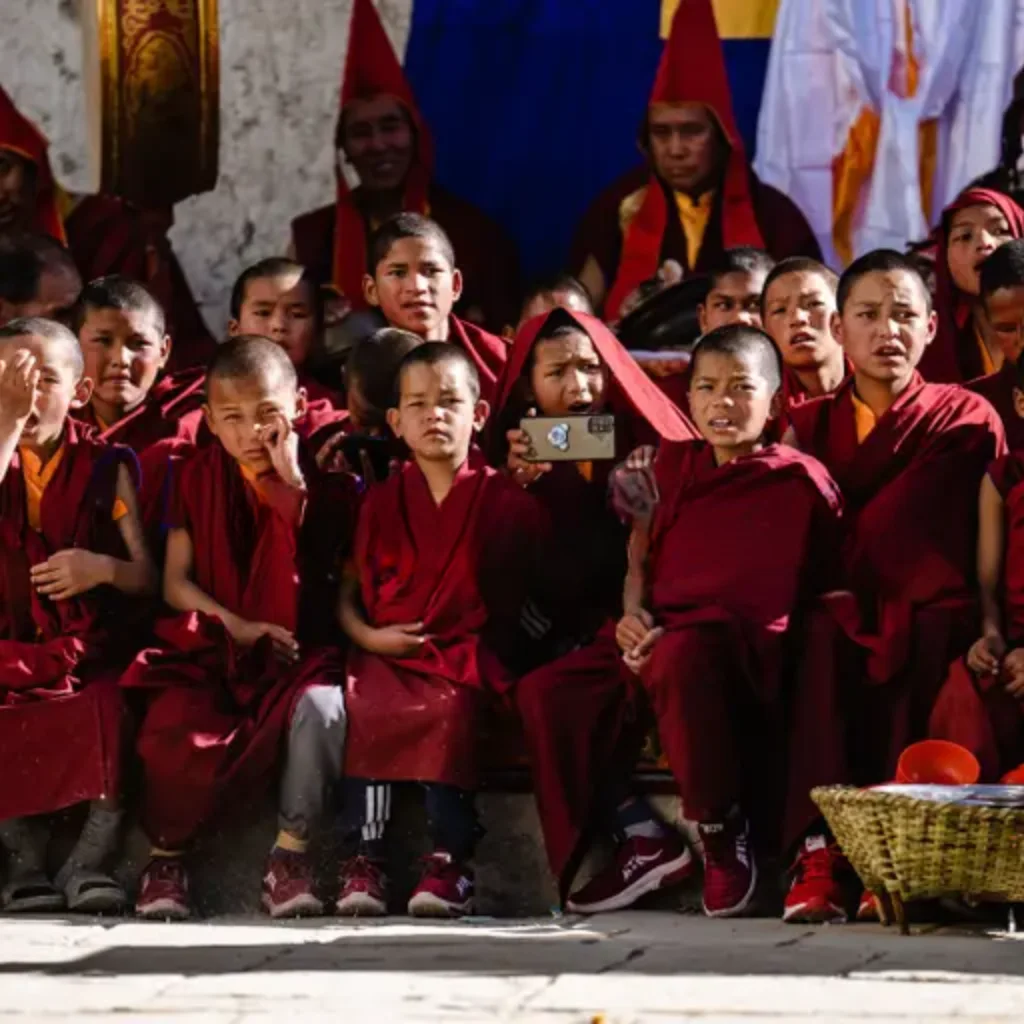
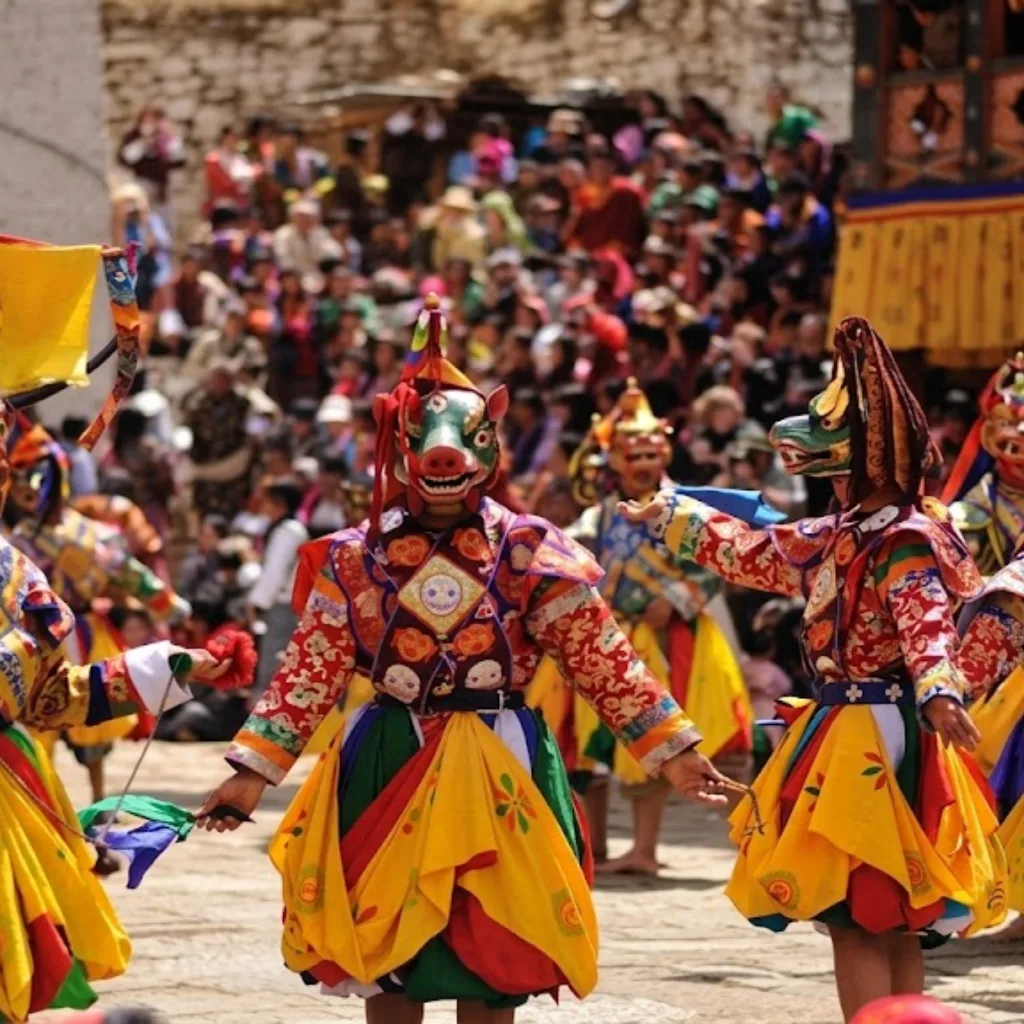

Tour Highlights
Twelve days of Tiji Festival masked dances, the walled city of Lo Manthang, cliff-side sky caves, apple orchards and the lunar landscape of the Upper Mustang restricted zone make this one of the most distinctive cultural journeys in Nepal.
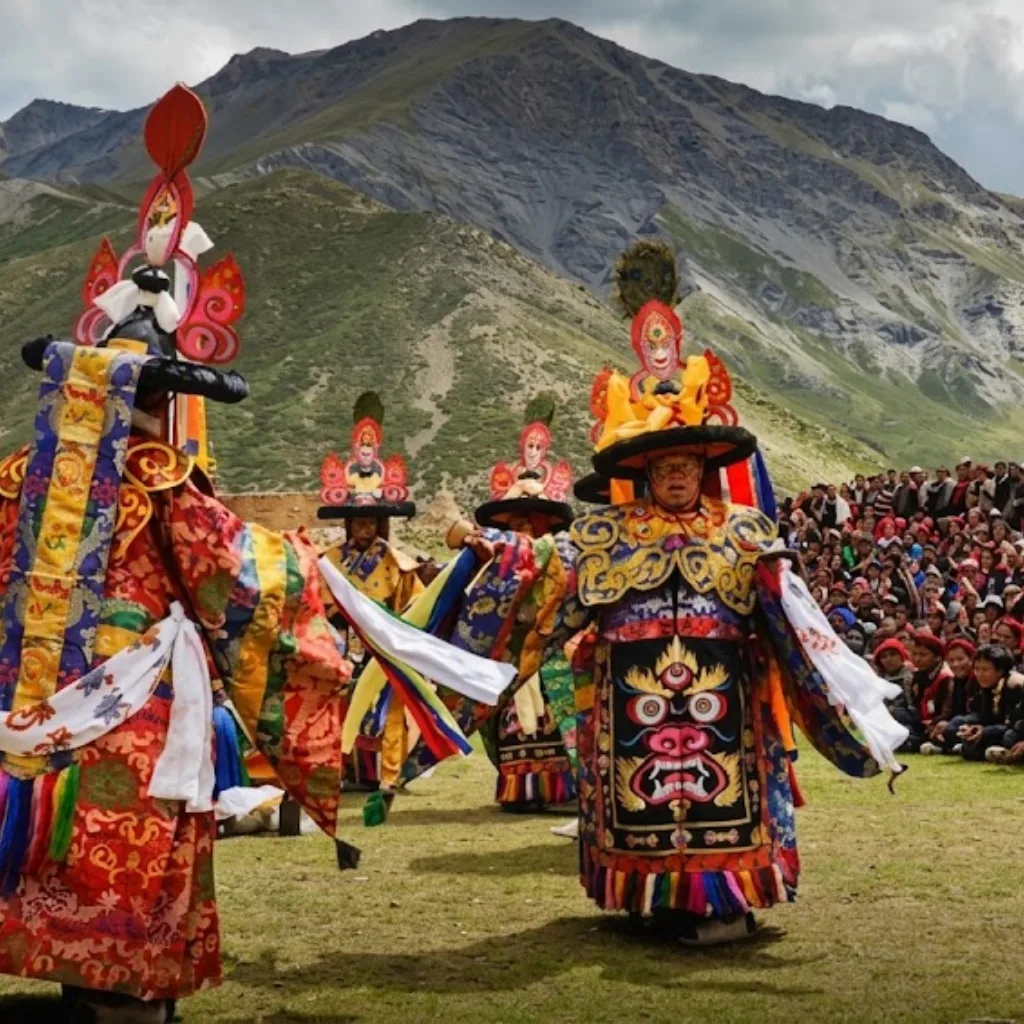
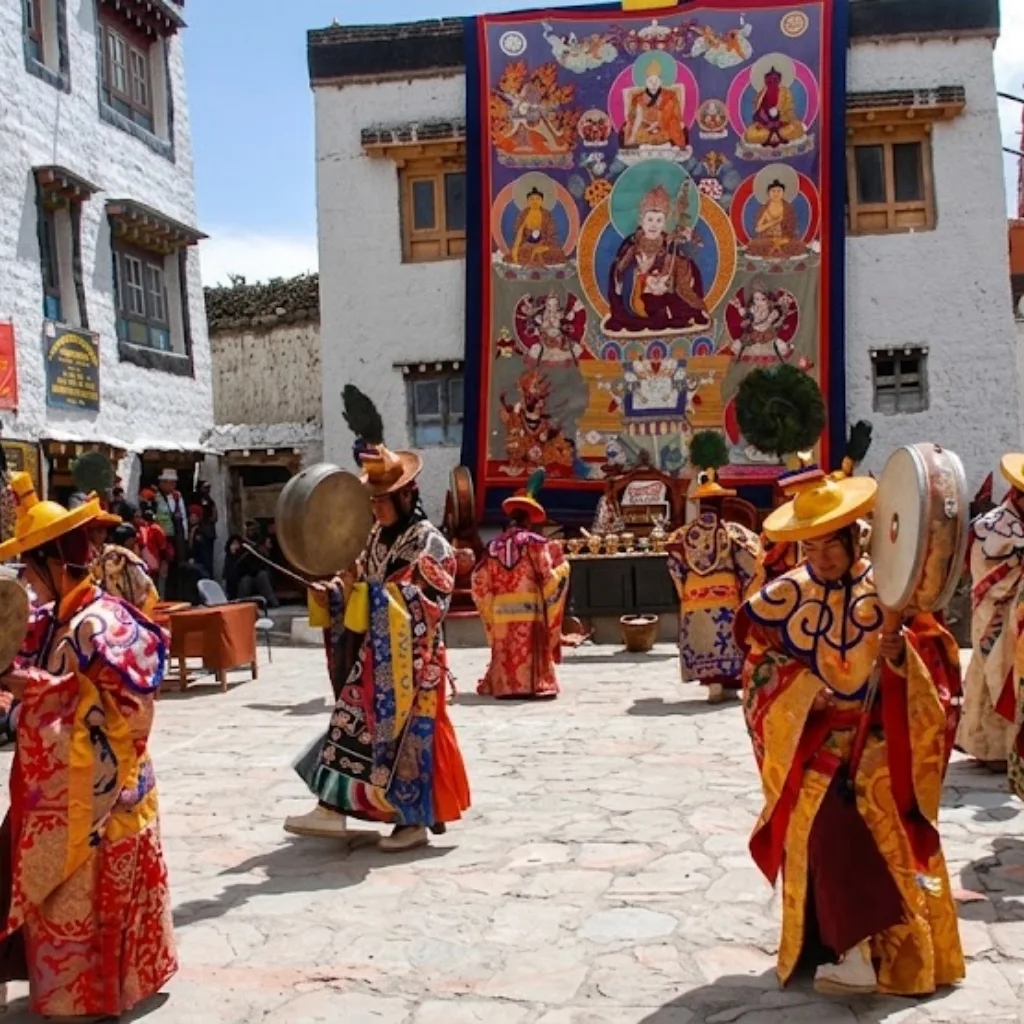
- Tiji Festival — 3 days, Lo Manthang 3,810 m / 12,500 ft: Witness the sacred masked dances, prayers and thangka ceremonies performed by monks of the Sakya tradition in the palace courtyards of the walled capital.
- Lo Manthang — 3,810 m / 12,500 ft: Walk the narrow lanes of the 15th-century walled city, once the seat of the Kingdom of Mustang, with its whitewashed houses and fortress walls.
- Chhoser Sky Caves — ~3,950 m / ~12,960 ft: Visit the ancient cave dwellings carved into the cliffs above Chhoser village, plus a local Buddhist school in the surrounding plateau.
- Kagbeni Gate Village — 2,804 m / 9,199 ft: Step through the traditional gateway village where the restricted-area permits are checked before the trail continues into Upper Mustang.
- Muktinath Temple — ~3,710 m / ~12,172 ft: Explore the revered pilgrimage complex shared by Hindu and Buddhist communities on the return into Lower Mustang.
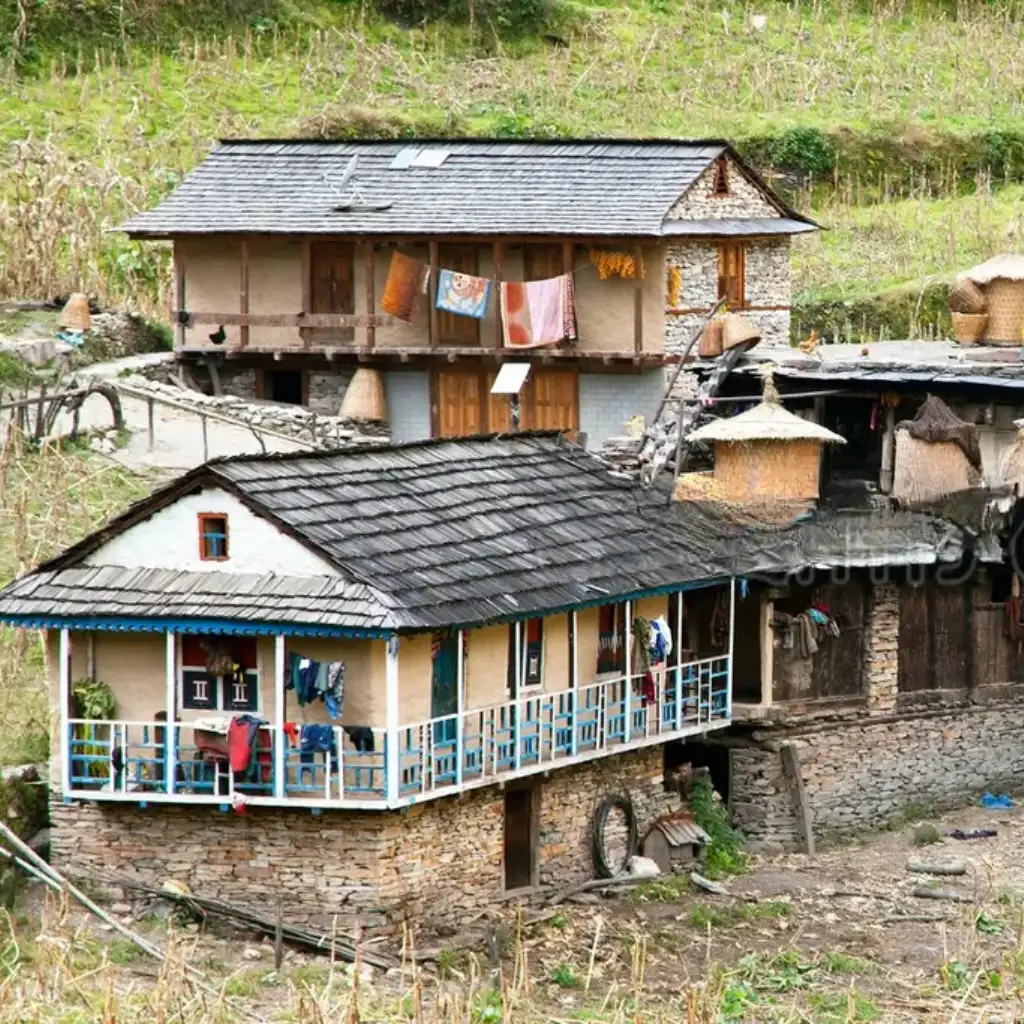
- Marpha Apple Orchards: Wander the stone streets of Marpha, famous for its orchards, cider, brandy and dried apples along the Kali Gandaki valley.
- Longest Mani Wall in Upper Mustang: Drive past the region’s longest prayer-wall, carved with thousands of prayer stones that reflect Upper Mustang’s unbroken Buddhist heritage.
- Tiji Festival + Pokhara: Combine the three days of festival in Lo Manthang with the lakeside evenings of Pokhara in one well-organised package.
- Restricted-Area Cultural Journey: With a maximum sleeping altitude of 3,810 m / 12,500 ft and driving-based days, this 12-day tour suits travellers seeking Upper Mustang’s culture and festival without trekking every day.
Mustang Tiji Festival 2026/2027 Overview
The Mustang Tiji Festival 2026/2027 is a 12-day cultural journey through the restricted Upper Mustang region in Nepal, timed around the three sacred days of the Tiji Festival in Lo Manthang. The tour reaches a maximum altitude of around 3,810 m / 12,500 ft at the walled capital of the former Kingdom of Mustang and is graded easy to moderate, which makes it one of the most accessible ways to experience a living Tibetan Buddhist festival.
The journey starts and ends in Kathmandu, moving by scenic flight to Pokhara and then by private four-wheel-drive jeep through the Kali Gandaki valley — via Tatopani’s hot springs, Marpha’s apple orchards, the pilgrimage temples of Muktinath and the gate village of Kagbeni — before crossing into the restricted zone that leads to Lo Manthang (3,810 m / 12,500 ft). From there, three days are given to the Tiji Festival: masked dances by Sakya-tradition monks, unfurled thangka banners and the ceremonial battle between good and evil that has drawn travellers for generations.
With Nepal Lion Tours, the package starts from USD 2,184.05 per person and includes a licensed English-speaking guide, flights and jeep transfers, hotel and lodge accommodation, most meals, all required permits (including the Upper Mustang Restricted Area Permit), airport transfers and essential trekking gear.
Guide’s Note — Nepal Lion Tours
“From our experience operating Upper Mustang departures, the Tiji Festival is the busiest week of the year in Lo Manthang — we recommend confirming your dates around the confirmed 2027 festival dates of 1–3 June as early as possible, because lodges inside the walled city fill quickly. For 2026 the festival fell in mid-May; the exact dates each year are set by the monasteries on the Tibetan lunar calendar.”
— Nepal Lion Tours Lead Trekking Guide
What Makes the Mustang Tiji Festival Tour Special?
The defining experience is being inside Lo Manthang’s palace courtyard while the Tiji Festival runs its three-day cycle. Monk dancers in elaborate silk costumes and painted masks re-enact the myth of Prince Dorje Jono, who — guided by Guru Padmasambhava — defeated the demon Man Tam Ru and saved the kingdom that would later live in peace. The festival, whose name comes from “Tempa Chirim”, meaning “Prayer for World Peace”, has been performed in Lo Manthang for around 300 years, and few places on earth still present Tibetan Buddhism in its original walled-city setting.
Beyond the festival, the route crosses one of the most distinctive landscapes in Nepal: a high-altitude desert shaped by wind and the Himalayan rain shadow. Travelers visit the sky caves of Chhoser carved into cliff faces, the longest mani wall in Upper Mustang, the ancient temples and gompas of the walled city and the apple orchards of Marpha. These are the same villages and monasteries the Kingdom of Mustang has guarded for centuries, now reachable by jeep.
The tour also stays in genuine Upper Mustang lodges — teahouses with Tibetan family hospitality — rather than camping, so the festival days are spent in comfort. Between Kagbeni and Lo Manthang, the crossings at Tsarang, Ghami, Ghiling and Samar deepen the sense of travelling through a lost Himalayan kingdom.
Why Choose the Mustang Tiji Festival Tour?
Time is the main reason. A classic walking expedition through Upper Mustang takes 14–18 days; this package reaches Lo Manthang by private jeep in a little over two days from Kathmandu, which makes the festival itself the centre of the journey rather than a reward at the end of a long trek. For travellers who want the culture, the history and the restricted-area mystique without committing to daily high- altitude walking, this is the practical route.
The package is also genuinely all-round: hotels in Kathmandu and Pokhara, lodges in Upper Mustang, the return by flights, jeep and tourist bus, permits handled by Nepal Lion Tours, and an itinerary that adds both Muktinath’s two-faith temple complex and Pokhara’s Lakeside evenings. You see the Himalayan heartland and one of its most sacred festivals in a single, well-paced two weeks.
Who Is This 12-Day Festival Tour Suitable For?
The Mustang Tiji Festival tour is a good choice for:
- Culture and festival travellers who want to witness a living Tibetan Buddhist celebration in its original setting
- First-timers to Nepal who are comfortable with long jeep days and altitudes around 3,800 m / 12,500 ft
- Travellers with limited time who want Upper Mustang without a 3-week trekking commitment
- Photographers and documentary-style travellers drawn to masked dances, thangkas, mani walls and cliff caves
- Couples and small groups wanting a private, guided cultural journey
- Trekkers choosing an easier, lodge-based option before or after a more demanding Nepal adventure
- Visitors combining the festival with Muktinath’s pilgrimage temples, Pokhara and Kathmandu sightseeing
No trekking experience is required. The tour is driven for most of the route, with short walks inside Lo Manthang, around Chhoser and at the Lodges; the main physical considerations are the long jeep days and one or two nights spent above 3,500 m / 11,483 ft.
Quick Facts
| Tour Fact | Details |
|---|---|
| Tour Name | Mustang Tiji Festival 2026/2027 |
| Duration | 12 days / 11 nights |
| Region | Upper Mustang, Gandaki, Nepal |
| Maximum Altitude | 3,810 m / 12,500 ft at Lo Manthang (up to ~3,950 m / ~12,960 ft on the Chhoser excursion) |
| Difficulty | Easy to Moderate |
| Main Highlight | The three-day Tiji Festival in Lo Manthang |
| Start / End | Kathmandu to Kathmandu |
| Route | Kathmandu – Pokhara – Tatopani – Kagbeni – Tsarang – Lo Manthang – Jomsom – Pokhara – Kathmandu |
| Typical Day | 4–8 hours of jeep/road driving; short festival and sightseeing walks |
| Best Season | Spring (Tiji Festival) and Autumn |
| Price From | USD 2,184.05 per person (Standard) / USD 2,948 (Luxury) |
| Accommodation | 3-star hotels, teahouse lodges and Upper Mustang guest houses |
| Guide | Licensed English-speaking guide (Chinese, Korean and Hindi also available) |
Mustang Tiji Festival Tour Route and Elevation
The Upper Mustang Tiji Festival route heads from Kathmandu to the foothill town of Pokhara by flight, then enters the Kali Gandaki valley by private jeep through Tatopani, Marpha, Jomsom and Muktinath before reaching the restricted-zone gateway at Kagbeni (2,804 m / 9,199 ft). From Kagbeni the road climbs across the high desert past Chhusang, Chele, Samar, Syanboche, Ghiling and Ghami to the walled city of Tsarang (3,560 m / 11,680 ft) and finally to Lo Manthang (3,810 m / 12,500 ft), where the festival takes place.
After the three festival days, the return retraces the route through Tsarang, Ghami, Ghiling and Samar to Kagbeni, continuing by jeep to Jomsom and then overland to Pokhara, before a tourist bus completes the journey to Kathmandu.
Mustang Tiji Festival Tour Route at a Glance
| Day | Tour Route | Altitude | Highlights |
|---|---|---|---|
| Day 01 | Arrive Kathmandu | 1,400 m / 4,593 ft | Airport pickup, Tiji Festival briefing, Thamel hotel |
| Day 02 | Kathmandu to Pokhara (flight) | 822 m / 2,697 ft | 25–30 minute flight, Annapurna & Dhaulagiri views |
| Day 03 | Pokhara to Tatopani (jeep) | 1,190 m / 3,904 ft | Kali Gandaki valley, natural hot springs |
| Day 04 | Tatopani to Kagbeni (jeep) | 2,804 m / 9,199 ft | Marpha orchards, Jomsom market, Muktinath temple |
| Day 05 | Kagbeni to Tsarang | 3,560 m / 11,680 ft | Permits checked at Kagbeni, watchtower, mani walls |
| Day 06 | Tsarang to Lo Manthang | 3,810 m / 12,500 ft | High desert, longest mani wall, Festival Day 1 |
| Day 07 | Lo Manthang + Chhoser | ~3,950 m / ~12,960 ft | Sky caves, Buddhist school, Festival Day 2 |
| Day 08 | Lo Manthang | 3,810 m / 12,500 ft | Champa Lhakang, Namgyal Gompa, Festival finale |
| Day 09 | Lo Manthang to Jomsom (jeep) | 2,713 m / 8,899 ft | Exit permit check, Nilgiri & Dhaulagiri views |
| Day 10 | Jomsom to Pokhara (jeep) | 822 m / 2,697 ft | Scenic return drive, Lakeside hotel |
| Day 11 | Pokhara to Kathmandu (bus) | 1,400 m / 4,593 ft | 205 km / 127 miles via Dumre and Mugling |
| Day 12 | Depart Kathmandu | — | Private airport transfer on flight schedule |
Mustang Tiji Festival Tour Elevation Profile
The elevation profile of this tour is gentle by Himalayan standards but steadily climbs into the high desert. Kathmandu sits at 1,400 m / 4,593 ft and Pokhara at 822 m / 2,697 ft; the jeep days then rise through Tatopani (1,190 m / 3,904 ft) and Kagbeni (2,804 m / 9,199 ft) to the Upper Mustang plateau towns of Tsarang (3,560 m / 11,680 ft) and Lo Manthang (3,810 m / 12,500 ft).
Sleeping at around 3,800 m / 12,500 ft for three consecutive nights is the property’s highest sustained exposure, comparable to an Annapurna-region teahouse trek at similar altitude. The profile explains the tour’s character: because most movement is by jeep rather than on foot, the physical challenge is far lower than a trekking version, but the altitude is real and should be treated with the usual care — steady pacing on the short walks, plenty of fluids and early rest in Lo Manthang.
A detailed route map and elevation profile can be provided with your touring materials so you can follow the overnight stops and the festival days through the journey.
How to Get to the Mustang Tiji Festival Tour
Mustang Tiji Festival tour begins at Tribhuvan International Airport in Kathmandu, where a Nepal Lion Tours representative meets you for the private hotel transfer. From there the itinerary uses a combination of a domestic flight, private four-wheel-drive jeeps and a tourist bus, which together open up the restricted Upper Mustang region to travellers who prefer not to trek every day.
Because the festival dates follow the Tibetan lunar calendar, the itinerary is booked around the confirmed festival window — 1–3 June 2027 for the current cycle — so your arrival in Lo Manthang lines up with the masked dances on the palace courtyard.
Kathmandu to Pokhara: Flight or Road?
Your route from Kathmandu to the west begins with a flight:
| Option | Approx. Travel Time | Best For |
|---|---|---|
| Domestic flight | 25–30 minutes | This tour’s included option; quickest and most scenic |
| Tourist bus | 6–7 hours* | Budget-conscious travellers (return leg, Day 11) |
| Private vehicle | Around 5–7+ hours* | Private transfers when flight schedules change |
Road travel times are approximate and can vary with traffic, road construction, weather and road conditions.
The Kathmandu to Pokhara flight is included in the package and gives aerial views of Annapurna, Dhaulagiri and Machhapuchhre on a clear day. Domestic flights occasionally run late or are bumped by weather, so the itinerary keeps the airport transfer and hotel check-in flexible on Day 2. The return leg on Day 11 uses a tourist bus overland, meaning you see the highway’s valleys and market towns on the way back to Kathmandu.
Pokhara to Tatopani: The Road to the Kali Gandaki
From Pokhara, the tour passes the first major land obstacle of the route: the drive to Tatopani along the lower Kali Gandaki valley. In a private four-wheel-drive jeep this normally takes around 5–6 hours on Day 3, following winding mountain roads past villages, terraced hillsides and dramatic river gorges.
Guide’s Note — Nepal Lion Tours
“From our experience operating Upper Mustang departures, the Pokhara–Tatopani jeep leg is one of the longest single sections of the journey. We recommend an early start, because the afternoon sun on the sun-baked valley can be intense, and a stop at the hot springs in Tatopani in the evening really helps loosen tired muscles before the higher days ahead.”
— Nepal Lion Tours Lead Trekking Guide
Jomsom, Marpha and the Restricted-Zone Gate at Kagbeni
Day 4 continues by jeep through Marpha, famous for stone houses and apple orchards, and the market town of Jomsom (around 2,713 m / 8,899 ft), before visiting the Muktinath temple complex and overnighting in Kagbeni (2,804 m / 9,199 ft). Kagbeni is the traditional gateway to the restricted region: from here on Day 5, permits and documents are checked before the road, trail and bridges continue into Upper Mustang.
From Kagbeni, the route passes Chhusang, Chele, Samar, Syanboche, Ghiling and Ghami — crossing the Kali Gandaki and its bridges before climbing to the walled village of Tsarang (3,560 m / 11,680 ft).
Returning to Kathmandu After the Tour
The return leg follows the same valley in reverse. Day 9 drives from Lo Manthang to Jomsom through Tsarang, Ghami, Ghiling and Samar, with a permit check at Kagbeni; Day 10 is the long Jomsom–Pokhara jeep return (around 7–8 hours); and Day 11 completes the journey by tourist bus from Pokhara to Kathmandu, 205 km / 127 miles along the Prithvi and Trishuli Highway routes through Damauli, Dumre and Mugling.
A Practical Tip for International Travellers
If you are connecting with an international flight, keep your departure day fixed but not rushed — the package arranges a private airport transfer roughly three hours before your flight, with free time in Kathmandu beforehand if your flight schedule is late. For festival departures the domestic flight to Pokhara can occasionally be delayed, so travellers should not book onward international connections on the same afternoon as the Day 2 arrival. A one- or two-night buffer in Kathmandu at the end of the tour is the safest arrangement.
Mustang Tiji Festival Tour Difficulty, Fitness & Altitude
The Mustang Tiji Festival tour is graded easy to moderate, but easy does not mean inactive. The route is driven for the majority of its length, yet you will walk through the lanes and temples of Lo Manthang, on the plateau around Chhoser and between lodges at up to around 3,950 m / 12,960 ft, with a maximum sleeping altitude of 3,810 m / 12,500 ft.
The real demands of this tour are different from a typical trek: long jeep days of 4–8 hours on rough mountain roads, early starts, wind and dust in the high desert and the body’s response to three nights above 3,500 m / 11,483 ft. Fitness is more about stamina for travel days than leg strength for climbing.
Where the Effort Actually Is?
The effort on this tour is concentrated in a few places rather than spread across twelve walking days.
The long jeep transfers are the main physical factor. Days 3, 4, 9 and 10 each involve 5–8 hours of rough road driving through the Kali Gandaki valley and across the high-desert plateau, which is tiring in a different way from walking — jolts, dust and sitting positions all take their toll. From our experience, travellers feel the third and fourth jeep days most, which is why the festival days in Lo Manthang come at a natural rest point.
The afternoon walks in Lo Manthang are short but at altitude. Visiting Champa Lhakang, Namgyal Gompa and the palace courtyards involves gentle uphills on uneven lanes at 3,810 m / 12,500 ft, and the Chhoser excursion on Day 7 reaches around 3,950 m / 12,960 ft — the highest point of the itinerary. These are the moments to slow down, drink water and listen to the guide’s altitude advice.
Guide’s Note — Nepal Lion Tours
“From our experience operating Upper Mustang departures, the Chhoser excursion on Day 7 is the section travellers underestimate most — the drive is short but the plateau walk sits at around 3,950 m / 12,960 ft, so it is not the place to rush. We recommend taking it slowly, drinking water and using the morning for the cave sites, because the wind on the plateau picks up noticeably after lunch.”
— Nepal Lion Tours Lead Trekking Guide
How to Prepare for the Mustang Tiji Festival Tour
You do not need a trekking-grade training programme for this tour, but modest preparation makes the jeep days and altitude easier to enjoy.
- Walk regularly before you travel: Aim for 3–4 sessions of 45–60 minutes each week so 1–2 hours of festival-day walking feels comfortable.
- Practice uphill and stairs: Lo Manthang’s lanes and the Chhoser plateau involve gentle climbs; stairs and slopes help.
- Build core and back comfort: Long jeep rides are gentler on a reasonably conditioned back — light core work pays off on Days 3, 4, 9 and 10.
- Organise fitness before altitude: Reaching 3,800 m is standard for a fit traveller, but arriving overtired makes altitude symptoms more likely.
- Take a few longer outings: Complete a couple of 2–3 hour walks, so you know how your body handles sustained activity at a sightseeing pace.
- Avoid last-minute overtraining: Do not start a hard new routine in the final week; arrive rested.
How Difficult Is This Tour Compared with Trekking Packages?
Compared with longer Upper Mustang treks (typically 14–18 days of daily walking with stages of 6–8 hours), the festival tour is significantly easier because it is jeep-supported. The maximum sleeping altitude of 3,810 m / 12,500 ft is similar to a Poon Hill or Annapurna-region teahouse trek, but the walking distances are far shorter, so the tour suits travellers who enjoy mountain culture without committing to trekking every day.
For trekking purists, these short, altitude-acclimatising days make the festival tour a natural introduction to the region before a longer Mustang or Annapurna circuit on a later trip.
Altitude, Acclimatization & Safety
The tour overnight spans from 822 m / 2,697 ft (Pokhara) to a sustained 3,810 m / 12,500 ft across the three Lo Manthang nights. Because the ascent is distributed over several days and the movement is driven, most travellers acclimatise well, but altitude is a genuine physiological factor and is treated seriously on every departure.
Mustang Tiji Festival Tour Altitude Profile
- Kathmandu — 1,400 m / 4,593 ft: Arrival day, airport pickup and briefing in Thamel.
- Pokhara — 822 m / 2,697 ft: The lowest overnight; flight arrival from Kathmandu and hotel stay.
- Tatopani — 1,190 m / 3,904 ft: Day 3 overnight after the jeep journey; hot springs.
- Kagbeni — 2,804 m / 9,199 ft: Day 4 overnight at the restricted-zone gateway; start of the Upper Mustang altitude.
- Tsarang — 3,560 m / 11,680 ft: Day 5 overnight in the walled village; the route’s first night above 3,500 m / 11,483 ft.
- Lo Manthang — 3,810 m / 12,500 ft: Days 6, 7 and 8; the maximum overnight altitude and home of the festival.
- Chhoser Excursion — ~3,950 m / ~12,960 ft: The highest point reached on Day 7, returning to Lo Manthang for the night.
- Jomsom — 2,713 m / 8,899 ft: Day 9 overnight on the descent toward Pokhara; the last night near Mustang altitude.
- Pokhara — 822 m / 2,697 ft: Lower overnight before the bus journey back to Kathmandu.
How the Body Adapts to Altitude
Above roughly 2,500 m / 8,202 ft, the body adjusts by breathing more and producing more red blood cells to carry oxygen. Acclimatisation works best with a gradual pattern of ascent and rest, which this itinerary follows naturally: the climb to 3,810 m / 12,500 ft is spread across four days from Pokhara, and Lo Manthang gives three nights at the same altitude so the body can settle before any excursion.
Practical habits support this process: walk at a comfortable pace on the short sightseeing days, drink water regularly, eat well, sleep early in Lo Manthang and tell your guide immediately if you feel the symptoms described below. The guide paces the group and adjusts any walk on the day.
Symptoms of Altitude Sickness to Watch For
Mild symptoms, common above 2,500 m / 8,202 ft and usually manageable:
- Headache
- Loss of appetite or nausea
- Fatigue and reduced energy
- Dizziness
- Trouble sleeping
More concerning symptoms that need immediate action:
- Worsening headache that does not respond to rest or painkillers
- Nausea or vomiting
- Confusion, clumsiness or poor coordination
- Shortness of breath at rest
- Coughing up fluid, or a bluish tinge to lips and nails
If you experience the more concerning symptoms, do not continue higher. Rest, tell your guide (and lodge staff), and — depending on severity — descend to a lower altitude, which is always the effective treatment. On this tour, the roads make descent fast and straightforward.
How Nepal Lion Tours Supports Altitude Safety
- Route design: The itinerary climbs gradually, with Pokhara and low Mustang nights before the sustained Lo Manthang altitude.
- Experienced guides: Every departure is led by a licensed guide trained in altitude awareness and first aid, carrying a medical kit.
- Open communication: Guides check on each traveller daily and encourage early reporting of symptoms.
- No sleep at maximum height: Overnights are capped at Lo Manthang (3,810 m / 12,500 ft) and the Chhoser outing returns lower every evening.
- Health & insurance: Travel insurance covering medical treatment and evacuation appropriate to the itinerary is strongly recommended, and the roads ensure rapid evacuation if ever needed.
Best Time to Trek the Mustang Tiji Festival
The best time for the Mustang Tiji Festival tour is the spring festival window — for the current festival cycle, 1–3 June 2027 — plus the autumn months for non-festival departures. The Upper Mustang region sits in the Himalayan rain shadow, so it enjoys clear, dry weather for much of the year, with the spring festival pulling the highest reliable tourist numbers.
The Tiji Festival follows the Tibetan lunar calendar, so its exact dates shift each year and are only confirmed by Lo Manthang’s monasteries a few months in advance. The 2026 festival fell in mid-May (around 13–16 May); the confirmed 2027 festival runs 1–3 June 2027.
| Season | Months | Weather & Trail Conditions | Mountain Views | Overall |
|---|---|---|---|---|
| Spring | Mar–May (festival reaches early June in 2027) | Clear, warm days; the festival window; high desert at its most photogenic | Excellent; Nilgiri, Dhaulagiri, Annapurna I, Tilicho | Best overall — festival time |
| Autumn | Sep–Nov | Stable, dry and clear; very moderate temperatures | Excellent on clear days | Best for non-festival visits |
| Winter | Dec–Feb | Cold and dry; harsh mornings above 3,000 m; lodges thinly staffed | Good on clear days | Good with preparation |
| Monsoon | Jun–Aug | Rain shadow keeps Upper Mustang relatively dry; the Kali Gandaki road can be soft | Variable; some low cloud | Possible, but festival routes and warm-season logistics are less ideal |
Spring — March to May
Spring is the classic season for the Mustang Tiji Festival tour because the festival itself falls in this window. Days are warm and clear, the high-desert plateau is dry under blue skies, and the apple orchards of Marpha bloom white in late spring. The 2027 Tiji Festival runs 1–3 June, extending slightly beyond the calendar spring, and this is the departure most travellers book.
On spring festival departures the interior of Lo Manthang is at its most lively, with pilgrims and villagers arriving from across Mustang. The trade-off is popularity: lodges book out, so early reservation matters. For wine-coloured light over the Nilgiri and Dhaulagiri ranges, spring mornings and evenings in Upper Mustang are superb.
Autumn — September to November
Autumn is the best season for non-festival visits to Upper Mustang. After the late-summer monsoon, the skies are the clearest of the year, the Kali Gandaki valley is green and waterfalls run full in the lower section while the high desert above Kagbeni is dry and stable.
Daytime temperatures are pleasant, mornings are crisp and the views of Annapurna I, Nilgiri, Tilicho and Dhaulagiri from the plateau are outstanding. Because there is no festival in autumn, Lo Manthang is quieter and lodges are easier to book; travellers choose autumn when they want the same route and culture with fewer crowds.
Winter — December to February
Winter in Upper Mustang is cold and dry. Days can be sunny and the air crystal clear, but mornings above 3,000 m / 9,843 ft are freezing and the wind across the plateau is biting. The Tiji Festival does not run in winter, so this is a season for hardy travellers exploring the route without the festival element. Some lodges operate reduced hours, and the lowest overnight town, Pokhara, remains mild. Winter suits travellers who prefer solitude over the festival atmosphere.
Monsoon — June to August
The Upper Mustang region lies in the Himalayan rain shadow, so it is markedly drier than the rest of Nepal during the monsoon, and the wall-to-wall rain that hits the foothills rarely reaches Lo Manthang. However, the lower Kali Gandaki road can be affected by soft ground and landslide-prone sections as the season begins, and after mid-June the festival has already passed. Travellers do visit the route in July–August for its relative dryness, but the combination of soft roads, fewer festival days and variable views makes monsoon the least favourable window.
Which Season Should You Choose?
If your goal is the Tiji Festival itself, choose the spring window — 1–3 June 2027 for the reliable dances and ceremonies. If you want clearest weather without the festival’s full programme, pick autumn (September–November). For solitude and to tolerate the cold, winter offers empty monasteries and sharp light. In every season, weather in the mountains changes quickly, so check the forecast close to departure and let Nepal Lion Tours keep the itinerary flexible.
Guide’s Note — Nepal Lion Tours
“On clear spring and autumn days, the first light across Nilgiri and Dhaulagiri is the moment our travellers photograph most — by the time the festival drums begin in the late morning, the desert heat is already building. We plan the palace-courtyard visits for the quieter morning hours whenever the programme allows.”
— Nepal Lion Tours Lead Trekking Guide
Mustang Tiji Festival Tour Permits & Regulations
The tour crosses into the restricted area of Upper Mustang, so beyond joining any local trekking permits, every foreign visitor needs the special Restricted Area Permit that is checked at Kagbeni on the way in and out. Nepal Lion Tours arranges all the required permits and government paperwork as part of the package.
Because Upper Mustang is a restricted area managed by the Department of Immigration, the permits here differ from an ordinary national park entry: they are issued only through a registered Nepali trekking agency, require a licensed guide and are tied to the specific approved itinerary. Our team prepares the paperwork before departure.
Mustang Tiji Festival Tour Permits at a Glance
| Requirement | Who Needs It? | Who Arranges It? |
|---|---|---|
| Restricted Area Permit (Upper Mustang) | Every foreign trekkers/drivers entering the restricted zone past Kagbeni | Nepal Lion Tours (registered-agency channel) |
| Annapurna Conservation Area Permit (ACAP) | All trekkers in the Mustang/Annapurna area | Nepal Lion Tours |
| TIMS Card (Trekkers’ Information Management System) | Trekkers on applicable Mustang routes | Nepal Lion Tours |
Restricted Area Permit for Upper Mustang
The Upper Mustang Restricted Area Permit (RAP) is the defining paperwork of this tour. From 22 December 2025, the fee changed from the old flat USD 500 for 10 days to a straight USD 50 per person, per day inside the restricted zone — with no minimum block, so you pay only for the days you actually spend beyond Kagbeni. Since 22 March 2026, solo travellers may also hold the RAP in their own name, though a licensed guide and a registered agency remain mandatory.
For the five days the itinerary spends past the Kagbeni checkpoint (Days 5–9), the RAP cost works out at roughly USD 250 per person (5 days x USD 50). The permit is issued by the Department of Immigration in Kathmandu or Pokhara, only through a registered agency, and is checked again at Kagbeni on the return. Fees can be revised by the authorities — confirm the current rate at booking.
Annapurna Conservation Area Permit (ACAP)
Because the route passes through the Annapurna region on the way into and out of Mustang, the Annapurna Conservation Area Permit (ACAP) is also required. As published by the Nepal Tourism Board, the ACAP fee is NPR 3,000 for foreign nationals and NPR 1,000 for SAARC nationals (children under 10 free) — one-time entry, valid for the whole visit. It applies to the entire journey from Tatopani through Jomsom, Kagbeni and the Mustang side, and — like the RAP — is included in the package and handled by Nepal Lion Tours.
Do You Need a TIMS Card?
Yes, a TIMS Card (Trekkers’ Information Management System) is part of the trekking-staff registration for Upper Mustang routes. The TIMS fee varies by nationality and current regulations — confirm the exact rate at booking. Nepal Lion Tours registers your details as part of the pre-trek paperwork, so in practice you simply carry your passport for the checks at Kagbeni and quote your TIMS number when asked.
Who Arranges the Permits?
Nepal Lion Tours arranges all Upper Mustang permits — the Restricted Area Permit, the ACAP and the TIMS card — as standard pre-tour paperwork through a registered channel. You carry your original passport (valid 6+ months) for identification at the Kagbeni checkpoint, and our team keeps the permit paperwork with the guide for the duration of the trip. Government fees and rules can be revised, so the current figures are confirmed with you at booking.
Food & Accommodation on the Mustang Tiji Festival Tour
Accommodation on the Mustang Tiji Festival tour mixes 3-star hotels in Kathmandu and Pokhara with teahouse lodges and guest houses in Upper Mustang — the two nights in Lo Manthang staying in local family-run lodges inside or beside the walled city. The food is filling, warm and largely local: dal bhat, noodle and momo dishes along the whole route, with Marpha’s apples and Jomsom’s produce as local specialities.
Lodge and Teahouse Accommodation on the Mustang Tiji Festival Tour
Upper Mustang lodges provide cosy, simple rooms in a Tibetan style, and the difference from mainstream teahouse routes is part of the experience. Points to expect:
- Twin-sharing rooms with mattresses, pillows and blankets; bedding is clean and well-kept
- Shared bathrooms with basic plumbing; hot-water service at most lodges (often bucket-style or limited)
- Warm dining rooms with stoves where groups gather for meals
- Electricity in Lo Manthang from solar or local grids; charging points in dining rooms (bring a power bank for the long jeep days)
- Simple heating; cold mornings require warm layers even indoors
- Wi-Fi is limited or absent in Upper Mustang — reliable mobile/LTE network is available in the valleys (a SIM card is arranged for you)
- Lodges at Tsarang, Ghami and Jomsom are locally operated family guest houses; hot showers at some stops are paid separately
In Kathmandu and Pokhara, the tour uses 3-star hotels (Thamel and Lakeside respectively) with private bathrooms, breakfast and reliable wi-fi, providing a comfortable start and finish to the journey.
What Food Is Available on the Mustang Tiji Festival Tour?
The route’s menu is broader in the lower section and simpler at altitude, but always warm and filling:
- Dal bhat — lentils, rice and vegetables; the reliable energy meal of Nepal and the default everywhere in Upper Mustang
- Momo dumplings — steamed or fried, vegetable or meat, from Tatopani to Jomsom
- Noodles and fried rice — spring-roll style staples in lodge dining rooms
- Soups — vegetable, garlic and chicken soups for cold evenings
- Tibetan bread and tsampa — barley-based items that reflect the Tibetan influence of Upper Mustang
- Potatoes and eggs — omelettes, fried potatoes and egg curry for breakfasts
- Porridge and pancakes — common breakfast choices to start the jeep days
- Marpha apple produce — cider, brandy, dried apples and apple juice from the famous orchards
- Tea and coffee — milk tea, black tea and instant coffee in lodges
Vegetarian food is widely available, and the guides can request vegan or gluten-free options in advance at the lodges. During the festival days in Lo Manthang, local families also sell snacks and warm drinks near the palace courtyard.
What Food and Accommodation Are Included?
| Included in the Tour Package | Usually Paid Separately |
|---|---|
| Hotel stays in Kathmandu and Pokhara (breakfast included) | Lunch and dinner in Kathmandu and Pokhara (Days 1–2, 10–11) |
| Lodge/guest-house stays in Upper Mustang (Days 3–9 full board) | Extra snacks, soft drinks and desserts |
| All breakfasts during the tour | Alcoholic and bottled drinks |
| Flight Kathmandu–Pokhara | Hot showers were charged separately |
| Private jeep transfers (Days 3, 4, 9, 10) | Personal items, souvenirs and bar bills |
| All permits (RAP, ACAP, TIMS) | Tips for guides and drivers |
| Airport transfers in Kathmandu | Travel and medical insurance |
The exact daily meal plan is confirmed on the itinerary at booking; the full-board days are those on the Upper Mustang route (Tatopani through Jomsom), while the Kathmandu and Pokhara city days typically cover breakfast only.
Drinking Water on the Tour
Water rules on this tour are the same as anywhere in Nepal: do not assume tap water is safe. We recommend you treat or purify water in Upper Mustang, refill from lodge drinking-water jars where provided, or buy bottled water in Jomsom, Kagbeni and Lo Manthang. Carry a reusable bottle with filter or purification tablets to reduce plastic waste and save money. Drink regularly on the jeep days — the dry desert air makes dehydration easy without you noticing.
Staying Comfortable at Lodges
- Bring a headlamp — power can flicker in Upper Mustang and the lanes of Lo Manthang are unlit after dark.
- Use the provided sleeping bag liner (a down jacket/sleeping bag is provided by Nepal Lion Tours on request) for cold nights.
- Carry a power bank for the long jeep days and early photo starts.
- Keep cash handy for drinks, hot showers and tips in Upper Mustang lodges, which rarely take cards.
- Layer your clothing for cold mornings and warm afternoons.
- Notify Nepal Lion Tours of any dietary needs before departure so lodges can prepare.
Why Book with Nepal Lion Tours?
Book the Mustang Tiji Festival tour with Nepal Lion Tours for a genuinely local team that knows the restricted-area paperwork, the festival schedule and the Upper Mustang lodges from running them year after year.
- Local, licensed English-speaking guides — government-licensed guides with direct experience of Upper Mustang routes, festival permits and the Kagbeni checkpoints.
- A registered trekking company you can verify — based in Kathmandu, licence details provided on request, and direct local roots in the Mustang area.
- Private departures from two trekkers — your own dates, your own jeep, and a pace set by your group rather than a fixed roster.
- Festival timing built into the itinerary — the 12-day plan is arranged around the confirmed Tiji Festival dates (1–3 June 2027), positioning you in Lo Manthang for the dances.
- Private flights, jeeps and transfers — Kathmandu–Pokhara flight, four-wheel-drive jeeps and airport transfers are all arranged by the team, so you travel directly rather than threading local buses together.
- Budget-friendly pricing without removing the main experiences — from USD 2,184.05 (Standard) with the RAP, ACAP, TIMS, meals and lodges included.
- A local team you can contact before and during your tour — reach us by WhatsApp at +977-9851039020 from enquiry to return.
From our experience operating Upper Mustang departures, the difference between a good festival visit and a great one is local coordination — a guide who can time the palace-courtyard viewings, a lodge booked close to the action and a jeep driver who knows the valley road. That is exactly what Nepal Lion Tours handles for you.
Book the Mustang Tiji Festival Tour
The Mustang Tiji Festival 2026/2027 is one of the most atmospheric cultural experiences in the Himalayas — a festival performed for centuries in the walled capital of a hidden kingdom. Reserved for travellers who book the spring window, the tour combines three days of festival with the Upper Mustang restricted area, all without trekking every day. Dates around the confirmed 1–3 June 2027 festival sell out each year.
Tour at a Glance
- Duration: 12 days / 11 nights
- Price: From USD 2,184.05 per person (Standard; USD 2,948 Luxury) — from USD 2,184.05 / USD 2,075 / USD 1,966 / USD 1,856 per person at 1, 2–4, 5–9 and 10+ travellers
- Difficulty: Easy to Moderate
- Maximum Altitude: 3,810 m / 12,500 ft (Lo Manthang; ~3,950 m / ~12,960 ft on the Chhoser excursion)
- Accommodation: 3-star hotels in Kathmandu and Pokhara; teahouse and guest-house lodges in Upper Mustang
- Meals: Breakfasts included; full board on Upper Mustang days
- Permits & Registration: Restricted Area Permit, ACAP, TIMS — arranged by Nepal Lion Tours
- Transportation: Kathmandu–Pokhara flight, private jeeps, tourist bus, airport transfers
- Guide: Licensed English-speaking guide
- Cancellation: Free cancellation up to 14 days before departure* (subject to booking terms)
Ready to Start Your Upper Mustang Adventure?
Send us your preferred travel date and group size through the booking form or WhatsApp at +977-9851039020, and we will confirm the festival dates, check lodge availability in Lo Manthang and finalise your permits. Whether you’re travelling solo, as a couple, with friends, or with family, we’ll prepare the itinerary, transfers, hotels and festival schedule for a smooth journey.
The spring window is the only adult you need to book early: villages and lodges in Lo Manthang have limited capacity, and the confirmed 2027 festival dates bring the largest arrivals of the year. Choose your dates and let the masked dances of Mustang begin your journey.
Related Upper Mustang Treks
The Mustang Tiji Festival tour sits naturally alongside other Upper Mustang and Annapurna-circuit packages operated by Nepal Lion Tours, depending on your time and appetite for walking.
| Trek | Duration | Difficulty | Max Altitude | Best For |
|---|---|---|---|---|
| Upper Mustang Tiji Festival Trek (classic walking) | 18 days | Moderate | ~4,350 m | Trekking to the festival through the full restricted trail |
| Upper Mustang Trekking (classic route) | 14–18 days | Moderate | 3,810 m | The timeless Kagbeni–Lo Manthang walking route |
| Upper Mustang Jeep Tour | 8–10 days | Easy–Moderate | 3,810 m | A faster driven traversal of the kingdom |
| Annapurna Circuit Trek | 14–18 days | Moderate–Challenging | 5,416 m (Thorong La) | Passing Muktinath on Nepal’s classic high circuit |
| Mustang Tiji Festival Tour (this package) | 12 days | Easy–Moderate | 3,810 m | Festival days plus Upper Mustang culture by jeep |
For trekkers who enjoy walking, the classic Upper Mustang route can be combined with the same 1–3 June 2027 festival window, ending in Lo Manthang in time for the dances. The festival tour also pairs well with Kathmandu sightseeing, a short Poon Hill trek or a Chitwan jungle safari on either side of the journey, all of which Nepal Lion Tours can combine into one trip.
Trip Essentials
Packing advice, required equipment & gear recommendations
Essential
Mustang Tiji Festival Tour Packing List
The Mustang Tiji Festival tour involves hotel nights in Kathmandu and Pokhara and simple lodge stays in Upper Mustang — not camping — but you should pack for changing temperatures, wind and cold mornings in the high desert. Nepal Lion Tours provides a down jacket, all-season sleeping bag, duffel bag and trekking map on request (to be returned after the trip).
Hiking Gear
- Daypack — 25–35 litre: For daily walks, camera, water and layers
- Comfortable walking shoes: Sturdy trainers or lightweight boots for Lo Manthang’s lanes and the Chhoser plateau
- Trekking poles: Useful but optional on the short altitude walks
- Headlamp or torch: Essential for unlit lanes and flickering power
- Reusable water bottle: 1 litre, with purifying tablets or filter
- Wind and dust protection: Sunglasses, lip balm and a buff or scarf
- Small padlock: For duffel and daypack during transfers
Clothing: Use Layers Rather Than Bulk
Base layers: - 2–3 sets of thermal or light wool underwear
- Wool or merino socks — 4–6 pairs
Mid-layers: - Fleece jacket or jumper
- Light puffy or down layer (a down jacket is provided)
Outer layers: - Waterproof jacket
- Windproof shell — critical on the desert plateau
- (Rainproof pants optional)
Trekking clothes: - 3–4 pairs of light trousers (including comfortable trail trousers)
- 3–4 warm or long-sleeved shirts and a couple of short-sleeved options
- Warm hat, lightweight gloves and sun hat; a buff for wind and dust
Close the layers in the evening — lodge dining rooms are warm, but the walk to dinner and the pre-dawn photography short journeys are cold.
Sleeping and Evening Comfort
- The provided sleeping bag adds warmth and hygiene; a silk liner is a useful extra
- Comfortable fleece or camp shoes for the evenings
- Quick-dry towel
- Pyjamas or warm sleepwear
Toiletries and Personal Health Items
- Toothbrush, toothpaste, deodorant and biodegradable soap/shampoo
- Personal first-aid basics: plasters, blister plaster and antiseptic wipes
- Painkillers, electrolyte sachets and altitude-related medication as advised by your doctor
- Sunscreen (high SPF) — the desert sun is intense at altitude
- Hand sanitiser and wet wipes / tissues
- Insect repellent for the lower sections
- Lip balm with SPF
- Personal medicines with original labelling, packed in hand luggage
Electronics
- Universal travel adapter (Nepal uses 220–240 V, two-pin round plugs)
- Mobile phone with a genuine Nepal SIM card (a SIM is included with the package)
- Power bank — essential for long jeep days
- Camera or phone gimbal for festival photography; spare batteries for cold mornings
Charging points exist in hotels and many Upper Mustang lodges, but supply can be limited at busy festival evenings — charge early.
Documents and Money
- Original passport with at least 6 months validity (needed for the Kagbeni permit check)
- Visa on arrival or e-visa details
- Travel insurance documents with emergency numbers
- Cash in NPR — Upper Mustang lodges and the festival stalls are cash-only (small notes useful)
- Credit/detail debit card for hotels and Pokhara/Kathmandu
- Photocopies or phone photos of your passport, visa and insurance
How Much Should You Pack?
Keep it light — you will transfer your own duffel between hotels, jeeps and lodges, and a bulky load makes the jeep days uncomfortable. Pack for warm spring/autumn conditions in Upper Mustang and cold nights, not for camping trekking; the hotel nights mean you can wash and recharge along the way. A duffel for the vehicle section plus a 25–35 litre daypack for Lo Manthang days is the right balance, with the daypack carrying camera, water, layers and documents during the festival.
If you are travelling in a group, coordinate and pack minimal extras; your Nepal Lion Tours team arranges the flights, permits and hotel logistics so you only need to look after your personal bag and daily kit.
Read Before You Book
Permits, terms, medical considerations & advisory guidelines
Advisory
What to Know Before Booking
A few practical points keep the Mustang Tiji Festival tour smooth, from who sleeps where to how the festival crowds behave in Lo Manthang.
Accommodation and Facilities
The tour alternates between 3-star hotels (Kathmandu, Pokhara) and simple family lodges in Upper Mustang. In Lo Manthang, rooms are basic — shared bathrooms, warm dining rooms and limited hot water — and this is part of the authentic experience. For the festival days, book early: capacity inside the walled city is small and lodges fill for the festival window.
Standard 3-star overlook intimate comfort, but they are clean and centrally located; private bathrooms and reliable hot water exist in Kathmandu and Pokhara, so travellers can refresh between the road days.
Food and Dietary Requirements
Upper Mustang’s menu is hearty and local: dal bhat, momos, noodles, soups, Tibetan bread and Marpha’s apples. Vegetarian food is widely available. Vegan, gluten-free or allergy-specific needs should be confirmed with Nepal Lion Tours before departure so lodge kitchens can prepare; the team communicates requirements to each property ahead of your arrival.
Altitude, Health and Insurance
Sleeping three nights at 3,810 m / 12,500 ft is comparable to a standard high teahouse trek, and the gradual ascent plus short walks make this one of the gentler altitude exposures in Nepal. That said, altitude affects people regardless of fitness — follow the guide’s pacing, tell the team about any illness, and never push through symptoms. Travel insurance covering medical treatment and evacuation to the itinerary’s altitude is strongly recommended; the roads guarantee rapid evacuation if ever needed.
Money and Tipping
Carry cash in NPR; Upper Mustang lodges and festival stalls are cash-only, and ATMs are effectively absent beyond Jomsom. Budget for drinks, hot showers, souvenirs and gratuities. Tipping guides and drivers is customary in Nepal — the standard guidance is 5–10% of the package value shared among support staff, though the exact amount is always your choice.
Culture and Responsible Trekking
- Photograph monks, dancers and villagers politely, and always ask before close portraits
- Dress modestly around monasteries and temples; remove shoes before entering gompas
- Speak quietly in monastic areas and during festival ceremonies
- Do not touch thangkas, statues or ritual objects
- Buy local at Marpha and inside Lo Manthang to support village economies
- Take plastic, wrappers and batteries back out with you; Upper Mustang is a fragile high-desert environment
Route Options
If you have more time or want a different pace:
- Walking version: the 18-day Upper Mustang Tiji Festival trek takes the full trail from Jomsom via Chele, Ghami and Tsarang to Lo Manthang
- Jeep tour: an 8–10 day Upper Mustang jeep tour covers the same settlements with more drive, less walking
- Combined trips: pair the festival tour with the Annapurna Circuit, Poon Hill or a Chitwan safari
Your planned dates, budget and fitness guide which option fits; ask the team for a tailored suggestion.
Booking and Before You Arrive
Make sure you understand before you travel:
- The festival dates are set by the monasteries and confirmed closer to departure — Nepal Lion Tours coordinates around the confirmed dates
- The RAP fee of USD 50 per person per day applies for the days inside the restricted zone (roughly USD 250 for this itinerary); current rates confirmed at booking
- Your passport must be valid for 6+ months and carried at Kagbeni
- A Nepal visa (on arrival or e-visa) is obtained separately from the permits
- Domestic flight weather delays are possible; keep buffer time at the end
- Hotel check-ins on arrival days follow standard flight schedules
- A phone and internet SIM is arranged so the team can reach you throughout the tour
A Few Final Tips
Start drinking water early on jeep days, trust your guide’s pacing around the festival crowds, and reserve the palace-courtyard viewpoints for the quieter morning hours. The festival is a religious celebration — move respectfully through it, and you will carry the memory of Lo Manthang long after the drums have faded. For any question at all, WhatsApp Nepal Lion Tours at +977-9851039020.
Day-by-Day Itinerary
Explore each day's route, trekking elevation, and activities
Upon arrival at Tribhuvan International Airport, you will be warmly welcomed by one of our representatives, who will arrange your private transfer to your hotel and assist you with the check-in process.
After your journey, you can take some time to relax at the hotel or explore the vibrant streets and cultural attractions of Kathmandu. Later, you will attend a detailed Tiji Festival Tour 2027 briefing, where you will meet your guide, review the upcoming journey, and collect or arrange any necessary trekking equipment.
After breakfast, your Tiji Festival Mustang Tour continues with a scenic flight from Kathmandu to Pokhara. During the flight, enjoy spectacular aerial views of Nepal’s diverse landscapes and the magnificent Himalayan ranges, including Annapurna, Dhaulagiri, and Machhapuchhre (Fishtail).
Upon arrival in Pokhara, our professional representative will meet you at the airport and arrange your transfer to the hotel. After check-in, you can relax and enjoy the beautiful surroundings of Pokhara. Overnight stay at a 3-star hotel in Pokhara.
After breakfast, we set out from Pokhara toward Tatopani by four-wheel-drive Jeep, following winding mountain roads through the picturesque landscapes of western Nepal. Along the way, enjoy panoramic views of the Himalayan mountains, traditional villages, terraced farmland, rushing rivers, and dramatic gorges.
As we reach Tatopani, take time to relax and rejuvenate in the area’s famous natural hot springs, surrounded by beautiful mountain scenery. It is a wonderful opportunity to unwind before continuing deeper into the Mustang region.
After breakfast in Tatopani, we continue our Mustang Tiji Festival journey by four-wheel-drive Jeep toward Kagbeni. The scenic route takes us through the charming village of Marpha, known for its traditional stone houses and apple orchards, followed by a visit to the lively local market of Jomsom.
We then drive toward Muktinath, one of Nepal’s most revered pilgrimage sites for both Hindu and Buddhist communities. Take time to explore the sacred temple complex and surrounding area, which beautifully reflects the region’s unique blend of spiritual traditions and cultures.
After visiting Muktinath, we continue to Kagbeni, a historic village situated at 2,804 m (9,199 ft). Enjoy the peaceful atmosphere and distinctive landscapes of the Mustang region before settling in for the night.
After breakfast in Muktinath, we begin our journey toward Tsarang (Charang), following the ancient trails into the mystical landscapes of Upper Mustang. Our first stop is Kagbeni, the traditional gateway to the restricted Mustang region, where permits and identification documents are checked before continuing farther into the area.
From Kagbeni, the route takes us through dramatic Himalayan scenery and traditional settlements, including Chhusang, Chele, Samar, Syanboche, Ghiling, and Ghami. Along the way, experience the distinctive local culture, interact with villagers, and observe their traditional way of life. The trail is lined with mani walls, prayer stones, and ancient Buddhist influences, reflecting the deep spiritual heritage of Mustang.
We continue toward Tsarang, crossing the Kali Gandaki River and passing through rugged valleys and remote mountain landscapes. Upon arrival, enjoy views of the impressive surrounding peaks and the historic walled village of Tsarang, an important cultural center of Upper Mustang.
After breakfast, we leave Charang (Tsarang) and drive toward the legendary walled city of Lo-Manthang, the cultural heart of Upper Mustang. As we travel deeper into the region, the landscape transforms into a spectacular high-altitude desert, with dramatic cliffs, Tibetan-style plateaus, ancient caves, and expansive mountain views.
Along the way, enjoy magnificent views of Annapurna I, Tilicho, Nilgiri, and other Himalayan peaks. The route also passes the longest Mani wall in Upper Mustang, adorned with prayer stones that reflect the region’s deep Buddhist heritage.
Upon reaching Lo-Manthang, you will enter the historic former capital of the Kingdom of Mustang, surrounded by traditional whitewashed buildings and ancient walls. After lunch, we head toward the King’s Palace area to experience the first day of the Tiji Festival 2027. Witness vibrant masked dances, traditional rituals, and sacred ceremonies performed by Buddhist monks, celebrating one of Mustang’s most important cultural festivals.
After the festival activities, we return to our Tea House or Lodge for dinner and an overnight stay in Lo-Manthang.
Today marks the second day of the Tiji Festival 2027 in Lo-Manthang. After breakfast, spend the morning exploring the ancient walled city and discovering its remarkable Tibetan Buddhist monasteries, temples, and traditional architecture. Walking through the narrow lanes offers a closer look at the local culture, history, and daily lifestyle of the people of Lo-Manthang.
In the morning, we take a short drive to Chhoser Village, located about an hour from Lo-Manthang. The village is renowned for its fascinating sky caves, ancient settlements, and Buddhist heritage. Visit the local Buddhist school and explore the remarkable cave dwellings carved into the surrounding cliffs. With some luck, you may also spot blue sheep or other wildlife in the surrounding landscape.
After exploring Chhoser, return to Lo-Manthang in time to witness the second day of the Tiji Festival. Watch the monks perform traditional masked dances, rituals, and religious ceremonies that bring the ancient festival to life.
After the festival concludes, return to the tea house or lodge for dinner and an overnight stay.
Today marks the third and final day of the Tiji Festival 2027 in Lo-Manthang. After breakfast, explore the historic walled city and visit its important monasteries, Buddhist schools, and ancient cultural sites. Walking through the traditional streets provides an opportunity to experience the unique heritage and everyday life of the local communities.
Visit the remarkable Champa Lhakang, a historic Buddhist temple known for its large Buddha statue and beautiful Mandala paintings. You can then take a short walk to Namgyal Gompa, an important monastery that has also traditionally served as a local court.
After exploring the cultural sites, join the local community after midday for the grand finale of the Tiji Festival. Experience traditional masked dances, sacred rituals, music, and colorful ceremonies performed by monks and local residents. This final celebration offers a memorable insight into the spiritual traditions and cultural heritage of Mustang.
After the celebration, return to the Guest House for dinner and an overnight stay in Lo-Manthang.
After breakfast, we bid farewell to the remarkable landscapes of Lo-Manthang and begin our return journey toward Jomsom by four-wheel-drive Jeep. Retracing our route through the remote landscapes of Upper Mustang, we pass through the traditional villages of Tsarang, Ghami, Ghiling, and Samar before reaching Kagbeni.
At Kagbeni, the required documents and special Mustang permit are checked before we continue toward Jomsom. The drive offers spectacular views of the Nilgiri and Dhaulagiri mountain ranges, along with dramatic valleys and rugged Himalayan terrain.
Upon arrival in Jomsom, check in at your lodge and take some time to relax. In the evening, you can explore the local market, experience the town’s traditional atmosphere, enjoy locally produced apple-based beverages, and interact with the local community. Afterward, return to the lodge for dinner and an overnight stay.
- Accommodation: Tea House or Lodge
- Meals: Breakfast, Lunch, and Dinner
- Driving Duration: 5–6 hours
After breakfast, we begin our return journey from Jomsom to Pokhara by four-wheel-drive Jeep, following the scenic route through the spectacular landscapes of the Annapurna and Mustang regions. As we retrace the route taken earlier, you will have another opportunity to appreciate the mountain scenery, traditional villages, rivers, valleys, and terraced hillsides from a different perspective.
The return journey also allows you to make brief stops at places you may have missed or particularly enjoyed on the way to Jomsom. Upon reaching Pokhara, check in at your hotel and relax after the long drive.
After breakfast, board a tourist bus from Pokhara and begin your scenic journey back to Kathmandu. The 205 km (127 miles) route winds through beautiful valleys, alongside the Marsyangdi and Trishuli Rivers, and across picturesque mountain landscapes.
Along the way, the journey passes through several lively market towns, including Damauli Bazaar, Dumre Bazaar, and Mugling Bazaar. Enjoy views of lush hills, rushing rivers, traditional settlements, and distant snow-capped mountains as you travel through the diverse landscapes of central Nepal.
Upon reaching the Kathmandu Valley, our representative will meet you and transfer you to your hotel in Thamel. After checking in and freshening up, you can spend your final evening exploring the vibrant streets of Thamel, shopping for souvenirs, or simply relaxing at the hotel. This marks the successful completion of your Upper Mustang Tiji Festival Tour 2027.
Today marks the end of your Upper Mustang Tiji Festival Tour 2027. According to your scheduled flight time, our representative will arrange a private airport transfer approximately three hours before your departure. You will be escorted to the airport comfortably and assisted with your departure arrangements.
If your flight is later in the day, you can use your remaining free time to explore Kathmandu, enjoy a short side trip, or do some last-minute shopping before leaving Nepal with wonderful memories of your journey.
Want to customize this itinerary?
Tailor duration, lodges, acclimatization days, or add private helicopter flights.
Inclusions & Exclusions
Everything that is covered and what you'll need to budget separately
What is Included
Fully covered in your package price
- Airport transfers: pick-up and drop-off (in our own vehicle)
- Transportation from Kathmandu - Soti Khola - Dharapani - Kathmandu
- Transportation, food, accommodation and insurance for your guide during the trip
- Licensed English/ Chinese/ Korean/ Hindi speaking along with Nepali speaking trekking guide
- Down jacket, all-season sleeping bag, duffel bag and trekking map (in case if you don't have your own. Down jacket, sleeping bag and duffel bag must be returned after completion of the trip)
- First aid medical kit (carried by the guide)
- All the required permits and government paperwork
- Welcome or farewell dinner in Kathmandu at a cultural restaurant
- A nation-wide operated Mobile SIM Card and a map of the trekking region
- Porter
- Private Jeep
What is Excluded
Personal expenses & optional extras
- International airfare and visa fees
- Your travel and medical insurance
- Personal expenses such as shopping, bar bills, hot shower, telephone, laundry, etc
- Emergency expenses such as expenses on charted helicopter
- Tips for guides and porters
Our Customer Reviews
Authentic experiences and feedback from our travelers
Write a Review
Share your adventure experience with other travelers
Thank You!
Your review has been submitted and is awaiting approval.
Please Wait
You've submitted several reviews recently. Please wait a few minutes before trying again.
Mateo Krause
We travelled slowly, and that made all the difference for me. The route through Into the Upper Mustang was the one I remembered most clearly afterwards. I had seen Twelve days of Tiji Festival masked dances, the walled city of Lo Manthang, cliff-side sky c... on a documentary, and the real thing was better. The group size was manageable, so we never felt like a crowd. We learned more from our guide in a few days than from any guidebook. We laughed more in those days than we had in weeks at home. We came home happy.
Hanna Clausen
The off-road sections were bumpy, but that was part of the fun. I still think about Tiji Festival more than anything else. Tsarang was one of those places that made the long travel 12 feel worthwhile. The weather was better than forecast, which helped a lot. Packing and unpacking every day got old, but the logistics themselves were fine. By the last morning, the routine of early starts and long walks already felt normal. We saw more of everyday life than we expected to. It was a good reminder that the best travel is often the least complicated. We had a lot of questions, and the team answered all of them. The teahouse had a great common room where everyone swapped stories at night. It is the kind of trip that keeps unfolding in your memory long after you get home.
Oscar Engstrom
The off-road sections were bumpy, but that was part of the fun. We were lucky with the conditions for Tiji Festival + Pokhara. Second Day of Tiji Festival gave us the clearest view of the mountains on the whole trip. The jeep gave us access to villages that felt far away from the main road. Bumpy, dusty and completely worth it.
Amelie Gallagher
We travelled with our two kids, so I was a little worried about the pace. We had Charang mostly to ourselves for a while, which made it feel special. There was a nice balance of effort and reward around Chhoser Sky Caves. There was a real sense of teamwork among the crew. We had a delayed start on one day, and the guide adjusted the schedule without drama. The kids loved the freedom of the outdoors and slept well every night. The meals were timely, which mattered after long days. Would recommend it.
Camille Vance
The views kept changing, which meant I was constantly reaching for my camera. We reached First Day of the Tiji Festival earlier than planned, which gave us time to sit and take it in. There was a nice balance of effort and reward around Marpha Apple Orchards. One afternoon was too cloudy for the planned view, but the backup plan was good. A proper adventure.
Frequently Asked Questions
Essential information on preparation, route specifics, safety standards, and logistical details.