Bhutan Tour 3 Nights 4 Days | Nepal Lion Tours
Discover the highlights of Bhutan on a 3-night, 4-day journey through ancient monasteries, historic landmarks, vibrant traditions, peaceful valleys, and stunning Himalayan scenery.
Bhutan Tour 3 Nights 4 Days

Tour Highlights
Four days, two valleys and the single best-known monastery view in Asia. The highlights run in this order:
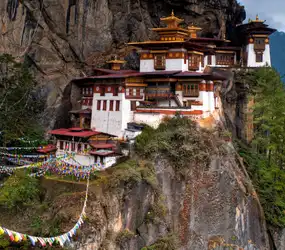
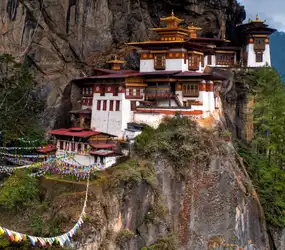
- Tiger’s Nest Monastery (Taktsang) — 3,120 m / 10,236 ft: the cliff-hugging icon of Bhutan, reached by a 4-6 hour mountain walk through pine forest and prayer flags.
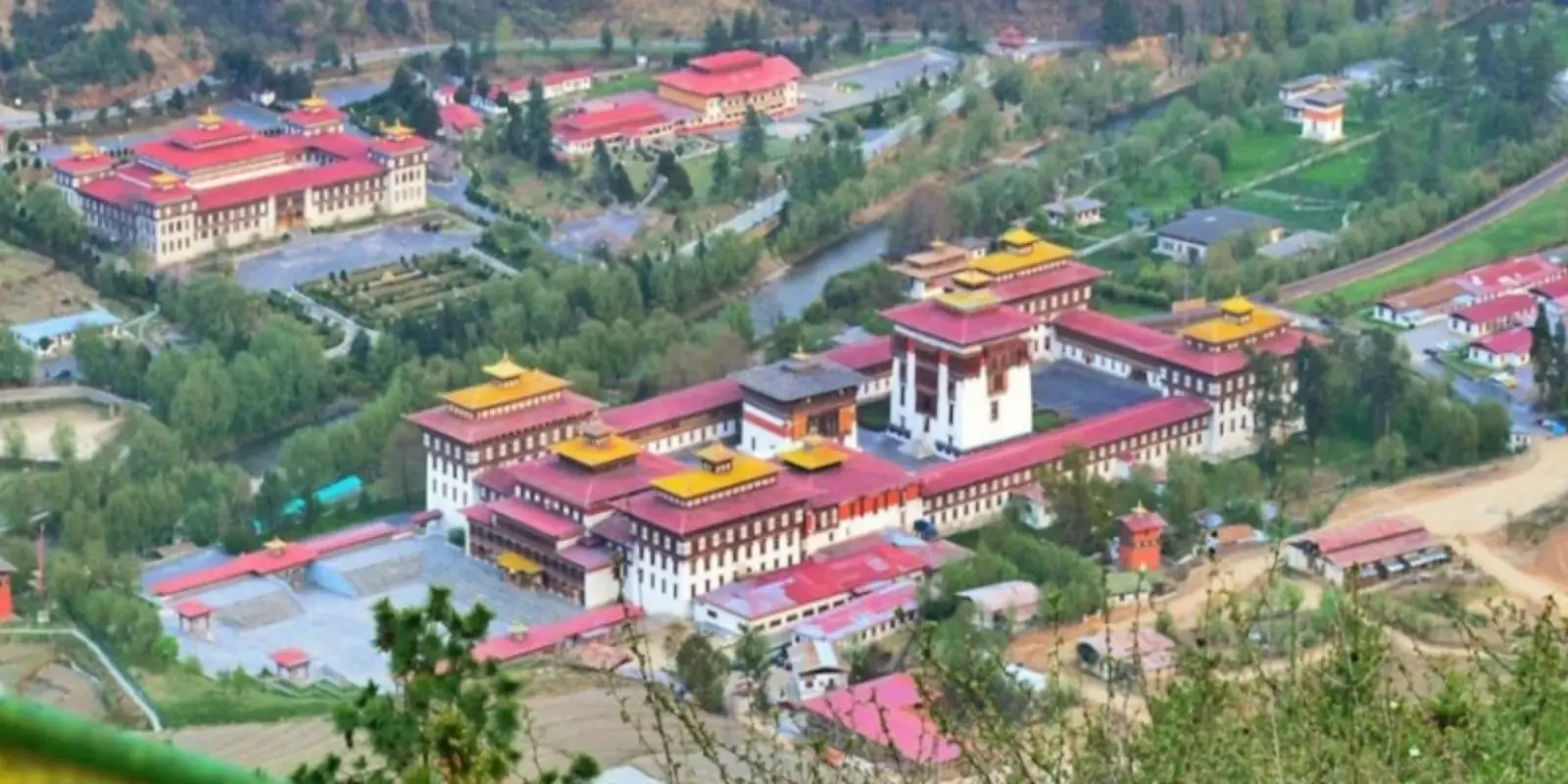
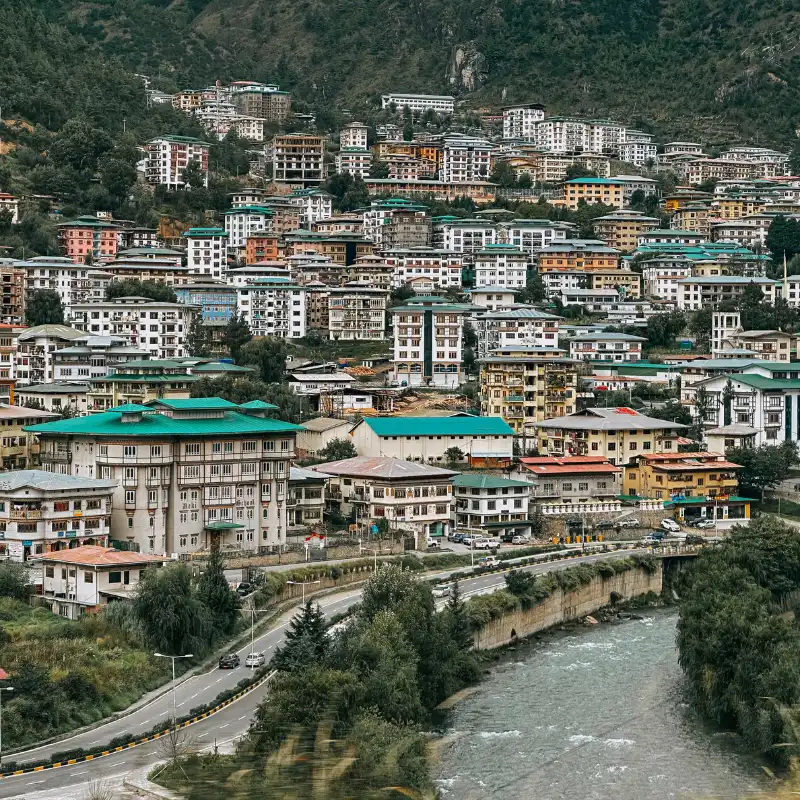
- Thimphu, the capital city: the world’s only capital without traffic lights, home to the Memorial Chorten, Tashichho Dzong and a relaxed royal charm.
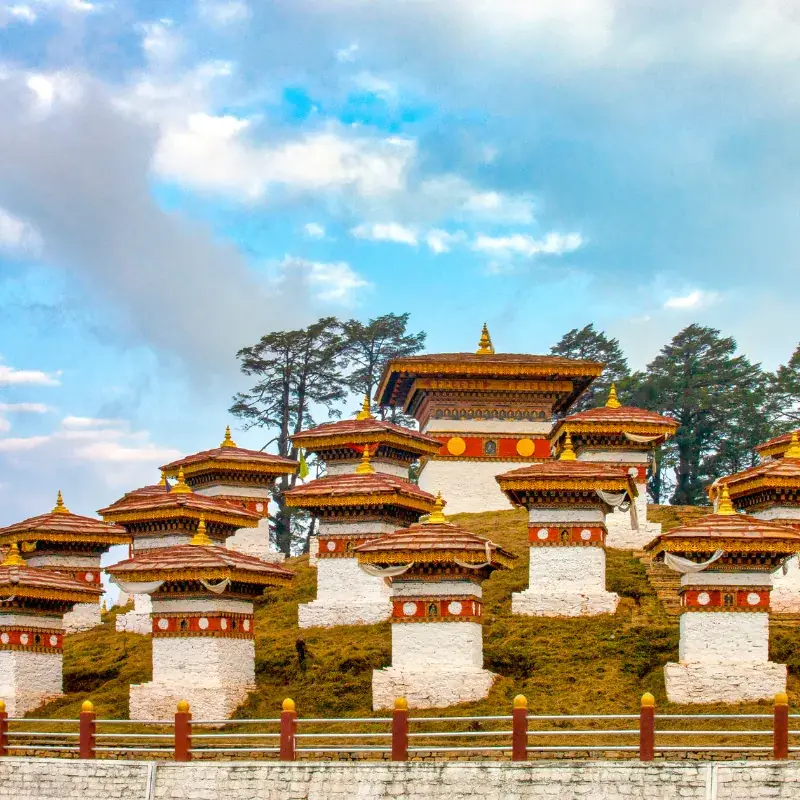
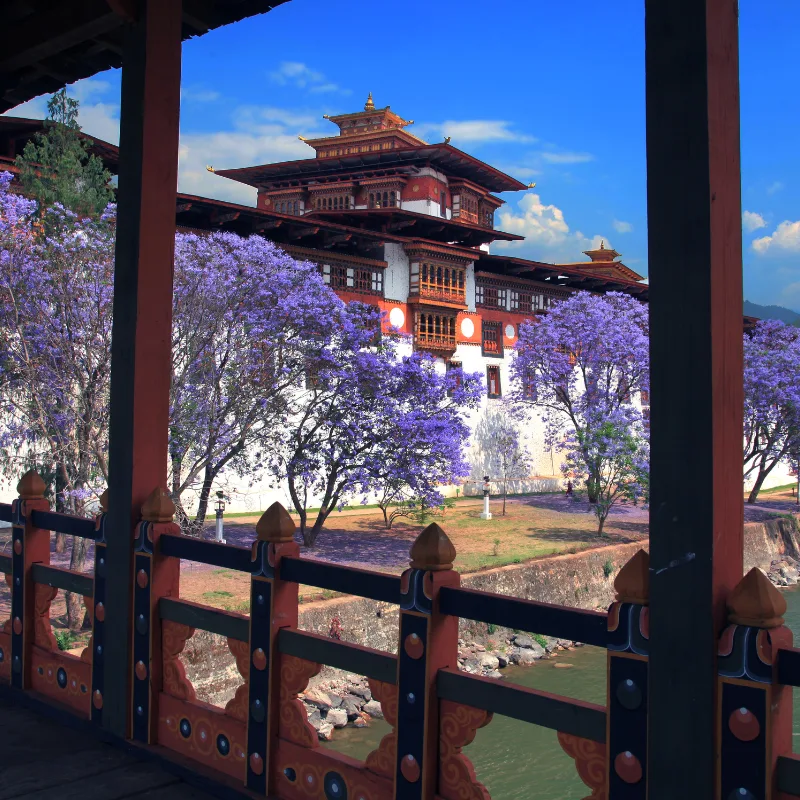
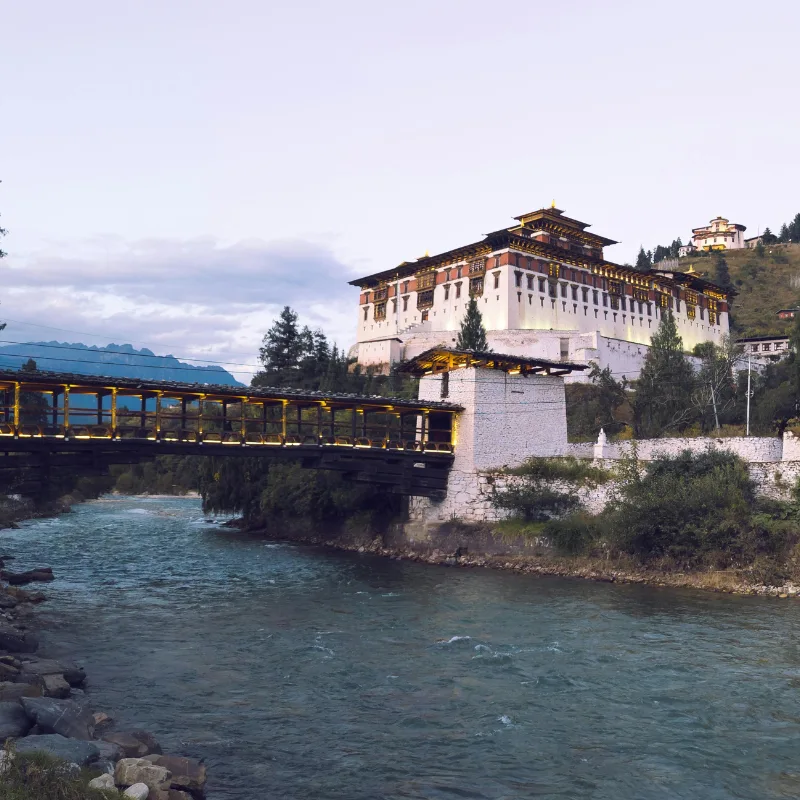
- The Dzongs, Bhutan’s fortress-monasteries: the great white-walled monasteries that are part castle, part temple, part government seat.
- The National Takin Reserve: Bhutan’s curious national animal, a goat-antelope spelling of a myth, browsed at the Motithang hillside reserve.
- Museums of a Living Culture: the Textile Museum, Folk Heritage Museum and the National Institute for Traditional Arts where thirteen crafts are taught.
- Zilukha Nunnery and Buddhist Practice: a working nunnery where nuns chant and study — Buddhism practised, not performed.
- Farmhouse and Local Market, Paro: a countryside lunch house, a local market and Bhutanese daily life at street level.
- Drukgyel Dzong and the Paro Rim: the ruined victory fortress beneath Jomolhari, and valley views of terraced fields.
- Short and Accessible: 4 days, easily graded, private vehicles throughout — the perfect introduction to Bhutan for first-timers.
Bhutan Tour 3 Nights 4 Days Overview
The Bhutan Tour 3 Nights 4 Days is a private, full-board cultural tour of Paro and Thimphu — Bhutan’s two most important valleys — built around the iconic Tiger’s Nest Monastery (Taktsang) at roughly 3,120 m / 10,236 ft and the living Buddhist culture of the capital. It is a genuinely easy, vehicle-based package aimed squarely at first-time visitors with limited time.
The route runs Paro to Thimphu and back: you land at Bhutan’s dramatic Paro International Airport, transfer to the capital, spend a full day among its monasteries, museums and the national Takin Reserve, then return to Paro for the hike up to Tiger’s Nest and the departure. It is the complete Bhutan insider’s loop compressed into four days.
With Nepal Lion Tours, the Bhutan Tour starts from USD 1,095 per person and includes private transport, a licensed English-speaking guide, hotels on a single-or-twin basis, full-board meals, sightseeing and monastery entrance fees, and the necessary travel permits — a short window into the Last Shangri-La with every detail arranged.
What Makes the Bhutan Tour 3 Nights 4 Days Special?
The headline is Tiger’s Nest Monastery, the monastery clamped to a sheer cliff face above the Paro Valley — one of the most photographed places on earth, reached by a mountain path of about 4-6 hours round trip. Around it the tour layers Bhutan’s quieter wonders: the fortress-chapels called dzongs, the Memorial Chorten and nunneries of Thimphu, the national Takin reserve, living handicraft schools where students train in thirteen traditional arts, and valleys terraced so steeply they seem stacked. Bhutan protects its identity fiercely — dress codes, architecture rules, even a national happiness index — and four days inside it feel markedly different from anywhere else in the Himalaya.
Guide’s Note — Nepal Lion Tours — From our experience arranging Bhutan departures for guests who have already trekked Nepal, the surprise is how different it feels: no hectic trail towns, no teahouse jostle — instead a quiet, orderly kingdom where every dzong keeps its own bell schedule and the pace is deliberately slow. We plan the arrival to slip you into Thimphu for a gentle evening before the sightseeing day, and we time the Tiger’s Nest morning so you climb before the heat and the crowds. — Nepal Lion Tours
What’s Tucked Into the Tour?
The inclusions, as published, are private transportation, all necessary travel permits, an English-speaking local guide, accommodation on a single-or-twin basis, sightseeing and monastery entrance fees per the itinerary, and a full-board meal plan (breakfast, lunch and dinner). The exclusions are the honest edges: insurance of any kind, costs from natural calamity or unforeseen circumstances, and personal expenses such as drinks and guide tips. Two practical items to budget separately on top of the published list: your international or connecting flight to Paro, and any Bhutan Sustainable Development Fee (SDF) if the current rate is not bundled inside “necessary travel permits” — our team confirms exactly what the fare covers when you book.
Who Is This 4-Day Bhutan Tour For?
- First-time visitors to Bhutan who want the essential destinations, not a marathon.
- Travellers with limited leave — a complete cultural dose inside a long weekend plus travel days.
- Couples and honeymooners looking for an unusual, gate-free kingdom.
- Families and older travellers — every transfer is by private vehicle; walking is optional at most stops.
- Photographers chasing Tiger’s Nest and the roof-of-the-world valley scenes.
- Adventures combining Nepal and Bhutan — a natural second act after a Nepal trek.
- Those curious about Buddhism and Himalayan culture beyond the tourist trail.
No experience is required; the only genuinely active moment is the optional-in-practice Tiger’s Nest climb, and the guide tailors it to your pace (horses carry riders part of the way). Everyone who can walk a few hours at altitude can complete Day 03.
Quick Facts
Bhutan Tour 3 Nights 4 Days at a Glance
| Tour Fact | Details |
|---|---|
| Tour Name | Bhutan Tour 3 Nights 4 Days |
| Duration | 4 days / 3 nights |
| Region | Paro and Thimphu valleys, Kingdom of Bhutan |
| Maximum Altitude | About 3,120 m / 10,236 ft at Tiger’s Nest Monastery |
| Difficulty | Easy overall; Day 03 is moderately active |
| Main Highlight | Tiger’s Nest Monastery (Taktsang) and Thimphu’s living culture |
| Tour Type | Private cultural tour, full board |
| Start / End | Paro International Airport (PBH) to Paro |
| Route | Paro — Thimphu — Paro (Tiger’s Nest) |
| Typical Walking | 4-6 hours on Day 03; otherwise minimal |
| Best Season | September-November and late February-May |
| Price From | USD 1,095 per person (Standard) |
| Accommodation | Hotels on single / twin basis |
| Guide | Licensed English-speaking local guide with driver |
Bhutan Tour Route and Elevation
The tour moves along one of the great Himalayan roads, connecting Bhutan’s two historic valleys. Paro and Thimphu sit in the west of the kingdom, about 55 km apart across a mountain divide, and every transfer is by private vehicle through pine forest, orchards and painted village houses.
Bhutan Tour Route at a Glance
| Day | Route | Altitude | Highlights |
|---|---|---|---|
| Day 01 | Arrive Paro — transfer to Thimphu | ~2,200 m → ~2,320 m / 7,218 ft → 7,612 ft | Visa clearance, the Paro-Thimphu drive, evening stroll |
| Day 02 | Thimphu full-day sightseeing | ~2,320 m / 7,612 ft | Chorten, nunnery, Takin reserve, museums, Tashichho Dzong |
| Day 03 | Thimphu — Paro via Tiger’s Nest | ~3,120 m at Taktsang | Tiger’s Nest climb, National Museum, farmhouse, market |
| Day 04 | Paro — departure | ~2,200 m / 7,218 ft | Breakfast, airport transfer, onward flight |
Bhutan Tour Elevation Profile
The tour operates almost entirely between about 2,200 m and 2,320 m — Paro and Thimphu are both elevated valleys, which is why the kingdom feels cool even at its warmest and why the air is already Himalayan. The single real step is Day 03, when the Tiger’s Nest path climbs roughly 900 m from the Paro Valley floor to about 3,120 m / 10,236 ft, though the car brings you partway and the walk is graded with generous switchbacks.
Physically, the profile is gentle: two valley days at comfortable altitude, one active morning, and a smooth departure. The 3,120 m step is high enough to notice the thinner air but low enough that a slow pace and a water bottle handle it — the guide sets the rhythm so nobody reaches the monastery breathless. Ask for a hard-copy route map with elevations from the vehicle kit before Day 03.
How the Four Days Unfold
Day 01 — Arrive Paro, drive to Thimphu: you clear customs and immigration at Paro International Airport — the visa clearance letter and prepaid visa smooth the process — meet your guide and driver outside the terminal, and drive the scenic mountain road to Thimphu at about 2,320 m. The evening is deliberately light: a walk through the capital’s streets, markets and prayer wheels before dinner and your first Bhutanese night.
Day 02 — Thimphu full-day sightseeing: a complete capital city day visiting the Memorial Chorten, the Zilukha Nunnery, the Takin Sanctuary, the Indigenous Hospital (traditional medicine college), the Textile Museum, the Folk Heritage Museum, the National Institute for Traditional Arts and the great Tashichho Dzong — with time permitting the Zangdopelri temple, a paper factory and more. Overnight in Thimphu.
Day 03 — Thimphu to Paro via Tiger’s Nest: the morning crosses back over the divide to Paro, then takes on the day’s adventure: the 4-6 hour walk to Tiger’s Nest Monastery, suspended on its cliff; afterwards a National Museum visit, a farmhouse with a Bhutanese lunch, and the local market before the overnight in Paro.
Day 04 — Paro and departure: breakfast at the hotel, then a morning transfer to the airport in time for your departure flight — four days, two valleys and a monastery on a cliff, complete.
How to Get to the Bhutan Tour
Bhutan is reached through a single practical gateway for this itinerary: Paro International Airport (PBH), one of the world’s most dramatic arrivals. The tour is designed around it — you are met at arrivals and driven straight into the experience.
Getting to Bhutan: Fly into Paro or Cross Overland
| Option | Approx. Time | Best For |
|---|---|---|
| Flight Kathmandu to Paro (Buddha Air / Druk Air etc.) | About 1 to 1.5 hours | The standard approach — a mountain-flight landing in itself |
| Overland via Phuentsholing (ground border) | 2-3 days each way | Slow-travel visitors combining India and Bhutan |
| Flight via Bangkok (BKK) or Delhi (DEL) | 6-10 hours plus | International visitors routing through Asian hubs |
For most travellers the flights to and from Paro are arranged and paid by the guest and not part of the package price; the tour takes over at the arrivals hall. From Kathmandu the mountain flight is a sight in its own right — a hop over the Himalaya that lands on Bhutan’s short, demanding runway. Overland access through Phuentsholing is possible but adds days, so we recommend the direct flight for this compact itinerary.
Guide’s Note — Nepal Lion Tours — The Paro approach is the one Bhutan arrival that visitors talk about for years: the plane drops between forested ridges and lands on a runway that seems to end at the hillside. From our experience running this programme, we recommend flying in the morning so you reach Thimphu with daylight for the first evening stroll, and we always confirm the arrival flight number ahead so the driver is waiting the moment you clear arrivals. — Nepal Lion Tours
Arriving at Paro International Airport
Paro International Airport sits at roughly 2,200 m / 7,218 ft in the Paro Valley. On landing you clear customs and immigration, present your passport alongside your visa clearance letter (your visa is prepaid through the tour arrangement, so no photographs or desks of paperwork are needed), and walk out to meet your guide. Baggage is straightforward, the terminal is compact, and the whole arrival to driving-away gap is usually under an hour.
Return and Departure: Paro to Your Next Destination
On Day 04 after breakfast, your private transfer takes you back to Paro airport in time for your onward flight. If you are returning to Kathmandu, the mountain flight west takes about an hour; if you continue to a hub like Bangkok or Delhi, connections are normal. For travellers extending into a Nepal itinerary, our team builds the handover so the Bhutan leg and the Nepal trek link cleanly — one team managing both countries.
Bhutan Tour Difficulty, Fitness & Altitude
The tour is graded Easy and it mostly is — private vehicles, short walking days and comfortable hotels. The honest caveat sits on Day 03: the walk to Tiger’s Nest is a genuinely active mountain outing, and we describe it exactly as every operator should — easy to organise, moderate in effort.
Where the Effort Really Goes
The effort concentrates in one place: the 4-6 hour round-trip climb to Tiger’s Nest Monastery, rising roughly 900 m / 2,953 ft from the valley to about 3,120 m / 10,236 ft. The path is well built with steps and switchbacks, and there are rest stops and a famous halfway café, but it does demand steady fitness and time. Every other hour of the four days is easy: seated sightseeing, short strolls, and an unhurried evening in Thimphu.
Guide’s Note — Nepal Lion Tours — From our experience the Tiger’s Nest walk defeats not the unfit but the unprepared: guests who gulp a big breakfast and charge the first stretch pay for it at the halfway point. We recommend an early start, small sips of water, and the pace the guide sets rather than the one adrenaline suggests. If you prefer not to walk, horses carry riders up the lower section and the views from the cliff are the reward either way. — Nepal Lion Tours
How to Prepare for the Day at Tiger’s Nest
- Practise a couple of hours on steps or hills in the weeks before — the path is mostly staircase.
- Start the day early — the monastery’s iconic photo hour and the coolest, clearest conditions come in the morning.
- Drink water steadily on the way up rather than all at once at the start.
- Wear broken-in walking shoes with grip — the path is stone and dust, not tarmac.
- Bring only a light daypack — cash and camera are the essentials; the café at the halfway point is real.
How Easy Is This Tour Compared with Nepal Treks?
Compared with a Nepal trekking itinerary, Bhutan Tour 3 Nights 4 Days is remarkably restful: a Poon Hill or Langtang trek strings together days of 5-8 hours of loaded walking, while this tour delivers spectacular Himalayan culture with one active morning. That makes it the ideal first Himalayan country visit or a calm second act after a demanding Nepal trek — same mountains, softer gear.
Altitude, Acclimatization & Safety
The tour’s altitudes — about 2,320 m in Thimphu and 3,120 m at Tiger’s Nest — are well within normal comfort ranges, and the short stay means acclimatization is not a concern for most travellers. Because the valleys are warm and the walk is gentle, the practical watch-outs are sun and hydration rather than altitude.
Bhutan Tour Altitude Profile
- Paro — ~2,200 m / 7,218 ft: the arrival and departure valley, airport and overnight on Days 01 and 03.
- Thimphu — ~2,320 m / 7,612 ft: capital city base for Days 01-02, with its monasteries, museums and reserve.
- Tiger’s Nest trailhead — ~2,280 m / 7,480 ft: where the Day 03 climb begins after the scenic approach.
- Tiger’s Nest Monastery (Taktsang) — ~3,120 m / 10,236 ft: the tour’s maximum altitude and its great viewpoint.
- Return to Paro — ~2,200 m / 7,218 ft: the gentle descent home for Day 04.
How the Body Adapts to Altitude
At these elevations the body simply breathes a little deeper for a day or two. The practical rules are the ordinary ones — arrive the first night without doing anything strenuous, drink water regularly, eat well, and take the Tiger’s Nest path slowly. The tour respects this by design: your first afternoon in Thimphu is a walk, not a workout.
Symptoms of Altitude Sickness to Watch For
The tour’s altitudes are low enough that altitude illness is rare, but the four classic signs remain worth knowing: a dull headache, reduced appetite, mild breathlessness and poor sleep. More serious signs — severe headache, nausea, dizziness, confusion — should be reported to the guide immediately. Because the tour descends to valley level each night, symptoms almost always settle by morning.
How Nepal Lion Tours Supports Altitude Safety
- Low-altitude design — the itinerary sleeps at 2,200-2,320 m and only visits 3,120 m by day.
- A paced Day 03 climb with rest stops and the guide setting the rhythm.
- Open communication — the guide checks everyone’s condition through the walking day.
- Immediate rest options — horses and a car on the lower section for anyone tiring.
- Simple medical logic — clinics in both towns and onward care in the capital are close at hand.
Best Time for the Bhutan Tour
Bhutan is a year-round kingdom, but the classic sightseeing windows are September-November and late February to May, exactly as the tour’s fact bar states. The seasons that book out fastest and photograph best follow a familiar Himalayan rhythm: dry autumn clarity and warm spring green.
| Season | Months | Weather & Conditions | Mountain Views | Overall |
|---|---|---|---|---|
| Spring | Late Feb-May | Warm, clear, flowers and fresh green valleys | Excellent | Highly recommended |
| Autumn | Sep-Nov | Dry, crisp and spotless visibility | Excellent | Best overall |
| Winter | Dec-Feb | Cold, sunny and quiet; frosty mornings | Very good | Good with the right layers |
| Monsoon | Jun-Sep | Warm and wet; afternoons can cloud over | Sometimes limited | Less suitable |
Spring — Late February to May
Spring turns the valleys gold-green with barley and wheat, sets the rhododendrons blooming in the hills, and keeps the light clear between rain showers. It is festival season too — if your dates align with a local tshechu festival, the tour can be noticeably more. Temperatures suit every sight comfortably, and the flight windows usually run dependably.
Autumn — September to November
Autumn is the classic best time for Bhutan: the monsoon’s clouds retreat, the air clears to glass, and Tiger’s Nest and the dzongs photograph at their sharpest. The country holds its largest festivals in these months, so hotels and flights book early — travellers who want autumn should reserve well ahead. It is the season the tour was designed for.
Winter — December to Mid-February
Winter is the quiet, crystalline season: cold mornings — often near freezing — warmed by brilliant sunshine, empty valleys and the clearest views of Jomolhari and Gangkhar Puensum’s range. Days are pocket-sized and comfortable inside the car and hotels, and the price climate suits budget travellers. Bring the warmest clothing of any season, and the reward is solitude.
Monsoon — June to September
The monsoon brings warmth, greenery and afternoon clouds to the western valleys, with rain shaping the landscape the way it shapes everywhere in the Himalaya. Sightseeing continues — most moments in the dzongs and museums are indoor — but morning starts are needed before the sky builds, and views can be soft. It is the off-peak season, quiet and low-cost, for travellers with flexible expectations.
Which Season Suits You Best?
- For picture-perfect clarity — book October or November.
- For warm days and green valleys — come in March, April or early May.
- For quiet and compact budgets — December through February works well.
- For flexibility and lower cost — the monsoon still delivers the temples indoors.
Guide’s Note — Nepal Lion Tours — Autumn and spring mornings in Paro usually dawn clear, and the Tiger’s Nest view is at its unforgettable best before ten in the morning — which is exactly why we schedule the climb early on Day 03. We always check the forecast in the days before and shift by an hour if a window promises better light. — Nepal Lion Tours
Bhutan Tour Permits & Regulations
Bhutan runs its tourism on a different model from Nepal: rather than trekking permits, the system revolves around a visa clearance letter, travel permits and the Sustainable Development Fee, all processed through a licensed Bhutanese tour operator. The good news is that the tour’s inclusions already state the permits are handled — the practical question is simply confirming exactly what the fare bundles.
Bhutan Tour Permits at a Glance
| Requirement | Who Needs It? | Who Arranges It? |
|---|---|---|
| Bhutan visa + clearance letter | All foreign visitors entering Bhutan | Arranged through the tour line; your visa is prepaid (“your visa has been paid”) |
| Travel permits for Paro / Thimphu | All visitors; checked at checkpoints | Included in “all necessary travel permits” |
| Sustainable Development Fee (SDF) | All visitors, per-night government fee | Confirm at booking whether bundled or separate |
| Photocopy of passport | Carried for permit checks and hotels | Guest carries; guide guides |
Bhutan Visa and the Visa Clearance Letter
Every visitor to Bhutan needs a visa, processed not at a border desk but by a licensed operator in advance, and the itinerary line is explicit: “your visa has been paid.” The process runs through the tour arrangement — passport details are sent ahead, the visa is approved, and a visa clearance letter is given to you for immigration at Paro. No passport photos or payment desks are involved; these days you simply present the letter and your passport, and the entry officers move you through.
The Sustainable Development Fee (SDF) and Travel Permits
Bhutan funds its “high value, low impact” tourism with the Sustainable Development Fee (SDF), a per-night government charge that applies to most visitors, almost always paid in advance through the tour operator and commonly bundled into published package pricing. The tour’s inclusion of “all necessary travel permits” almost certainly covers the inner-travel permits for Paro and Thimphu; whether it also absorbs the SDF depends on the current rate and the fare quoted, so our team confirms the exact position when you book. Nothing on this front should surprise you at the airport — ask for the breakdown in writing and it is settled before you leave home.
How Nepal Lion Tours Handles Your Bhutan Paperwork
Passport details are collected at booking and sent ahead to the Bhutanese partner, who processes the visa, the clearance letter and any travel permits; guests fly with their passport and simply follow the guide’s lead at arrivals. Carry a photocopy of your passport for hotel check-ins and keep the clearance letter on hand in your daypack. Fees and rules are revised by the Bhutan government from time to time — every current figure is confirmed in writing when you book.
Food & Accommodation on the Bhutan Tour
The tour runs on Bhutan’s most trustworthy tourism standard: full board — breakfast, lunch and dinner — served in the hotels and farmhouses along the route. Food in Bhutan is a genuine highlight: spicy, honest and based on the famous ema datshi, the national chili-and-cheese dish.
Meals on the Bhutan Tour
The itinerary provides breakfast each morning, lunches on Day 02 and Day 03, and dinners on Days 01-03 under the full-board plan, served at your hotel or at the chosen farmhouse. Day 03 includes a countryside lunch stop in the Paro Valley around the Tiger’s Nest visit, and Day 04 closes with breakfast before the airport transfer. Portions are generous, the kitchens cook to order, and dietary needs are noted at booking.
| Included in the Package | Usually Paid Separately |
|---|---|
| Full-board meals: breakfast, lunch and dinner | Drinks beyond the meal table |
| Hotel accommodation, single or twin | Tips for guide and driver |
| Private transport and permits as listed | Souvenirs, spa and personal extras |
| Sightseeing and monastery entrance fees | Insurance and unexpected-event costs |
Bhutanese Cuisine Worth Trying
Try ema datshi (hot chili and cheese — the national dish), red rice, momos (dumplings), jasha maroo (spiced chicken) and suja (butter tea) with zaw (puffed rice). Bhutanese food is spicy by default and remarkably proud of it, so “not too spicy” is a phrase worth learning early for tender palates. Vegetarian dining is excellent across the country, with farms nearby and monasteries setting the standard for meatless days.
Where You Stay: Hotels on Single or Twin Basis
Accommodation is in comfortable approved hotels in Paro and Thimphu on a single-or-twin basis, typically with en-suite bathrooms, heating, Wi-Fi and mountain-facing windows. Bhutan’s “approved properties” list is maintained by the tourism authority, so the standard is broadly consistent — clean, warm and hospitable — and the exact hotel is confirmed at booking. Both valleys have developed visitors for decades and know exactly what guests need after a mountain flight.
Drinking Water and Stay-Fresh Basics
Bottled and boiled water are standard in the hotels, and the guide stocks the vehicle with bottles for the drives. Tap water should not be assumed safe in Bhutan — stick to sealed bottles, refill from hotel kettles, and carry a reusable bottle for the Tiger’s Nest day. A small daypack with water, sun protection and a warm layer completes the practical kit for Day 03.
Why Book with Nepal Lion Tours?
Seven reasons, phrased as this company actually operates:
Seven Reasons to Book the Bhutan Tour with Nepal Lion Tours
- One team across both Himalayas: Nepal Lion Tours runs Nepal treks and Bhutan cultural tours under one roof, so a Nepal-plus-Bhutan combination is planned, booked and supported by a single point of contact — no handoffs between agencies.
- Licensed Bhutanese-English-speaking guides: the partner guides on the ground are licensed, local and fluent in English, with the abbey-and-dzong stories that a road book cannot supply.
- A registered trekking company you can verify: based in Kathmandu with company and licence details available on request, so the international booking carries the same verifiable backing as a Nepal trek.
- The full-board, permits-handled standard: accommodation, all meals, sightseeing and entrance fees and the travel permits are stated inclusions — the “what’s actually covered” question is answered in writing.
- Private vehicles and door-to-door logistics: every transfer is a private car with your own driver and guide; you never wait on group schedules or shared buses.
- Honest pricing from USD 1,095 with group discounts: the fares published on the tour page are the fares quoted — no hidden per-hour add-ons at the destination.
- A local team reachable before and during your trip: questions about the flight, the SDF or the packing list go to people who have run the route, and the guide on the ground is your day-to-day contact.
Book the Bhutan Tour
Three nights, two valleys, one monastery on a cliff — the Bhutan Tour 3 Nights 4 Days is the fullest possible experience of the kingdom inside a compact window. Here is everything you need to lock it in.
Bhutan Tour Pricing
- Duration: 4 days / 3 nights
- Price: From USD 1,095 per person (Standard), from USD 1,478 (Luxury)
- Difficulty: Easy overall; Day 03 (Tiger’s Nest) moderately active
- Maximum Altitude: About 3,120 m / 10,236 ft
- Accommodation: Approved hotels, single / twin basis
- Meals: Full board (breakfast, lunch, dinner)
- Permits: Visa, clearance letter and travel permits arranged; SDF — confirm at booking
- Transportation: Private vehicle with guide, airport to airport
- Guide: Licensed English-speaking local guide
- Cancellation: Free cancellation up to 14 days before departure, subject to booking terms
The price per person drops as the group grows, across both tiers:
| Group Size | Standard (USD per person) | Luxury (USD per person) |
|---|---|---|
| 1 traveller | 1,095 | 1,478 |
| 2-4 travellers | 1,040 | 1,404 |
| 5-9 travellers | 986 | 1,330 |
| 10+ travellers | 931 | 1,256 |
The final price can vary depending on group size, dates, services and requested itinerary changes — send your dates and group size for a precise quote.
Ready to Start Your Bhutan Adventure?
Send your preferred travel dates and group size through the booking form on the tour page or reach us on WhatsApp at +977-9851039020, and we will handle the rest — passport details for the visa, flight coordination to Paro, and the exact hotel and permit position in writing. Whether you are travelling solo, as a couple, with friends or with family, we prepare the kingdom’s paperwork so you only pack. Your first Himalayan kingdom visit is waiting — let’s place your name on a Bhutanese permit.
Related Bhutan Tours
This compact itinerary sits at the top of Nepal Lion Tours’ Bhutan programme, with longer, deeper routes for travellers who want more of the kingdom:
| Tour | Duration | Difficulty | Max Altitude | Best For |
|---|---|---|---|---|
| Bhutan Tour 4 Nights 5 Days | 5 days / 4 nights | Easy-Moderate | ~3,120 m / 10,236 ft | Adding a second Thimphu or Paro valley day |
| Bhutan Tour 5 Nights 6 Days | 6 days / 5 nights | Moderate | ~3,120 m / 10,236 ft | The combined Paro, Thimphu and Punakha circuit |
| Bhutan Tour 6 Nights 7 Days | 7 days / 6 nights | Moderate | ~3,310 m / 10,860 ft | Punakha added with Dochula Pass and deeper culture |
| Bhutan Tour 7 Nights 8 Days | 8 days / 7 nights | Moderate | ~3,310 m / 10,860 ft | The fullest cultural-basics itinerary in the collection |
| Tibet Tour 3 Nights 4 Days | 4 days / 3 nights | Easy | ~3,650 m / 11,975 ft | A neighbouring plateaus capital, Lhasa, from Nepal |
The 3 Nights 4 Days tour is the natural first step into Bhutan, and because Nepal Lion Tours also operates Nepal tours and treks, many guests book it the week before or after a Nepal itinerary — one booking team, two Himalayan countries. Ask us to combine, and we will sequence the flights and permits cleanly.
Trip Essentials
Packing advice, required equipment & gear recommendations
Essential
This is a hotel-based, vehicle-based tour with one hiking morning, so the packing list is the easiest of any Himalayan itinerary: comfort layers, sturdy walking shoes for Day 03, plenty of sun protection, and modest clothes that respect temple etiquette.
Essential Clothing
- A warm mid-layer (fleece or similar): evenings and mornings in the valleys run cool, especially October-onward.
- A light insulated or windproof jacket: for winter’s frosty streets and the wind at Tiger’s Nest.
- Comfortable trousers and daywear: modest knee-covering clothing fits Bhutanese expectations at temples.
- A scarf or shawl: practical for warmth and for covering shoulders when stepping into monasteries.
- A hat and gloves: winter travellers need both; autumn and spring can manage with the hat.
- A neat outfit for temple days: Bhutanese custom welcomes modest, clean daywear — bright is fine, skimpy is not.
Footwear and Day Gear
- Broken-in walking shoes with grip: essential for the Tiger’s Nest path on Day 03.
- A daypack of 20-25 litres: water, camera, a layer, cash for the ride up and the café.
- A refillable water bottle: 1-2 litres for the walking day.
- Sun protection: sunglasses, sunscreen and a sun hat — the valleys shine at 2,300-3,100 m.
- A small umbrella or packable rain layer: for monsoon and changeable spring afternoons.
- Camera or phone with a charged battery: the monastery viewpoint and the drive both photograph endlessly.
Travel Documents and Money
- Passport with at least 6 months validity — the single most load-bearing document.
- A photocopy of the passport kept separately from the original.
- The visa clearance letter as issued by the operator, handy for immigration.
- A little local currency — the Ngultrum (BTN) — for extras, markets and tips; Indian rupees are widely accepted.
- Travel insurance details on your phone, with the policy number and contact visible.
Toiletries and Personal Health Items
- Toothbrush, toothpaste, skincare and lip balm
- Sunscreen (SPF 30+) and moisturiser
- Basic first-aid: plasters, pain relief, motion-sickness tablets for the mountain roads
- Hand sanitiser and tissues
- Any personal prescription medication in its original packaging
- A small towel and quick-dry clothes if you prefer independence from hotel amenities
Electronics and Connectivity
- Smartphones with a local SIM or eSIM — coverage is solid in Paro and Thimphu and patchy en route.
- Charger and a power bank — charging is reliable in both hotel towns.
- Camera, spare battery and memory card — the keepers of the Tiger’s Nest hour.
- Plug adaptor — Bhutan uses the three-round-pin Indian socket and 230V.
How Much Should You Pack?
Lighter is correct. With hotels both nights, laundry available, and the only walking a single morning, a carry-on-class suitcase plus a daypack covers everything — overpacking adds nothing but taxi weight. Pack the warm layer, the walking shoes and the modest temple outfit on top, and everything else secondary. Pack for two climates — warm valley days and cool mountain mornings — and guard the passport, because without it no gate opens.
Read Before You Book
Permits, terms, medical considerations & advisory guidelines
Advisory
A few things worth knowing before you commit to the Bhutan Tour.
Accommodation and Facilities
Hotels are government-approved properties in Paro and Thimphu on a single-or-twin basis, with en-suite bathrooms, heating, Wi-Fi and in most cases mountain views. The exact hotel is confirmed at booking; the specification is consistent because “approved” is a formal Bhutanese category. Both towns are walkable and safe in the evening.
Food and Dietary Requirements
Full board means breakfast, lunch and dinner every day, and the kitchens cook to order. Bhutanese food is spicy, so request mild where needed; vegetarian and vegan meals are excellent across the country, and any allergy or intolerance should be called out at booking so the hotels can stock accordingly.
Altitude, Health and Insurance
The tour reaches about 3,120 m at Tiger’s Nest for a few hours, which is comfortable for almost everyone but combines with the walking to make fitness honest. Travel insurance is a stated exclusion on this tour and strongly recommended — it should cover medical treatment and evacuation appropriate to the itinerary, since the guide cannot insure a guest. Carry the policy details and note it is your own responsibility.
Money, Tipping and the Ngultrum
Bhutan’s currency is the Ngultrum (BTN), pegged one-to-one with the Indian rupee, which is accepted broadly. Budget a little cash for personal extras, market purchases and tips for the guide and driver (the guide tip is an explicit exclusion). Cards work in hotels and larger shops; smaller vendors are cash-first.
Culture and Responsible Travel
- Dress modestly at religious sites — shoulders and knees covered, shoes removed where marked.
- Respect the kabney and rachu scarf etiquette at dzongs — your guide explains when to wear what.
- Do not photograph inside temples and monasteries, and ask before photographing people.
- Walk clockwise around chortens and stupas — the direction of respect.
- Buy from licensed shops and farmhouses so earnings stay in villages.
- Say “Kuzu zangpo” — the Bhutanese greeting — and you will be treated like a friend returning.
Route Options
The four-day core is the standard, and the tour customises freely: add a Thimphu craft and dzong day, tuck in a valley walk, extend to the Taktsang hike plus a post-climb soak, or upgrade to the longer Bhutan circuits (5 to 8 days) that add Punakha and the Dochula Pass. Horses at Tiger’s Nest, festival dates and extra farmhouse meals are all simple additions.
Booking and Before You Arrive
- Send passport details early so the Bhutan visa and clearance letter are clear in time.
- Confirm the flight routing to Paro — the package starts at arrivals, not at your home airport.
- Ask the SDF question in writing at booking — bundled or separate, it should cost no surprises.
- Reserve well ahead for autumn and festival dates.
- Book insurance that covers the walking day to 3,120 m.
- Keep your nights light in Thimphu so Day 03 starts fresh.
- Remember the 14-day free-cancellation window for your side of the plan.
A Few Final Tips and the Bottom Line
Arrive with a packed passport, an open mind and modest clothes; leave the clock-watching to your guide. The Bhutan Tour 3 Nights 4 Days proves that a kingdom’s entire essence — monasteries, dzongs, mountain valleys and a measured, gentle way of life — fits inside a long weekend. Four days, two valleys, one cliff-hung monastery: that is the whole of this little masterpiece in a line.
Day-by-Day Itinerary
Explore each day's route, trekking elevation, and activities
Upon arrival in Paro, clear customs and immigration. Keep your copy of the visa clearance letter handy. P.P size pictures are no longer required and your visa has been paid.
Meet your Guide and driver outside the terminal building and transfer to Thimphu. Stroll around the city in the evening. Overnight.
Visit Memorial Chorten, Zilukha Nunnery, Takin Sanctuary, Indigenous Hospital, Textile Museum, and Heritage Museum, Traditional School of arts & crafts and Tashicho Dzong. Upon available time, you will also visit Zangdopelri temple, paper factory and other sights. Overnight.
After breakfast, retrace your drive back to Paro. In Paro visit Tiger’s Nest Monastery (Taktsang) and Farm House, National Museum and Local Market Overnight.
After breakfast, transfer to the airport in time for your departure flight to onward destination
Want to customize this itinerary?
Tailor duration, lodges, acclimatization days, or add private helicopter flights.
Inclusions & Exclusions
Everything that is covered and what you'll need to budget separately
What is Included
Fully covered in your package price
Cost Includes
- Private transportation.
- All necessary travel permits
- English speaking local guide.
- Accommodation on single/twin room basis.
- Sightseeing and monastery entrance fees as per the itinerary
- Meal plan: Full Board Basis
What is Excluded
Personal expenses & optional extras
Cost Disincludes
- Insurance of any kind.
- Additional cost due to natural calamity and unforeseen circumstance
- Personal expenses such as drink, guide tips & etc.
Our Customer Reviews
Authentic experiences and feedback from our travelers
Write a Review
Share your adventure experience with other travelers
Thank You!
Your review has been submitted and is awaiting approval.
Please Wait
You've submitted several reviews recently. Please wait a few minutes before trying again.
Alexander Mercier
I booked this needing a break, and I came back with a better sense of what I want next. There was a small viewpoint just past Bhutan that was even better than the main stop. For me, Thimphu, the capital city was the standout. We had one day of rain, and it made the rest of the trip feel even better. The trip changed pace often, which kept it interesting. The rooms were comfortable, and the hot showers after long days felt like a luxury. The people we met along the way were the best part of the trip. The trip reminded me that I do not need to fill every hour to feel like I have done something. We ordered too much on the first night and learned to share after that. Good value overall.
Eva Schipper
Food was not the reason we booked this trip, but it became a highlight. The morning we spent at Evening. Overnight was calm and unhurried, which was exactly what we needed. The pace of The Dzongs, Bhutan’s fortress-monasteries was relaxed, which we appreciated. The service was attentive without being intrusive. Breakfasts were simple but filling, which is exactly what we needed before a long day. Worth the splurge for a special occasion.
Maya Moreau
I brought too much camera gear and still used only half of it, but the light made up for it. The local food near Takin Sanctuary was some of the best we had. Drukgyel Dzong and the Paro Rim was the moment the trip really clicked for me. The service was attentive without being intrusive. The photos do not quite do it justice, which is probably the best compliment I can give.
Hanna Fischer
This was a treat for us, and the level of service was noticeable from the start. We were tired by the time we reached Thimphu, and it still lifted our mood. I still think about Short and Accessible more than anything else. The villages along the way felt lived-in rather than staged for visitors. It was a comfortable way to see a place that is not always comfortable, and we loved it.
Oscar Vos
We wanted comfort at the end of each day without losing the sense of adventure. There was a small viewpoint just past Zilukha Nunnery that was even better than the main stop. I would do The National Takin Reserve again in a heartbeat. The simple routine of walk, eat, sleep, repeat was exactly what I needed. We felt looked after without feeling watched. The contrast between the cold mornings and warm afternoons was bigger than expected. The food was a step above what we usually get on this kind of trip. Easy recommendation from us.
Frequently Asked Questions
Essential information on preparation, route specifics, safety standards, and logistical details.