Langtang Valley View Trek – 7 Days | Nepal Lion Tours
A Scenic Himalayan Journey Through Langtang Valley, Traditional Villages, Forests, and Breathtaking Mountain Views
Langtang Valley View Trekking
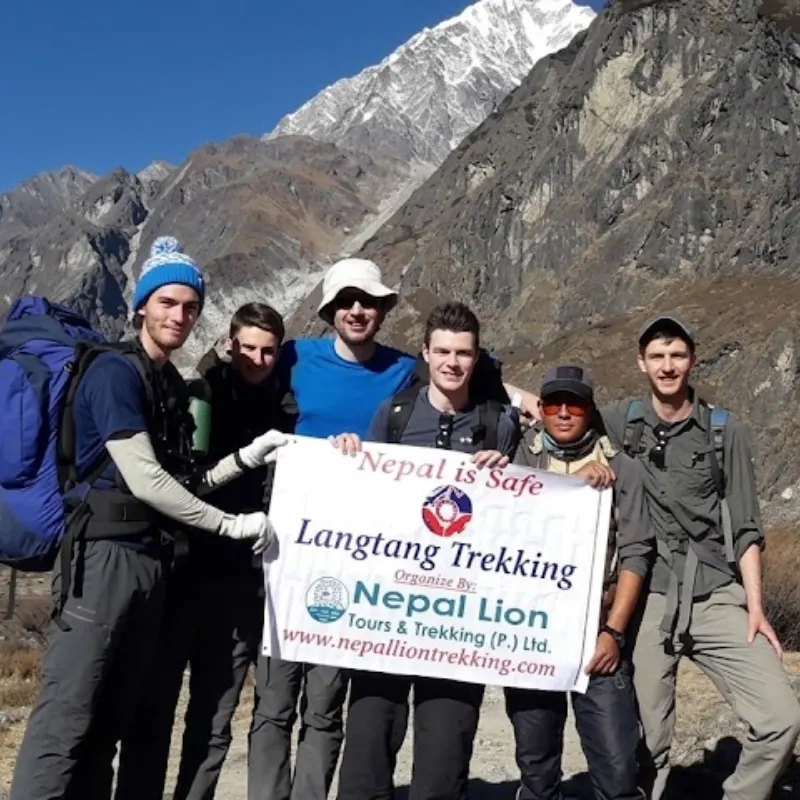
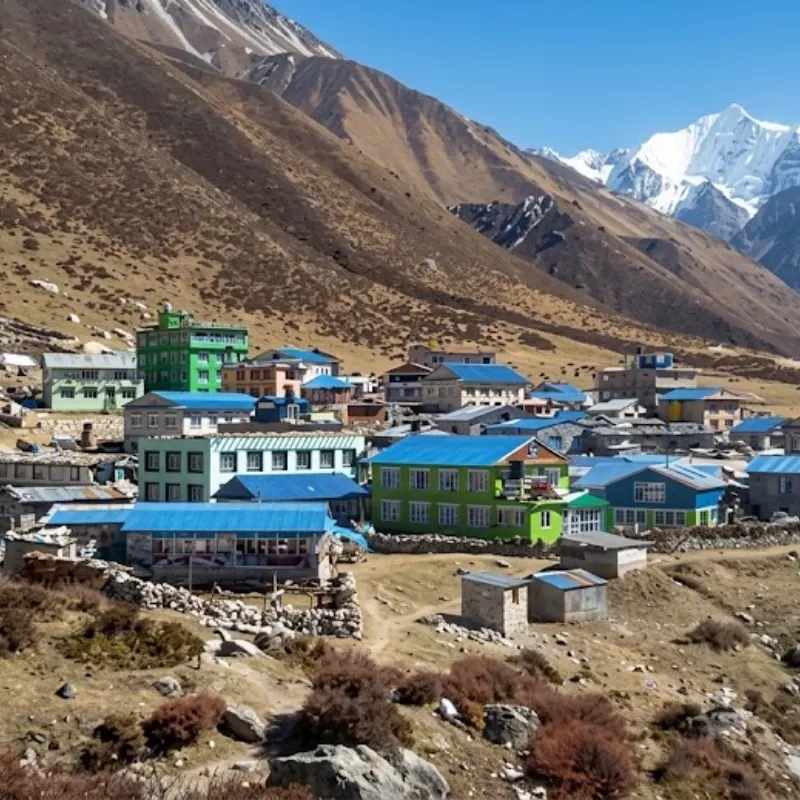


Tour Highlights
The Langtang Valley View Trek compresses the best of the Langtang valley into one week — forested river trails, a sacred valley floor, and a glacier-side settlement below the region’s most dramatic peak.
- Kyanjin Viewpoint — ~4,800 m / ~15,748 ft: the pre-dawn high point of the trek, a two-hour climb to a ridge above Kyanjin Gompa with Langtang Lirung filling the skyline and the glacier below.
- Langtang Lirung — 7,227 m / 23,711 ft: the region’s guardian peak, visible from the valley trail, the village of Langtang and dominating every viewpoint.
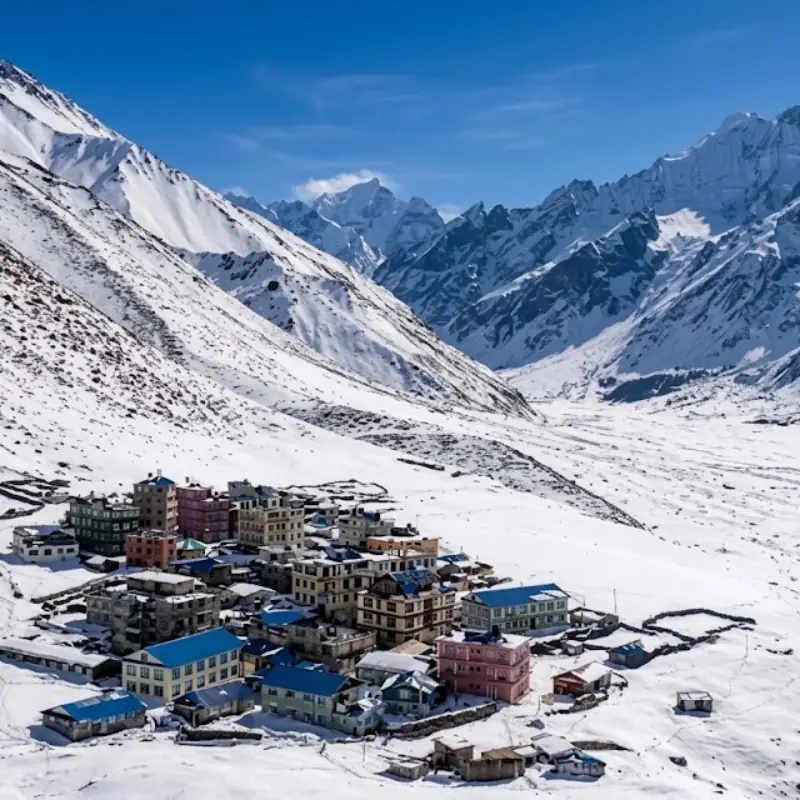
- Langtang Valley — 3,430 m / 11,253 ft: the flat, sacred valley floor of the Langtang Khola, flanked by mani walls, chortens and yak pastures, with the rebuilt village at its centre.
- Kyanjin Gompa — 3,870 m / 12,697 ft: the trek’s highest settlement, circled by peaks and glaciers, home to the Khangjhim Gompa monastery and the famous yak cheese factory.
- Lama Hotel — 2,380 m / 7,808 ft: the forest stop on the lower valley, screened by rhododendron and oak on the banks of the Langtang Khola.
- Langtang Khola and suspension bridges: the milky river trail with its chain of hanging bridges — the signature opening scene of the trek.
- Wildlife and birdlife: the mature forests shelter langur monkeys, wild boars, yellow-throated martens and, with luck, red pandas and Himalayan black bears.
- Yak cheese at Kyanjin Gompa: warm, freshly made local cheese from the valley’s cooperative factory — a genuinely local treat.
- Short and accessible: 7 days Kathmandu-to-Kathmandu, 3–6 walking hours a day, max overnight of 3,870 m — big scenery on a moderate-altitude, no-flight route.
Langtang Valley View Trek Overview
The Langtang Valley View Trek is a 7-day Himalayan valley trek in the Langtang region of Nepal that climbs from the river trailhead of Syabrubesi (1,550 m / 5,085 ft) through forests and traditional Tamang villages to the high settlement of Kyanjin Gompa (3,870 m / 12,697 ft), with a sunrise climb to the Kyanjin viewpoint at roughly 4,800 m / 15,748 ft. Graded moderate, it is one of the most accessible routes to walk right beneath the Langtang Lirung (7,227 m / 23,711 ft) massif, and it suits trekkers who want big Himalayan scenery without the long approach of the Everest and Annapurna circuits.
The route runs Kathmandu to Kathmandu: a 6–7 hour private road drive to Syabrubesi, four trekking days up the Langtang Khola valley to the base of the glaciers, a return descent to Syabrubesi, and a final drive back to Kathmandu with a festive farewell dinner. The walking days climb progressively — Lama Hotel, Langtang Valley and Kyanjin Gompa — so the body adjusts as you go, and the itinerary holds its highest night at Kyanjin Gompa rather than above it.
With Nepal Lion Tours, the Langtang Valley View Trek starts from USD 427.50 per person with group discounts for larger parties, and includes a licensed English-speaking guide, teahouse accommodation, full board meals on trekking days, all Langtang National Park permits, private transfers, and a down jacket, sleeping bag and duffel bag loaned for the trip.
What Makes the Langtang Valley View Trek Special?
The defining experience is the morning climb to the Kyanjin viewpoint, a pre-breakfast walk of roughly two hours that opens onto the full Langtang glacier and ice falls with Langtang Lirung towering beside you and the distant Ganesh Himal on the horizon. Unlike the crowded dawn viewpoints of the Annapurna region, Langtang’s viewpoint reward is felt across the whole valley floor far below — a sense of height achieved through simple, steady climbing.
The trail itself is the story: suspension bridges over the milky Langtang Khola, thick oak and rhododendron forest, mani walls and chortens, and the rebuilt Langtang village that stands as a quiet memorial to the 2015 earthquake. Around every bend the profile of Langtang Lirung rearranges itself, and at Kyanjin Gompa you can visit the region’s famous yak cheese factory and eat a plate of Kyanjin’s own cheese with views of the glacier snack-belt behind it.
Why Choose the Langtang Valley View Trek?
Because it delivers the Langtang valley in one week: road transfer up, four focused trekking days, a sunrise viewpoint, and the return drive — all in a compact itinerary that fits a standard holiday. The trailhead at Syabrubesi is reachable by ordinary road from Kathmandu with no domestic flight involved, which removes the weather-cancellation risk that dogs flight-dependent treks.
The profile is gentle enough for first-time trekkers yet rich enough for repeat visitors: moderate gradients, short-to-mid walking days of 3–6 hours, and a maximum overnight of just 3,870 m / 12,697 ft means altitude stays manageable while still delivering glacier-hugging scenery. It is also a budget-friendly route — Langtang permits are inexpensive and teahouse prices are lower than in the Khumbu — making it one of the best value-for-scenery treks in Nepal.
Who Is This 7-Day Langtang Valley View Trek Suitable For?
- First-time Himalayan trekkers wanting a genuine mountain-valley experience without technical terrain.
- Travellers on a one-week Nepal holiday, including arrival and departure days.
- Couples and small groups, who can depart privately from two trekkers.
- Families with older teens comfortable with 4–6 hours of walking at a stretch.
- View hunters who want Langtang Lirung, glacier ice falls and the Ganesh Himal in one trip.
- Return visitors to Nepal looking for a quieter, shorter alternative to EBC or the Annapurna circuit.
- Budget-conscious trekkers after the highest scenery-per-dollar ratio in the Langtang region.
No previous trekking experience is required and the route involves no technical climbing. The one stamina caveat is the Kyanjin viewpoint ascent, which starts before daylight on Day 5 — a hard but short push that rewards early risers.
Guide’s Note — Nepal Lion Tours: “From our experience operating Langtang departures, the Kyanjin viewpoint hour is the moment travellers remember for years — the valley below still dark, the glacier turning gold above you. We climb it slowly, carry hot tea in flasks, and are almost always back at Kyanjin Gompa in time for a proper breakfast.” — Nepal Lion Tours, Langtang Team
Quick Facts
Trek Fact | Details |
|---|---|
Trek Name | Langtang Valley View Trek |
Duration | 7 days / 6 nights |
Region | Langtang, Bagmati, Nepal |
Maximum Altitude | 4,800 m / 15,748 ft at the Kyanjin viewpoint; highest overnight 3,870 m / 12,697 ft at Kyanjin Gompa |
Difficulty | Moderate |
Main Highlight | Sunrise from the Kyanjin viewpoint above the Langtang glacier |
Start / End | Kathmandu to Kathmandu |
Route | Kathmandu – Syabrubesi – Lama Hotel – Langtang Valley – Kyanjin Gompa – Kyanjin viewpoint – Syabrubesi – Kathmandu |
Typical Walking | 3–6 hours per trekking day |
Best Season | Spring and autumn |
Price From | USD 427.50 per person (standard tier) |
Accommodation | Teahouse lodges; hotel night in Kathmandu |
Guide | Licensed English-speaking trekking guide |
Langtang Valley View Trek Route and Elevation
The Langtang Valley View Trek is road-first, then a long river-valley walk: a private drive north to Syabrubesi, four trekking days up the Langtang Khola to Kyanjin Gompa, a morning viewpoint excursion, and a two-day descent back to the roadhead before the return drive to Kathmandu. The elevation profile is a steady staircase — rising through forest, then pasture, then glacier-scoured ground — and the hardest sustained day is balanced by a gentler arrival at the high settlement.
Langtang Valley View Trek Route at a Glance
Day | Trek Route | Altitude | Highlights |
|---|---|---|---|
1 | Kathmandu to Syabrubesi (drive) | 1,550 m / 5,085 ft | Trishuli Bazar lunch, Dhunche, Langtang river valley |
2 | Syabrubesi to Lama Hotel | 2,380 m / 7,808 ft | Langtang Khola, suspension bridges, forest trail |
3 | Lama Hotel to Langtang Valley | 3,430 m / 11,253 ft | Thick woodlands, chortens, first views of Langtang Lirung |
4 | Langtang Valley to Kyanjin Gompa | 3,870 m / 12,697 ft | Yak pastures, largest mani wall in Nepal, glacier views |
5 | Kyanjin viewpoint to Lama Hotel | 4,800 m / 15,748 ft then 2,380 m / 7,808 ft | Sunrise viewpoint, glacier ice falls, descent past Tamang villages |
6 | Lama Hotel to Syabrubesi | 1,550 m / 5,085 ft | Downhill through green forest, river views, arrive in time for lunch |
7 | Syabrubesi to Kathmandu (drive) | 1,400 m / 4,593 ft | Return road day, festive farewell dinner |
Langtang Valley View Trek Elevation Profile
The profile climbs in four clear steps. The road day finishes at Syabrubesi (1,550 m / 5,085 ft); Day 2 climbs through forest to Lama Hotel (2,380 m / 7,808 ft); Day 3 rises to the Langtang Valley (3,430 m / 11,253 ft); and Day 4 eases to Kyanjin Gompa (3,870 m / 12,697 ft). From there the only higher ground is the Kyanjin viewpoint at roughly 4,800 m / 15,748 ft, climbed as a dedicated morning excursion before the route descends all the way back down the valley to Syabrubesi and the road to Kathmandu.
Physically, that means four days of gentle, mostly shade-filled climbing with no single grim stretch, capped by one short hard morning. The descent days are long downhill walks that are easy on the lungs but steady work for knees and ankles, so well-cushioned, broken-in boots and trekking poles are worth their weight on Days 5 and 6. The Nepal Lion Tours team provides a trekking map and elevation profile of the route so you can follow the day’s climb before you set out each morning.
How to Get to the Langtang Valley View Trek
The trek starts from Kathmandu rather than any remote mountain town, and the trailhead at Syabrubesi is reached entirely by road — the route carries no flight dependency at all. The Nepal Lion Tours team transfers you from the airport on arrival, and on the morning the itinerary begins a private vehicle collects you from your hotel door.
Kathmandu to Syabrubesi: Flight or Road?
Option | Approx. Travel Time | Best For |
|---|---|---|
Private road transfer | 6–7 hours | The standard choice; included in the package |
Tourist / local bus | 7–9+ hours | Budget travellers arranging independently |
Flight | Not available | No scheduled airport serves Syabrubesi |
There is no practical flight option for this trek, which is precisely why the route is stress-free to coordinate — no weather-grounded aircraft, no missed connections, no buffer days needed. The private transfer included by Nepal Lion Tours uses ordinary national roads through the Trishuli valley, stopping at Trishuli Bazar for lunch before continuing through Dhunche and dropping down to Syabrubesi, usually by mid-afternoon.
The drive is far from wasted travel: the first hours run beside the Trishuli River through terraced hills, and the final stretch above Dhunche offers the first wide views of the Langtang range. On the return Day 7 the same corridor zips back in around 7 hours, and roadworks or brief traffic can add time — the route is comfortable but genuinely long, so the itinerary deliberately front-loads it.
Syabrubesi to the Trailhead
Syabrubesi itself is the trailhead — the Langtang trail begins at the northern end of the village, crossing the Langtang Khola and entering the forest on Day 2. Roughly 120 km from Kathmandu, the village sits at about 1,550 m / 5,085 ft and acts as the gateway town for the entire Langtang valley, with lodges, shops and the Langtang National Park checkpoint on the approach road.
Because the drive is long, the itinerary stops in Syabrubesi on both ends of the trek: you sleep there after Day 1’s drive and return there on Day 6 for the final night before driving home. This keeps the walking days clean and means the group starts Day 2 fully rested rather than straight off a 7-hour drive.
Returning to Kathmandu After the Trek
After the Day 6 descent to Syabrubesi and an overnight rest, the private vehicle collects the group on Day 7 for the drive back to Kathmandu, arriving with enough daylight for last-minute shopping or sightseeing. The package then finishes with a festive farewell dinner in the city that evening and a transfer to the airport whenever your flight departs.
For international travellers the team can arrange onward sightseeing, a jungle safari in Chitwan or a Pokhara extension before departure — a popular way to turn a one-week trek into a fuller Nepal holiday.
A Practical Tip for International Travellers
Don’t book international departure flights for the same night you return to Kathmandu. The Syabrubesi drive can stretch to 7+ hours with traffic and stops, and a missed international flight is the one thing that ruins an otherwise relaxed trip. Keep at least one full Kathmandu night after the trek — which the itinerary naturally includes, since Day 7’s farewell dinner happens in the city and Day 8 is your own day before the airport transfer.
Guide’s Note — Nepal Lion Tours: “From our experience operating Langtang Valley departures, travellers often underestimate the road days: they feel like transport, but they are part of the trip. We leave early, stop for a riverside lunch at Trishuli Bazar, and most groups are in Syabrubesi lodges by mid-afternoon with daylight to spare. Our advice for the return is the same — plan around the road, and treat the Kathmandu night as part of the itinerary, not an overnight layover.” — Nepal Lion Tours, Langtang Team
Langtang Valley View Trek Difficulty, Fitness and Altitude
The Langtang Valley View Trek is graded moderate: the climbing is steady rather than steep, the trails are clear underfoot, and there is nothing technical — no ropes, no exposed ledges, no pass crossings. But moderate does not mean flat. The route climbs around 1,000 m of net altitude between Syabrubesi and Kyanjin Gompa over three days, plus the separate Kyanjin viewpoint excursion, so a reasonable base level of hill fitness makes the trip genuinely enjoyable.
Where the Effort Actually Is?
The trek’s three concentrated efforts are the climb out of Syabrubesi through the forest on Day 2, the first view-stuffed rise toward Langtang Valley on Day 3, and above all the pre-dawn Kyanjin viewpoint climb on Day 5 — a roughly two-hour, 900 m ascent from Kyanjin Gompa that combines gradient, altitude and the cold of an early start.
Everything else is moderate valley walking of 3–6 hours on trails through forest, pasture and village paths, with tea-houses spaced for regular stops. The terrain mix — riverbed boulders, pine needles, yak pasture and occasional stone steps — keeps the walking interesting without ever feeling exposed, and the descent days on Days 5 and 6 are downhill cruises that ask more of the knees than the lungs.
Guide’s Note — Nepal Lion Tours: “From our experience, the Kyanjin viewpoint climb of about 900 m is short compared with other Langtang-region ascents, but the darkness and cold of that early start make preparation important. We recommend arriving at Kyanjin Gompa the evening before wearing your viewpoint layers, and letting the guide set a slow, deliberate pace on the way up — the reward is worth the extra ten minutes.” — Nepal Lion Tours, Langtang Team
How to Prepare for the Langtang Valley View Trek
- Walk regularly for 30–60 minutes, 4–5 times per week, for 4–6 weeks before departure.
- Practice hills and stairs — the Syabrubesi exit and the Kyanjin viewpoint morning are where this pays off most.
- Build leg and core strength with squats, lunges and step-ups to protect your knees on the descent days.
- Take one or two longer weekend hikes carrying a small loaded daypack to test boots, fit and stamina.
- Get used to early starts — the viewpoint departure is before breakfast and in darkness.
- Avoid last-minute heroics — a consistent six-week base beats a frantic fortnight of overtraining.
How Difficult Is the Langtang Valley View Trek Compared with Longer Treks?
This is significantly easier than the full Langtang Valley Trek or Everest Base Camp because it compresses the same valley scenery into fewer days, a lower highest overnight (3,870 m vs 5,000 m+) and shorter distances. There is no high pass to cross and no extended time above 4,000 m, which keeps the altitude risk low and the walking hours manageable.
The trade-off is that the route is all uphill on the way in and all downhill on the way out — a simple physical pattern that rewards preparation over luck. Trekkers who can manage a six-hour forest climb with a daypack will find the Langtang Valley View Trek well within their range, and the short walking days leave energy for evening strolls around each village.
Altitude, Acclimatization and Safety
The trek’s maximum overnight is 3,870 m / 12,697 ft at Kyanjin Gompa, with the Kyanjin viewpoint at roughly 4,800 m / 15,748 ft reached only as a morning excursion before returning to sleep lower. At these heights the risk of acute mountain sickness is low but real, and the itinerary is naturally conservative: altitude is gained firmly but gradually, and the body has three nights below 3,900 m to adapt before the viewpoint morning.
Langtang Valley View Trek Altitude Profile
- Kathmandu — 1,400 m / 4,593 ft: arrival, hotel night and pre-trek briefing.
- Syabrubesi — 1,550 m / 5,085 ft: trailhead on the Langtang Khola; night before the first walking day.
- Lama Hotel — 2,380 m / 7,808 ft: forest stop on the lower valley after the first trekking day.
- Langtang Valley — 3,430 m / 11,253 ft: the valley floor village after the second trekking day.
- Kyanjin Gompa — 3,870 m / 12,697 ft: highest overnight of the trek, in the shadow of Langtang Lirung.
- Kyanjin viewpoint — ~4,800 m / ~15,748 ft: the Day 5 morning high point; no night is spent here.
- Syabrubesi — 1,550 m / 5,085 ft: return trailhead for the final trekking night.
How the Body Adapts to Altitude
Above about 3,000 m / 9,843 ft the body needs time to make more red blood cells and absorb oxygen more efficiently, which happens gradually over days rather than hours. On this trek the practical approach is simple: ascend steadily, walk at a pace where you can hold a conversation, drink plenty of water, eat regular meals and sleep early. Because the itinerary spreads the climb over three days and holds its highest sleep at 3,870 m, most trekkers adapt comfortably without medication — and the group is never more than a day’s walk from the roadhead at Syabrubesi.
Symptoms of Altitude Sickness to Watch For
- Mild symptoms (common, worth monitoring): headache, loss of appetite, disturbed sleep, mild fatigue, slight breathlessness on steep ground.
- More concerning symptoms (act immediately): vomiting, worsening headache at rest, confusion, breathlessness at rest, unsteady walking.
On this route the practical response is to stop ascending, rest, drink and, if symptoms persist, descend — your guide carries a first-aid kit, checks on the group throughout the day, and will make the call to turn around if needed. Kyanjin Gompa is the highest point, so any descent is a true descent toward thicker air.
How Nepal Lion Tours Supports Altitude Safety
- Licensed, English-speaking guide on every departure, carrying a first-aid kit.
- Conservative itinerary that sleeps at 3,870 m maximum and positions the 4,800 m viewpoint as a morning excursion.
- Short walking days with pacing at group level — the guide lets the slowest set the rhythm.
- Early communication culture — trekkers are asked to report any symptom, no matter how small.
- Travel insurance strongly recommended to cover medical treatment and road evacuation — reviewed with you before the trek.
Best Time to Trek the Langtang Valley View Trek
The best time to trek the Langtang Valley View is autumn (September to November) for the clearest skies and driest trails, with spring (March to May) a close second when the forests bloom and the valley is warm. Because the trek is road-accessible, valley-based and lower than most Himalayan routes, it is also trekkable in winter for those who want the valley to themselves, while the monsoon months from June to August bring wet trails, cloud and the risk of washed-out paths higher up.
Season | Months | Weather & Trail Conditions | Mountain Views | Overall |
|---|---|---|---|---|
Autumn | Sep–Nov | Clear, dry, cool nights; best visibility | Excellent | Best overall |
Spring | Mar–May | Mild, blooming rhododendrons, occasional rain | Very good | Highly recommended |
Winter | Dec–Feb | Cold, crisp, snow above ~3,500 m; quiet | Good on clear days | Good with preparation |
Monsoon | Jun–Aug | Wet trails, green valley, heavy cloud | Frequently limited | Less suitable |
Autumn – September to November
Autumn is the classic Langtang window. After the monsoon, skies are rinsed clear and the Langtang Lirung massif shines from the first morning of the trek. October and November are the two most reliable months: warm, dry valley days, cold but manageable nights at Kyanjin Gompa, and the clearest chances of the full panorama from the Kyanjin viewpoint. Trails and tea-houses are busier, but Langtang remains markedly quieter than the Everest and Annapurna highways during the same weeks.
Spring – March to May
Spring is a different but equally lovely season. March offers clear late-winter skies, April brings the first green flush, and May sees rhododendrons in bloom through the forest sections of the lower valley. Days are mild, nights are warmer than in autumn, and the valley carries the scent of new growth all the way up to Kyanjin Gompa. Spring showers are common by May, so expect the occasional damp afternoon and cloud that can briefly cover the viewpoint.
Winter – December to February
Winter treks here are possible and steadily popular with return visitors. Daytimes are crisp and sunny in the valley, nights drop well below freezing at Kyanjin Gompa, and snow dusts the trail above about 3,500 m. The reward is an almost empty trail, a silent white glacier flank, and the stillest conditions for photography. The key is layers, a warm sleeping bag (loaned by Nepal Lion Tours) and accepting that the viewpoint may be closed by fresh snow for short periods.
Monsoon – June to August
Monsoon is the least suitable window. The valley turns intensely green and the river runs high, but rain, mud and clouds make the climb slippery and frequently hide the mountains that are the whole point of the trek. Leeches appear in the forest sections below Kyanjin Gompa, and beyond the viewpoint of the event. Most trekkers and operators avoid June–August; those who do go should carry full rain gear and expect views in brief windows between showers.
Which Season Should You Choose?
If clear, guaranteed views are your priority, book October or November. If you prefer greenery, flowers and fewer people, choose April or early May. If you want the quietest, most atmospheric trek and are comfortable in the cold, December to February is a genuine option. Whenever you go, weather in the mountains changes quickly — the Nepal Lion Tours team checks the Langtang forecast before each departure and adjusts the plan if conditions above Kyanjin Gompa look unsafe.
Guide’s Note — Nepal Lion Tours: “In our experience the Langtang viewpoint behaves like most Himalayan viewpoints: it is most reliably clear in the two hours after dawn, before valley cloud builds. That is why the itinerary schedules the climb before breakfast — by mid-morning October skies can already be softening, and the early start is the difference between a full panorama and a sea of cloud.” — Nepal Lion Tours, Langtang Team
Langtang Valley View Trek Permits & Regulations
The trek enters Langtang National Park, one of Nepal’s finest protected Himalayan landscapes, so the paperwork is straightforward: a park entry permit and a TIMS registration card, both handled by Nepal Lion Tours as part of the package. There is no restricted-area permit required for this route, which keeps the pre-trek arrangements simple and inexpensive.
Langtang Valley View Trek Permits at a Glance
Requirement | Who Needs It? | Who Arranges It? |
|---|---|---|
Langtang National Park Entry Permit | Foreign and SAARC trekkers entering the park | Nepal Lion Tours |
TIMS Card (Trekkers’ Information Management System) | All trekkers on the route | Nepal Lion Tours |
Langtang National Park Entry Permit
The Langtang National Park Entry Permit is the main document for this trek, required for all foreign and SAARC visitors entering the park at the checkpoint on the road above Dhunche. You will need your original passport for the permit — the Nepal Lion Tours team prepares the formalities, but officials check the traveller, the passport and the permit together at the gate, so carrying the document with you is essential.
The current fee is NPR 3,000 for foreign nationals, NPR 1,500 for SAARC nationals and NPR 100 for Nepali nationals, and government fees can be revised by the authorities without notice — the Nepal Lion Tours office confirms the exact figure at booking.
TIMS Card
The TIMS (Trekkers’ Information Management System) card is a trek-registration record that ties every trekker to a licensed agency and a route, a nationwide system that has been operating in digital form (e-TIMS) since 2026. It is required as a safety and traceability measure for all trekkers on the Langtang route.
The standard fee is NPR 2,000 for independent trekkers and NPR 1,000 when going through a registered agency like Nepal Lion Tours, which makes going with a local operator both simpler and cheaper. The TIMS and park permits are arranged together by the Nepal Lion Tours team and issued before your trek begins.
Do You Need a Restricted-Area Permit?
No — the Langtang Valley View Trek is not in a restricted zone and requires no Restricted Area Permit or special government-issued trekking pass. The villages and overnight stops — Syabrubesi, Lama Hotel, Langtang Valley and Kyanjin Gompa — all fall inside Langtang National Park rather than a restricted border area, so the entry permit and TIMS card are the complete set of paperwork for the route.
Rules can change and itineraries that extend into bordering valleys could differ, so the Nepal Lion Tours office reviews current requirements with every booking.
Who Arranges the Permits?
Nepal Lion Tours arranges all permits and registration as part of the pre-trek preparation, so you do not queue at the national park office or the TIMS counter yourself. You simply carry your original passport on the trek and present it at the park checkpoint as required by the rangers.
Permit fees and regulations are set by the Nepali government and can be adjusted at any time — the price of the package reflects the current schedule, and the team confirms the figures when you book.
Food & Accommodation on the Langtang Valley View Trek
The Langtang route runs through a well-established teahouse network: family-run lodges at every overnight village, a simple but hearty mountain menu, and warm common dining rooms where the day’s stories are shared over dal bhat. It is a social, comfortable style of treking — no camping, no cooking, no carrying tents — and the guide coordinates each stop so the group arrives at a bed, a meal and a fire.
Teahouse Accommodation on the Langtang Valley View Trek
- Twin-sharing rooms are standard, with a mattress, pillow and blanket at every stop.
- Shared or attached bathrooms vary by lodge; the higher you climb, the more likely shared facilities.
- Hot showers are available at most stops on the lower valley, usually for a small fee at higher lodges.
- Electricity reaches most tea-houses; charging points may be limited and come at a small cost.
- Heated dining rooms are the social heart of each lodge, where dinner, card games and conversation happen.
- Wi-Fi is common in lower-valley lodges and unreliable at Kyanjin Gompa — expect to disconnect above 3,000 m.
- Bedding is provided, but Nepal Lion Tours loans an all-season sleeping bag for extra warmth and hygiene.
Lodges range from the comfortable guesthouses of Syabrubesi to the simpler high settlement rooms at Kyanjin Gompa — all locally operated and family-run, and all part of what makes Langtang one of the friendliest trekking valleys in Nepal.
What Food Is Available on the Langtang Valley View Trek?
- Dal bhat — the trekker’s staple: rice, lentil soup, curried vegetables and pickles, served with refills.
- Sherpa stew and Tibetan thukpa noodle soup — warming classics for high-altitude evenings.
- Tibetan bread and fried momos — dumplings stuffed with vegetables or meat.
- Fried rice, chow mein and noodle soups — quick energy after a long afternoon.
- Pasta and simple Western dishes — pizza and spaghetti appear on higher-village menus.
- Fresh soups — tomato, mushroom and vegetable soups are warming standbys.
- Boiled potatoes, eggs, chapati and roti breads — filling, cheap additions to any meal.
- Porridge, pancakes, muesli and toast — the standard trekking breakfasts.
- Tea, coffee, hot chocolate and fruit juices — hot drinks are a core ritual of the trail.
Dal bhat is the most reliable energy source at altitude, and vegetarian food is widely available across the whole route. If you have vegan, gluten-free or allergy needs, tell the Nepal Lion Tours team before departure so lodges can be prepared in advance.
What Food and Accommodation Are Included?
Included in the Trek Package | Usually Paid Separately |
|---|---|
Full board meals on trekking days (breakfast, lunch, dinner) | Drinks and additional snacks beyond the standard menu |
Garden-Variety bottled tea/coffee with meals in most lodges | Extra hot showers at some higher lodges |
Teahouse accommodation on trekking days | Alcoholic drinks and soft drinks at lodges |
One hotel night in Kathmandu around the trek | Food and accommodation in Kathmandu outside the stated plan |
Welcome or farewell dinner in Kathmandu at a cultural restaurant | Tips for guides and porters |
Permits, private transfers and guide services | Personal expenses, laundry and phone calls |
The precise split of included meals and Kathmandu accommodation is confirmed in your booking details, and the Nepal Lion Tours team lays it out clearly before you pay.
Drinking Water on the Trek
Do not assume any tap water is safe. On the Langtang route the practical options are boiled water (available for a small fee at most lodges), bottled water at lower villages, or treated water using your own purification tablets or filter. Kyanjin Gompa and the upper valley have fewer resupply points, so plan water for the viewpoint morning carefully.
Carry a reusable bottle and a supply of purification tablets or a filter — this keeps you hydrated, cuts the cost of bottled water and reduces plastic on the trail. Drink regularly through the day, especially above 3,000 m, where dehydration mimics the early symptoms of altitude sickness.
Staying Comfortable at Teahouses
- Carry a reusable water bottle and purification tablets for drinking water at every stop.
- Use the Nepal Lion Tours sleeping bag liner inside your sleeping bag for warmth and comfort.
- Bring a power bank — valley charging points are not always sufficient for all devices.
- Carry small cash (NPR) to settle drinks, showers and extra meals quickly.
- Dress in layers in the evening — dining rooms are warm but the walk between room and dinner is cold.
- Give the guide your dietary needs before the trek so each lodge can prepare properly.
A little preparation goes a long way: trekkers who plan their water, cash and layers consistently rate the Langtang teahouse experience among the most comfortable mountain lodgings in Nepal.
Why Book with Nepal Lion Tours?
Booking the Langtang Valley View Trek with Nepal Lion Tours means a steadily run trip handled end-to-end by a local Kathmandu team whose territory this is. From your airport pickup to the farewell dinner, the details of permits, transfers, lodges and pacing are managed by people who walk this valley themselves.
- Local, licensed English-speaking guides — government-licensed, with deep knowledge of the Langtang valley, its glaciers and its villages. Nepal’s requirement that foreign trekkers use a licensed guide has been law since April 2023, and Nepal Lion Tours places an experienced, certified guide on every departure to interpret the route safely and well.
- A registered trekking company you can verify — based in Kathmandu, with company and licence details provided on request. You are not booking a nameless middleman; the Nepal Lion Tours team is a registered local operator whose documentation you can check before you travel.
- Private departures from two trekkers — your own dates, your own pace, no joining a stranger’s group. Couples, friends and small families travel on private departures, and the guide paces the group to its own rhythm rather than a fixed schedule.
- The Kyanjin viewpoint experience by design — the itinerary places the 4,800 m sunrise excursion where it works best. The trek is structured so the hardest morning comes after three nights of acclimatizing sleep, and the return descends the same restful corridor.
- Private transfers and straightforward logistics — road to the trailhead, drop at your hotel, guide with you throughout. The long driving days are handled with a private vehicle, a lunch stop at Trishuli Bazar and a guide who owns the whole trip.
- Budget-friendly trekking without removing the main experiences — value pricing with the full Langtang valley in the plan. Inexpensive permits, off-peak pricing and a no-flight route keep the cost down without cutting the viewpoint, the glacier or the villages.
- A local team you can contact before and during your trek — WhatsApp support from enquiry to your return home. Send the Nepal Lion Tours team a message at any point and you talk directly to the people running your trip.
Book the Langtang Valley View Trek
Seven days, one valley, and a sunrise that pours down a glacier straight at your feet — the Langtang Valley View Trek is one of the highest-value weeks in the Nepali Himalaya, and the Nepal Lion Tours team is ready when you are.
Trek at a Glance
- Duration: 7 days / 6 nights, Kathmandu to Kathmandu
- Price: From USD 427.50 per person (standard tier), with group discounts and a luxury-tier option
- Difficulty: Moderate
- Maximum Altitude: 4,800 m / 15,748 ft at the Kyanjin viewpoint
- Accommodation: Teahouse lodges on trekking days; hotel night in Kathmandu
- Meals: Full board on trekking days; welcome or farewell dinner in Kathmandu
- Permits & Registration: Langtang National Park Entry Permit and TIMS card, arranged by Nepal Lion Tours
- Transportation: Private vehicle, Kathmandu to Syabrubesi and return
- Guide: Licensed English-speaking trekking guide
- Cancellation: Free cancellation up to 14 days before departure (subject to booking terms)
Ready to Start Your Langtang Adventure?
Secure your dates through the booking form on the website or WhatsApp at +977-9851039020 — send your preferred travel dates and group size and the team will confirm availability, current permit fees and your exact package price. Whether you are travelling solo, as a couple, with friends or with family, the itinerary adjusts to your pace and your holiday length.
Your Kyanjin sunrise is waiting — choose your dates and start planning your Langtang Valley trek today.
Related Langtang Treks
If the Langtang valley catches you, there is plenty more to see in the same region — cultural heritage trails, the sacred lakes of Gosaikunda, viewpoints higher than Kyanjin, and longer itineraries that circle the whole valley.
Trek | Duration | Difficulty | Max Altitude | Best For |
|---|---|---|---|---|
Short Tamang Heritage Trail Trekking | 7 days | Moderate | ~3,135 m / 10,285 ft | Tamang villages, cultural loop and family-run homestays |
Gosaikunda Trekking | 7 days | Moderate | ~4,380 m / 14,370 ft | Sacred alpine lakes and Hindu-Buddhist pilgrimage sites |
Langtang and Tserko Ri View Treks | 8 days | Moderate | ~4,985 m / 16,355 ft | The valley plus the higher Tserko Ri summit viewpoint |
Langtang Valley Trekking | 11 days | Moderate | ~3,870 m / 12,697 ft | The full classic valley trek with acclimatization days |
Joint Treks of Langtang and Poon Hill | 12 days | Moderate | ~3,210 m / 10,531 ft | Two regions in one wide-view journey |
Related-trek details are approximate and hedged as web estimates — the Nepal Lion Tours team confirms exact figures and routes on the live pages. Any of these can be combined with the Langtang Valley View Trek for a longer Nepal itinerary, or paired with a Chitwan jungle safari and Pokhara lakeside days before or after the mountains.
Trip Essentials
Packing advice, required equipment & gear recommendations
Essential
Langtang Valley View Trek Packing List
Packing for the Langtang Valley View Trek is about layers, protection and comfort — the trek is teahouse-based, so you carry a daypack while the main bag travels with you, and conditions range from warm valley afternoons to below-freezing nights at 3,870 m. Nepal Lion Tours loans a down jacket, all-season sleeping bag, duffel bag and trekking map, which removes the two most expensive items from your shopping list.
Hiking Gear
- Broken-in trekking boots with ankle support and lugged soles — the single most important item.
- Trekking poles — a genuine knee-saver on the long descent days.
- Daypack (30–40 litres) for daily layers, water, snacks and valuables.
- Small duffel bag (loaned by Nepal Lion Tours) for the main luggage carried to each stop.
- Headlamp or torch with spare batteries — needed for the pre-dawn viewpoint departure.
- Reusable water bottle (1–2 litres) and purification tablets or a filter.
- Trekking map of the region (provided by Nepal Lion Tours) and an elevation profile.
Clothing: Use Layers Rather Than Bulk
Base layers — merino or synthetic long-sleeve tops; two sets, worn on rotation and washed on rest days.
Mid-layers — a fleece or lightweight synthetic down jacket is the workhorse layer for mornings and evenings.
Outer layers — a waterproof and windproof shell jacket and trousers for the inevitable Langtang shower; a down jacket (loaned by Nepal Lion Tours) for Kyanjin Gompa evenings.
Trekking clothes — two pairs of convertible or trekking trousers, three short-and-long sleeve shirts, warm hat, sun hat, gloves and a neck gaiter or buff.
Headwear and gloves — a warm beanie, light sunhat, thin liner gloves and a heavier pair for the viewpoint morning.
The summit morning and lodge evenings are cold at 3,870 m and 4,800 m: layer up before dawn, and keep the down jacket and warm hat within easy reach in the top of your daypack.
Sleeping and Evening Comfort
- All-season sleeping bag — loaned by Nepal Lion Tours; the lodges provide bedding but the extra warmth matters at Kyanjin Gompa.
- Sleeping bag liner for hygiene and a small comfort bump.
- Down or fleece booties for cold lodge floors.
- Toiletries and a small quick-dry towel; villages have basic wash-up facilities.
Toiletries and Personal Health Items
- Sunscreen (SPF 30+), lip balm with SPF, moisturiser.
- Soap, shampoo, toothbrush, toothpaste, deodorant.
- Personal first-aid items: plasters, blister patches, antiseptic, painkillers.
- Paracetamol or ibuprofen for headaches and aches.
- Waterproofing dry bags or zip bags to protect electronics and documents.
- Scented hand sanitiser and a small pack of wet wipes.
- Motion-sickness tablets for the winding road days if you are prone.
- Altitude medication — discuss with your doctor; diamox is an option for some trekkers.
- Any personal prescription medicines, with extras in the main bag.
- Sunglasses with UV filter, essential at altitude.
- Travel insurance documents stored digitally and in the daypack.
- A small daypack towel and swimwear (road-side spring pools at lower villages occasionally).
Electronics
- Mobile phone plus power bank and cables — the main camera and communication tool.
- Light camera (or use the phone) for the viewpoint and valley panoramas.
- Universal adapter for Nepali sockets (two round pins, 220V).
- Nepal Lion Tours SIM card (provided) for coverage along the valley and in Kathmandu.
Wi-Fi is available at many lower-valley lodges but unreliable at Kyanjin Gompa; most trekkers put the phone on flight mode and rely on the guide for weather updates and logistics.
Documents and Money
- Original passport — required for the Langtang National Park permit check.
- Extra passport photos and a photocopy of the passport main page.
- Travel insurance documents with emergency contact numbers.
- Cash in Nepali rupees for drinks, hot showers, laundry and tips — about USD 100–150 worth is typical.
- A credit or debit card for Kathmandu, where cards are widely accepted; carry cash on the trail.
- Emergency contacts written down, including the Nepal Lion Tours WhatsApp number.
How Much Should You Pack?
Less is genuinely more. A carry-on sized duffel plus a 30–40 litre daypack is plenty for seven days, and every extra kilogram becomes a surcharge on your back and your knees. The Nepal Lion Tours team loans the down jacket, sleeping bag and duffel, so your own list is mostly layers, toiletries and small items.
Keep the daypack light — water, snacks, rain shell, camera, money and documents — and leave the bulky gear in the duffel that travels with the group. Porter support is available as an optional add-on for trekkers who prefer to walk empty-handed; the Nepal Lion Tours team arranges it at booking if you want it.
Read Before You Book
Permits, terms, medical considerations & advisory guidelines
Advisory
What to Know Before Booking
A handful of practical notes between you and a smooth Langtang Valley View Trek.
Accommodation and Facilities
All nights on the trail are in family-run tea-houses with twin rooms, shared or attached bathrooms and heated dining rooms; the standard is highest at Syabrubesi and progressively simpler as the trail climbs. One hotel night in Kathmandu is included as part of the package, and a welcome or farewell dinner is hosted at a cultural restaurant in the city.
Food and Dietary Requirements
The trail menu is hearty and vegetarian-friendly, with dal bhat the reliable staple and Tibetan dishes a speciality. If you have allergies, vegan or gluten-free needs, tell the Nepal Lion Tours team before departure so the lodges can prepare — kitchens at Kyanjin Gompa are flexible but not infinitely stocked.
Altitude, Health and Insurance
Maximum sleep is 3,870 m and the viewpoint excursion touches roughly 4,800 m, so altitude caution applies — drink, pace yourself and report symptoms early. Travel insurance is strongly recommended and should cover trekking in Nepal, medical treatment and road evacuation, with your height and activities declared.
Money and Tipping
Carry NPR cash on the trail for drinks, showers and extra meals — no cards are accepted in the mountains. It is customary to tip guides and porters at the end of the trek; the Nepal Lion Tours team can advise on a fair amount for your group size.
Culture and Responsible Trekking
- The Langtang valley is Tamang and Tibetan-influenced — greet people with “namaste”, ask before photographing people, and dress modestly in villages.
- Dress modestly in villages and remove shoes at monasteries and chortens.
- Walk with a reusable bottle to avoid plastic on the trail.
- Respect the 2015 earthquake memorial at Langtang village — tread gently, read, reflect.
- Buy from the small village shops and the yak cheese factory — every purchase feeds the local economy.
- Carry out what you carry in, especially batteries and wrappers.
Route Options
The Langtang Valley View Trek is the compact introduction to the region. For more time on the trail, the full Langtang Valley Trek runs 11 days with acclimatization days, the Tserko Ri option adds the region’s highest viewpoint, the Gosaikunda trek heads over the sacred lakes, and the Langtang Gosainkunda & Helambu round trek circles the whole valley system in 16 days. Customise the pace, add a day at Kyanjin Gompa, or combine the trek with Chitwan and Pokhara.
Booking and Before You Arrive
- Confirm your dates and group size through the booking form or WhatsApp at +977-9851039020.
- Understand the included meals and accommodation — the Kathmandu split is stated clearly in your booking details.
- Check the latest permit fees — government rates can change between booking and departure.
- Arrange travel insurance covering trekking up to at least 5,000 m and road evacuation.
- Arrive in Kathmandu the night before Day 1 — the itinerary starts at your hotel door at around 6:30 am.
- Carry your original passport throughout the trek for the national park checkpoint.
- Keep one full Kathmandu night free after the trek before any onward international travel.
A Few Final Tips
- Do the Kyanjin viewpoint on every trip — it is the moment the whole valley makes sense.
- Eat dal bhat — it is the most reliable energy at altitude, and refills are free.
- Start walking days early and take the afternoon slowly once you reach the lodge.
- Drink more water than you think you need — above 3,000 m dehydration hides fatigue.
- Carry small cash every day — the village shops and cheese factory are worth supporting.
- Personalizing the trip — an extra Kyanjin Gompa day or a slower descent is easy to arrange.
Day-by-Day Itinerary
Explore each day's route, trekking elevation, and activities
You should let us know about your arrival to Kathmandu, we will be there to pick you up from Airport to your Hotel but our package only starts from the second day of your arrival.
Our representative will come at your door of your hotel at 6.30 in Kathmandu, to receive you before we start the trip.
The trip also starts with a drive of around 6 to 7 hours through lush green forest, meandering road through the hills and gracefully flowing riverside, like the way to Pokhara.
After breakfast, we drive out along the north-western mountains of Kathmandu. Delightful in the Himalayan views and marvel at the unique lifestyle through the terraced fields and rural towns. Enjoy lunch at the Trishuli Bazar before proceeding further to Dhunche. From Dhunche, we go to Syabrubesi.
This is our first day of trekking. We follow the Langtang Khola(river). Pass through the thick woodlands. Cross a few suspension bridges. Pass tea-houses. The trail looks steep, but it isn’t that testing, and is always exciting.
After a morning tea, we set out our second day of the voyage. Our trail proceeds along thick woods. Revel in the grand views of the Langtang-Lirung. Pass water factories, watch Chortens, and see stunning hills that have all kinds of engravings cut on them.
After breakfast, we escape the town and pass through yak pastures. We also cross the biggest Mani divider in Nepal and cross a few wooden scaffolds as well. Since, we are truly getting into the high elevations, you may begin to feel the thin mountain air. Kanjin Gompa is encompassed by the Himalayas all around. You can go out for a stroll around Kanjin Gompa appreciating the perspectives, ice sheets, ice-falls and yaks.
On the early morning, we visit to Kyanji view (4800/16,404ft) for stunning sunrise views. After breakfast, continue to Lama Hotel. Since it is basically downhill, it is 4/ 5 hours stroll from Kanjin Gompa to get to the Lama Hotel. Pass ethnic Tamang settlements who take after religious and social views like the Tibetans.
After breakfast, we trek down to Syabrubensi, which takes a 5 hours walk. Enjoy the simple downhill trail through lush green vegetation. Upon arriving at Syabrubesi, we take our lunch.
Since we may have some spare time(depends upon the speed of our walk) after we arrive here, you can enjoy the stunning view of this bizarre hill-town.
After breakfast, we drive over to Kathmandu. Arriving Kathmandu, we transfer you to your hotel. Spend the day at your own leisure, enjoying your much-deserved rest, reveling in some last moment shopping or sight-seeing any sights you might have missed on your first day in Kathmandu. At night, enjoy a festive dinner.
Want to customize this itinerary?
Tailor duration, lodges, acclimatization days, or add private helicopter flights.
Inclusions & Exclusions
Everything that is covered and what you'll need to budget separately
What is Included
Fully covered in your package price
- Airport pickup and drop services on a private vehicle
- Transportation from Kathmandu to Lukla and back to Kathmandu (by flight)
- Food (Breakfast, Lunch, Dinner and a cup of coffee or tea) and accommodations during the trip in hotels and guesthouses with family environment
- One licensed English-speaking trekking guide (Chinese, Korean, Hindi speaking guides are also available)
- Transportation, food, accommodation and insurance of guide during the trip
- Down jacket, all-season sleeping bag, duffel bag (to be returned after completion of the trip)
- First Aid Medical Kit (Carried by the guide)
- All the required permits and paperworks
- Welcome or farewell dinner in Kathmandu at a cultural restaurant (complimentary)
- Mobile SIM Card (works nationwide) and a map of the trekking region
Optional Addons
- Porter extra charge
What is Excluded
Personal expenses & optional extras
- International airfare
- Visa charges
- Your travel and medical insurance
- Personal expenses such as shopping, bar bills, hot shower, telephone, laundry etc.
- Food and accommodation in Kathmandu (except mentioned)
- Other services that are not mentioned
- Tips for guides and porters
Our Customer Reviews
Authentic experiences and feedback from our travelers
Write a Review
Share your adventure experience with other travelers
Thank You!
Your review has been submitted and is awaiting approval.
Please Wait
You've submitted several reviews recently. Please wait a few minutes before trying again.
Florence De Vries
The mix of jeep drives, walks and river time kept every day different. The light at Langtang Valley View was incredible, and I ended up staying longer than planned. Kyanjin Gompa gave us the best story of the trip. There were a few long days, and we adjusted by starting a little earlier. Everything ran on schedule, which is not always the case on trips like this. The guides were good at reading tracks and knowing when to wait quietly. The quiet parts were just as important as the big views. It was tiring in places, but we would do it again as a family.
Linnea Zimmermann
This trip gave me more than I expected, and not just in the way of photographs. The kids were fascinated by Syabrubesi, which kept them moving without complaint. The pace of Langtang Khola and suspension bridges was relaxed, which we appreciated. The best parts were often the unplanned ones, like a longer stop for tea or an extra walk before dinner. We would go again.
Samuel Eklund
I judge every trip partly by the food, and this one did well. Langtang Valley gave us the best story of the trip. Your Door Of Your Hotel was busier than expected, but we still found quiet corners. Our guide was patient, knowledgeable and genuinely good company. We ordered too much on the first night and learned to share after that. We took a short walk on our rest day and found a viewpoint with no one else around. The booking details were accurate, and there were no surprise costs. One afternoon was too cloudy for the planned view, but the backup plan was good. It was not perfect, but it was real, and that is what I remember. Breakfasts were simple but filling, which is exactly what we needed before a long day. A memorable trip.
Louise Meyer
I had wanted to see a rhino in the wild for years, and this trip delivered. I keep coming back to the memory of Kyanjin View Point when people ask about the trip. There was a nice balance of effort and reward around Short and accessible. The rooms were colder than we expected, but the blankets were warm enough. It was patient, quiet travel, and that suited us perfectly. Tip: Book the helicopter or flight option early if you are on a tight schedule.
Nora De Jong
I had wanted to see a rhino in the wild for years, and this trip delivered. The group was in a good mood after Langtang Lirung, and it carried into the evening. Seeing Kyanjin Gompa in person felt different from seeing it in photos. I liked that the food was local rather than international hotel fare. Having a fixed plan made the trip feel relaxed rather than rigid. We had a clear morning at Kyanjin Gompa, and it made the whole day. We had a lot of questions, and the team answered all of them. All in all, a solid trip and good value for what we got.
Astrid De Jong
We came for the wildlife, and we were not disappointed. The cold at Pick You Up was sharper than we expected, so layers were essential. I took a hundred photos during Lama Hotel and kept about ten. Packing light was the right call, especially on the days with a lot of moving around. Good value overall.
Frequently Asked Questions
Essential information on preparation, route specifics, safety standards, and logistical details.