Kathmandu to Lukla Helicopter — 3–4 Hours | Nepal Lion Tours
Fly from Kathmandu to Lukla and Begin Your Everest Region Adventure with a Scenic Himalayan Flight
Kathmandu To Lukla Helicopter
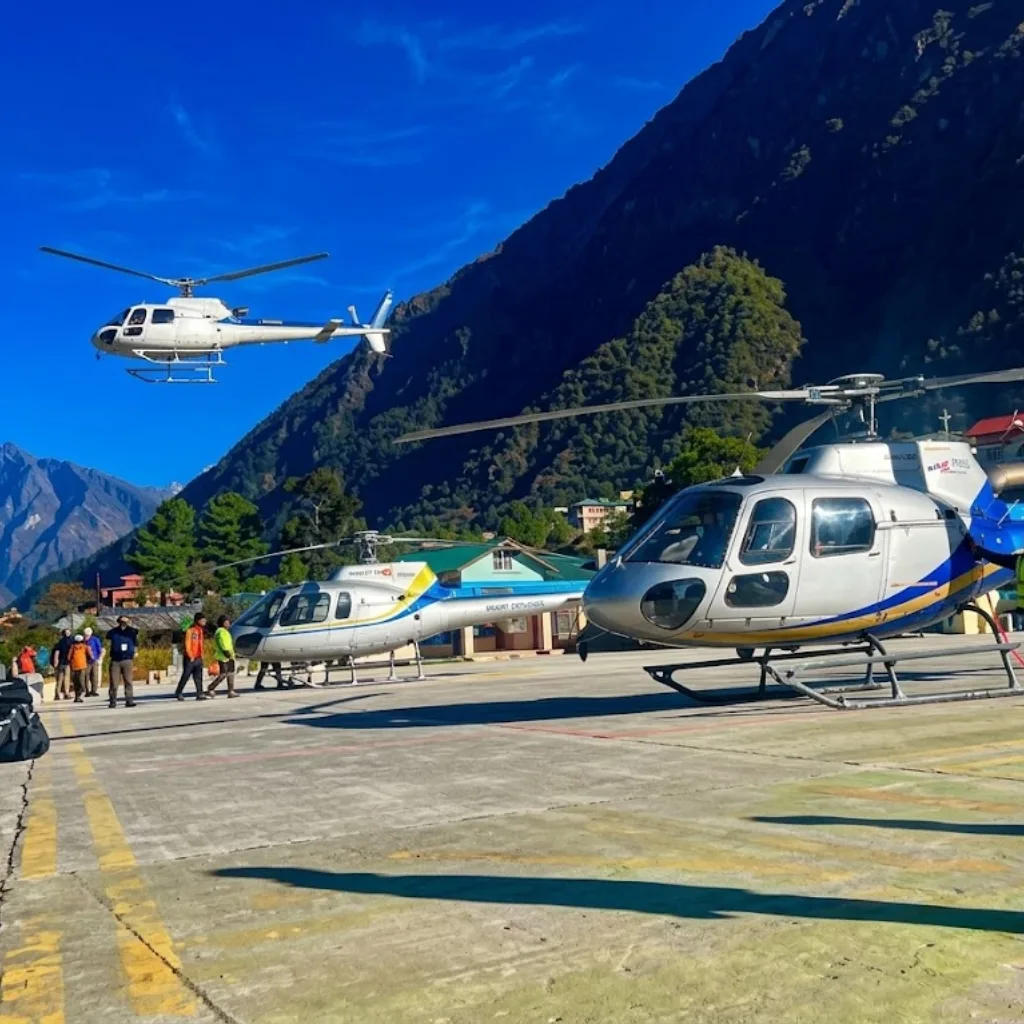
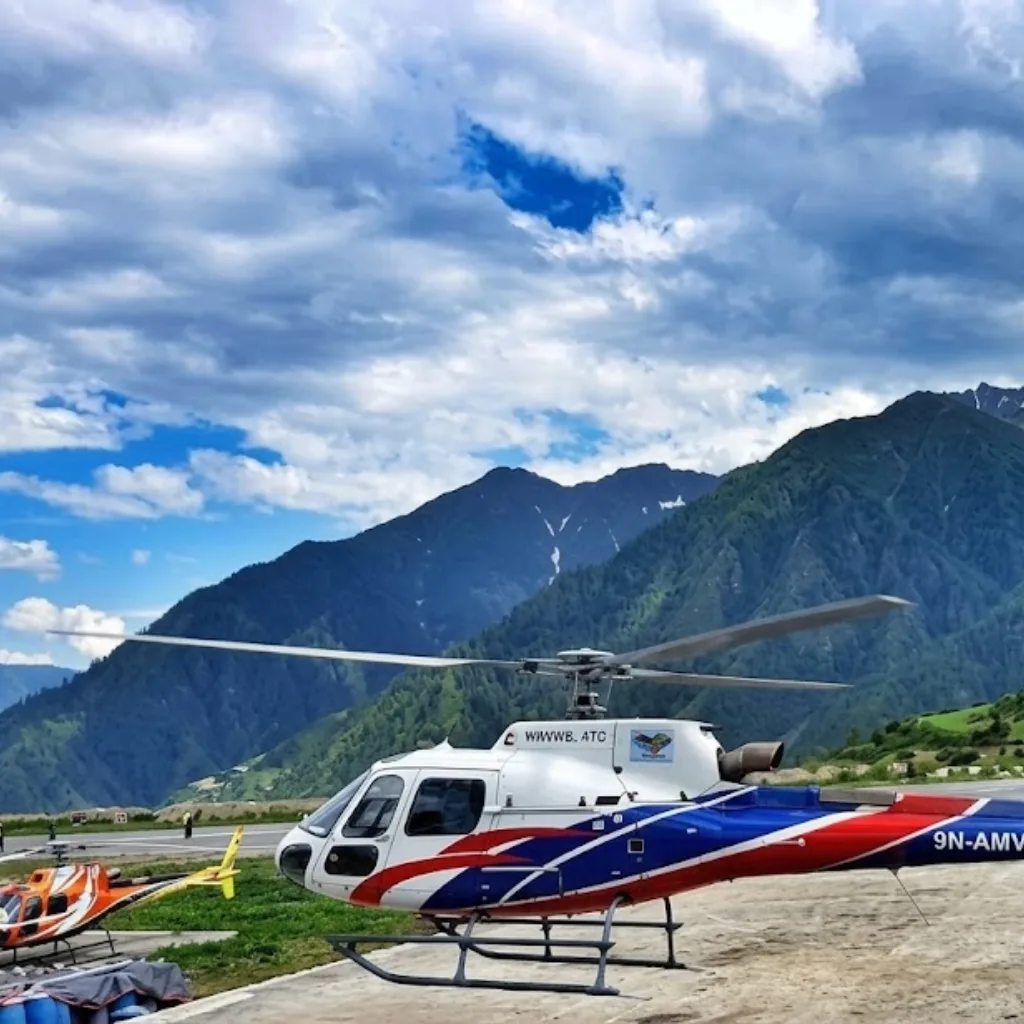

Tour Highlights
The Kathmandu to Lukla Helicopter packs the gate of the Everest world into a single aviation morning. Beyond the practical job of getting you to the trailhead, the flight itself is the highlight reel.
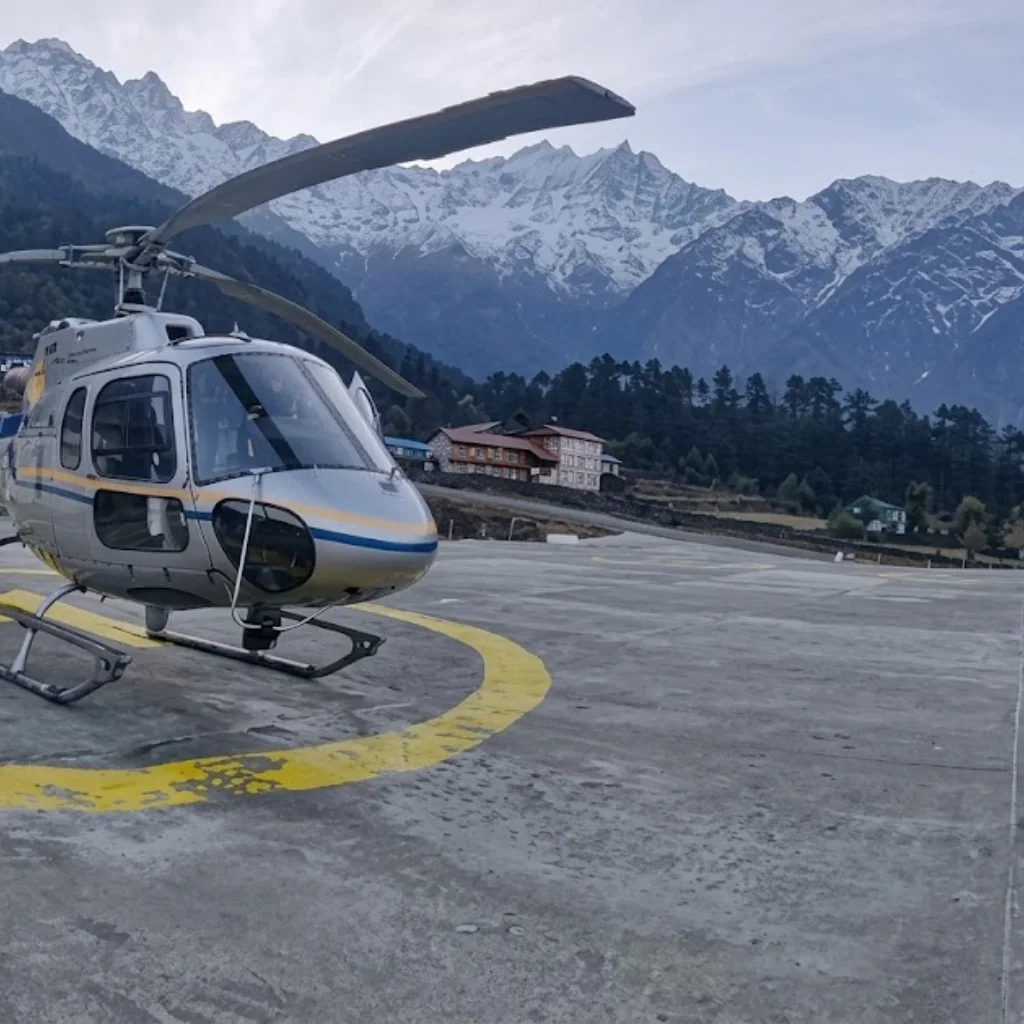
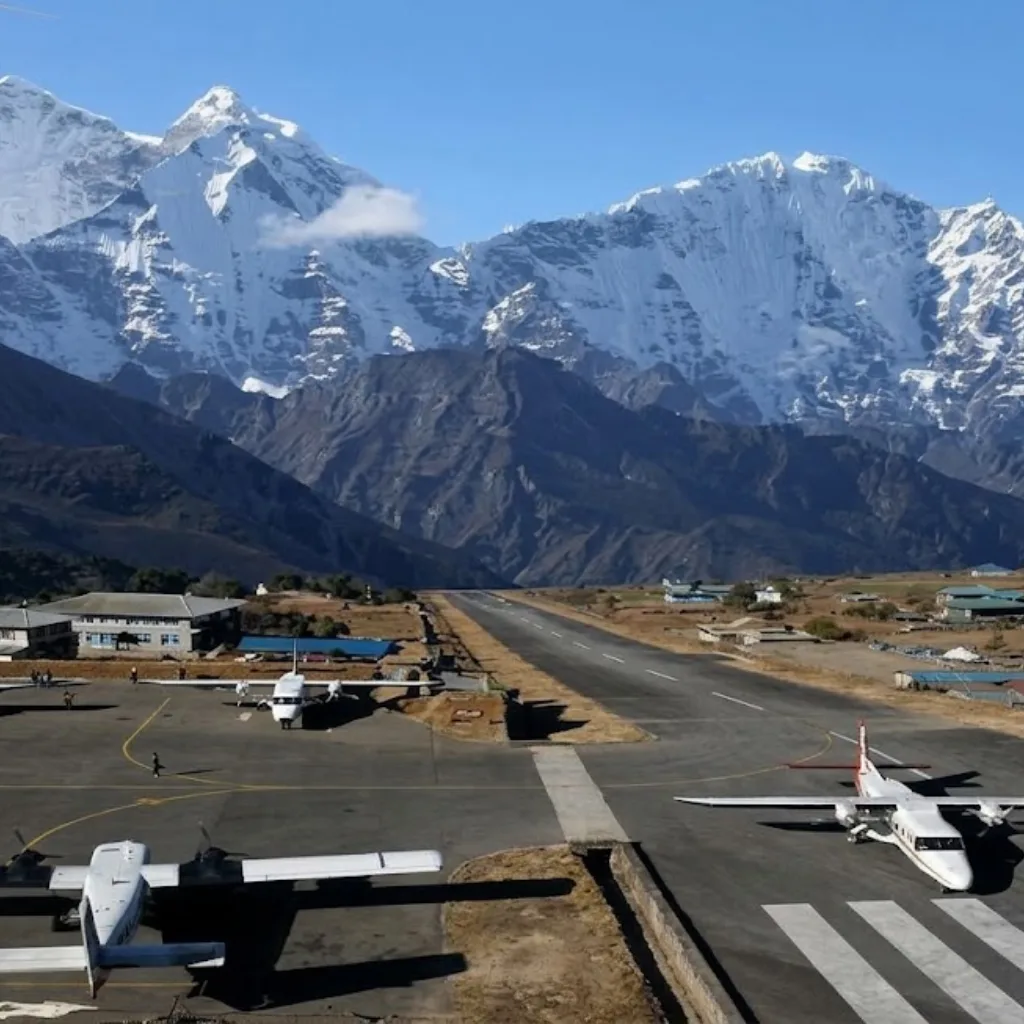
- Touchdown at Tenzing-Hillary Airport (2,860 m / 9,383 ft) — one of the world’s most famous and dramatic runways, reached in about 30 minutes of flying.
- The Kathmandu Valley from above — terraced farmland, winding rivers, forested slopes and traditional settlements sliding away beneath the skids.
- The valley-to-Himalaya transition — monasteries, waterfalls and terraced hillsides giving way to steep ridges and deep river valleys as the helicopter climbs northeast.
- The upper Khumbu approaches — rugged mountain terrain as the flight enters the high Himalayan fringe before the Lukla descent.
- A morning window photographically — clear light on the outbound leg, with the option to photograph the Lukla runway and surrounding ridges on the conditional ground stop.
- Same-morning flexibility — the proven alternative when airline Lukla flights cancel, with no Ramechhap road detour.
- Return-as-scenic or continue-as-trekkers — the same flight serves the day-tripper and the base camp walker, and everything downstream starts at the Lukla runway.
- Per-person tiered comfort — sharing-departure seating priced per passenger, with rates dropping from 5–9 and 10+ traveller groups.
- The reliable Day-1 start — trekkers step off and begin the route to Phakding, Namche and beyond with no lost morning at the airport.
Kathmandu to Lukla Helicopter Overview
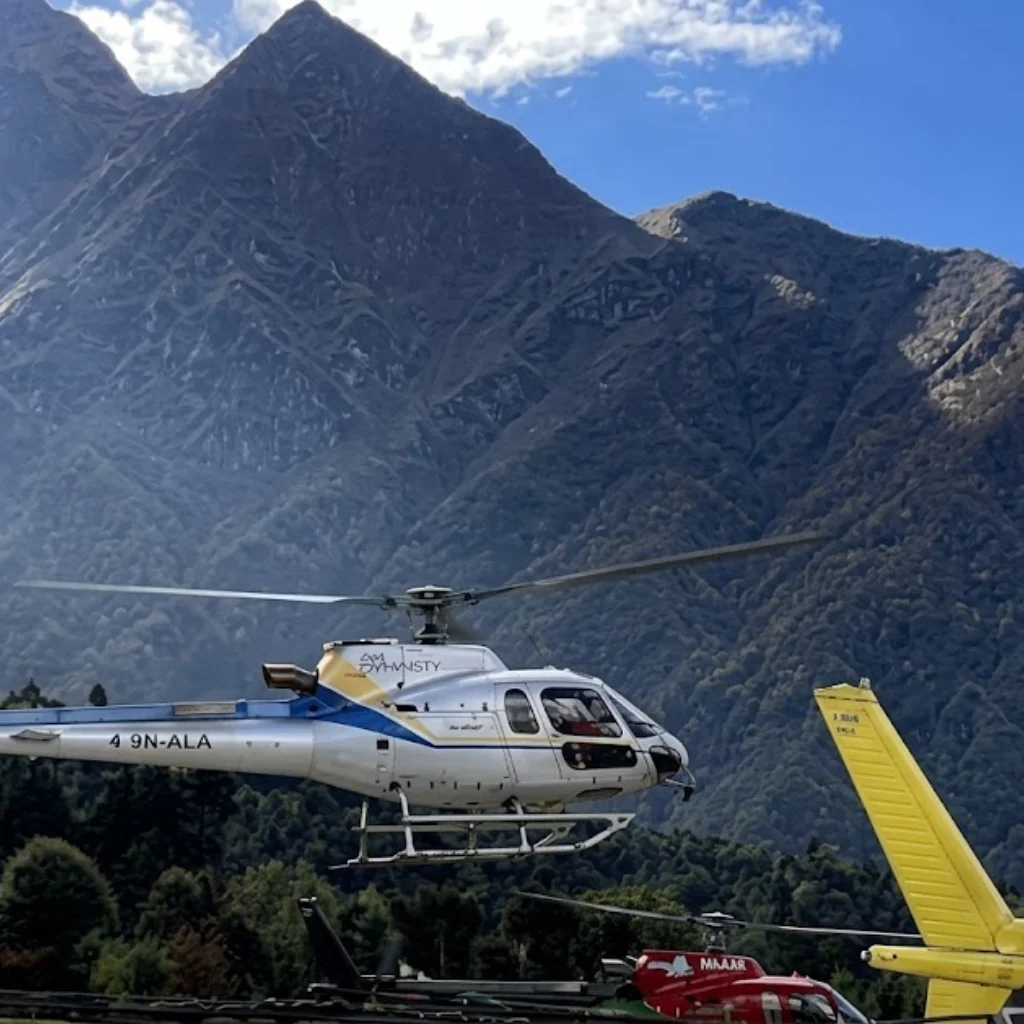
The Kathmandu to Lukla Helicopter is a scenic helicopter flight from Tribhuvan International Airport in Kathmandu to Tenzing-Hillary Airport at Lukla (2,860 m / 9,383 ft) — the front door of the Everest region — running as a 3–4-hour experience that can be flown round-trip or one-way depending on your plan. The outbound leg takes roughly 30 minutes, and the helicopter gives you the same gateway that dozens of Everest journeys pass through, without the queuing and weather cancellations that the daily airline wing often faces.
The itinerary is a single aviation day. The helicopter lifts off from Kathmandu over the valley’s terraced farmland, winding rivers, forests and traditional settlements, then climbs past rugged ridges and deep river valleys into the Himalayan fringe, landing at Lukla’s Tenzing-Hillary Airport at around 2,860 m. Depending on the flight schedule and operational conditions you may step out at Lukla, photograph the runway and the surrounding Khumbu ridges, and either re-board for the scenic return to Kathmandu or — if you booked it as a trek connector — start your walk toward Everest Base Camp from the airport gate itself.
With Nepal Lion Tours, the flight starts from USD 570 per person (Standard tier, 5% off the USD 600 list price) or USD 770 per person (Luxury tier). The flight is priced per seat on a sharing departure, with rates dropping as your group grows, and includes the helicopter lift, the experienced pilot, airport and landing charges, taxes and helicopter insurance in line with Nepal Civil Aviation norms — with the exact inclusion list for the package confirmed at booking since this is a transfer-style product.
What Makes the Kathmandu to Lukla Helicopter Special?
This flight is the scheduling insurance the Everest trek needs. The airlines that normally fly Kathmandu–Lukla are famously weather-sensitive, and in peak season a trekkers’ morning often ends in a wait for a cancelled departure. A helicopter is more flexible: it operates on the same morning window when conditions are best, lands at the same Tenzing-Hillary Airport, and removes the road detour via Ramechhap (Manthali) that the fixed-wing airlines sometimes use in busy periods — a roughly 4-hour drive followed by a short hop before the trek even begins.
It is also the only way to be in the Khumbu and back in the morning. Return passengers fly out over the green Kathmandu Valley, cross the ridges into the high Himalaya, touch the world’s most notorious runway, and are back in Kathmandu within a few hours — an Everest-region taste for travellers who do not have days for a trek, and a reliable door-to-door transfer for those who do.
Finally, the flight sits at the top of the paranoia index for trekkers for a practical reason: your porters, permits and walking plan all assume you reach Lukla. Arriving by helicopter removes the single most common day-one disruption of an Everest Base Camp trek, and it does it with the most scenic seat in the aircraft.
Why Choose Kathmandu to Lukla Helicopters?
If your plan is the Everest Base Camp trek or any Khumbu itinerary, this is the transfer style that gets you to the trailhead on schedule: depart Kathmandu in the morning, land at Lukla, and start walking the same day or spend a calm afternoon in the gateway village. If your plan is a scenic day out, it works as a round-trip highlight — the aerial geography lesson over the valley and ridges, a Lukla landing for photos, and the return leg home before lunch.
The product is also unusually flexible in how it flexes to your group: per-seat pricing on a sharing departure means solo travellers and small groups pay the same published current-facing rate as everyone else, and those who want the aircraft to themselves can ask about a private-hold option at booking. It pairs with any Everest itinerary on the site — from a 1-day helicopter circuit to the full 12-day Base Camp trek — because everything downstream starts at Lukla.
Who Is This Helicopter Flight Suitable For?
- Everest Base Camp trekkers who want a reliable start at Lukla on their booked date.
- Travellers doing a scenic half-day from Kathmandu who want the Khumbu gateway touched without a trek.
- Photographers and geography lovers who enjoy the successive belts of Nepal’s landscape from the air.
- Travellers with tight schedules who cannot afford a day lost at Kathmandu airport waiting for an airline slot.
- Families and older travellers wanting the Everest gateway without the physical trek effort (with the standard comfort check for helicopter travel).
- Solo and small groups who get their own seat and tiered pricing rather than paying for an idling aircraft.
- Trek support logistics — porters and companions can travel in the same departure on the same tier basis.
- Anyone whose fixed-wing flight pinged out the evening before — this helicopter is the proven same-morning backup.
There are no fitness requirements at all: the flight itself needs nothing but comfort in the air. If you continue trekking from Lukla, the fitness conversation belongs to the trail, not the flight.
Guide’s Note — Nepal Lion Tours — From our experience coordinating Everest departures, the trip to Lukla treats passengers, not the aircraft, as the variable. We schedule our helicopters in the first morning wave — that is when the Khumbu basin is usually at its clearest and the thermals are calmest — and we tell return passengers to keep their cameras out on the descent: the transition from green valley to high valley to snowfield crest is the part guests rewatch. If you are continuing to base camp, we recommend flying with your walking bag organized so you can step off the helicopter and walk within the hour. — Nepal Lion Tours
Quick Facts
Kathmandu to Lukla Helicopter at a Glance
| Tour Fact | Details |
|---|---|
| Tour Name | Kathmandu To Lukla Helicopter |
| Duration | 3–4 hours (round trip) or ~30 minutes one-way |
| Region | Everest (Khumbu), Koshi, Nepal |
| Maximum Altitude | 2,860 m / 9,383 ft at Tenzing-Hillary Airport, Lukla |
| Difficulty | Easy (flight only) |
| Main Highlight | A scenic helicopter touch-down at Everest’s Lukla gateway |
| Start / End | Tribhuvan International Airport (domestic terminal), Kathmandu |
| Route | Kathmandu (1,400 m) → Lukla (2,860 m) → Kathmandu (or trek onward) |
| Flying Time | Around 30 minutes each way |
| Best Season | Spring (March–May) and Autumn (October–November) |
| Price From | USD 570 per person (Standard); USD 770 per person (Luxury) |
| Accommodation | None included (overnight stays at Lukla teahouses for trekkers) |
| Meals | Not included (light snacks recommended; Lukla teahouses for trekkers) |
| Guide | Licensed experienced pilot; trek-friendly luggage assistance |
Kathmandu to Lukla Helicopter Route and Elevation
The route runs the classic Kathmandu–Lukla corridor, only at helicopter altitude and pace. From Kathmandu (1,400 m / 4,593 ft) the aircraft flies northeast over the valley rim, crosses the transitional belt of hills and river valleys, and descends into the Khumbu foothills to Tenzing-Hillary Airport at Lukla (2,860 m / 9,383 ft) — the steep single runway carved into the mountainside that has launched every Everest expedition since the 1960s.
Kathmandu to Lukla Helicopter Route at a Glance
| Leg | Route Point | Altitude | Highlights |
|---|---|---|---|
| Takeoff | Tribhuvan International Airport, Kathmandu | 1,400 m / 4,593 ft | Morning light over the valley; terraces, rivers, settlements |
| Climb | Valley and foothills transition | 1,400 → ~2,000 m | Forests, waterfalls, monasteries, terracing |
| Approach | Khumbu ridge country | ~2,000 → 2,860 m | Steep ridges, deep river valleys, Himalayan fringe |
| Landing | Tenzing-Hillary Airport, Lukla | 2,860 m / 9,383 ft | The famous runway; conditional photo stop |
| Return (optional) | Reverse corridor to Kathmandu | 2,860 → 1,400 m | Scenic descent over the foothills |
| Or continue | Trek from Lukla to Phakding/Namche | 2,860 → 3,440 m | The Everest Base Camp trail begins at the gate |
Reading the Flight, If You Like Geography
The profile is a staircase upward and a slide home: push high through the Kathmandu Valley, level across the hills, step up through the ridges, and set down on the one strip that matters. On the outbound leg the landscape changes visibly with altitude — farmland hands the ground to forest, forest to open hillside, hillside to the glacier-cut valleys of the upper Dudh Kosi drainage. On the return, the same scenery runs in reverse, and the haze-free mornings that make Lukla flyable also make the valley views sharper. Exact routes and altitudes vary with weather, air traffic and operational conditions, exactly as the itinerary says — the corridor is fixed by the geography, but the daily line through it is the pilot’s call.
How to Get to the Kathmandu to Lukla Helicopter
The departure point is Tribhuvan International Airport’s domestic terminal in Kathmandu, the same hub every Everest-route passenger funnels through. From anywhere in the city, a vehicle ride of 20–40 minutes (depending on traffic and your hotel) reaches the terminal, and Nepal Lion Tours helps coordinate the timing; the flight’s morning window makes an early transfer the standard arrangement.
Getting from Kathmandu to Lukla: Helicopter, Airline or Road
| Option | Approx. Travel Time | Best For |
|---|---|---|
| Helicopter (this package) | Around 30 minutes flying | Fixed schedules, scenic views, weather-resilient departure, no road detour |
| Fixed-wing airline (Kathmandu–Lukla) | ~25–35 minutes flying | Budget trekkers willing to risk weather cancellations |
| Fixed-wing via Ramechhap (Manthali) | ~4-hour road + short hop | Peak-season backup routing when Kathmandu departures are full |
The helicopter is the option that treats your start date as fixed. Fixed-wing services are cheaper but famously weather-fragile: when wind hits the Lukla valley, departure slots collapse in cascade, and in October’s rush the airlines shift some flights to Ramechhap, adding a drive before the trekkers even board. The helicopter flies the same corridor, lands at the same Tenzing-Hillary Airport, and does it without the road leg — which is why the most common booking story for this package begins with the words “our flight got cancelled.”
The Departure-Day Routine
Plan to be at the domestic terminal around an hour before your scheduled departure for security and boarding formalities — confirm the exact report time when your flight is confirmed, since it follows that morning’s wave. Luggage flies with you; keep it politely sized (confirm the per-person allowance at booking) and palm-accessible for the camera. On arrival at Lukla, trekkers staying on the trail should have their permits and walking docs in hand; return passengers simply follow the turnaround and re-board for the scenic leg home.
A Practical Tip for International Travellers
Do not book an international flight out of Kathmandu on the same morning as a Lukla round-trip — the window closes by mid-afternoon at best. Instead, keep the flight day free and schedule onward international travel for a later day with margin. For trekkers, the reverse advice applies: the days after landing at Lukla belong to the trail, and the helicopter buys exactly the clean start the trek rewards.
Guide’s Note — Nepal Lion Tours — From our experience running Kathmandu–Lukla helicopter departures, the single best habit is answering the morning: we confirm the report time over WhatsApp the evening before, and we ask trekkers to have their documents out — passport to hand, and for those continuing on foot, the permit details we’ve arranged. Return passengers take the desk at the front of the aircraft on the outbound leg, because they get the Runway-first view as Lukla opens up under the skids. And if the weather looks marginal at either end, we re-sequence the wave rather than rush — a 40-minute delay beats forcing a landing in a closing valley. — Nepal Lion Tours
Kathmandu to Lukla Helicopter Difficulty, Fitness & Altitude
The flight is graded easy with a caveat that has nothing to do with muscle: it is a mountain helicopter transfer, and the easy part of the equation is the walking — there is none. The brief stop at Lukla (2,860 m / 9,383 ft) and the aircraft climb above the valley rim are the only altitude touches, both short and gentle compared with any Khumbu trek.
Where the Effort Actually Is?
For returning passengers the “effort” is zero beyond an early start and comfort in the air — the whole round trip runs 3–4 hours including the ground stop. For those continuing to the trail, the effort belongs entirely to the trek ahead (the route from Lukla climbs through Phakding (2,610 m), Namche Bazaar (3,440 m) and beyond), which is a separate conversation from the flight. The genuinely physical thing worth mentioning is the scheduling discipline: the flight runs to a morning wave, so the pre-dawn routine at the Kathmandu terminal is real, and trekkers carry their own bags the final metres onto the strip.
How to Prepare for the Flight
- Arrive at the domestic terminal about an hour early with documents and allowance-friendly luggage.
- Pack the camera within reach for the outbound leg — the valley-to-Himalaya transition is the visual payoff.
- Eat lightly and hydrate before the climb; an empty stomach or a heavy one both complain in turbulent mountain air.
- Manage expectations on the ground stop — stepping out at Lukla depends on the schedule and conditions; it is conditional, not promised.
- For trekkers: organize the walking pack first — permits, passport, walking shoes accessible when you step off.
- Plan for the return-side weather — mountains close quickly; keep buffer hours in your Kathmandu plan.
How This Flight Compares with the Trek Options
Almost everyone who books this flight is either skipping the first two days of a route or replacing a cancelled one. Against the fixed-wing airline it trades a little money for reliability and the Ramechhap-free experience; against the seat-in-a-scenic-EBC-tour helicopters it is simpler and much cheaper, because it is a transfer with a view rather than a multi-landing spectacle. Measured against walking to Lukla (the old Jiri approach), it compresses days into 30 minutes — that is the legitimate comparison, and the right one when your holiday time is the scarce resource.
Altitude & Safety on the Flight
Altitude Profile of the Flight
- Kathmandu — 1,400 m / 4,593 ft: departure and return base, no altitude consideration.
- Lukla — 2,860 m / 9,383 ft: the flight’s highest point and turnaround; brief exposure, barely noticeable in a short ground stop.
How the Body Responds on the Flight
At 2,860 m the body notices very little in a few minutes on the ground; the air is noticeably cooler and thinner than Kathmandu but well below any real altitude reaction. The climb beyond the Kathmandu Valley happens quickly inside a pressurized-capable cabin environment, but this route’s max is Lukla, and trekkers heading onward to Namche (3,440 m) or above will do their acclimatizing on the trail, not the flight.
Symptoms of Altitude Sickness to Watch For
On a 3–4-hour flight-level package, acute mountain sickness is effectively outside the risk window for the short Lukla stop. The symptoms that matter here are the milder, immediate ones — a light headache, mild dizziness or slight light-headedness after a rapid climb — which settle quickly at equal altitude or on descent. The real altitude conversation should start on the incoming trek, and it is fully covered there by Nepal Lion Tours trek support.
How Nepal Lion Tours Supports Your Safety
- Licensed, experienced pilot commanding the aircraft under Nepal Civil Aviation rules.
- Weather-first scheduling — departures run in the morning window when mountain conditions are most stable, and re-sequence rather than rush.
- Helicopter insurance carried in accordance with aviation norms; confirm the exact policy detail at booking.
- Flexible turnaround — if Lukla hasn’t cleared, the operator holds or reschedules rather than forcing the landing.
- Trek-ready handover — for walkers, documents, permits and porters’ plan align before you set off.
- Insurance advice — trekkers continuing beyond Lukla must carry cover for mountain trekking and helicopter evacuation; return-only passengers need standard travel cover.
Guide’s Note — Nepal Lion Tours — In our experience the genuine effort on this transfer is the morning discipline, not the altitude: a pre-dawn alarm, baggage at the exact agreed weight, and documents ready at the domestic terminal. The flying itself is the easy part — and the valley-to-snowfield transition that guests describe as the highlight is over in roughly half an hour, so we advise keeping the camera within reach for the whole outbound leg. — Nepal Lion Tours
Best Time to Take the Kathmandu to Lukla Helicopter
The package lists spring–autumn as its season, and those windows are right: autumn (October–November) and spring (March–May) bring the clearest skies and the most stable morning flying conditions across the Kathmandu–Lukla corridor. The helicopter operates year-round in practice, but the same weather that grounds the local airlines constrains the helicopter too — evenings and the monsoon are when the returns get complicated.
| Season | Months | Weather & Flight Conditions | Mountain Views | Overall |
|---|---|---|---|---|
| Autumn | October–November | Clear, dry and stable | Excellent | Best overall |
| Spring | March–May | Clear mornings; busier Khumbu trails | Very good | Highly recommended |
| Winter | December–February | Cold and crisp; occasional closures at Lukla | Good on clear days | Good with preparation |
| Monsoon | June–August | Cloud, rain and closures frequent | Frequently limited | Least reliable |
Autumn — October to November
Autumn is the apex window. Post-monsoon air is dry and stable, the mornings above the valley are textbook, and the Lukla runway is at its most forgiving. It is also the busiest season for second-guessing trekkers, which means helicopters are in demand — book early, because the reliable seats go first.
Spring — March to May
Spring is the strong runner-up, with warm valley mornings and clear early skies before the expedition pushes overhead. Trails through the Khumbu are busy with spring climbers, and sporty trekkers take the helicopter to keep pace with the season’s best weather windows higher up.
Winter — December to February
Winter flies on good days with preparation. The cold, crisp mornings give excellent visibility more often than not, but wind at Lukla closes in faster and short-daylight margins mean the schedule tightens. The reward is a quieter runway and the most dramatic snow-clad scenery on the ground.
Monsoon — June to August
Monsoon is the least reliable window for obvious reasons: cloud and rain sit on the corridor, and both helicopter and airline operations slow. If summer dates are unavoidable, keep a buffer day in Kathmandu and hold flexible downstream plans, because the sky, not the diary, decides the takeoff.
Which Season Should You Choose?
Choose autumn for certainty, spring for balance, winter for drama with margins, and avoid monsoon unless work forces it. The practical rule is the same as every mountain flight: the first morning wave is the most reliable of the day, so whatever the season, early scheduling and a spare Kathmandu evening are the two moves that protect your plan.
Guide’s Note — Nepal Lion Tours — In our experience the corridor gives its best show in the first 90 minutes of light, year round. The valley mist sits in the hollows while the Khumbu crests are already sunlit, and helicopters running first-wave get the sharpest of both worlds. We also counsel trekkers in October and March to book well ahead — those are the months when the airlines cancel in batches and the helicopter books out. — Nepal Lion Tours
Kathmandu to Lukla Helicopter Permits & Regulations
The flight itself is a transport service: no trekking permit is required to fly into Lukla, because Tenzing-Hillary Airport sits just outside the Sagarmatha National Park boundary on the gateway side of the Khumbu. The permits you may have heard about apply once you begin walking — and for return-only passengers, there is no walking at all. Nepal Lion Tours keeps the two cases clearly separated.
Permits at a Glance
| Requirement | Who Needs It? | Who Arranges It? |
|---|---|---|
| Helicopter flight docs (boarding, airport/handling charges) | All passengers | Nepal Lion Tours (part of the flight) |
| Sagarmatha National Park Entry Permit | Trekkers continuing on foot from Lukla | Nepal Lion Tours (for trekkers) |
| Khumbu Pasang Lhamu Rural Municipality Permit | Trekkers continuing on foot | Nepal Lion Tours (for trekkers; replaces TIMS in Khumbu) |
Sagarmatha National Park Entry Permit
Trekkers who continue from Lukla toward Namche and beyond cross into Sagarmatha National Park, and the park entry permit is the first trekking document. The current fee is NPR 3,000 per foreign trekker / NPR 1,500 for SAARC nationals, set by the park authority and subject to revision — confirm at booking. Flight-only passengers do not need it, and Nepal Lion Tours arranges it for every trekker in advance so the walk starts without a permit scramble at the first checkpoint near Monjo.
Khumbu Pasang Lhamu Rural Municipality Permit
Alongside the park permit, trekkers in the Khumbu need the Khumbu Pasang Lhamu Rural Municipality permit, the local-government document that replaced the TIMS card in this region. The current fee is NPR 3,000 foreign / NPR 2,000 SAARC — confirm at booking. Combined, the two permits are the standard set on every Khumbu route, and they are arranged by Nepal Lion Tours as part of the trek (not the flight) package.
Do You Need a TIMS Card or a Restricted-Area Permit?
No — on the Khumbu side there is no TIMS requirement (the municipality permit replaces it) and no restricted-area permit for the standard routes from Lukla up to Everest Base Camp, the Gokyo lakes or the panorama trails. Modified or connecting itineraries that cross restricted zones or an overland approach through the Gaurishankar Conservation Area would add a permit, and Nepal Lion Tours flags this when the itinerary changes.
Who Arranges the Permits?
For the flight, Nepal Lion Tours handles the airport and boarding arrangements as part of the ticket. For trekkers, the Sagarmatha and Khumbu permits are arranged in advance from your passport copy, and the fees are built into the trek package. Government fees and rules in Nepal can shift without warning — confirm the current figures at booking and carry the original passport.
Food & Accommodation on the Kathmandu to Lukla Helicopter
This is a transfer, not a stay-over, so food and accommodation work differently from the trek pages: nothing is included overnight, and the 3–4-hour package carries no meals. What the product genuinely offers is the gateway village of Lukla as a stopping point — a full teahouse town for anyone swinging off the helicopter into the trek.
What the Flight Package Includes (Food-Wise)
The helicopter carries no in-flight catering as standard — light snacks and water from your day bag are the normal arrangement for a flight you can measure in tens of minutes. Water is available at the Kathmandu terminal and at Lukla’s teahouses. If you are flying through to the trail, eat lightly before the flight and let your first real meal happen in Lukla, where the Khumbu’s dining culture starts in proper form.
Lukla: The Gateway Town You Step Into
Tenzing-Hillary Airport’s apron is the town’s front door: Lukla is a full-service trekking village with a string of lodges, tea shops and equipment stores lining the single main street through the ridge-top bazaar. For trekkers, Lukla offers the standard mountain menu — dal bhat, momos, noodles, soups and breakfast plates — and twin-sharing teahouse rooms for those who add a Lukla night before the walk or fly out the next morning.
For Trekkers: Where to Sleep After the Landing
The classic first-night pattern from the airport is a short walk to Phakding (2,610 m / 8,563 ft) or a full push to Namche Bazaar (3,440 m / 11,286 ft) on a strong first day — either way, the teahouse network starts right at the runway. Nepal Lion Tours pre-books trek accommodation on the standard routes, so the helicopter arrival simply feeds the already-organised plan for the nights ahead.
What is Included vs Usually Paid Separately
| Included in the Flight Package | Usually Paid Separately |
|---|---|
| Helicopter transfer Kathmandu ↔ Lukla (or one-way) | Lukla teahouse night and meals for trekkers |
| Experienced pilot and aviation insurance | Meals, drinks and snacks beyond the flight |
| Airport, landing and handling charges, taxes | Trekking permits (if continuing on foot) |
| Kathmandu terminal boarding coordination | Extra nights and personal expenses |
| Trek-ready luggage assistance | Tips for the pilot and airport staff |
If You Are Not Continuing on Foot
Return passengers land, photograph, re-board and fly home — the “accommodation” question reduces to which Kathmandu hotel you return to in time for lunch. If you are using the helicopter as a one-way transfer without an onward trek, a teahouse night in Lukla followed by a return helicopter on a later day is the flexible pattern our guests arrange as a custom add-on.
Why Book with Nepal Lion Tours?
This is the kind of product where the operator’s reliability is the product: a morning helicopter to one of the world’s most weather-sensitive runways, priced per seat, coordinated by a team that runs the whole Everest line-up behind it.
1. Licensed, experienced mountain pilots
The flying crew holds current licences and operates the Kathmandu–Lukla corridor professionally under Nepal Civil Aviation rules. When the outcome depends on weather judgment over high ridges, experience is the safety feature that cannot be priced into a seat, so we keep it at the front of the package.
2. A registered company you can verify
Nepal Lion Tours is a registered Nepal travel operator based in Kathmandu, and its licences and details are available on request. A transfer into a trek that cannot easily be rescheduled deserves a company with an office you can walk into.
3. Tiered per-person pricing with 5% off the Standard tier
The list price of USD 600 drops to USD 570 (Standard, 1 traveller), with per-person rates falling further at 2–4, 5–9 and 10+ travellers, and a Luxury tier from USD 770. Solos and couples pay for seats, not for the aircraft.
4. Arrive at Lukla on schedule — the signature reliability of this package
Flying through the morning wave beats the airline queue and the Ramechhap road bank, which is exactly what a trekkers’ Day 1 needs. It is the product guests book when the fixed-wing departures shake out, and the reason it runs so often in October.
5. Straightforward logistics at the terminal
Assisted boarding, allowance-friendly luggage and weather-first scheduling; the flight is designed so the only decision on departure morning is whether to look left or right out of the window.
6. Budget-friendly within the transfer category
Per-seat pricing makes the helicopter a credible option against cancellation-prone airlines, and the 5–9 and 10+ tiers bring the per-person cost close to the airline zone for groups.
7. A local team you can contact before and during
The same WhatsApp line (+977-9851039020) confirms the report time the night before, coordinates the morning, and, for trekkers, hands you to the walking crew at the Lukla apron. One team, one thread, from enquiry to trailhead.
Book the Kathmandu to Lukla Helicopter
The morning wave to Lukla is short, scenic and scheduling-proof — and it is the door to half the itineraries on this site. Tell us whether you fly round-trip or one-way, and we will put your seat in the first clear window.
Kathmandu to Lukla Helicopter Pricing at a Glance
| Travellers | Standard (per person) | Luxury (per person) |
|---|---|---|
| 1 person | USD 570 (list USD 600 — 5% OFF) | USD 770 |
| 2–4 people | USD 542 | USD 732 |
| 5–9 people | USD 513 | USD 693 |
| 10+ people | USD 485 | USD 655 |
The Standard tier list price is USD 600, with 5% off applied to USD 570 for a single traveller; per-person rates fall at 2–4, 5–9 and 10+ travellers, and the Luxury tier runs from USD 770 on the same group scale. The final price can vary depending on group size, dates, one-way or round-trip routing and requested itinerary changes.
Trip snapshot: 3–4 hours round trip · maximum altitude 2,860 m / 9,383 ft · easy · shared/group helicopter flight · morning scheduling · free cancellation up to 14 days before departure (subject to booking terms).
Ready to Reach the Everest Gateway?
Send us your preferred date, the number of passengers and whether you need the round-trip scenic version or the one-way trek connection, through the booking form or WhatsApp at +977-9851039020. We will confirm the morning wave, seat your group on the published tier, and — if you are heading to base camp — have your permits and trail plan ready for when the skids touch Lukla. Your trek was always going to start at Lukla; this is the version where it actually does. Book your seat and start planning the walk today.
Related Everest Region Helicopter Tours & Treks
The Kathmandu to Lukla Helicopter is the transfer that feeds the region’s trails and pairs with its other flying adventures. It is the natural “get me there” layer under every itinerary that starts at Tenzing-Hillary Airport, and a scenic zoom-out when combined with the tours that land higher.
| Trek / Tour | Duration | Difficulty | Max Altitude | Best For |
|---|---|---|---|---|
| Kathmandu to Lukla Helicopter (this flight) | 3–4 hours | Easy | 2,860 m | The reliable transfer to the Everest trailhead or a scenic day out |
| Lukla to Kathmandu Helicopter | 3–4 hours | Easy | 2,860 m | The return leg home from the trailhead in the same guaranteed style |
| Everest Base Camp Helicopter Tour with Kala Patthar Landing | 1 day | Easy | 5,545 m | A full Khumbu day trip with the classic viewpoint landing |
| Everest View Hotel Luxury Helicopter Tour with Overnight | 2 days | Easy | 3,880 m | Sunset and sunrise from the world-famous mountain hotel |
| Everest Panorama Trek | 6 days | Easy–Moderate | 3,880 m | The shortest walking route to big Everest views via Lukla |
| Everest Base Camp Trek via Kala Patthar | 12 days | Moderate | 5,545 m | The classic EBC trek this transfer launches from Lukla |
Trekkers planning any walk from Lukla should pair this flight with the Everest Base Camp Trek via Kala Patthar or the Everest Panorama Trek for a smooth Day-1 start. Travellers who want the mountains to do the work can book the helicopter one-way and connect home with the Lukla to Kathmandu Helicopter, or fly the whole Khumbu as an Everest Base Camp Helicopter Tour with Kala Patthar Landing on the same trip.
Trip Essentials
Packing advice, required equipment & gear recommendations
Essential
Packing for this flight is two-bag thinking: a polite-sized soft bag for the helicopter, and a small grab bag with the camera, layers and documents. If you are continuing to the trail, the walking pack replaces the soft bag — the flight layer of packing stays light either way.
Essential Carry
- Valid passport — required for boarding and for trekkers’ permit checks.
- Trekking permits (if continuing on foot) — Sagarmatha and Khumbu permits, documents from Nepal Lion Tours.
- Travel insurance details, including mountain/evacuation cover for trekkers.
- Nepali rupees (NPR) for teahouse meals, water and tips at Lukla.
- A reusable water bottle and light snacks for the flight and the Lukla stop.
Clothing: Layers for a Changing Day
Base layer — a light layer under a mid-weight fleece or jacket; the valley and Lukla are not the same temperature.
Mid layer — a fleece or insulated jacket for the runway-side stop at 2,860 m; it is noticeably cooler than Kathmandu.
Outer layer — a thin windproof shell; apron breezes at Lukla are real but short.
Headwear and gloves — a cap for the valley light; light gloves are optional unless you fly mountain-cold days.
Footwear — comfortable walking shoes; the ground stop and the trek both reward grip, but boots are not needed.
High-Altitude Comfort at Lukla
- Sunglasses — exposed apron and runway light at 2,860 m.
- Sunscreen and lip balm — the high-air UV is stronger than the temperature suggests.
- Scarf or buff — useful if you step out on a windy runway apron.
- A roomier top layer kept within reach for the descent home if you get cold airside.
Toiletries and Personal Health Items
Only what fits a short day: toothbrush if you overnight at a Lukla teahouse, personal medication, and any motion-sickness remedy you know you need for the climb. Everything else stays in the main luggage or the walking pack.
Electronics
Camera or smartphone for the aerial sequence, a power bank, and chargers for the hotel stopovers either side. Charge the night before — the aircraft doesn’t have sockets, and the morning is early.
Documents and Money
Passport, permits for walkers, insurance, a small cash reserve in NPR, and your booking reference for the flight. Keep the documents against your person rather than in deep baggage, because the Lukla turnaround moves fast when the sky is good.
How Much Should You Pack?
For the round-trip flight: one soft bag plus a grab bag is plenty. For trekkers, the full trek packing lives in the walking duffel, with the same soft bag on board. The helicopter has a luggage allowance like any aircraft — confirm the per-person figure at booking and keep the just-in-case items at home, because the shortest part of your Everest journey deserves the lightest bag you own.
Read Before You Book
Permits, terms, medical considerations & advisory guidelines
Advisory
Everything about this product lives in the morning: the wave, the weather, the runway and the reboard. The checklist below is what it takes to keep the flight on your side.
Helicopter Operations and Weather
All timings are approximate and may change with weather, visibility, air traffic and operational conditions. Flights run in the morning window because that is when the corridor is most stable; if conditions close, the operator re-sequences or reschedules rather than forcing the landing. Carry a buffer in your plan and insurance that understands mountain flying.
Departure Times and Meeting Points
Plan for a domestic-terminal report around an hour before your confirmed departure — the exact time follows that morning’s wave and is confirmed over WhatsApp the evening before. Return passengers should keep the same day clear until mid-afternoon; trekkers step straight from the apron into the trail.
Health, Altitude and Insurance
The flight top at Lukla (2,860 m) is brief and gentle, but the surrounding farm and valley transitions mean a light head is a good idea. Travel insurance with helicopter cover is advised for all passengers and mandatory for trekkers continuing above 3,000 m (with medical and evacuation cover); confirm the policy covers the activity.
Money and Tipping
Flights are quoted in USD and paid per booking terms; teahouse meals, water and tips run in NPR, so carry a small cash reserve. Tipping the pilot and terminal staff is optional but appreciated — around 5–10% of the package split across the crew is the customary guidance.
Culture and Responsible Tourism
- The corridor from Kathmandu to Lukla crosses the lands of Newar and Sherpa communities and Buddhist monasteries.
- Greet with “Namaste”, and ask before photographing people and prayer-walls.
- Land light at Lukla: the village is the working heart of the Everest economy — buy tea, be patient, support the local lodges.
- Keep the aircraft and apron waste-free; carry your litter off the runway.
- Respect flight discipline — the runway is the working front door of a whole national park.
Route Options
The choices are simple: round-trip scenic (fly back the same day), one-way trekkers’ transfer (step off and walk), or extended gateway stay (overnight at Lukla and return by helicopter later). Each is bookable through the same product and combines with any Everest trek or heli tour on the site.
Booking and Before You Arrive
Before you travel, make sure you understand:
- The Standard vs Luxury tier difference and the 5%-off Standard price.
- Report time at the domestic terminal (confirm the night before).
- Luggage allowance for the helicopter — keep it soft and confirm the limit.
- One-way or round-trip selection on your booking.
- Weather and re-sequencing policy for the morning wave.
- Insurance with mountain/heli cover (mandatory for trekkers).
- Permit arrangements if you continue on foot — arranged with your trek.
A Few Final Tips
Sleep early, hydrate, and have the camera in the grab bag. On the outbound leg the light belongs to geology — valley mist, terraced hills, the white crests arriving — and the fast answer to “what’s the best seat?” is “the window, anywhere.” Trust the morning wave, keep a spare Kathmandu evening in your plan, and let the helicopter carry the part of the Everest journey that the weather used to own.
Day-by-Day Itinerary
Explore each day's route, trekking elevation, and activities
Activity 1: Takeoff from Kathmandu
Begin your Everest region adventure with a scenic helicopter flight from Tribhuvan International Airport in Kathmandu. As the helicopter rises above the Kathmandu Valley, enjoy aerial views of terraced farmland, winding rivers, traditional settlements, and lush green hills. The morning light creates beautiful conditions for photography as you travel northeast toward the Khumbu region.
Activity 2: Scenic Flight over the Valley and Hills
As the helicopter gains altitude, the landscape gradually changes from the green hills surrounding Kathmandu to rugged mountain terrain. Admire scattered villages, forested slopes, waterfalls, monasteries, and terraced hillsides along the route. The changing scenery offers a fascinating transition from Nepal's lower valleys toward the high Himalayas.
Activity 3: Entering the Himalayan Region
Continue toward the Khumbu through steep ridges, deep river valleys, and increasingly dramatic mountain landscapes. The helicopter provides an intimate aerial perspective of the terrain, allowing passengers to observe the changing geography and Himalayan surroundings from above. Flight routes and altitude may vary according to weather, air traffic, and operational conditions.
Activity 4: Arrival at Lukla
Land at Tenzing-Hillary Airport in Lukla at approximately 2,860m, the principal gateway to the Everest region. Depending on the flight schedule and operational requirements, you may have an opportunity to step outside, take photographs, and enjoy your first close views of the surrounding Khumbu landscape.
Activity 5: Return Flight or Trekking Continuation
For passengers returning to Kathmandu, board the helicopter for the scenic journey back through the Himalayan foothills and Kathmandu Valley. For trekkers continuing toward Everest Base Camp, Lukla serves as the starting point for the overland trekking route into the Khumbu. Flight operations and return arrangements are subject to weather, visibility, air traffic, and applicable aviation regulations.
Want to customize this itinerary?
Tailor duration, lodges, acclimatization days, or add private helicopter flights.
Our Customer Reviews
Authentic experiences and feedback from our travelers
Write a Review
Share your adventure experience with other travelers
Thank You!
Your review has been submitted and is awaiting approval.
Please Wait
You've submitted several reviews recently. Please wait a few minutes before trying again.
Adam Krause
We had limited time, so flying in and walking out was the perfect compromise. I had seen A morning window photographically on a documentary, and the real thing was better. The path beyond Landscape Gradually Changes was quieter and more beautiful than the main trail. The teahouse was more comfortable than the itinerary had led us to expect. We laughed more in those days than we had in weeks at home. The local families we met were welcoming without being pushy. The trip changed pace often, which kept it interesting. A great option if your time is limited but your curiosity is not.
Martin Gauthier
We took the helicopter option to save time, and it was worth every penny. Even the drive to Rugged Mountain Terrain. Admire Scattered Villages had good views, which set the tone for the day. The kids rated Same-morning flexibility as their favourite part. The teahouse was simple but clean, and the staff were friendly. We took a short walk on our rest day and found a viewpoint with no one else around. The trip had a rhythm to it that took a couple of days to settle into. Everything ran on schedule, which is not always the case on trips like this. The quiet parts were just as important as the big views. Weather delayed us by a morning, but the team handled the change well. Exactly what we needed. Tip: Ask the guide about the quieter alternatives if a stop is busy.
Astrid Strand
Looking back, the quiet moments between the big sights are what stayed with me. There was a nice balance of effort and reward around Return-as-scenic or continue-as-trekkers. Even the drive to Traditional Settlements had good views, which set the tone for the day. We felt looked after without feeling watched. The flight was smooth, and the pilot pointed out landmarks along the way. The best parts were often the unplanned ones, like a longer stop for tea or an extra walk before dinner. We had some of our best conversations on the trail. The contrast between the cold mornings and warm afternoons was bigger than expected. The local food was one of the unexpected highlights. The little tea houses along the way were often better than the bigger stops. Good value overall.
Julia Rostova
We travelled with our two kids, so I was a little worried about the pace. The kids were fascinated by Green Hills Surrounding Kathmandu, which kept them moving without complaint. We had a lot of fun with The upper Khumbu approaches, more than the itinerary suggested. The clouds cleared at exactly the right moment near Green Hills Surrounding Kathmandu. It was a good reminder that the best travel is often the least complicated. Weather delayed us by a morning, but the team handled the change well. Good value overall.
Laura Zimmermann
Every turn seemed to offer a different frame, especially around Takeoff. The Kathmandu to Lukla Helicopter packs the gate of the Everest world into a single aviation... ended up being the part we talked about most afterwards. The tea house near Takeoff had the best view of the whole trip. I filled an entire card before we even reached the halfway point. The flight alone made the trip memorable.
Victor Keller
We usually plan everything ourselves, so this was a nice change of pace. I would recommend giving Enjoy Aerial Views Of Terraced Farmland more time rather than less. I was looking forward to The reliable Day-1 start, and it did not disappoint. The light after the rain was beautiful. The guide handled the permits and paperwork, which saved us a lot of time. We loved it.
Frequently Asked Questions
Essential information on preparation, route specifics, safety standards, and logistical details.