Annapurna Base Camp Helicopter Tour — 1 Day | Nepal Lion Tours
Experience the breathtaking Himalayas from above on an unforgettable helicopter journey to Annapurna Base Camp.
Annapurna Base Camp Helicopter Tour

Tour Highlights
The whole experience is one fast, panoramic morning — 30 minutes climbing the Modi valley, 30–45 minutes inside the Sanctuary, and 30 minutes back down.
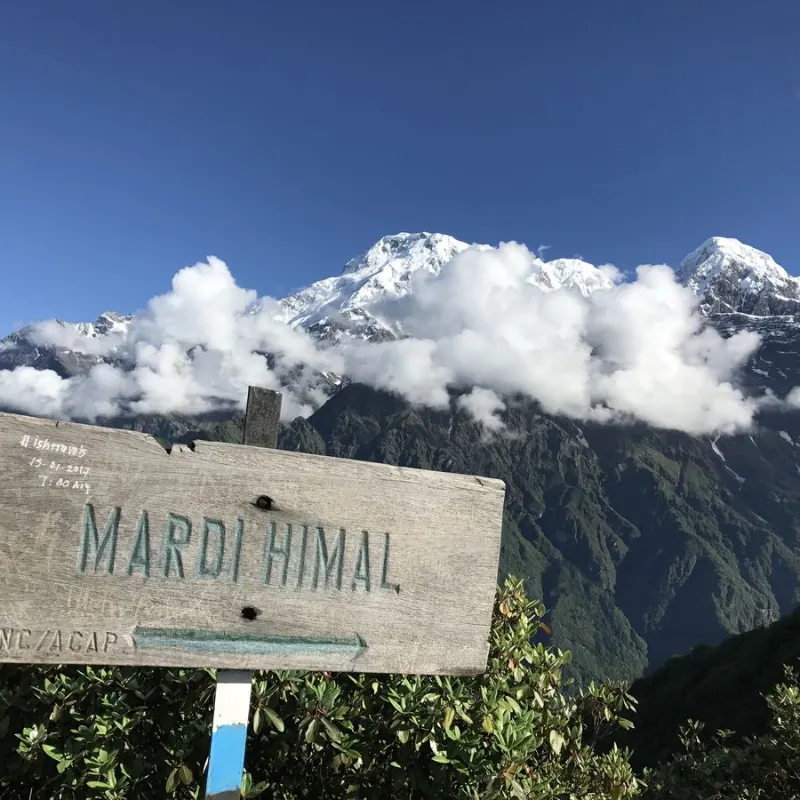
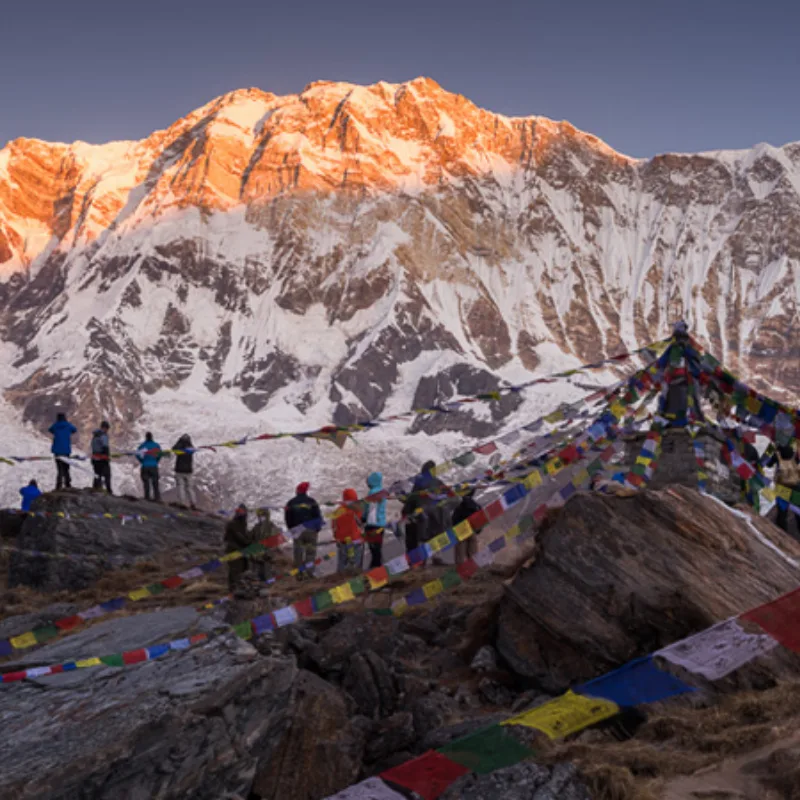
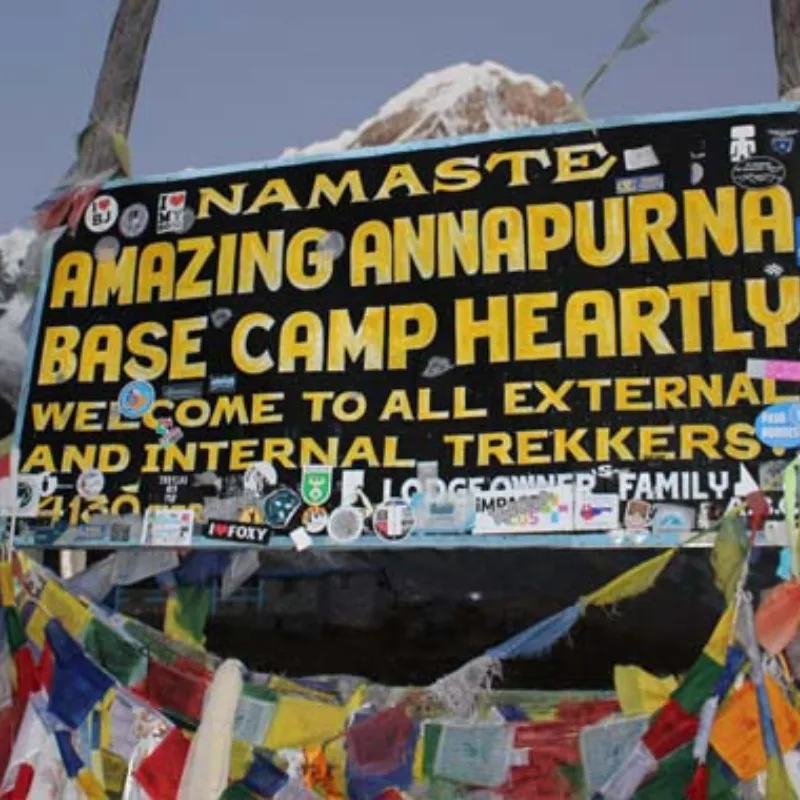
- Direct Landing at Annapurna Base Camp — 4,130 m / 13,550 ft: step off the helicopter onto the grassy plateau beneath the south face of Annapurna I (8,091 m / 26,545 ft), with the Sanctuary welcome sign and prayer flags for the classic photograph.
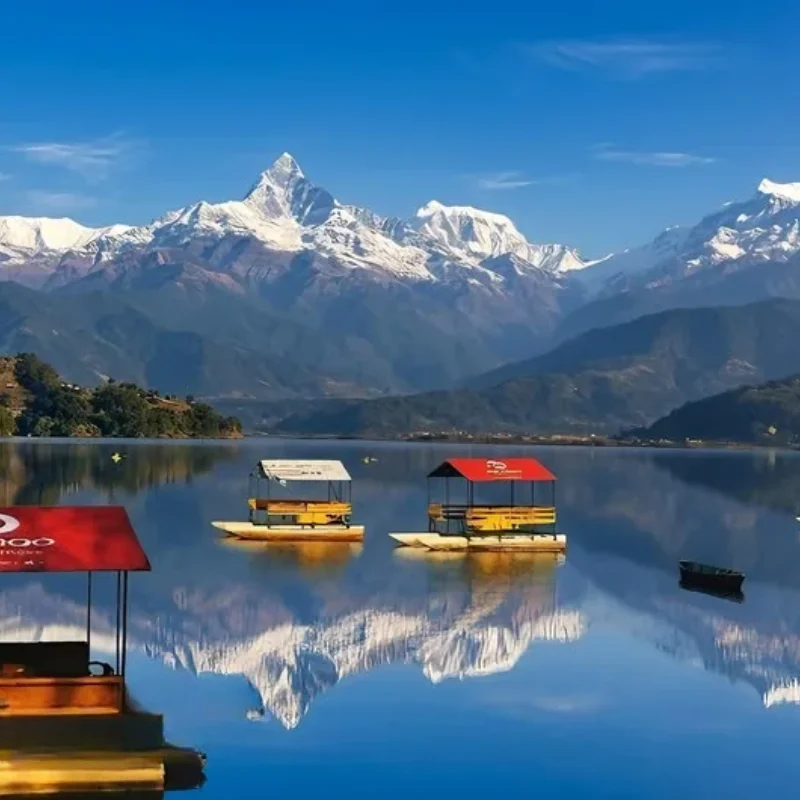
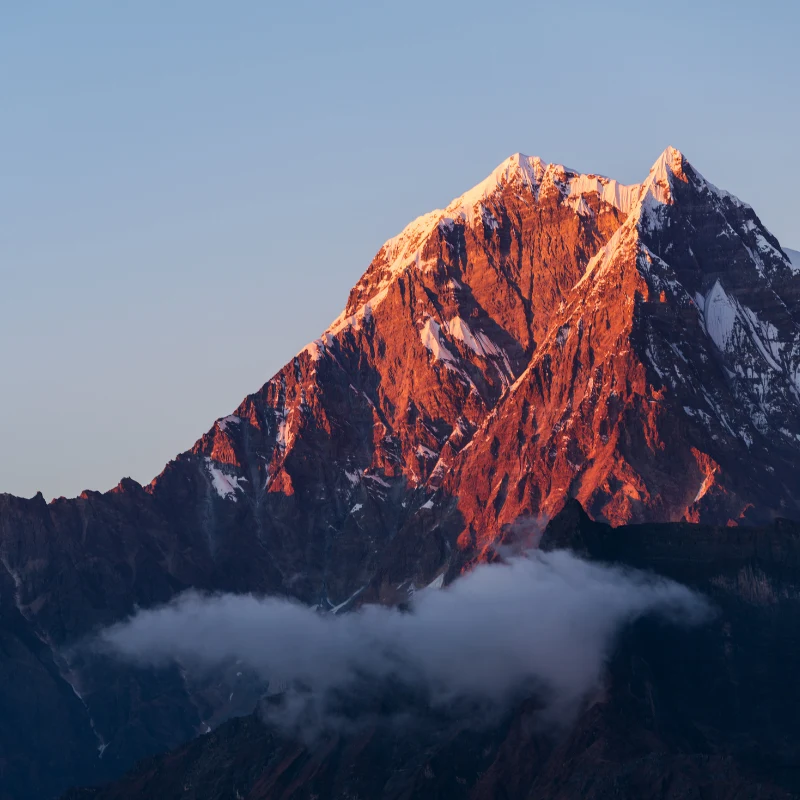
- Machhapuchhre “Fishtail” Peak — 6,993 m / 22,943 ft: the holy, unclimbed peak passes directly outside your window and towers over the landing zone; its twin summit ridges are unmistakable from the flight path.
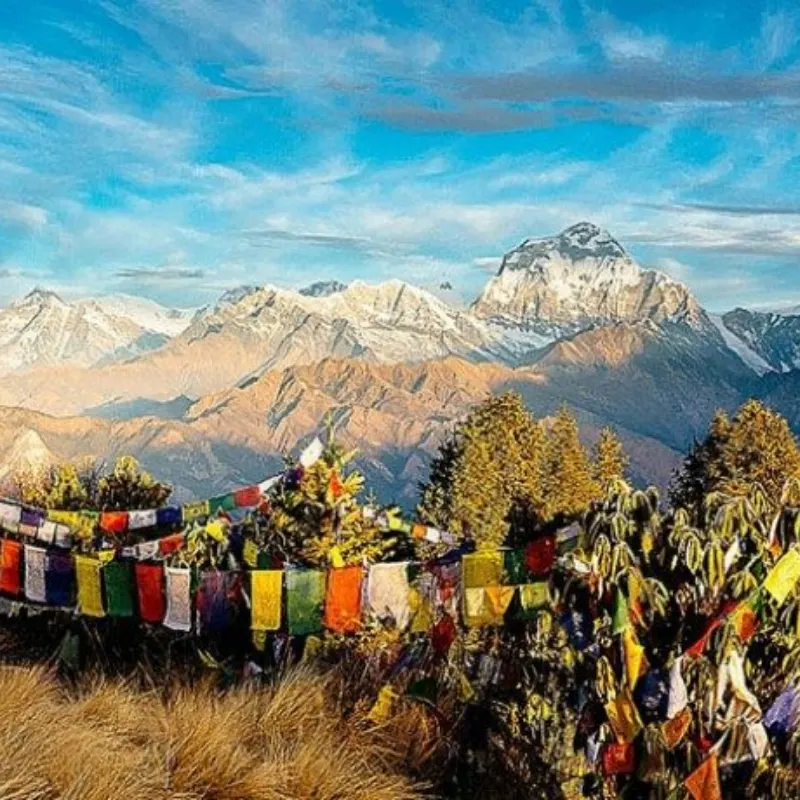
- Annapurna I — 8,091 m / 26,545 ft: the world’s tenth-highest mountain fills the head of the amphitheatre; on clear mornings its south face catches golden alpenglow.
- Annapurna South and Hiunchuli — 7,219 m / 23,684 ft and 6,441 m / 21,132 ft: the two guardian walls that make the Sanctuary feel like a closed circle of ice and rock.
- Machhapuchhre Base Camp aerial pass — around 3,700 m / 12,140 ft: flying the final approach past the base of the Fishtail, the gateway trekkers reach on ABC’s day six.
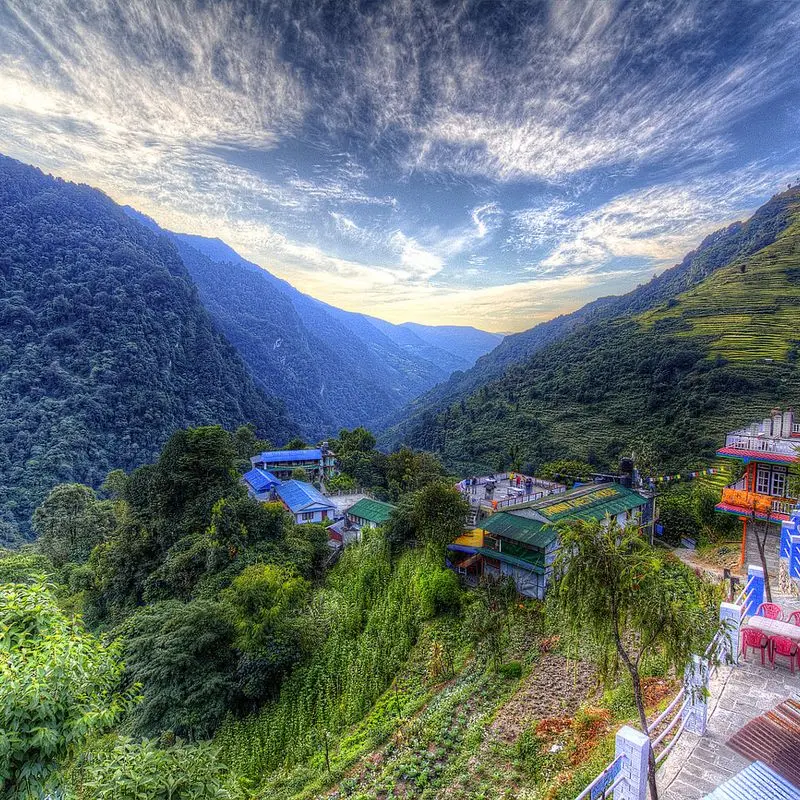
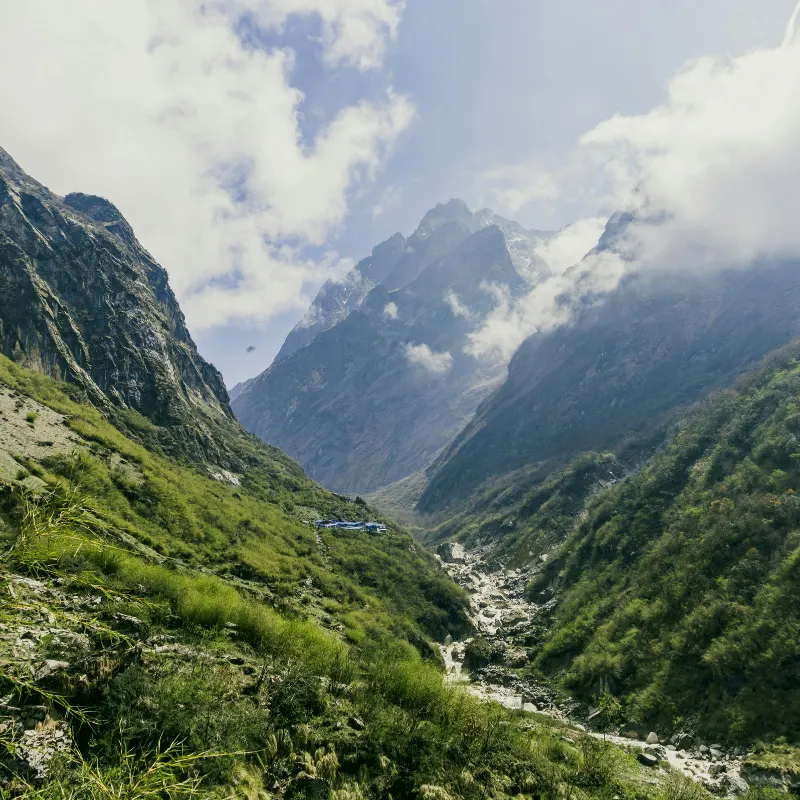
- Modi Khola Valley flight — 850 m / 2,789 ft to 4,130 m / 13,550 ft: the green gorge, Gurung villages, terraced fields, waterfalls and the trailhead settlements of Ghandruk, Chhomrong and Sinuwa stream by below in minutes.
- Gangapurna and Nilgiri panorama — 7,455 m / 24,459 ft and 7,061 m / 23,166 ft: on the climb out of Pokhara you also see the Annapurna II side and, on clear days, Dhaulagiri (8,167 m / 26,795 ft) across the valley.
- The Whole Experience Without Trekking: one morning, one flight, no walking days — the shortest possible route to Annapurna Base Camp, perfect when your Nepal trip is measured in days, not weeks.
Annapurna Base Camp Helicopter Tour Overview
The Annapurna Base Camp Helicopter Tour is a 1-day helicopter flight in Nepal’s Annapurna region that lifts off from Pokhara (or Kathmandu) and lands at Annapurna Base Camp at 4,130 m / 13,550 ft in roughly 30 minutes. Instead of walking for 6–8 days to reach Nepal’s most famous mountain amphitheatre, you fly straight into it, spend 30–45 minutes surrounded by the walls of the Sanctuary, and are back in your hotel in time for breakfast. There is no trekking involved, and the tour works for first-time visitors, families and travellers on a tight Nepal itinerary.
The route climbs out of Pokhara at around 850 m / 2,789 ft, crosses the forested Modi Khola valley, and rises past the Machhapuchhre Base Camp ridge before settling on the grassy plateau of Annapurna Base Camp. From the landing zone you look straight up the south face of Annapurna I (8,091 m / 26,545 ft), with Machhapuchhre (6,993 m / 22,943 ft), Annapurna South (7,219 m / 23,684 ft), Hiunchuli (6,441 m / 21,132 ft) and Gangapurna (7,455 m / 24,459 ft) closing the circle around you.
With Nepal Lion Tours, the Annapurna Base Camp Helicopter Tour starts from USD 575 per person on a shared helicopter, with tiers dropping to USD 546 (2–4 pax), USD 518 (5–9 pax) and USD 489 (10+ pax), plus a private-charter and Luxury option from USD 776 per person. The price covers your hotel transfers, the helicopter flight, permits and paperwork, and a company escort, with morning departures timed for the clearest mountain weather.
What Makes the Annapurna Base Camp Helicopter Tour Special?
The tour condenses the single most rewarding hour of the classic Annapurna Base Camp Trek into one morning. From Pokhara, the helicopter climbs the same valley that ABC trekkers spend days walking, then drops you directly onto the plateau where the world’s tenth-highest mountain (Annapurna I, 8,091 m / 26,545 ft) and the Machhapuchhre “Fishtail” peak (6,993 m / 22,943 ft) tower overhead. On clear early mornings the south face of Annapurna I turns golden with sunrise alpenglow — the same light ABC trekkers wake early for, delivered without a single night on the trail.
The landing site itself is a genuine base camp: the Annapurna Base Camp welcome sign decorated with trekking stickers and prayer flags at 4,130 m / 13,550 ft, the grassy sanctuary bowl, and the silence below the ice walls. Guides escorting the tour typically keep the group on the open plateau, let you photograph the Annapurna amphitheatre, and keep the stay appropriately short because of the altitude.
Why Choose the Annapurna Base Camp Helicopter Tour?
It is the practical option for anyone who wants the Annapurna Sanctuary experience without committing to a multi-day trek. The flight takes about 30 minutes each way, the ground stop is 30–45 minutes, and the whole tour from Pokhara runs about 2.5 hours door to door — an ideal half-day for travellers adding one unforgettable experience to a longer Nepal holiday. From Kathmandu, the shared option adds a 25–30 minute domestic flight to Pokhara each way, and private charters can fly directly from Kathmandu and return the same morning.
The tour also suits travellers who plan to walk later. Spending 30–45 minutes at 4,130 m / 13,550 ft on a helicopter arrival is a legitimate taster of the Annapurna Base Camp amphitheatre; many guests combine it with a shorter Poon Hill or Ghorepani trek, or book the Annapurna Base Camp Helicopter Return Trek — walking in one way and flying out on the last day.
Who Is This 1-Day Helicopter Tour Suitable For?
- First-time visitors to Nepal who want a guaranteed big-mountain moment without trekking days.
- Time-limited travellers with only 2–4 days in the country and no room for a week-long trek.
- Families with children and elderly travellers — flight time is short and there is no hiking involved.
- Couples celebrating a milestone — the sunrise flight is a classic honeymoon-style experience in the Annapurna region.
- Photographers chasing Annapurna I, Machhapuchhre and the Sanctuary from above and on the ground.
- Travellers with mobility or joint concerns who can walk a flat 200–300 metres but not climb a mountain.
- ABC trekkers who want a scouting flight or a look at the trail before committing to the 6–8 day walk.
- Adventure travellers who simply love flying through high mountains.
No previous trekking or mountaineering experience is required. The one genuine consideration is the altitude: 4,130 m / 13,550 ft affects everyone differently, and anyone with heart, lung or blood-pressure conditions should check with a medical professional before the flight.
Guide’s Note — Nepal Lion Tours
“From our experience operating Annapurna Base Camp departures, the morning helicopter window is the whole secret of this tour. We schedule take-off around 6:00 AM from Pokhara because the Annapurna valley is typically clearest in the first hours after sunrise — that is when the south face of Annapurna I turns golden and the peaks above the Sanctuary stand out sharp against the sky. Afternoon flights exist, but morning is our honest recommendation.”
— Nepal Lion Tours, Helicopter Operations Team
Quick Facts
Tour Fact | Details |
|---|---|
Tour Name | Annapurna Base Camp Helicopter Tour |
Duration | 1 day (helicopter tour) — approx. 1 hr 30 min flight + ground time; ~2.5 hrs door-to-door from Pokhara |
Region | Annapurna, Gandaki, Nepal |
Maximum Altitude | 4,130 m / 13,550 ft at Annapurna Base Camp |
Difficulty | No trekking required; Moderate graded for the altitude exposure |
Main Highlight | Landing inside the Annapurna Sanctuary amphitheatre at sunrise |
Start / End | Pokhara → Pokhara (Kathmandu departure option also available) |
Helicopter Route | Pokhara – Modi Khola Valley – Machhapuchhre Base Camp – Annapurna Base Camp – return |
Flight Time | ~30 minutes each way; 30–45 minutes on the ground |
Best Season | Spring (Mar–May) and Autumn (Sep–Nov); year-round when weather allows |
Price From | USD 575 per person (Standard, 1 pax); 2–4 pax $546; 5–9 pax $518; 10+ pax $489 |
Accommodation | Hotel in Kathmandu or Pokhara (day tour — no overnights on route) |
Guide | Licensed English-speaking guide / company escort on the tour |
Group Size | 1–10 pax (shared helicopter); private charter available |
Annapurna Base Camp Helicopter Tour Route and Elevation
The route follows the classic ABC trekking corridor from the air. From Pokhara, the helicopter tracks the Modi Khola river north into the mountain wall, threading the gorge below Ghandruk and Chhomrong before the valley opens into the Sanctuary at 4,130 m / 13,550 ft. It is the same landscape trekkers spend 6–8 days walking — compressed into a 30-minute flight.
Annapurna Base Camp Helicopter Tour Route at a Glance
Flight Leg | Route | Flight Time | Altitude |
|---|---|---|---|
Departure | Pokhara Airport → Modi Khola valley | ~10 minutes | 850 m / 2,789 ft rising |
Valley corridor | Terraced villages, Gurung settlements, forested gorge | ~10 minutes | up to ~2,700 m / 8,858 ft |
Sanctuary approach | Machhapuchhre Base Camp ridge → Annapurna Base Camp | ~10 minutes | 4,130 m / 13,550 ft |
Ground stop | Explore the amphitheatre, photograph the peaks | 30–45 minutes | 4,130 m / 13,550 ft |
Return | Annapurna Base Camp → Pokhara Airport | ~30 minutes | descent to 850 m / 2,789 ft |
Annapurna Base Camp Helicopter Tour Elevation Profile
The helicopter gains roughly 3,280 m / 10,760 ft in about 30 minutes — the equivalent of the ABC trek’s entire vertical gain, delivered in a single flight. From Pokhara (850 m / 2,789 ft) the profile climbs steadily through mid-valley at around 2,000–3,000 m / 6,562–9,843 ft, levels briefly past the Machhapuchhre Base Camp ridge, and finishes on the flat plateau of Annapurna Base Camp (4,130 m / 13,550 ft).
What the profile means physically is simple: there is almost no one side of it, because you are flying. The noticeable change is the air — thinner at 4,130 m, noticeably cooler, and with less oxygen than at lake level in Pokhara. Because the exposure is short (30–45 minutes) rather than days, the altitude risk is lower than on the trek, but it is not zero, so the itinerary keeps the ground stop brief and the descent immediate. Your escort and the flight crew keep the plan flexible; if anyone on board feels unwell, the helicopter is ready to leave at short notice. The full elevation profile and a trekking map of the Annapurna Sanctuary are available with the tour materials from Nepal Lion Tours on request.
How to Get to the Annapurna Base Camp Helicopter Tour
You join the tour in Pokhara or Kathmandu, depending on the option you book. Pokhara is the closest and most convenient departure base — the helicopter returns there the same morning — while the Kathmandu option suits travellers arriving and departing the country from the capital. From either city, Nepal Lion Tours arranges your hotel pickup and drop-off on a private vehicle, so your only job is to be ready at the hotel at 5:30 AM.
Kathmandu to Pokhara: Flight or Road?
Option | Approx. Travel Time | Best For |
|---|---|---|
Domestic flight | 25–30 minutes | Shortest connection; pairs seamlessly with a 5:30 AM start |
Tourist bus | 6–7 hours* | Budget travellers visiting Pokhara anyway on a longer trip |
Private vehicle | Around 5–7 hours* | Flexible or private travel, scenic Prithvi Highway |
*Road times approximate; affected by traffic, weather and road construction.
The domestic flight is the obvious choice for combining with the helicopter tour: a 25–30 minute hop from Kathmandu to Pokhara fits cleanly into the shared-tour schedule, and your onward helicopter connection is coordinated by the Nepal Lion Tours team. The road is comfortable but long, and on a 1-day tour a 6–7 hour bus transfer would consume your entire spare time — so travellers who want to do the flight from Kathmandu and return the same morning should book the domestic flight option rather than the road.
Pokhara to the Helipad
From your Pokhara hotel, the tour transfer picks you up at 5:30 AM and drops you at the Pokhara Domestic Airport heliport in about 15–20 minutes, depending on your hotel’s location along Lakeside or near the airport. After check-in, you complete the passenger paperwork, go through the brief safety orientation, and walk to the helicopter. The formalities are handled for you; you carry your passport for identification and the flight manifest.
The Kathmandu Departure Option
From Kathmandu, the shared-tour day starts with a 5:30 AM hotel pickup and a transfer to the Domestic Terminal of Tribhuvan International Airport. At 6:30 AM you take the short domestic flight to Pokhara, join the helicopter around 7:30 AM, spend 30–45 minutes at Annapurna Base Camp from about 8:00 AM, fly back to Pokhara and connect with your return domestic flight, landing at your Kathmandu hotel between 10:30 and 11:00 AM. Private-charter guests instead fly directly from Kathmandu by helicopter and return the same way, without the connecting fixed-wing legs.
What to Expect at the Helipad
The heliport is purpose-built for tours like this, and the morning routine moves quickly: check-in, weight and paperwork, safety briefing, and board. The helicopter you fly is operated by one of Nepal’s licensed helicopter operators flying under CAAN (Civil Aviation Authority of Nepal) rules; shared tours typically seat 5–6 passengers per helicopter, with larger groups split across two or more aircraft. Your escort keeps the group together through check-in and hands you off only at the end of the return transfer.
Guide’s Note — Nepal Lion Tours
“Please do not script your international connection too tightly after a helicopter tour. Our Pokhara morning flights normally land back around 7:45 AM, and the Kathmandu shared option finishes at the hotel near 11:00 AM, but mountain weather can slide the schedule by an hour. If you are flying out of Nepal the same day, leave a comfortable buffer — we suggest staying in Kathmandu or Pokhara an extra day or at least a long same-day gap between the tour and your departure.”
— Nepal Lion Tours, Helicopter Operations Team
Annapurna Base Camp Helicopter Tour Difficulty, Fitness and Altitude
The tour is graded Moderate, but that grade is about the destination and altitude, not your legs. There is no trekking, no climbing and no long walking — you fly in and you fly out. The genuine consideration is the altitude: you step from Pokhara (850 m / 2,789 ft) to Annapurna Base Camp (4,130 m / 13,550 ft) in about 30 minutes, and spending time at that height — even briefly — affects the body more than the flight itself.
Where the Effort Actually Is?
The “effort” on this tour is almost entirely absent in physical terms: a short walk from the A4 to the helicopter, a 30–45 minute amble around the base camp plateau, and a walk back to the aircraft. What deserves respect is the sudden altitude. At 4,130 m / 13,550 ft the air holds roughly 40% less oxygen than at sea level, so even relaxed sightseeing can leave someone feeling short of breath, headachy or light-headed. The itinerary counteracts this with a short ground stop, a morning schedule (cool, stable air), and an immediate return to lower altitude.
Guide’s Note — Nepal Lion Tours
“Although there is no climbing on this tour, we run it with the same altitude discipline as our ABC treks. We keep the stop at Annapurna Base Camp to 30–45 minutes, watch every passenger’s condition, and do not linger if anyone feels unwell — the helicopter is literally standing by. In practice the vast majority of guests feel fine, but a few mornings at 4,130 m / 13,550 ft remind you that altitude does not care whether you walked or flew.”
— Nepal Lion Tours, Helicopter Operations Team
How to Prepare for the Helicopter Tour
- Sleep well the night before — the tour starts with a 5:30 AM pickup, so an early night makes the morning far easier.
- Eat a light breakfast before boarding, or carry a small snack; flying on an empty stomach is worse than flying after a light meal.
- Drink water and skip alcohol the evening before — hydration matters more at altitude, however short the stop.
- Dress in layers for a cold morning at 4,130 m / 13,550 ft (a fleece or light jacket plus a warm top under a windproof layer is usually enough).
- Tell the operator about any health condition — heart, lung or blood-pressure concerns should be cleared with a doctor before flying to altitude.
- Keep heels and long skirts open, the open skirt makes climbing in and out of the helicopter awkward — comfortable trousers and flat, closed shoes are best.
How a Helicopter Arrival Differs from the ABC Trek
On the Annapurna Base Camp Trek, walkers gain the 4,130 m over several days, with nights spent at Chhomrong (2,400 m / 7,874 ft), Dovan (2,500 m / 8,202 ft), Deurali (3,230 m / 10,597 ft), Machhapuchhre Base Camp (3,700 m / 12,140 ft) and finally Annapurna Base Camp itself — a gradual arc that lets the body adjust. The helicopter collapses that whole progression into 30 minutes, so correct stepping from a lowland city like Pokhara straight to 4,130 m is the key difference. For many people this causes no symptoms at all; for some it causes mild and short-lived ones. Because the stay is brief, the tour is far gentler than trekking as far as risk is concerned — but it should still be treated with respect rather than dismissed.
Altitude, Acclimatization and Safety
Annapurna Base Camp Helicopter Tour Altitude Profile
- Pokhara — 850 m / 2,789 ft: the departure base; comfortable lowland air temperature on the lake side of the Seti river valley.
- Kathmandu — 1,400 m / 4,593 ft: the alternative departure city; a good “pre-acclimatisation” base if you arrive a day or two early.
- Mid-valley — ~2,000–3,000 m / 6,562–9,843 ft: the transition zone over the Modi valley, passed in about 20 minutes of flight.
- Machhapuchhre Base Camp ridge — ~3,700 m / 12,140 ft: the final gateway before the Sanctuary opens onto the landing zone.
- Annapurna Base Camp — 4,130 m / 13,550 ft: the highest point of the tour and the landing site — reached in about 30 minutes from Pokhara.
How the Body Adapts to Altitude
Altitude affects everyone because at 4,130 m / 13,550 ft the body must work harder with less oxygen. Because your exposure on this tour is measured in minutes, formal acclimatisation is neither possible nor necessary — instead the strategy is prophylactic: arrive in Kathmandu or Pokhara a day early if you can, stay well hydrated, sleep normally, eat lightly, avoid alcohol, and keep the ground stop short. On the plateau, move slowly, keep conversation light, and pay attention to how you feel. Your escort is trained to recognise the early signs of altitude problems and will cheerfully shorten the stop if needed — no one on a helicopter tour is expected to tough it out.
Symptoms of Altitude Sickness to Watch For
Mild symptoms to expect and manage calmly:
- Headache, especially a dull pressure that does not leave with a rest.
- Fatigue or unusual shortness of breath on minimal effort.
- Dizziness or light-headedness when standing.
- Loss of appetite or nausea.
- Trouble sleeping or waking with a feeling of breathlessness.
More concerning signs that should end the stop immediately:
- A worsening headache that standard pain relief will not touch.
- Nausea that becomes repeated vomiting.
- Increasing confusion, clumsiness or slurred speech.
- Breathlessness that continues at rest.
- Cough producing frothy or discoloured sputum (a rare, serious sign).
The correct response on any short visit is the same one our guests are told at the pre-flight safety briefing: stop ascending, descend, and seek advice. On this tour descending means boarding the helicopter and returning to Pokhara (850 m / 2,789 ft), which is exactly what the crew does without hesitation.
How Nepal Lion Tours Supports Altitude Safety
- Morning flight windows are chosen for stable, cooler air and the clearest mountain light.
- Short ground exposure — the 30–45 minute stop at 4,130 m / 13,550 ft is deliberately kept brief.
- Licensed flight crews follow CAAN (Civil Aviation Authority of Nepal) rules on weather minima, fuel and passenger weight.
- Escort watchfulness — a company escort accompanies the tour and monitors passenger well-being at the landing site.
- Insurance and medical advice — travel insurance covering helicopter travel and high-altitude exposure is strongly recommended; NLT’s team is on hand for questions before you fly.
Best Time for the Annapurna Base Camp Helicopter Tour
The best time for the Annapurna Base Camp Helicopter Tour is autumn (September to November) and spring (March to May), when the Annapurna valley has its longest runs of clear, stable weather. Unlike a trek, where rain and mud are the main enemies, a helicopter tour depends on visibility — the operator needs a safe cloud base, acceptable winds and clear approach to Annapurna Base Camp — so the seasons with the best mountain views are also the seasons when the tour is most likely to run on time.
Season | Months | Weather & Flight Conditions | Mountain Views | Overall |
|---|---|---|---|---|
Autumn | Sep–Nov | Post-monsoon clarity; stable mornings | best of the year; wide-open | Best overall |
Spring | Mar–May | Warming days; some late afternoon clouds | Excellent on clear mornings | Highly recommended |
Winter | Dec–Feb | Cold but crisp; occasional snow showers | Good on clear days | Good with flexibility |
Monsoon | Jun–Aug | Frequent cloud, rain and low ceilings | Often limited | Less suitable |
Autumn — September to November
Autumn is the classic Annapurna flying season. The monsoon has rinsed the air clean, and October and November deliver the most reliable sequences of cloud-free mornings of the entire year. The Sanctuary sits wide open, the south face of Annapurna I catches the morning alpenglow before the light flattens, and the flight is quietly bump-free. Book early in September–November: helicopter seats sell fastest in these months, and clear dates around October full up weeks ahead.
Spring — March to May
Spring is the second peak season, running from March through May, with the lowland terraces green, the rhododendrons flowering along the Modi valley, and warming days that keep morning air stable. Views of Annapurna I, Machhapuchhre and the Sanctuary walls are excellent on clear mornings, and the general weather reliability in April and early May is outstanding. Later in May, afternoon cumulus builds more readily, but your early-morning departure minimises exposure to it.
Winter — December to February
Winter is the quietest season, and it is perfectly doable if you want the Sanctuary nearly to yourself. Mornings are frosty — expect sub-zero temperatures at Annapurna Base Camp (4,130 m / 13,550 ft) and cold air over the valley — but the high pressure systems of December and January produce some of the year’s crispest blue-sky days. The trade-off is a higher chance of short snow showers cancelling or delaying departure. Booking a flexible date and keeping a spare morning is the winter strategy.
Monsoon — June to August
Monsoon (June to August) is the least suitable window. Cloud bases sit low over the Annapurna ranges, rain fills the valley almost daily, and the Sanctuary frequently wraps itself in cloud — the exact conditions that prevent safe landings at 4,130 m / 13,550 ft. Flights do operate on the clear spells that break the monsoon, but expect the possibility of rebooking. If your dates are fixed inside the monsoon, leave flexible days and an open mind about flying later in your trip.
Which Season Should You Choose?
Choose autumn (Sep–Nov) for the most reliable views and the best probability of a perfectly clear morning; choose spring (Mar–May) for vivid green valleys and excellent flying too. Winter works for photographers chasing crisp empty peaks, and monsoon is the only season we would steer anyone away from. Whatever the season, an early-morning take-off around 6:00 AM from Pokhara remains the single best choice — valleys thin out and peaks sharpen as the day goes on, so the first flight of the morning usually has the widest weather window.
Guide’s Note — Nepal Lion Tours
“On a clear autumn or spring morning the view opens up from the valley floor all the way to Annapurna I within minutes of lift-off. We hold morning slots back from the first window forwards — if the first departure is delayed by morning cloud, our team watches the trend and usually gets the flight away shortly after. A flexible day in Pokhara has rescued many guests from a missed landing at Annapurna Base Camp.”
— Nepal Lion Tours, Helicopter Operations Team
Annapurna Base Camp Helicopter Tour — Permits and Regulations
A helicopter landing at Annapurna Base Camp takes you inside the Annapurna Conservation Area (ACA), Nepal’s largest protected area, so an Annapurna Conservation Area Permit (ACAP) entry fee applies on top of the tour booking. The good news is that Nepal Lion Tours arranges the applicable permits and paperwork as part of the tour preparation — you simply carry your passport to match the documentation. Helicopter tours are also subject to aviation rules (weather minima, passenger manifests and weight limits) that the licensed helicopter operator and CAAN regulate, not the trekking rules of the trail.
Annapurna Base Camp Helicopter Tour Permits at a Glance
Requirement | Who Needs It? | Who Arranges It? |
|---|---|---|
Annapurna Conservation Area Permit (ACAP) | Visitors landing inside the Annapurna Conservation Area, incl. Annapurna Base Camp | Nepal Lion Tours |
TIMS (Trekkers’ Information Management System) | Not normally required for helicopter-only visits — applies to trekkers on foot | N/A for this tour |
Passport / photo ID | All passengers, for the flight manifest and permit match | Carried by the passenger |
Adult aviation manifest | All helicopter passengers under CAAN rules | The helicopter operator |
Restricted-area permit | Not required for this tour | N/A |
Annapurna Conservation Area Permit (ACAP)
The Annapurna Conservation Area Permit (ACAP) is the entry fee for the great Annapurna protected region, and it is required for anyone touching down inside the area — which a landing at Annapurna Base Camp (4,130 m / 13,550 ft) certainly is. The current fee schedule runs approximately NPR 3,000 for foreign nationals and NPR 1,000 for SAARC nationals (government rates can be revised — confirmed at booking). You authorise the permit with your passport details, and Nepal Lion Tours takes care of the paperwork so the fee is wrapped into your tour rather than handled at a counter.
TIMS and Helicopter Tours
The TIMS (Trekkers’ Information Management System) card is associated with trekkers walking the Annapurna routes, not with helicopter passengers, and it is not normally required for a helicopter-only visit to the Sanctuary. If you plan to combine your flight with a trek — for example, the Annapurna Base Camp Helicopter Return Trek, where you walk into the Sanctuary and fly out — then TIMS and the routine trekking permits apply to the walking portion, and Nepal Lion Tours still arranges them. For a straight 1-day helicopter tour, your practical “paperwork” is a passport, the ACAP entry and the CAAN passenger manifest.
Do You Need a Restricted-Area Permit?
No — not for this tour. The flight into Annapurna Base Camp sits inside the open-access Annapurna Conservation Area, not a restricted zone like Upper Mustang or Manaslu, which carry separate restricted-area permits. The heliport and landing zone are routine helicopter operations under CAAN air-traffic clearance rather than restricted-trek permits. Where a modified itinerary diverges — a private charter adding Poon Hill (3,210 m / 10,531 ft) or Machhapuchhre Base Camp as a stop — our team confirms the current requirements with the operator at booking; park rules and aviation rules can change, so verify at booking.
Who Arranges the Permits and Flight Paperwork?
Nepal Lion Tours handles the permit and flight paperwork end to end. When you book, we collect passport details for the ACAP entry and the CAAN passenger manifest, and the helicopter operator files the flight plan with the authorities before the morning departure — including the weather brief and passenger weight manifest that every helicopter flight in Nepal legally requires. Your only task is to carry your original passport on tour day and arrive at the 5:30 AM pickup on time. Government fees, aviation fees and rules are revised periodically, so the exact figures confirmed at booking are the ones that count.
Food and Accommodation for the Annapurna Base Camp Helicopter Tour
A 1-day helicopter tour has no overnight stops on the route, so “accommodation” on this package means your hotel in Kathmandu or Pokhara, and “food” means the meals you take around the flight — there is no food or lodging included along the flight itself. The base camp lodge at Annapurna Base Camp exists but is a simple trekker guesthouse catering to overnight walkers; guests on the morning helicopter stop typically stay only 30–45 minutes and do not take a sit-down meal there.
Overnight Stays for the Helicopter Tour
Your nights on this package are spent in city hotels — in Kathmandu (Thamel or the airport belt for early transfers) or in Pokhara (the Lakeside district, simplest for the 5:30 AM pickup). Hotel standards in both cities range from budget through 3-star to 4-star; rooms come with private bathrooms (hot shower included), wi-fi, and electricity, which is a distinctly more comfortable night than a trekker teahouse. Nepal Lion Tours can arrange your hotel in either city as part of the booking, matching your budget and positioning you close to the departure points.
Food and Meals Around the Flight
Because the tour starts at 5:30 AM, most guests take a light early breakfast at their hotel or eat a snack before boarding. There is no meal service during the roughly 1.5–2 hour flight and ground stop, and the simple ABC lodge is not booked for a sit-down breakfast on the morning stop. On the way back, the 7:45 AM Pokhara landing (or the ~11:00 AM Kathmandu return) lands you in time for a proper late breakfast or early lunch in the city. Vegetarian, vegan and allergy-friendly city restaurants are plentiful in both Kathmandu and Pokhara.
What Is Included in the Helicopter Package?
Included in the Tour Package | Usually Paid Separately |
|---|---|
Private hotel pickup and drop-off (Pokhara or Kathmandu) | Hotels in Kathmandu or Pokhara |
Helicopter flight out and back to the Sanctuary | Meals around the flight |
ACAP permit and flight paperwork | Personal expenses (souvenirs, extra drinks) |
Licensed flight crew and safety briefing | Travel or medical insurance |
Company escort on the tour | Tips for the crew or escort |
Morning schedule timed for the clearest weather | Other services not stated in the inclusions |
The exact list of inclusions can vary slightly by tour tier and departure option, so the final inclusions are confirmed at booking — the Standard and Luxury tiers differ in aircraft and service level rather than in meals or accommodation.
Why Book with Nepal Lion Tours?
Nepal Lion Tours has operated Annapurna departures for years and runs this helicopter tour with the same discipline as our multi-day treks: licensed crews, sealed paperwork, morning timing, and a local team you can reach before and during your trip. On this package, “the guide” is your licensed English-speaking guide / company escort, and the flight itself is flown by a CAAN-licensed helicopter operator.
- Local, licensed English-speaking guides and crews.
Your tour is escorted by a licensed English-speaking guide or company representative, while the helicopter flies under a CAAN-licensed operator with qualified pilots — the same verification standard we apply to our Annapurna, Everest and Langtang treks.
- A registered trekking company you can verify.
Nepal Lion Tours is a registered trekking company based in Kathmandu, and company and licence details are provided to travellers on request. You are not booking a phone-number operator with no physical office.
- Private departures from two travellers.
The shared tour runs daily with 1–10 passengers; the moment you have two or more guests who want exclusivity, the private-charter option gives you your own aircraft, your own timing and the freedom to add Poon Hill or Machhapuchhre Base Camp as optional aerial stops.
- Direct access to the Annapurna Sanctuary in one morning.
This is the signature value of the package: landing at 4,130 m / 13,550 ft inside Annapurna Base Camp — a destination trekkers need 6–8 days to reach on foot — delivered in a 30-minute flight before 9:00 AM.
- Seamless transfers and straightforward logistics.
Hotel pickups, airport handling, ACAP paperwork, the CAAN manifest and the helicopter booking are all coordinated by one local team, so a guest flying from Kathmandu or Pokhara simply turns up at the door.
- Transparent pricing with genuine group discounts.
The shared tour steps down from USD 575 (1 pax) to USD 546 (2–4 pax), USD 518 (5–9 pax) and USD 489 (10+ pax), and the Luxury tier from USD 776 (1 pax) to USD 660 (10+ pax) — straightforward per-person rates published up front.
- A local team you can contact before and during your trip.
Weather and rescheduling questions, hotel recommendations, extra-day flexibility — our Nepal-based office answers on WhatsApp and by phone through the journey, and the 24/7 response guarantee covers every departure.
Book the Annapurna Base Camp Helicopter Tour
One morning, one helicopter, 30–45 minutes inside Nepal’s most famous mountain amphitheatre — the Annapurna Base Camp Helicopter Tour is the fastest way to stand beneath Annapurna I (8,091 m / 26,545 ft) and the Machhapuchhre Fishtail. Morning departures run from either Pokhara or Kathmandu, and the whole experience slots neatly into even the shortest Nepal itinerary.
Annapurna Base Camp Helicopter Tour at a Glance
- Duration: 1 day — ~1 hr 30 min helicopter tour; ~2.5 hours door-to-door from Pokhara.
- Price: from USD 575 per person (Standard); USD 546 (2–4 pax), USD 518 (5–9 pax), USD 489 (10+ pax); Luxury from USD 776.
- Difficulty: no trekking required; altitude exposure to 4,130 m / 13,550 ft.
- Maximum Altitude: 4,130 m / 13,550 ft at Annapurna Base Camp.
- Departures: Pokhara (daily, ~6:00 AM take-off) or Kathmandu (shared with domestic connection / private charter direct).
- Group Size: 1–10 pax on shared tours; private charter available.
- Meals: not included on the flight; hotels and city restaurants cover the day’s food.
- Accommodation: hotel in Kathmandu or Pokhara (arranged on request).
- Permits and paperwork: ACAP, CAAN flight manifest — arranged by Nepal Lion Tours.
- Transportation: private hotel transfers at both ends; helicopter out and back.
- Guide: licensed English-speaking guide / company escort on the tour.
- Cancellation: free cancellation up to 14 days before departure (subject to booking terms).
Ready to Start Your Annapurna Adventure?
Secure your preferred travel date and group size through the booking form or WhatsApp at +977-9851039020. Tell us whether you want the Pokhara departure, the Kathmandu shared option, or a private charter — plus the exact number of passengers so we can quote the right per-person tier (USD 575 / 546 / 518 / 489). Whether you are flying as a solo traveller, a couple celebrating something special, or a family group, our team will confirm your morning slot, arrange your hotel transfers, and handle the permits before you board.
Your Annapurna Base Camp morning is waiting — choose your date and get ready to land inside the Sanctuary.
Related Annapurna Tours and Treks
The Annapurna region offers a full menu of ways to see the Sanctuary — from the hour-long helicopter flight above, to the 6–8 day classic walk into the amphitheatre. If the helicopter tour sparks a desire to spend more time among the mountains, these are the natural companions.
Tour | Duration | Difficulty | Max Altitude | Best For |
|---|---|---|---|---|
Annapurna Base Camp Helicopter Return Trek | Trek in, fly out — duration on package page | Moderate | 4,130 m | Walking into the Sanctuary, flying out on the last day |
Ghorepani Poon Hill Trekking | 4 days | Easy–Moderate | 3,210 m / 10,531 ft | Short sunrise-viewpoint getaway |
Poon Hill Teahouse Trekking | 7 days | Easy–Moderate | 3,210 m / 10,531 ft | Slower village-paced trekking |
Annapurna Panorama View Trek | 9 days | Easy–Moderate | 3,210 m / 10,531 ft | Wider foothill scenery, villages and views |
Annapurna Base Camp Trek | 10–12 days | Moderate | 4,130 m / 13,550 ft | Reaching the Sanctuary amphitheatre on foot |
Annapurna Circuit Trek | 14–18 days | Moderate–Challenging | 5,416 m / 17,769 ft | Long high-altitude journey around the massif |
For trekkers who want the full Annapurna Base Camp Trek together with the scenic exit, Nepal Lion Tours also operates the Annapurna Base Camp Helicopter Return Trek — a multi-day walk into the Sanctuary with a helicopter flight back to Pokhara on the final day; the day-by-day itinerary and current price are on the package page. The flight-only tour in this article combines naturally with sightseeing in Pokhara, a short Poon Hill trek, or a Chitwan Jungle Safari on the same Nepal trip.
Trip Essentials
Packing advice, required equipment & gear recommendations
Essential
Packing List for the Annapurna Base Camp Helicopter Tour
You pack for one cold morning at altitude, not for days on a trail. Because the tour is short, keep everything in a small daypack — there is no need for trekking boots, sleeping bags or a duffel, and shared helicopters are weight-conscious, so light is right.
Hiking Gear for the Helicopter Tour
- Comfortable, flat closed shoes or light walking shoes — you only walk across the helipad and the ABC plateau.
- A small 15–25 litre daypack for your layers, water, snacks, camera and documents.
- A reusable water bottle (empty through security where required) — hydration helps at altitude.
- Sunglasses with UV protection — the snow and light at 4,130 m / 13,550 ft is intense.
- Sunscreen (SPF 30+) — high-altitude sun burns fast, even on a short visit.
- A light rain shell or windbreaker — the valley and the plateau weather can change over the morning.
- Small power bank for your phone and camera — a full day out without a charging stop.
Clothing: Layers for a Cold Morning at 4,130 m
- Base layers — a light merino or synthetic top; you will be comfortable inside the helicopter.
- Mid-layers — a fleece or light down jacket; the air at 4,130 m / 13,550 ft is cold in the morning.
- Outer layers — a windproof shell breaks the rotor wash on boarding and any plateau breeze.
- Trekking clothes — comfortable trousers (not jeans if you want full mobility in and out of the aircraft) and a warm top under the shell.
- Headwear and gloves — a beanie and light gloves for the early-morning cold at altitude; a wide-brim of sun hat too if you are out in the midday light.
Sleeping and Evening Comfort
- Not applicable to the flight itself — you sleep in a city hotel in Kathmandu or Pokhara, not on the mountain.
- Pack earplugs and an eye mask only if you are sensitive on the nights before an early departure.
- No sleeping bag or duffel needed — this is a half-day tour, not an overnight expedition; Nepal Lion Tours supplies trek gear only for multi-day packages.
Toiletries and Personal Health Items
- Personal medication and any medical docs (inhalers, glucose tabs, prescriptions).
- Lip balm with SPF and moisturiser — mountain mornings are dry and cold.
- Hand sanitiser and wet wipes.
- Pain relief tablets suitable for altitude headaches (paracetamol-style) if your doctor recommends them.
- Antiseptic plasters for any small scrape around the helipad.
- Tissues or a small pack of tissues.
- Contact-lens solution if you wear lenses — cold, dry air can irritate.
- Personal prescriptions carried in your daypack, not in checked luggage.
- A compact comb or brush, and any personal toiletry favourites.
- A small tube of sunscreen for reapplication after the flight.
- Throat lozenges for the dry cabin air.
- A small reusable bag for dirty or wet clothing.
- Motion-sickness tablets if you have flown light aircraft before and felt queasy — take as directed.
Electronics
- Camera or smartphone — the essential item; charge it fully the night before a 5:30 AM pickup.
- Spare camera battery or power bank for extra photos at the Sanctuary.
- Phone with your booking details and your hotel address in Pokhara or Kathmandu saved offline.
- Charging cables and a universal adapter if you fly in with non-Nepali plugs.
- Note: charging points are not available at the landing zone; keep everything charged overnight at your hotel.
Documents and Money
- Passport — required for the ACAP permit match and the CAAN flight manifest.
- A printed or digital copy of your booking confirmation with the pickup time (5:30 AM).
- Nepali rupees in cash for small purchases and tips (a few hundred NPR is plenty).
- A second card or emergency cash kept separately.
- Insurance card and emergency contact numbers — travel and medical insurance covering helicopter travel is strongly recommended.
How Much Should You Pack?
Pack lightness is the rule. Everything you need fits in a 15–25 litre daypack: a few warm layers, water, snacks, camera, and your passport. The helicopter cabin is shared and weight-conscious, and any larger group’s baggage is limited by the aircraft manifest, so leave the wheeled suitcase at the hotel. Your escort handles the practicalities at both ends, but the golden rule is the same as any mountain morning — light daypack, warm layers, full camera, empty bladder, and your passport.
Read Before You Book
Permits, terms, medical considerations & advisory guidelines
Advisory
What to Know Before Booking
A few practical details make the Annapurna Base Camp Helicopter Tour run smoothly. Read through these before confirming your date.
Accommodation and Facilities
Your nights are spent in city hotels in Kathmandu or Pokhara, with full private bathrooms, hot water, wi-fi and electricity — a proper hotel room rather than a trekker teahouse. For the Pokhara departure, staying in Lakeside keeps your 5:30 AM pickup short; for the Kathmandu shared option, hotels near Thamel or the airport belt simplify the early transfer. Nepal Lion Tours can arrange the hotel to match your budget when you book.
Food and Dietary Requirements
There is no meal service on the flight, so plan a light breakfast before the 5:30 AM pickup or carry a snack. There is no kitchen commitment to the ABC lodge on the 30–45 minute stop. After landing, late breakfast or lunch is easy in both cities, and vegetarian, vegan and allergy-friendly options are plentiful. Tell us about any dietary requirements when you book if you would like city restaurant suggestions arranged.
Altitude, Health and Insurance
The tour reaches 4,130 m / 13,550 ft with no gradual acclimatisation, so health matters. Travellers with heart, lung or blood-pressure conditions, pregnant travellers, and anyone who has had altitude problems before should get medical clearance before flying. Travel insurance covering helicopter travel and high-altitude exposure is strongly recommended on every departure — and check your policy covers mountain flying, since some standard policies exclude it.
Money and Tipping
The tour price covers the flight, transfers and permits, but personal expenses — snacks, souvenirs, extra drinks and crew or escort tips — are paid separately. Carrying Nepali rupees in cash (a few hundred to a thousand NPR) covers these. Tipping is optional and at your discretion; if you fly with a company escort, a modest tip for good service is welcome but never required.
Culture and Responsible Trekking
- Keep the Sanctuary clean — carry out everything you bring, and take no rocks or plants.
- Respect the religious character of the peaks — Machhapuchhre is worshipped, never climbed.
- Treat prayer flags and chortens with respect — photographing them is fine, leaning on or touching them is not.
- Keep noise low around the landing zone so the morning stays calm for everyone.
- Follow the crew’s instructions on movement around the helicopter — rotor safety comes first.
- Buy local — tea, snacks and souvenirs bought in Pokhara or Kathmandu support Nepali families directly.
Route Options
The Pokhara departure is the simplest: ~2.5 hours door to door, out and back from the lake city. The Kathmandu shared option adds the 25–30 minute domestic connection each way and lands you home by ~11:00 AM. The private charter flies directly from Kathmandu (or Pokhara) with your own timing and can add quick aerial stops at Poon Hill (3,210 m / 10,531 ft) or Machhapuchhre Base Camp (3,700 m / 12,140 ft). And the Annapurna Base Camp Helicopter Return Trek package combines a multi-day walk into the Sanctuary with a helicopter exit — ask our team to compare it with the flight-only tour.
Booking and Before You Arrive
Make sure you understand the following before you confirm:
- Pickup is at 5:30 AM — the itinerary is built around the clear-morning window; an early night matters.
- Passport is mandatory for the permits and flight manifest.
- Weather flexibility is built in — flights are weather-dependent, and rare delays or rescheduling are handled under the operator/weather policy.
- Small daypack only — shared helicopters carry limited baggage by manifest.
- Health conditions must be declared at booking so the team can confirm suitability.
- Peak-season dates sell out — October, November, April and May slots fill weeks ahead; book early.
- Stay in Pokhara (or Kathmandu) the night before if you can, so the 5:30 AM transfer is stress-free.
A Few Final Tips
Arrive in Kathmandu or Pokhara at least one day before the tour so jet lag, late flights and altitude-based sluggishness do not eat into your morning. Choose the Pokhara departure if you want the shortest, most relaxed version of the day. Keep your camera charged overnight, wear fast shoes and layers, and be ready to rebook by one day if the weather window closes — the same Annapurna Sanctuary will still be there tomorrow morning.
Day-by-Day Itinerary
Explore each day's route, trekking elevation, and activities
From Pokhara
Your adventure begins early at 5:30 AM with a pickup from your hotel, followed by a transfer to Pokhara Domestic Airport. After check-in, you'll receive a brief safety orientation before boarding the helicopter.
At around 6:00 AM, the helicopter takes off toward the Annapurna range, offering spectacular views as you fly above lush forests, terraced fields, traditional Gurung villages, rivers, and waterfalls. As you approach the mountains, you'll see impressive peaks including Annapurna I (8,091 m), Machhapuchhre, Annapurna South, Hiunchuli, Gangapurna, Nilgiri, and Dhaulagiri. The scenic flight takes approximately 30 minutes.
Around 6:30 AM, you'll arrive at Annapurna Base Camp (4,130 m). You'll have approximately 30 to 45 minutes to explore the area, capture photographs, and enjoy the magnificent Himalayan scenery. The stay is kept relatively short due to the high altitude.
At approximately 7:15 AM, the helicopter begins the return journey, reaching Pokhara Airport around 7:45 AM. From the airport, you'll be transferred back to your hotel, bringing the helicopter tour to an end.
Your journey starts at 5:30 AM with a hotel pickup and transfer to the Domestic Terminal of Tribhuvan International Airport.
At 6:30 AM, shared-tour passengers take a short domestic flight to Pokhara, while guests traveling by private charter proceed directly to the helicopter in Kathmandu.
Around 7:30 AM, the helicopter heads toward the Annapurna Sanctuary, flying across breathtaking landscapes featuring the Annapurna and Dhaulagiri mountain ranges, deep valleys, remote villages, and glaciers before reaching Annapurna Base Camp.
From approximately 8:00 AM, you'll have 30 to 45 minutes at Annapurna Base Camp to admire the surrounding mountains, explore the area, and take memorable photographs.
The return flight begins around 8:45 AM. Shared-tour passengers fly back to Pokhara and connect with their domestic flight to Kathmandu, while private charter guests return directly to Kathmandu by helicopter. The journey concludes with a hotel drop-off between 10:30 and 11:00 AM.
Want to customize this itinerary?
Tailor duration, lodges, acclimatization days, or add private helicopter flights.
Inclusions & Exclusions
Everything that is covered and what you'll need to budget separately
What is Included
Fully covered in your package price
- Airport pickup and drop services on a private vehicle
- Transportation from Kathmandu to Lukla and back to Kathmandu (by flight)
- Food (Breakfast, Lunch, Dinner and a cup of coffee or tea) and accommodations during the trip in hotels and guesthouses with family environment
- One licensed English-speaking trekking guide (Chinese, Korean, Hindi speaking guides are also available)
- Transportation, food, accommodation and insurance of guide during the trip
- Down jacket, all-season sleeping bag, duffel bag (to be returned after completion of the trip)
- First Aid Medical Kit (Carried by the guide)
- All the required permits and paperworks
- Welcome or farewell dinner in Kathmandu at a cultural restaurant (complimentary)
- Mobile SIM Card (works nationwide) and a map of the trekking region
Optional Addons
- Porter extra charge
What is Excluded
Personal expenses & optional extras
- International airfare
- Visa charges
- Your travel and medical insurance
- Personal expenses such as shopping, bar bills, hot shower, telephone, laundry etc.
- Food and accommodation in Kathmandu (except mentioned)
- Other services that are not mentioned
- Tips for guides and porters
Our Customer Reviews
Authentic experiences and feedback from our travelers
Write a Review
Share your adventure experience with other travelers
Thank You!
Your review has been submitted and is awaiting approval.
Please Wait
You've submitted several reviews recently. Please wait a few minutes before trying again.
Mateo Vance
The flight in was a highlight before the trip had even properly started. For me, Gangapurna and Nilgiri panorama was the standout. We were tired by the time we reached Terraced Fields, and it still lifted our mood. Our guide was patient, knowledgeable and genuinely good company. I took far too many videos, but I am glad I did. We loved it, and I think most people would too.
David Smit
Honestly, we booked it fairly last minute and it turned out better than expected. We were lucky with the conditions for Annapurna South and Hiunchuli. The approach to Annapurna Base Camp was one of the most scenic parts of the whole trip. The accommodation was as described, and the rooms were clean. All in all, a solid trip and good value for what we got.
Eva Peters
We had limited time, so flying in and walking out was the perfect compromise. I would happily go back to Traditional Gurung Villages and spend more time there. Machhapuchhre Base Camp aerial pass was the moment the trip really clicked for me. The clouds cleared at exactly the right moment near Traditional Gurung Villages. The local families we met were welcoming without being pushy. We took a short walk on our rest day and found a viewpoint with no one else around. The flight was smooth, and the pilot pointed out landmarks along the way. The local food was one of the unexpected highlights. The quiet parts were just as important as the big views. The team was flexible when our plans changed slightly. It was not a trip that changed everything, but it changed how I want to travel.
Selma Jansen
We wanted something memorable without making the children miserable, and this was a good balance. The tea house near Annapurna Base Camp Helicopter had the best view of the whole trip. The kids rated Machhapuchhre “Fishtail” Peak as their favourite part. The kids loved the freedom of the outdoors and slept well every night. The meals were timely, which mattered after long days. The villages along the way felt lived-in rather than staged for visitors. It was a good reminder that the best travel is often the least complicated. A great option if your time is limited but your curiosity is not.
Frequently Asked Questions
Essential information on preparation, route specifics, safety standards, and logistical details.