Manaslu Circuit Trekking — 14 Days | Nepal Lion Tours
14 Days of Himalayan Adventure Through Remote Villages, Mountain Landscapes & Larke La Pass
Manaslu Circuit Trekking - 14 days

Tour Highlights
The circuit is a river-gorge climb into a restricted high valley and a pass-crossing out of it — every afternoon brings a fresh gallery of cliff, gompa and peak.
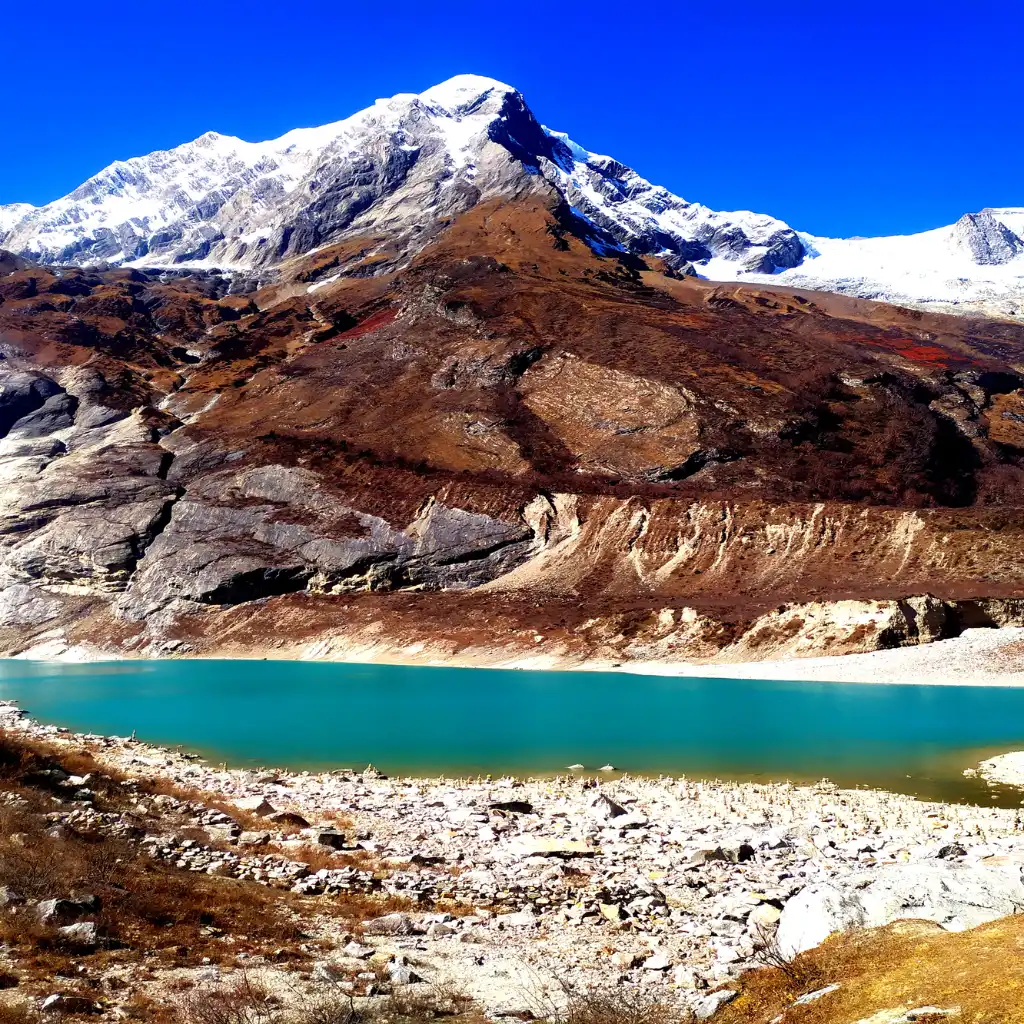
- Larkya La – 5,106 m / 16,752 ft: The trek’s highest point, crossed on Day 11. The three-to-four-hour dawn climb rewards the crest with Himlung, Kang Guru and Annapurna II on one side and the descent to Bhimtang’s glacier lakes and cliffs on the other. The spelling Larke La appears on maps and permits; it is the same pass.
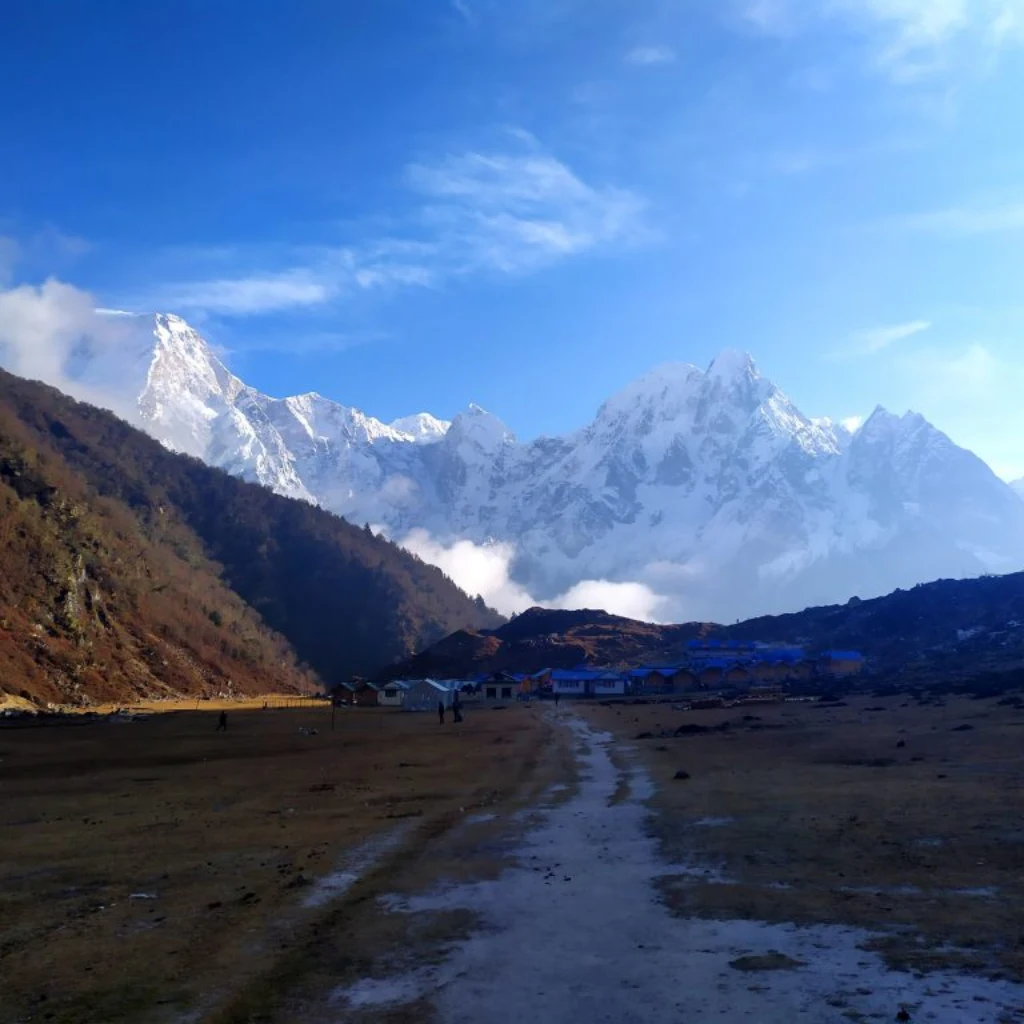
- Mount Manaslu – 8,163 m / 26,781 ft: The world’s eighth-highest mountain and the trek’s quiet centrepiece, watched for days from Lho, Sama Gaon and the Manaslu Base Camp side-trip before the circuit finally crosses behind it.
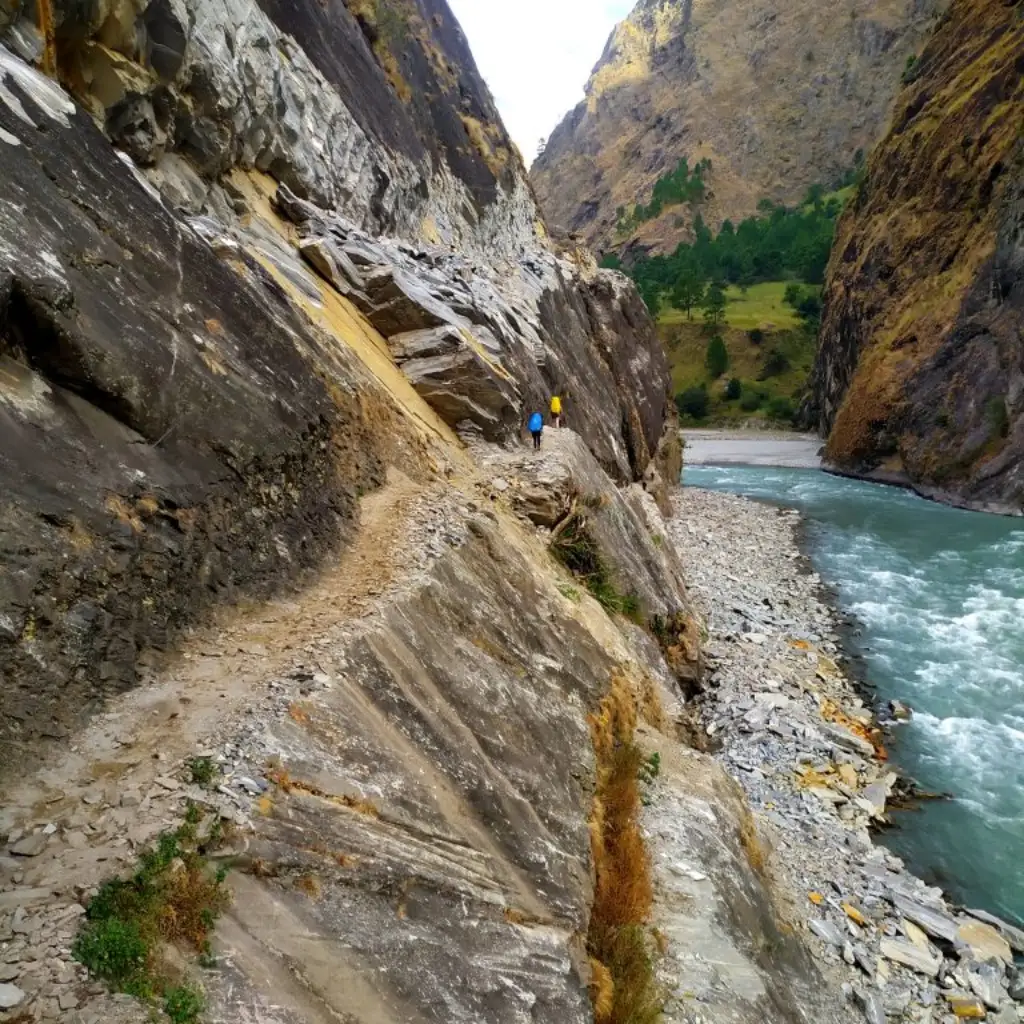
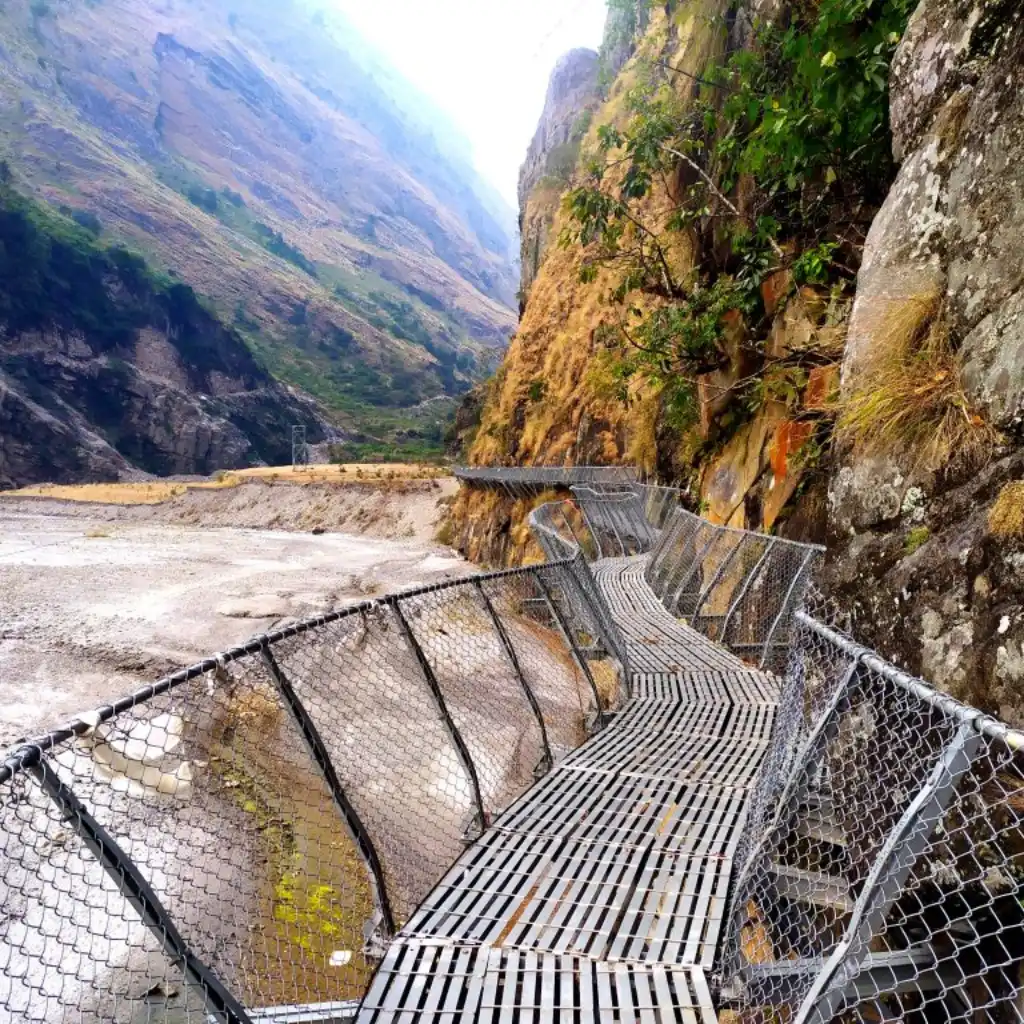
- The Budhi Gandaki gorge: The restricted canyon trail from Soti Khola — suspension bridges, landslide slopes, Sal and rhododendron forest, and the river that powers the valley — the section of the trek most Nepal visitors never see.
- Sama Gaon – 3,530 m / 11,581 ft: The principal village of the Nubri people, with its gompa, heliport, tea-houses and close-up views of the Manaslu massif, and the base for the Day 8 acclimatisation.
- The Day 8 side-trips – 4,400 m / 14,435 ft: Climb-high, sleep-low on the acclimatisation day — the cliff-top Pungen Gompa with grazing yaks and Himalayan thar, or the longer hike to Manaslu Base Camp on the mountain’s north side.
- Samdo – 3,860 m / 12,664 ft: The Tibetan refugee village barely 4 km shy of the Chinese border, approached through mani walls and juniper and birch forest, with optional hikes to Samdo Peak or the border view.
- Bhimtang, Tilije and Tal on the descent: The long register from the pass through Karcher La, paddy terraces and oak forest, joining the Annapurna Circuit at Dharapani before the road-head village of Tal.
- Comfort built in: Licensed guide, provided down jacket and sleeping bag, SIM card and trekking map, first-aid kit, full-board tea-house meals, complimentary welcome or farewell dinner, and free cancellation up to 14 days before departure.
Manaslu Circuit Trek Overview
The Manaslu Circuit Trek is a 14-day trek in Nepal’s Manaslu Region that circles the world’s eighth-highest mountain, Mount Manaslu (8,163 m / 26,781 ft), through the remote Nubri and Tsum valleys of the Budhi Gandaki gorge. The route climbs from the subtropical lowlands at Soti Khola through Tamang, Gurung and Nubri villages to the glacial basin beneath Larkya La (Larke La), crosses the pass at 5,106 m / 16,752 ft, and descends through the Annapurna-side Marsyangdi valley from Bhimtang to Tilije and Tal before the road drive back to Kathmandu.
It is Nepal’s classic restricted-area trek — a moderate, 14-day circuit through the Manaslu Conservation Area and a section of the Annapurna Conservation Area that demands the Manaslu Special Permit plus the MCAP and ACAP paperwork. The reward is big Himalayan scenery without the crowds of the better-known circuits: the trail stays below 2,000 m for the first two days, then climbs steadily through wooden suspension bridges, glacier-fed rivers and mani-wall villages to the high valley, with Larkya La crossing on Day 11 as the signature mountain moment.
With Nepal Lion Tours, the Manaslu Circuit Trek starts from USD 1,330 per person on the standard tier (5% OFF the regular USD 1,400) and from USD 1,796 per person on the luxury tier, with group discounts from two trekkers and a small-group cap of 10. The package includes the road transfers from Kathmandu to Soti Khola and from Tilije back to Kathmandu, the MCAP, ACAP and Manaslu Special permits, a licensed guide, full-board meals, teahouse accommodation, a complimentary welcome or farewell dinner, and the provided sleeping bag, down jacket, SIM card and trekking map. A porter can be arranged as an optional add-on.
Guide’s Note — Nepal Lion Tours
From our experience operating Manaslu departures, the restricted-area rule is the trek’s greatest advantage, not a formality — it is exactly what keeps the trail quiet while the Everest and Annapurna routes queue. The permit paperwork is handled in our office long before you fly, so the only thing you manage on the trail is the walking. The Larkya La day is the one discipline that really matters: an early start, steady pacing on the climb, and the whole crossing finishes comfortably inside daylight.
— Nepal Lion Tours Lead Trekking Guide
What Makes the Manaslu Circuit Trek Special?
The Larkya La crossing (5,106 m / 16,752 ft) on Day 11 is the trek’s signature — one of the great Himalayan passes, with a panorama over Himlung (7,126 m), Kang Guru (6,981 m) and Annapurna II (7,937 m) from the crest, and the glacial lakes and searing cliffs of the descent to Bhimtang below. Where the standard Annapurna Circuit crowds the Thorung La approach, Larkya La stays a restricted-area experience reached by a trail that most Nepal trekkers never walk.
The Budhi Gandaki gorge is the other defining feature — a dramatic, restricted canyon of river and cliff trail that climbs from subtropical forest through suspension bridges and landslide zones to the Tibetan-corridor villages at the top. The route then rounds the Nubri valley’s highest settlements — Sama Gaon, Samdo and Lho, each with an active gompa and close views of the 8,163 m Manaslu massif — with the acclimatisation day at Sama Gaon offering the choice of the cliff-top Pungen Gompa or a full day to Manaslu Base Camp (4,400 m / 14,435 ft).
The cultural thread completes the picture: the route’s isolation preserves an old Tibetan way of life. The Ribung Gompa at Lho, the mani-wall approach to Samdo (just 4 km short of the Tibetan border), and the seasonal herders’ settlement at Bhimtang give the trek a distinct northern-Himalaya feel, quite different from the Annapurna and Everest trails. Sama Gaon, the principal Nubri village, even keeps a heliport and police post, underlining how genuinely remote this valley is.
Why Choose the Manaslu Circuit Trek?
You choose the Manaslu Circuit when you want a genuine restricted-area summit trek without a three-week calendar. At 14 days including the road legs, the circuit fits a standard holiday window, and the combination of a real 5,106 m pass, an 8,000-metre mountain viewed from base-camp distance, and a quarter of the Everest-region crowds makes it the thinking trekker’s alternative to the famous circuits.
It is also a flexible private departure: your dates, your pace, a dedicated guide, and Nepal Lion Tours logistics — road transfers, all three permits, teahouse bookings — managed start to finish. Solo travellers, couples and small groups take the same private itinerary, with no fixed group calendar to join, and the free cancellation window up to fourteen days before departure keeps planning low-risk. The route’s road-head start (no flights involved) also means the itinerary is far less weather-sensitive than flight-dependent treks.
Who Is This 14-Day Manaslu Circuit Trek Suitable For?
The Manaslu Circuit suits trekkers who want real altitude, real remoteness and real mountain views without technical climbing. If you can walk four to eight hours a day on stone steps and mule trails, handle several nights above 3,500 m, and trust a guide’s pacing on one long pass day, you can do this trek. It is particularly good for:
- Trekking through the restricted area is the draw — a circuit with a permit structure most trekkers never experience.
- Trekkers who have done one moderate Himalayan trek and want a proper pass without the extreme length of Everest or Thorung La circuits.
- Travellers on a two-week Nepal holiday who want scenery, culture and a genuine summit day in one itinerary.
- Couples and small private groups who prefer a dedicated guide and flexible dates over a fixed group calendar.
- Return visitors to the Annapurna/Everest regions who want the quieter, wilder side of the same Himalaya.
The one honest caution: the itinerary tops out above 5,000 m, the pass day is long, and the route is genuinely remote — so a basic measure of fitness, good boots and a flexible outlook are the right companions, which is exactly what the Nepal Lion Tours itinerary provides.
Quick Facts
| Trek Fact | Details |
|---|---|
| Trek Name | Manaslu Circuit Trekking - 14 Days |
| Duration | 14 days / 13 nights |
| Region | Manaslu Region, Gorkha District, Nepal |
| Maximum Altitude | 5,106 m / 16,752 ft at Larkya La Pass |
| Difficulty | Moderate |
| Main Highlight | The Larkya La crossing at 5,106 m and a full restricted-area circuit of Mount Manaslu (8,163 m), the world’s eighth-highest mountain |
| Start / End | Kathmandu to Kathmandu |
| Route | Kathmandu – Soti Khola – Machha Khola – Jagat – Deng – Namrung – Lho – Sama Gaon – Samdo – Dharmasala – Larkya La – Bhimtang – Tilije – Tal – Kathmandu |
| Typical Walking | 4–8 hours per day, with the Larkya La day the longest at about 8 hours |
| Best Season | Spring and Autumn |
| Price From | USD 1,330 per person (list USD 1,400; luxury USD 1,796) |
| Accommodation | Tea-houses and lodges along the trail with hotels in Kathmandu (excluded) |
| Guide | Licensed English-speaking (or Chinese, Korean, Hindi, Nepali) trekking guide |
Manaslu Circuit Trek Route and Elevation
The route is a genuine circuit with a high pass inside it: drive up the Budhi Gandaki to the Soti Khola road-head, climb the gorge through Machha Khola, Jagat, Deng, Namrung, Lho and Sama Gaon, step up through Samdo and Dharmasala, cross Larkya La, and descend the far side through Bhimtang, Tilije and Tal before the road return to Kathmandu. The outbound and return legs pass through completely different valleys in both directions — the walk never doubles back on itself.
Manaslu Circuit Trek Route at a Glance
| Day | Trek Route | Altitude | Highlights |
|---|---|---|---|
| Day 01 | Drive Kathmandu to Soti Khola | 710 m / 2,329 ft | 160 km road along the Budhi Gandaki via Arughat, 8–9 hrs |
| Day 02 | Trek to Machha Khola | 900 m / 2,953 ft | Labubesi, Sal forest, suspension bridges, 6 hrs |
| Day 03 | Trek to Jagat | 1,410 m / 4,626 ft | Tatopani hot springs, Yaru, long cantilever bridge, 6 hrs |
| Day 04 | Trek to Deng | 1,804 m / 5,919 ft | Restricted-area checkpoint, Sirdibas, Philim, 6 hrs |
| Day 05 | Trek to Namrung | 2,630 m / 8,628 ft | Ganesh Himal, Siring Himal and Himal Chuli views, 6 hrs |
| Day 06 | Trek to Lho | 3,180 m / 10,433 ft | Nupri region, Ribung Gompa, first Manaslu views, 4 hrs |
| Day 07 | Trek to Samagaun | 3,530 m / 11,581 ft | Principal Nubri village, gompa and heliport, 4 hrs |
| Day 08 | Acclimatization - Pungen Gompa or Manaslu Base Camp | 4,400 m / 14,435 ft | Birendra Tal, yaks and Himalayan thar, climb-high sleep-low |
| Day 09 | Trek to Samdo | 3,860 m / 12,664 ft | Tibetan-border village, mani walls, juniper forest, 4 hrs |
| Day 10 | Trek to Dharmasala | 4,460 m / 14,633 ft | Scrub juniper, old mani stone wall, short acclimatizing walk, 4 hrs |
| Day 11 | Trek to Bhimtang via Larkya La | 5,106 m / 16,752 ft | The pass crossing - Himlung, Kang Guru, Annapurna II, 8 hrs |
| Day 12 | Trek to Tilije | 2,300 m / 7,546 ft | Karcher La, rhododendron forest, paddy terraces, 5 hrs |
| Day 13 | Trek to Tal | 1,700 m / 5,577 ft | Dharapani and the Annapurna Circuit junction, oak forest, 5 hrs |
| Day 14 | Drive to Kathmandu | 1,400 m / 4,593 ft | Tal to Besisahar to Kathmandu along the Marsyangdi, 8 hrs |
Manaslu Circuit Trek Elevation Profile
The Manaslu Circuit is a road-connected trail-profile trek: it begins with a full day of driving from Kathmandu (1,400 m / 4,593 ft) to the trailhead village of Soti Khola (710 m / 2,329 ft), then rises with only small descents along the Budhi Gandaki to the highest point at Larkya La (5,106 m / 16,752 ft) before a long descent on the far side, ending with another road day from Tal back to Kathmandu.
The ascent is deliberately graduated. Days 2–3 hold to low, steep-sided canyons around Machha Khola (900 m / 2,953 ft) and Jagat (1,410 m / 4,626 ft) as the river trail works around boulders and suspension bridges. From Deng the route climbs through lush forest, rhododendron and oak into the Nubri valley, with overnights at Namrung (2,630 m / 8,628 ft) and Lho (3,180 m / 10,433 ft) before reaching Sama Gaon at 3,530 m / 11,581 ft — the acclimatisation base whose Day 8 side-trips reach 4,400 m while the body sleeps low. Beyond it, Samdo (3,860 m / 12,664 ft) and then Dharmasala (4,460 m / 14,633 ft) set the stage for the pass.
On the descent, the trail loses altitude steadily through Bhimtang (3,720 m / 12,205 ft), Tilije (2,300 m / 7,546 ft) and the Marsyangdi-side terraces to Tal (1,700 m / 5,577 ft) on the road back to Kathmandu. Day 11 is the only genuinely long walking day — roughly 8 hours, with a long climb from Dharmasala to the pass and a descent of about 1,500 m to Bhimtang — so the profile suits trekkers with a moderate baseline of fitness who want a genuine restricted-area pass rather than a gentle valley circuit.
How to Get to the Manaslu Circuit Trek
The approach is road-based — there is no airport in the Manaslu Region, and the circuit begins at the road-head in Soti Khola, reached by road only. That little piece of logistics is exactly what keeps the trail quiet, but it deserves a plan.
Kathmandu to Soti Khola: The Gateway Road
The road transfer from Kathmandu (1,400 m / 4,593 ft) to Soti Khola (710 m / 2,329 ft) runs around 160 km and takes 8–9 hours. The first stretch from Kathmandu to Arughat is paved and pleasant with views of hilly countryside; from Arughat the final two hours to Soti Khola are dusty and bumpy, threading along the Budhi Gandaki river. The departure is from Gongabu Bus Park for the standard local bus, or by private vehicle for those who prefer the flexibility.
| Option | Approx. Travel Time | Best For |
|---|---|---|
| Local public bus | 8–9 hrs | Budget trekkers, standard tier |
| Private vehicle | 7–8 hrs | Comfort, flexibility, photography stops |
| Luxury private transfer | 7–8 hrs | Luxury tier, family and small groups |
Both road options use the same route through Arughat and the gorge; the private vehicle allows driver-controlled stops and a more predictable arrival, so Nepal Lion Tours recommends it for trekkers on a tight schedule around the trek’s fixed start.
From Soti Khola the Trek Begins
Soti Khola sits at the top of the drivable gorge, and the trek begins there the next morning with a walk along the river — the first of many days that follow the Budhi Gandaki upstream. The village has tea-houses, a reliable supply point, and the feel of a proper trailhead: from here on, everything moves by foot or mule until the far side of the pass.
Guide’s Note — Nepal Lion Tours
From our experience, the Manaslu road days are the least glamorous part of the trek but they matter more than they look: they set the trail rhythm and the acclimatisation profile. The Kathmandu to Arughat section is paved and pleasant, the Arughat to Soti Khola stretch is dusty and bumpy, and the return via Besisahar runs along the Marsyangdi. We schedule the outward drive to reach Soti Khola with the afternoon in hand, and we hold the last day flexible so a road delay never costs you a walking day.
— Nepal Lion Tours Lead Trekking Guide
Road Conditions and What to Expect
The drive days frame the trek. On the way in, the road is sealed as far as Arughat and rough from Arughat to Soti Khola, with river views and occasional bumpy stretches that are simply part of the Manaslu experience. On the way out, the return from Tal runs via Besisahar on the Prithvi Highway along the Marsyangdi and Trishuli rivers — around 8 hours with lunch at a riverside stop, a much easier road than the inward gorge. Both directions can slow in the monsoon with landslide work; in the normal spring-autumn seasons they are straightforward.
Returning to Kathmandu After the Trek
The return leg is a mirror of the outward drive: breakfast at Tal on Day 14, a jeep or bus to Besisahar (3–4 hours), then onward transport to Kathmandu (about 6 hours) along the Prithvi Highway. Both road sections are arranged by Nepal Lion Tours under the package’s transportation inclusion, and the same coordination covers the option to break at Besisahar for a Chitwan safari or Pokhara add-on — a common way trekkers extend the trip.
A Practical Tip for International Travellers
Do not book an international flight for the same evening you return from the trek. The road legs run late with weather, and the Manaslu gorge sections are occasionally delayed by landslide work in the monsoon. Give yourself one full night back in Kathmandu before departure — the standard itinerary always includes it.
Manaslu Circuit Trek Difficulty, Fitness & Altitude
The Manaslu Circuit Trek is graded moderate — the valley ascent along the Budhi Gandaki is steady walking on stone steps and mule trails, and the genuine effort is concentrated in the final climb to Larkya La (5,106 m / 16,752 ft) and the long descent to Bhimtang. There is no technical climbing; the route is walked without ropes or ladders and rests on pacing and acclimatisation.
Where the Effort Actually Is?
The genuine effort sits in three places: the contrast of the long-drive bookend days, the 8-hour Larkya La pass day with its sustained climb and the sharp descent to Bhimtang, and the repeated altitude above 3,500 m from Sama Gaon onward. Most trekkers find the cool, clear pass morning easier than the forecast suggests because pacing and acclimatisation have done their work — but the length of the day and the early start are why the route carries a moderate rather than easy grade.
Guide’s Note — Nepal Lion Tours
From our experience, Larkya La is a mental game as much as a physical one. We leave Dharmasala early, keep the pace slow and short-stepped on the climb, and the payoff — the panorama over Himlung, Kang Guru and the Annapurnas from the crest — is usually the highlight trekkers talk about longest. The descent to Bhimtang is long and steep, so knees and trekking poles matter as much as lungs.
— Nepal Lion Tours Lead Trekking Guide
How to Prepare for the Manaslu Circuit Trek
- Walk regularly for a month beforehand — three to five hill walks a week, gradually lengthening to a full day.
- Practise the exact climbing rhythm: a sustained uphill morning, then a long downhill afternoon, mirroring the Larkya La day.
- Build leg strength on stairs or an uphill treadmill, and add a weighted 25–35 litre daypack to your training walks.
- Train an early start with a couple of 5 am walks; the pass day begins before dawn.
- Listen to the guide and pace yourself on the high sections rather than racing — this is a controlled summit day, not a race.
- Break in your boots well before departure; new footwear on stone steps and moraine is a common mistake.
How Difficult Is the Manaslu Circuit Compared with Longer Treks?
At 14 days and a maximum of 5,106 m, the Manaslu Circuit is shorter than the full Annapurna Circuit and far gentler than the Everest Three Passes, yet it reaches a genuine high pass with restricted-area permits as the barrier to entry. Compared with the Everest Base Camp treks, it is similar in daily walking but quieter and lower; compared with the Annapurna Circuit’s Thorung La, Larkya La is less crowded and the route is harder to reach, which is exactly why most Nepal trekkers never see it. It is the better fit for trekkers who want a proper summit challenge without a three-week calendar.
Altitude, Acclimatization & Safety
The Manaslu route peaks at 5,106 m / 16,752 ft on Larkya La (Day 11), with acclimatisation built around the overnight at Sama Gaon and the Day 8 climb-high, sleep-low side-trips to 4,400 m. The itinerary’s overnights stay mostly below 3,900 m until Dharmasala, keeping acute mountain sickness risk low, and the Nepal Lion Tours guide watches each trekker’s condition through the pass morning.
Manaslu Circuit Trek Altitude Profile
- Kathmandu — 1,400 m / 4,593 ft: Arrival, pre-trek briefing and the road-day start.
- Soti Khola — 710 m / 2,329 ft: Trailhead village at the top of the drivable gorge.
- Machha Khola — 900 m / 2,953 ft: Low river village and first walking overnight.
- Jagat — 1,410 m / 4,626 ft: Gorge village with hot springs nearby and a long cantilever bridge.
- Deng — 1,804 m / 5,919 ft: Forest village below the valley’s steep cliffs; restricted-area entry.
- Namrung — 2,630 m / 8,628 ft: Best first viewpoint for Ganesh Himal, Siring Himal and Himal Chuli.
- Lho — 3,180 m / 10,433 ft: Nupri village with the Ribung Gompa and clear Manaslu views.
- Sama Gaon — 3,530 m / 11,581 ft: Principal Nubri village; the acclimatisation base.
- Manaslu Base Camp / Pungen Gompa — 4,400 m / 14,435 ft: The Day 8 climb-high side-trips, slept low below.
- Samdo — 3,860 m / 12,664 ft: Tibetan-border herders’ village about 4 km from the border.
- Dharmasala — 4,460 m / 14,633 ft: The high camp beneath Larkya La.
- Larkya La — 5,106 m / 16,752 ft: The pass; highest point of the trek, crossed on Day 11.
- Bhimtang — 3,720 m / 12,205 ft: High valley settlement after the pass, with glacier lakes and cliffs.
- Tilije — 2,300 m / 7,546 ft: Marsyangdi-side village on the descent.
- Tal — 1,700 m / 5,577 ft: Road-head village for the drive back to Kathmandu.
How the Body Adapts to Altitude
Above roughly 2,500 m the body acclimatises by breathing faster, raising the heart rate and, over several days, producing more red blood cells. The Manaslu format runs one acclimatisation day at Sama Gaon with a high excursion to 4,400 m, then a measured push up through Samdo and Dharmasala, so the red-blood-cell response has time to catch up before the pass crossing — the classic climb-high, sleep-low rhythm that the whole route is built around.
Symptoms of Altitude Sickness to Watch For
Mild symptoms (headache, fatigue, poor sleep, loss of appetite) are common above this height and usually settle with rest, water and slower pacing. Concerning symptoms — a persistent headache, nausea or vomiting, loss of coordination, confusion, or breathlessness at rest — mean the trekker should stop ascending and descend under the guide’s direction. Descending is the treatment, and the guide carries the protocol for it.
How Nepal Lion Tours Supports Altitude Safety
- The acclimatisation structure — the overnight at Sama Gaon, the Day 8 climb-high side-trips and the step-by-step rise to Dharmasala — keeps every overnight except the high camp below 3,900 m until the pass.
- The guide runs daily well-being checks, paces hydration and holds the group’s speed on the pass morning.
- Every departure includes an emergency evacuation assistance service coordinated by the Kathmandu office (helicopter and hospital costs are covered by the trekkers’ travel insurance, not the company).
- Nepal Lion Tours provides the sleeping bag and down jacket so the high-desert night at Dharmasala stays comfortable rather than a risk factor.
- Travel insurance covering high-altitude rescue and evacuation is compulsory and checked before departure.
Best Time to Trek the Manaslu Circuit
The best time to trek the Manaslu Circuit is autumn (September to November) for the clearest skies over Larkya La and the driest trails, with spring (March to May) as the close second for green valleys and stable pass weather. Both seasons keep the crucial pass-day visibility high and the trail underfoot firm and dry.
| Season | Months | Weather & Trail Conditions | Mountain Views | Overall |
|---|---|---|---|---|
| Autumn | Sep–Nov | Clear, dry, cool nights; best pass visibility | Excellent | Best overall |
| Spring | Mar–May | Mild days, green valleys, occasional showers | Very good | Highly recommended |
| Winter | Dec–Feb | Cold and snow above ~3,500 m; quiet; some lodges close | Good on clear days | Good with preparation |
| Monsoon | Jun–Aug | Wet, landslide risk on the gorge roads, leeches below 2,000 m | Frequently limited | Least suitable |
Autumn - September to November
September to November is the classic window: the monsoon cloud drains away, the air over the Himalaya is washed clean, and views across to Ganesh Himal, Himal Chuli and the Larkya La shoulder hold with rare clarity. Days are pleasantly cool in the valley and crisp at the higher villages, the trails are at their driest, and the Budhi Gandaki crossings run low and safe. This is also the peak period for the area’s limited tea-houses, so October is the best month for reliable weather and the fullest lodge network — book well ahead.
Spring - March to May
March to May is the second-best window and the pick for trekkers who like their Himalayan valleys alive rather than bare. The snow retreats across the passes, and the lower gorge is flowering — rhododendron and magnolia drift through the forest sections below Deng and Namrung — while days stay mild and nights cool but tolerable. The one reservation is pass-day weather: April and May afternoons can build clouds over Larkya La, so the guide starts early to cross before the summit gathers.
Winter - December to February
December to February is cold, dry and wonderfully quiet on the Manaslu Circuit. The route is walkable with the right gear, and snow is usually limited to the uppermost folds around Dharmasala and the pass itself. The reward is privacy — you are often the only party crossing Larkya La — but some lodges close, hours shorten, and night temperatures at Dharmasala can drop well below freezing. If you book winter, keep the plan flexible and rely on the provided sleeping bag and down jacket.
Monsoon - June to August
June to August is the least suitable season. The Budhi Gandaki runs high and angry, sections of the road into Soti Khola face landslide closure, and the lower gorge trails turn slick with mud and leeches below about 2,000 m. Visibility on the Larkya La day is frequently rained off, which makes the monsoon the wrong choice for most first-time Manaslu trekkers. If your dates are fixed, trek with a flexible private team and let the guide make the call on pass day; many monsoon schedules instead head to Upper Mustang or Dolpo, which sit in the rain shadow and stay comparatively dry.
Which Season Should You Choose?
Choose autumn if you want the highest chance of a flawless Larkya La crossing, dry trails and guaranteed views; choose spring if you prefer green valley walking, flowering forest and slightly softer light; choose winter for an uncrowded, budget-friendly circuit with crisp clear days. Book 4 to 6 months ahead for autumn and 2 to 3 months ahead for spring, because the limited teahouse capacity on the restricted route fills quickly.
Guide’s Note — Nepal Lion Tours
Spring is a hidden gem on Manaslu. Everyone funnels into the Annapurna and Everest circuits in March and May, but we quietly run most of our Manaslu departures in spring — the valleys are flowering, the gorge is green, and the pass is usually windless in April. If you can be flexible on dates, late March to mid-April is the sweetest spring window.
— Nepal Lion Tours Lead Trekking Guide
Manaslu Circuit Trek Permits & Regulations
This trek enters the Manaslu Conservation Area (MCA) and passes through a section of the Annapurna Conservation Area (ACA) on the descent, and it crosses a designated restricted area around the mountain. That means three permits for foreign trekkers — the MCAP permit, the ACAP permit and the Manaslu Special Permit — all arranged by Nepal Lion Tours as part of the pre-trek paperwork. You simply carry your passport.
Manaslu Circuit Trek Permits at a Glance
| Requirement | Who Needs It? | Who Arranges It? |
|---|---|---|
| Manaslu Special (Restricted Area) Permit | All foreign trekkers entering the restricted zone around Manaslu | Nepal Lion Tours |
| MCAP - Manaslu Conservation Area Project Permit | All trekkers entering the conservation area | Nepal Lion Tours |
| ACAP - Annapurna Conservation Area Permit | All trekkers on the Annapurna-side descent | Nepal Lion Tours |
The Manaslu Special Permit (Restricted Area)
The Manaslu Special Permit is the entry ticket to the restricted zone, a category of trekking area reserved for the protected corridors around the high Himalaya. The current fee structure runs about USD 100 for the first seven days and roughly USD 15 per day thereafter, though rates are set by the department and can be revised — Nepal Lion Tours confirms the exact figure for your dates at booking. The permit rules require a minimum of two trekkers, and since 2017 the permit has been issued only through licensed trekking agencies rather than for independent trekkers, which is one reason a Nepal Lion Tours-led itinerary is effectively mandatory on this route.
MCAP and ACAP Permits
The Manaslu Conservation Area Project (MCAP) permit covers the Nubri valley core and current fees are about NPR 3,000 for foreign nationals and NPR 1,500 for SAARC nationals, collected at the conservation area checkpoint near the entry point. The Annapurna Conservation Area (ACAP) permit, similarly around NPR 3,000 foreign / NPR 1,500 SAARC, covers the Marsyangdi-side descent where the route joins the Annapurna Circuit at Dharapani. Both are standard Nepali conservation permits — straightforward, arranged with the special permit in one bundle, and presented at checkpoints along the trail.
Do You Need a TIMS Card for the Manaslu Circuit Trek?
No — a TIMS card is not required on this route. The Manaslu Special Permit and the MCAP/ACAP conservation permits replace the Trekker Information Management System for this circuit, exactly as restricted-area rules work throughout Nepal’s protected corridors. If a modified or multi-region itinerary changes the rules, your Nepal Lion Tours team advises you at booking.
Who Arranges the Permits?
Nepal Lion Tours arranges all three permits as part of the trek preparation. You provide passport details, a passport-sized photograph and a signed consent form, and the paperwork is handled in Kathmandu before departure — trekkers cannot self-issue the restricted-area permit in recent years, so agency arrangement is the standard (and correct) way. On the trail, your guide carries the originals and presents them at the checkpoints as the route demands, and nothing is left for you to collect at the trailhead.
Food & Accommodation on the Manaslu Circuit Trek
Teahouses line the Manaslu trail from Soti Khola to the far side of the pass — this is a lodge-based trek, not a camping one — and you sleep in a different village almost every night, from the low gorge settlements to the high valley lodges of Dharmasala. Meals are full board throughout, cooked in the same stone kitchens where you sleep.
Teahouse Accommodation on the Manaslu Circuit Trek
- Rooms: Private or twin-sharing as standard at most teahouses, simpler and colder the higher you climb.
- Bathrooms: Shared at most stops, especially above Deng; attached bathrooms appear in the bigger villages.
- Hot showers: Available at several lodges for a small fee where solar or gas heat is running — budget NPR 300 to 500 below the high valley and expect minimal facilities at Dharmasala.
- Electricity and charging: Solar and hydro power in most villages; charge phones and batteries for a fee that rises with altitude.
- Heated dining rooms: The wood-stove dining room is where everyone gathers above 3,000 m — and the only heated room in each lodge.
- Wi-Fi: Best at Namrung, Sama Gaon and Samdo (where the source route notes bakery and coffee alongside); patchier elsewhere. The provided Nepal SIM often outperforms lodge Wi-Fi.
- Bedding: Provided, with the package’s down jacket and sleeping bag adding reliable warmth for the highest nights.
Nights are in private rooms at each teahouse with shared bathrooms, hot showers for a small fee where solar water runs, and no heating in the bedrooms — that is what the provided down jacket and all-season sleeping bag are for. The lodges get progressively more basic toward Dharmasala, so the mid-route villages are the best chance to recharge fully.
What Food Is Available on the Manaslu Circuit Trek?
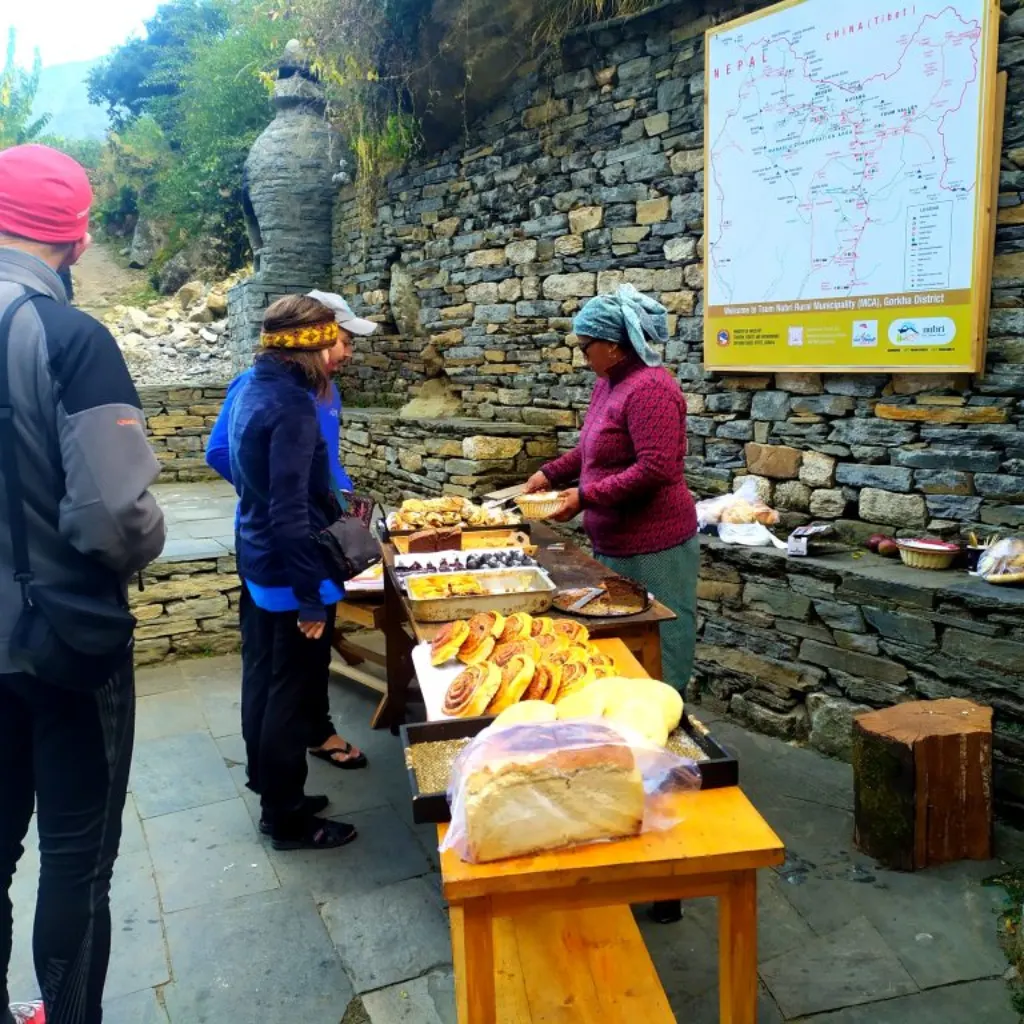
The teahouse menu repeats along the route but covers real needs at altitude: dal bhat (the classic Nepali lentils and rice — the trekkers’ energy meal, with refills), momos, thukpa noodle soup, fried rice, pasta, soups, potato dishes, eggs, porridge, pancakes, toast and chapatis, plus tea, coffee, hot lemon and drinking chocolate. At Namrung and the larger villages, bakeries add fresh bread and pastries. Dal bhat with vegetables is the most reliable high-altitude fuel and the easiest food to ask for seconds of at any lodge. Vegetarian food is widely available, and most lodges can manage basic vegan, gluten-free and allergy requests if you tell us in advance — pickings are thinner at the high stops, so carry backup snacks from Soti Khola.
What Food and Accommodation Are Included?
| Included in the Trek Package | Usually Paid Separately |
|---|---|
| Meals (breakfast, lunch and dinner) on trekking days, plus a cup of tea or coffee | Meals in Kathmandu (beyond the complimentary welcome or farewell dinner) |
| Teahouse accommodation during the trek (private or twin-sharing) | Kathmandu hotel nights |
| Airport pick-up and drop-off in private vehicles | Hot showers, Wi-Fi and charging where fees apply |
| Road transport Kathmandu–Soti Khola and Tilije–Kathmandu (local bus, or private vehicle on request) | Bottled drinks, alcohol, snacks and extra teas |
| Guide services with meals, insurance, salary, lodging and equipment | Tips for the guide, porter and driver |
| All three permits (MCAP, ACAP, Manaslu Special) and the SIM card and trekking map | Travel insurance, chartered-helicopter and hospital costs, personal expenses |
Confirm the exact final split at booking — the inclusions above reflect the package page, and a porter can be added as an optional supplement.
Drinking Water on the Trek
Do not assume mountain tap water is safe to drink untreated. Daily water needs run 3–4 litres at altitude, and the standard approach is a combination of boiled water (sold by lodges for a small fee), bottled water at the bigger villages, and treated water from your own bottle with purification tablets or a filter. A reusable bottle is essential — buying endless plastic bottles above Soti Khola is expensive, and the trail sends waste down-valley. Refill your bottle everywhere you can and drink regularly through every walking day; dehydration magnifies altitude symptoms more than most trekkers expect.
Staying Comfortable at Teahouses
Six habits make the difference between rough and comfortable lodge nights: carry a wide-mouth water bottle you can fill with boiled water, bring a warm sleep setup (the provided sleeping bag plus dry base layers), take a power bank because outlets are rationed and shared, carry cash in Nepali rupees for showers, snacks and extra meals, use layering rather than heavy clothing indoors, and flag any dietary need to your guide at the start so lodges can prepare. The wood-stove dining room of each lodge is where the day is reviewed over dal bhat and the next morning’s start time is set.
Why Book with Nepal Lion Tours?
Nepal Lion Tours is a Kathmandu-based trekking operator that runs Manaslu and western-Himalaya departures with its own licensed guides, private road transport and a direct line between you and the team from first enquiry to final return.
- Local, licensed multilingual guides — government-licensed, with practical route knowledge of every stone step and lodge on this circuit, and English (plus Chinese, Korean, Hindi on request) communication.
- A registered trekking company you can verify — based in Kathmandu, with company and licence details provided on request and on the website.
- Private departures from one trekker — your own dates, your own pace, no fixed group calendar to join, for solo travellers and groups up to ten.
- A genuine restricted-area circuit — the Manaslu Special Permit, MCAP and ACAP paperwork handled end to end, which is effectively mandatory on this route since 2017.
- Road logistics handled completely — Kathmandu–Soti Khola and Tilije–Kathmandu transport, airport transfers, teahouse bookings and the permit bundle managed start to finish, with the Besisahar add-on to Chitwan or Pokhara available.
- Budget-visible pricing without cutting safety — the Standard tier (from USD 1,330) and Luxury tier (from USD 1,796) share the same route, permit set and guiding; the difference is lodge grade and some comfort levels, never safety or support.
- A local team you can contact before and during your trek — WhatsApp and phone open through departure, so your questions are answered in Kathmandu, not after the fact.
The business of a mountain trek is trust, and everything Nepal Lion Tours does — from the permit paperwork to the pass-day pacing — is built so you can concentrate on one thing: walking well.
Book the Manaslu Circuit Trek
Fourteen days, one proper high pass and the quietest restricted circuit in the western Himalaya — the Manaslu Circuit rewards trekkers with the mountain world the famous routes no longer offer. Secure your spot with a small confirmation to lock the permits and the best Sama Gaon and Samdo rooms, and the planning starts immediately.
Manaslu Circuit Trek at a Glance
- Duration: 14 days / 13 nights, including both road days
- Price: From USD 1,330 per person (standard, 1 traveller; list USD 1,400; group tiers reduce to USD 1,131 per person for 10+; luxury tier from USD 1,796)
- Difficulty: Moderate
- Maximum Altitude: 5,106 m / 16,752 ft at Larkya La Pass
- Accommodation: Tea-houses and lodges on the trail; Kathmandu hotels excluded
- Meals: Breakfast, lunch and dinner on trekking days, plus tea or coffee
- Permits & Registration: Manaslu Special, MCAP and ACAP permits arranged by us
- Transportation: Road transfers Kathmandu–Soti Khola and Tilije–Kathmandu, with the Besisahar add-on option
- Guide: Licensed, multilingual trekking guide; porter as an optional add-on
- Cancellation: Free cancellation up to 14 days before departure (subject to booking terms)
Ready to Start Your Manaslu Adventure?
Send us your preferred travel date, group size and Standard or Luxury tier through the booking form — or WhatsApp us at +977-9851039020 — and we’ll confirm availability within twenty-four hours, current permit fees and your exact price, including whether a porter is needed and the Besisahar add-on if you want to extend the trip. Whether you’re travelling solo, as a couple, with friends, or with family, we’ll help you prepare for a smooth and enjoyable trek. Your Larkya La sunrise is waiting — choose your dates and start planning today.
Related Manaslu Region Treks
The Manaslu region offers several ways into the same mountain world, from short view treks to the full circuit — and the Annapurna and Mustang valleys just across the ridge share much of the same high-country character.
| Trek | Duration | Difficulty | Max Altitude | Best For |
|---|---|---|---|---|
| Ghorepani-Poonhill Luxury Trekking | 6 days | Moderate | 3,210 m | Poon Hill sunrise with upgraded lodges |
| Poon Hill Hot Spring Trekking | 5 days | Moderate | 3,210 m | A short Annapurna-view trek with natural hot springs |
| Annapurna Panorama View Trek | 9 days | Moderate | 3,200 m | A compact panorama circuit of the Annapurna range |
| Lower Mustang Trekking - 9 Days | 9 days | Moderate | 3,750 m | The Jomsom flight and the Muktinath pilgrimage |
| Annapurna Circuit Trek | 18 days | Moderate–Challenging | 5,416 m | The full Thorung La circuit around the Annapurnas |
| Upper Mustang Trekking | 12–14 days | Moderate | 4,230 m | The restricted Tibetan-style desert kingdom |
The Annapurna Circuit shares the Manaslu route’s high-pass DNA and joins it at Dharapani, while Lower Mustang and Upper Mustang offer the dry, restricted-country counterpart on the rain-shadow side. All can be combined with Kathmandu sightseeing, a Chitwan jungle safari, or an east-Nepal extension — talk to us about stringing two trips into one.
Trip Essentials
Packing advice, required equipment & gear recommendations
Essential
Manaslu Circuit Trek Packing List
This is a lodge-based trek, not a camping one — you carry only what you walk with, and Nepal Lion Tours provides the heavy cold-weather kit: down jacket, all-season sleeping bag, SIM card and trekking map. Fill your bag with layers and essentials, not bulk — the teahouses cover the evening comfort.
Hiking Gear
- Hiking boots, broken in, with good ankle support and grip for stone steps, moraine and the rocky descent from Larkya La
- A comfortable daypack, for the day’s water, layers, snacks, camera and documents
- Trekking poles — genuine protectors on the pass descent and the gorge’s endless steps
- A head torch with spare batteries — essential for the pre-dawn Larkya La start
- Water bottles or a hydration bladder — 3 litres total capacity for the long days
- Water purification tablets or a filter for topping up from streams and lodges
Clothing: Use Layers Rather Than Bulk
- Base layers: Two lightweight merino or synthetic tops and bottoms, worn at night and under everything.
- Mid-layers: A fleece or soft-shell for the active walking layers; a lightweight puffy for cold stops.
- Outer layers: A waterproof and windproof shell jacket and trousers for snow, wind and the chilly pass morning.
- Trekking clothes: 2–3 pairs of quick-dry walking trousers, 3–4 trekking tops and T-shirts, and long-sleeve shirts for sun.
- Headwear and gloves: A warm beanie, a sun hat, sun gloves and a liner-plus-insulated glove combination for the high morning.
Sleeping and Evening Comfort
- The provided all-season sleeping bag on every night, especially at Dharmasala
- Warm sleep socks and a fleece or down layer for the unheated bedrooms
- Earplugs and a sleep mask for shared teahouse nights
- Lightweight camp or slippers for lodge evenings
Toiletries and Personal Health Items
- Basic toiletries and biodegradable soap and hand sanitiser
- Sunscreen (high SPF), lip balm and sunglasses — the sun at 5,000 m is fierce
- A small personal first-aid kit: plasters, blister kit, painkillers, rehydration salts, personal medication
- Moisturiser for dry mountain air and lotion for cracked hands
- Wet wipes for the evenings at simpler lodges
- Any personal prescriptions carried with the guide’s knowledge
Electronics
- A power bank with enough capacity for the higher villages’ rationed outlets
- Universal adapter for Nepal sockets
- Phone with offline maps and message apps; camera with spare batteries and cards — note that charging at teahouses is usually a small paid service above Deng
Documents and Money
- Original passport — required for all three permits
- A few photocopies of passport and two passport photos for any permit contingencies
- Cash in Nepali rupees — for hot showers, drinks, extra meals, tips and the odd charging fee
- Travel insurance documents including the compulsory high-altitude rescue and evacuation cover
- Hotel and flight confirmations for the Kathmandu legs
How Much Should You Pack?
Carry light — the walking is easier and the porters thank you. Your duffel (main bag) typically holds about 10–12 kg; your daypack holds the day’s water, layers, snacks and documents. Keep the high-value items, warmth and camera with you in the daypack, and split the rest sensibly between duffel and daypack. Nepal Lion Tours provides the bulky cold-weather gear, so your own kit is mostly layers, footwear and personal essentials — and since the trek involves no internal flights, there is no flight-weight restriction, only the pack-weight that makes walking enjoyable.
Read Before You Book
Permits, terms, medical considerations & advisory guidelines
Advisory
What to Know Before Booking
A few realities of this quiet, restricted circuit, settled before you go — so the trail holds no surprises.
Accommodation and Facilities
Teahouse standards are comfortable but mountain-simple: shared bathrooms common at the higher stops, electricity rationed and chargeable above Deng, Wi-Fi strongest at Namrung, Sama Gaon and Samdo, and bedrooms unheated — the provided sleeping bag plus your own layers make the difference. Dharmasala (4,460 m), the pre-pass sleep, is the most basic and the coldest of the trek, and that is by design — one night of simplicity is the price of a dawn start over Larkya La.
Food and Dietary Requirements
The teahouse menu covers energy at altitude, with dal bhat the reliable daily staple. Vegetarian food is widely available at every lodge; vegan, gluten-free and allergy-specific needs are workable in the lower and mid villages, thinner at the high stops, so carry backup snacks from Soti Khola — and tell us before departure so we can brief the team. Meals during trekking days are included; Kathmandu hotel nights and most Kathmandu meals are not, apart from the complimentary welcome or farewell dinner.
Altitude, Health and Insurance
You will cross above 5,000 m, so travel insurance that covers high-altitude trekking and rescue evacuation at about 5,400 m is compulsory in practice — the route has road access in parts, but the pass sector is genuinely remote and evacuation is by helicopter. Altitude sickness can affect anyone regardless of fitness, so the Sama Gaon acclimatisation structure matters more than training alone; report any symptom to your guide the same day. Bring any personal medication, disclose medical conditions, and consider the private-vehicle option for the road days if you are at all uncertain.
Money and Tipping
Rupees cash covers what the package does not: hot showers, drinks, extra meals, charging fees and tips. Cards are accepted in Kathmandu but rarely on the trail — withdraw or exchange Nepalese rupees before departure, since ATMs are effectively absent in the Manaslu gorge. Tipping the guide, porter and driver is customary at the trek’s end — a fixed-sum per-day guideline is provided at briefing, decided by satisfaction and group size.
Culture and Responsible Trekking
- Respect monastery etiquette at Lho, Sama Gaon and the villages, and walk clockwise past chorten and prayer monuments.
- Ask before photographing monks, porters or local people.
- Carry out what you carry in — the Manaslu Conservation Area works hard to keep the trail clean, and so should you.
- Stay on the main trail; the fragile alpine terrain above the treeline recovers slowly.
- Support the local economy — sleep, eat and charge at the teahouses; every rupee you spend stays in the valley.
Route Options
The standard route is fixed (14 days, one high pass). Alternatives within the same family: the Manaslu Circuit Trekking - 12 Days for a tighter calendar on the same core trail, the Manaslu and Tsum Valley Trekking - 16 Days for the Buddhist Tsum Valley extension, and the Annapurna Circuit joining at Dharapani for a longer traverse. Each has its own price, permit profile and difficulty — ask us to compare them side by side for your dates.
Booking and Before You Arrive
- Send passport details and two passport photos for the permits in advance.
- Confirm your Standard or Luxury tier and whether you want the porter add-on.
- Confirm the road transport choice — local bus (included) or private vehicle (on request).
- Decide early if you want the Besisahar add-on to Chitwan or Pokhara.
- Book your international return with at least one buffer night after Day 14.
- Keep your insurance policy and emergency contacts with you, not at the bottom of the bag.
- Tell us your dietary needs and health questions at enquiry, not on Day 1.
A Few Final Tips
Start training early and gradually, focus on consecutive walking days and long descents rather than speed, arrive in Nepal a day or two before the trek to recover from the flight in, and pace yourself harder on the first days than your fitness tempts. The circuit rewards the patient: the Larkya La sunrise and the quiet hours above the Budhi Gandaki are earned at the pace you walk, not the pace you planned.
Day-by-Day Itinerary
Explore each day's route, trekking elevation, and activities
Your trip for Manaslu Circuit Trek begins from Kathmandu. You will start the day early after breakfast. You will take a direct local bus from Kathmandu, Gongabe Bus Park to Soti khola which is 160 Km drive (We can arrange private vehicle as your requirement). You will take a drive from Kathmandu to Arughat on a nice, paved road enjoying the views of hilly areas. From Arughat to Soti Khola is 2 more hour drive where road will be quite dusty and bumpy with the view of Budhi Gandaki river. Overnight at teahouse in Soti Khola.
Trek to Machha Khola [900m, 6 hrs]You will start your trekking journey from today. Despite of uneven road, you will have the most amazing walk on the first day of this trek. Ascending further the rocky trail and then descending, you will reach Gurung village Labubesi. You will pass number of small villages, through Sal forest, rivers and waterfalls to reach Nyali Khola. You will encounter hundereds of mules on the routes. We head down to the river and cross suspension brdge t reach Machha Khola Village. Overnight in Machha Khola Tea House.
You will enjoy the warm breakfast at the teahouse at Machha Khola. From Machha Khola you will start walking across the trekking trail on the bank of Buri Gandaki River and suspension bridge. After a few ascends and descends, you will reach a popular hot-spring, Tatopani. The trail is quite exposed and challenging in places. After spending a few moments here, you will head to dohan for Lunch. You will reach a small village Yaru from where you cross a long cantilever bridge to reach Jagat, where we spend the night.
From this day, you will be walking in the restricted region where you have to verify your trekking permits at check post. You will leave Jagat on a well paved road and climb up the valley before you reach Sirdabas. You will proceed through forest of Rhododendron and Himalayan pine where the village Philim welcomes you. Finally, you will reach Deng, the final destination of the day. Deng is home to a few Tea houses where you can gather around the fireplace and share experiences with the fellow trekkers before you go to bed.
After the sun rises, you will have breakfast at tea house. Today the trail from Deng takes you along a winding path to Rana and crossing suspension bridge to Bihi Phedi. The trail then proceeds to Ghap village through several landslide zones where you should be careful while walking. Passing the Ghap you will trek through bamboo, rhododendron and oak forests. Namrung is the best viewpoint for Siring Himal, Ganesh Himal and Mt. Himal Chuli. Namrung offers you best teashops, restaurant and tea house with Fresh Bakery items, Coffee and Wi-Fi.
Today the trail enters the Nupri region where you will be blessed with magnificent sight of the mountains. From Namrung a steep climb and passage through forest takes us to Lihi. You will witness some fine painting in the kani as passing to Sho. As you reach Loh you will visit a large moastery known as Ribung monastery. From the place, you can catch the stunning views of Manaslu (8163m) and Manaslu North (7157m).
Following the lateral moraine of Pungen Glacier, the trail stretches towards the settlement at Samagaun. You will experiences the breathtaking view of mountains crossing the Shyala village and reach Sama Gaon. From here you will get to witness the amazing views of Mount Mansalu and you can explore the famous Ribung Gompa. Sama Gaon is the principal village of the nurbi peope which holds a large gompa, many tea Houses, shops, Health post, Police station, Heliport, Telephone and WIFI access.
This day is set aside to rest and acclimatize to prevent altitude-related illness. You will take a short hike that leads you to Birendra Taal (3,450m) which lies below the Manaslu Glacier. As on Acclimatization day you have two options for side trip to either Pungen Gompa or Manaslu Basecamp.
If you options for the half day walk, you can experiences Pungen Gompa which is 3-4 hours hiking. Pungen Gompa lies on the east of Nubri Valley where you will see many Himalayan Thars and Yaks grazing.
Or, you can hike to Manaslu base Camp (4400m) which is on the north of Sama Gaun. Manaslu Base camp hike can be completed in 8-9 hours.
Today is the short day trek as you take the trail on the right to Larkya La to reach Samdo which is a small Tibetan refugee village. This village is very close to Tibetan border which is just 4 km away (You can extend one more day at Samdo and go to a short hike to Tibetan Border). Today is a fairly easy trail, passing through Mani walls and juniper and birch forests. Once you reach Samdo, you can explore the nearby village or hike to Samdo Peak.
After Breakfast at Samdo,you will sart our day trip by crossing a wooden bridge over Budhi Gandaki river and hike upwards. Today you will trek past grassy slopes with scrub juniper, rhododendron, enjoy with the big old mani stone wall and chorten. The short walk to Dharmasala provides enough time and rest to acclimatize for the further trek.
Today you trek for 3-4 hours to ascend 800m to get to Larkya La pass, then descend for 4-5 hours losing 1500m to get to Bimthang. You need to wake up early and leave teahouse for today trek as trek is quite challenging. We ascend the moraines of a glacier enjoying the breathtaking views of Himlung(7126m), Cheo, Kang guru(6981m) and the Annapurna II (7937m). After lunch at small teahouseyou will descend to Bimthang where you will get stunning view of huge cefalls and mountains in all directions, Pongkar tal between the pongkar and salpudanda Glaciers.
After enjoying the splendid views of the mountains from a ridge in Bhimtang, we make our way down towards to village of Gho. We will be walking downlhill enjoying the lush forests full of flora and fauna including rhododendron bushes. Initially you will head towards the small Karcher La Pass and then along the dentle paddy fields on the sidewalk, the trail will take you to tilje. Overnight at Teahouse.
You will move in a stone paved path passing the dudh khola to reach Thojne. After passing through a police checkpost we make our way towards Dharapani from wehre we enter the Annapurna Circuit. We will then head through fields ouuver a clear stream, past houses and more dields interspersed with rhododendron and oak forests. We will reach our final destination to the Tal Village.
You will have breakfast at Tal then you will take a jeep/Bus ride to Besisahar which will take 3-4 hours. From besisahar you will find local vehicle to Kathmandu for every 1 hours (We can arrange private vehicle as your requirement). You will drive along the Prithvi Highway on banks of Marsyangdi and Trishuli river, with refreshing views of the hilly areas. After a 6 hours of Bus/Jeep ride we will reach Kathmandu.
From Besisahar you have another option for a drive to Chitwan or Pokhara and extend your trip. Check our Chitwan Jungle safari and Pokhara package.
Want to customize this itinerary?
Tailor duration, lodges, acclimatization days, or add private helicopter flights.
Inclusions & Exclusions
Everything that is covered and what you'll need to budget separately
What is Included
Fully covered in your package price
- Airport picks up & drop by private vehicle to hotel.
- Transportation from Kathmandu to Soti Khola and Tilije to Kathmandu vai Public bus.
- Necessary paperwork and Trekking Permits fee (ACAP, MCAP and Manaslu Special Permit)
- Accommodation during trek and Meal (Breakfast, Lunch, Dinner and a cup of coffee or tea)
- Licensed English or Chinese or Korean or Hindi along with Nepali speaking Friendly trekking guide.
- Coverage of Guides including their Meals, Insurance, Salary, Lodging, transportation and other necessary equipment.
- First Aid Medical Kit (Carried by the guide).
- Sleeping bag, down jackets and trekking map, if necessary.
- Emergency Evacuation Assistance Service (The cost of the helicopter, hospital and necessary transport are not payable by the company).
- Welcome or farewell dinner in Kathmandu at a cultural restaurant (complimentary).
- A nation-wide operated Mobile SIM Card and a map of the trekking region.
- Optional Addons
- Porter (We can arrange porter for your trek).
- Private vehicle from Kathmandu to Soti Khola and Tilije to Kathmandu.
What is Excluded
Personal expenses & optional extras
- International airfare.
- Nepal Entry Visa fee: you can obtain a visa easily upon your arrival at Tribhuwan International Airport.
- Personal Travel insurance which has to cover emergency high-altitude rescue and evacuation compulsory.
- Personal expense (shopping, snacks, boil bottle water, hot and cold drinks, hot shower, Alcohol, Wi-Fi, telephone call, battery re-chargefee).
- Accommodation, Lunches and dinners in Kathmandu, except the farewell dinner.
- Emergency expenses such as expenses on charted helicopter.
- Additional costs or delays caused by out of management control, for example, landslide, weather condition, itinerary modification due to safety concerns, illness, change of government policies etc.
- Gratitude and tips for your guide, porter and driver.
Our Customer Reviews
Authentic experiences and feedback from our travelers
Write a Review
Share your adventure experience with other travelers
Thank You!
Your review has been submitted and is awaiting approval.
Please Wait
You've submitted several reviews recently. Please wait a few minutes before trying again.
Hugo Van Leeuwen
The whole thing felt easier than we expected, which was a relief. The cold at Side was sharper than we expected, so layers were essential. The Budhi Gandaki gorge was one of the few things we did that felt genuinely unique to this route. The trip reminded me that discomfort is often part of the best memories. Exactly what we needed.
Erik Hansen
We wanted something memorable without making the children miserable, and this was a good balance. The light at Manaslu Basecamp was incredible, and I ended up staying longer than planned. I would plan another trip around Mount Manaslu alone. The people we met along the way were the best part of the trip. Weather delayed us by a morning, but the team handled the change well. The small details made a difference, from the morning tea to the evening briefing. The trip made me realise how little I actually need day to day. I would do the helicopter version again without hesitating. Tip: Read the itinerary carefully, especially the transfer days.
Louis Engstrom
Our trip began with a lot of questions and ended with a long list of places we want to return to. The guide timed our arrival at Namrung well, and we avoided the biggest crowds. The circuit is a river-gorge climb into a restricted high valley and a pass-crossing out of it was one of the few things we did that felt genuinely unique to this route. I would pack for colder weather than you think you need. It was not cheap, but it saved us days and gave us views we would not have seen otherwise.
Victor Larsson
I judge every trip partly by the food, and this one did well. Machha Khola was the part I had built up in my head, and it still surprised me. Comfort built in was slower and quieter than I expected, in a good way. There was something comforting about a hot meal after a cold day. Breakfasts were simple but filling, which is exactly what we needed before a long day. The local crafts and shops were interesting without being overwhelming. The landing sites were more remote than I expected, which made the whole thing feel special. The flight alone made the trip memorable.
Paul Lindner
We took the helicopter option to save time, and it was worth every penny. I would do Sama Gaon again in a heartbeat. There was a lot of uphill before Samdo, but the descent afterwards was gentle. It was clear that the team had done this route many times. The trip had enough variety that no two days felt the same. The wind picked up in the afternoons, so early starts were worth it. The flight was smooth, and the pilot pointed out landmarks along the way. The rooms were colder than we expected, but the blankets were warm enough. The private vehicle ride was long, but the stops were well spaced. I came home with a longer list of things I want to do, not a shorter one. I came home with a full card and a shortlist of places I want to photograph again.
Frequently Asked Questions
Essential information on preparation, route specifics, safety standards, and logistical details.