Everest Base Camp Trek — 14 Days | Nepal Lion Tours
A Classic Himalayan Adventure to Everest Base Camp Through Sherpa Villages, Buddhist Monasteries, and Iconic Mountain Landscapes
Everest Basecamp Trek - Classical


Tour Highlights
The Everest Base Camp Trek is a highlight reel of the Khumbu, spread across two weeks of increasingly dramatic landscapes:
- Kala Patthar sunrise — 5,545 m / 18,192 ft: The iconic viewpoint with the full north face of Mount Everest above the Khumbu Glacier, best in the pre-dawn light.
- Everest Base Camp — 5,364 m / 17,598 ft: Standing on the glacial moraine at the foot of the world’s highest mountain, a bucket-list moment universally.
- Namche Bazaar — 3,440 m / 11,286 ft: The vibrant trading capital of the Khumbu, with bakeries, markets and its celebrated first glimpse of Everest.
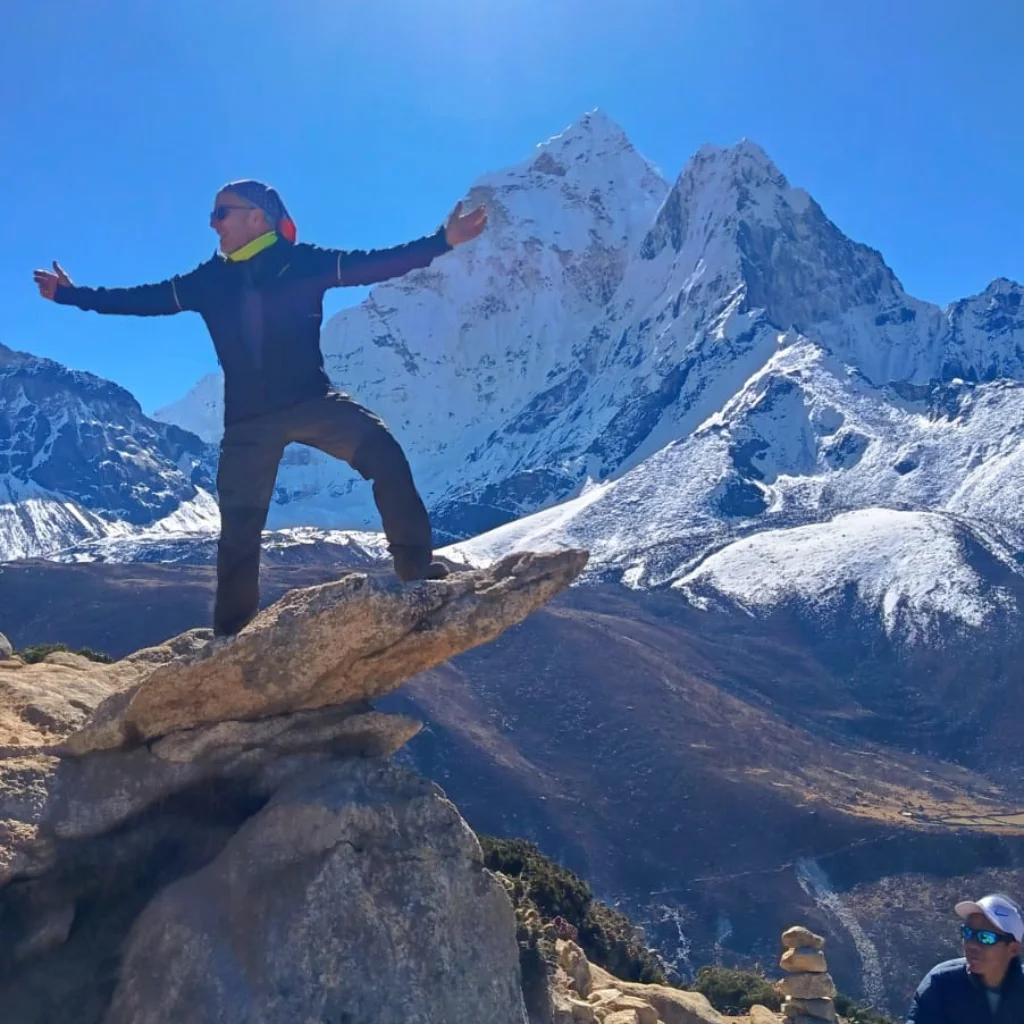
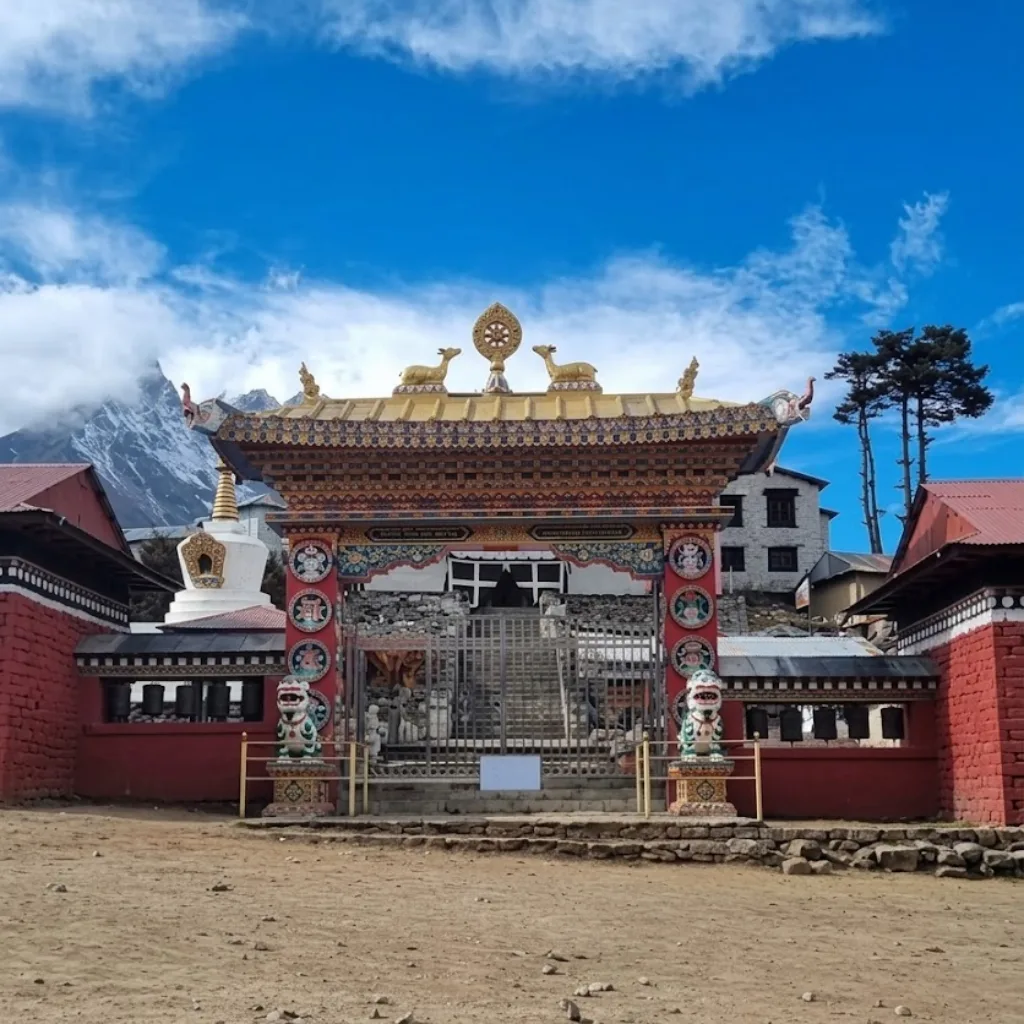
- Tengboche Monastery — 3,860 m / 12,664 ft: The Everest region’s most important Buddhist monastery, framed by Ama Dablam.
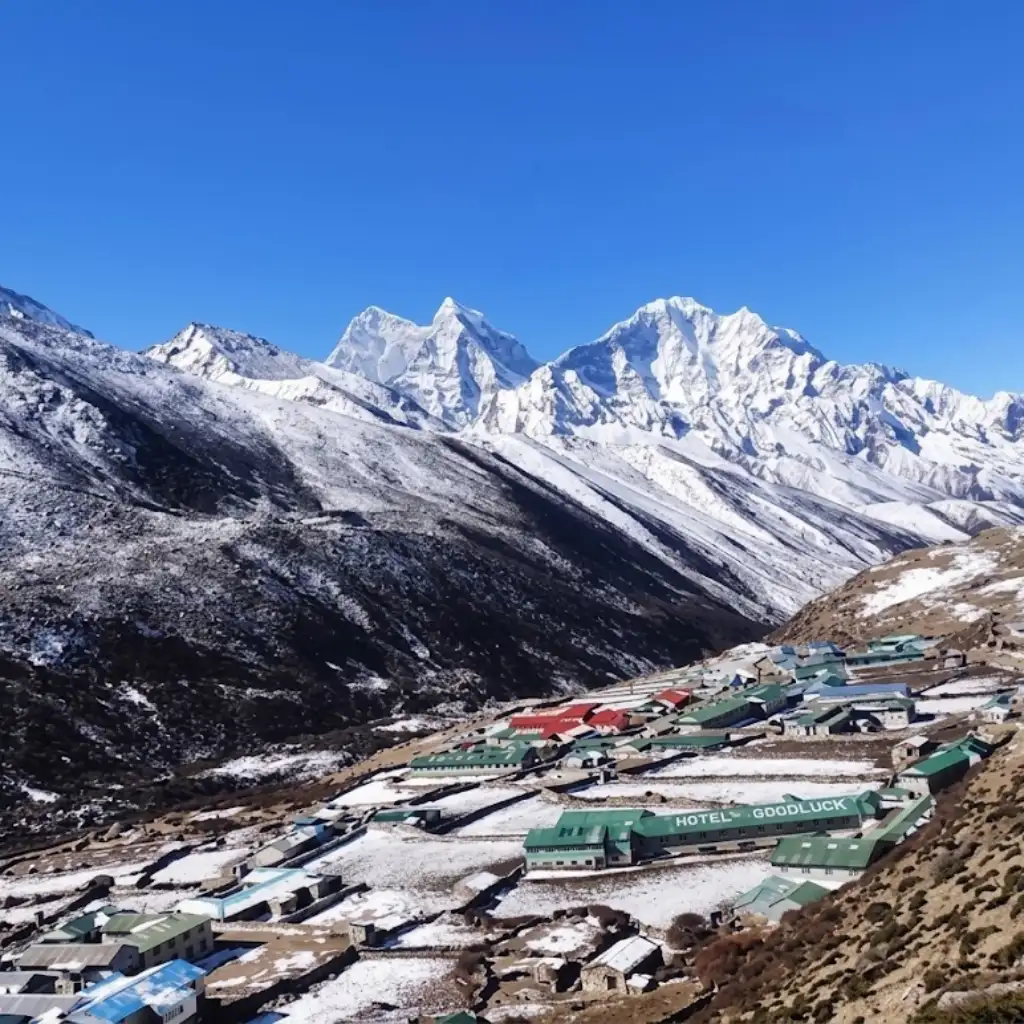
- The Dudh Koshi Valley trail: Suspension bridges, pine and rhododendron forests, and rushing glacial rivers from Lukla to Namche.
- The climbers’ memorials at Thukla: A solemn ridge honouring the mountaineers who died on Everest and the surrounding peaks.
- Acclimatization walks with a purpose: The Everest View Hotel hike above Namche and the Nangkartshang Ridge climb above Dingboche.
- The Khumbu Glacier: Trekking alongside the world’s highest glacier on the route from Lobuche and Gorakshep.
- Sherpa culture throughout: Mani walls, gompas, teahouse hospitality and villages that make the trek a cultural journey as well as an alpine one.
Everest Base Camp Trek Overview
The Everest Base Camp Trek is a 14-day adventure in Nepal’s Everest (Khumbu) region that follows the classic route from Lukla deep into the Himalaya, reaching Everest Base Camp at 5,364 m / 17,598 ft and the viewpoint ridge of Kala Patthar at 5,545 m / 18,192 ft. Graded strenuous, it is Nepal’s most famous long trek and the journey most trekkers mean when they say they are “trekking to Everest.”
The route begins and ends in Kathmandu, flying to the mountain airstrip of Lukla (2,860 m), then climbing the Dudh Koshi Valley through Phakding, Namche Bazaar, Tengboche, Dingboche and Lobuche before the high-altitude finale at Gorakshep. After standing at Everest Base Camp and watching sunrise from Kala Patthar, the trail descends back through the villages to Lukla for the return flight.
With Nepal Lion Tours, the package starts from USD 1,383.20 per person, including the Kathmandu–Lukla return flights, licensed English-speaking guide, teahouse accommodation, meals on the trail, all required permits and pre-trek briefing in Kathmandu.
What Makes the Everest Base Camp Trek Special?
The Everest Base Camp Trek delivers the two experiences every trekker comes for. The first is Kala Patthar — the iconic viewpoint where the pre-dawn climb puts you face to face with the full north face of Mount Everest (8,849 m) above the Khumbu Glacier, usually crowned by a sunrise glow. The second is Everest Base Camp itself, where you stand on the glacial moraine at 5,364 m, at the foot of the world’s highest mountain’s climbing route.
The journey matters as much as the destination. The route winds through Namche Bazaar, the cultural capital of the Khumbu, past the beautiful Tengboche Monastery backed by Ama Dablam, and through the high settled valleys of Dingboche and Lobuche. Two built-in acclimatization days — one hiking above Namche, one climbing the Nangkartshang Ridge above Dingboche — are what make the high-altitude days possible.
Why Choose the Everest Base Camp Trek?
The classical itinerary is the version most Everest trekkers have always done: fly to Lukla, walk up the Dudh Koshi and Imja Valleys with proper acclimatization, and return the same way. It is the right balance of challenge, logistics and tradition — supported by a full teahouse network the entire route.
This 14-day version paces the journey so the highest days arrive safely: two nights in Namche, two nights in Dingboche, and a high-point day designed around Kala Patthar before Base Camp, because the Kala Patthar viewpoint offers the best view of Everest itself. For trekkers with two weeks to spend, it is the definitive Everest experience.
Who Is This 14-Day Everest Base Camp Trek Suitable For?
The 14-day Everest Base Camp trek is a good choice for:
- Trekkers with an adventurous spirit who are ready for a demanding high-altitude challenge
- Those with 2–3 weeks of holiday who want the complete classic Everest journey
- Fit first-timers who have trained and are prepared for altitude
- Experienced trekkers ticking off Nepal’s most famous route
- Travellers who want teahouse comfort rather than camping on the way to Base Camp
- Photography lovers chasing the Kala Patthar sunrise and glacial landscapes
A good all-round fitness level and time in your schedule are essential. The trek regularly climbs above 4,000 m and sleeps at 5,164 m at Gorakshep, so altitude is the defining factor — but with the acclimatization structure and guidance of this itinerary, thousands of first-time trekkers complete it every year.
Guide’s Note — Nepal Lion Tours “In our experience, the trekkers who struggle on the EBC route are almost never the ones who are unfit — they are the ones who walk too fast in the first two days and arrive in Namche feeling spent. We start slowly, keep the pace conversational, and we have never lost a trek to poor planning when the group trusts the acclimatization rhythm.” — Our leading trekking guides, Nepal Lion Tours
Quick Facts
| Trek Fact | Details |
|---|---|
| Trek Name | Everest Base Camp Trek — Classical |
| Duration | 14 days / 13 nights |
| Region | Everest (Khumbu), Koshi, Nepal |
| Maximum Altitude | 5,545 m / 18,192 ft at Kala Patthar; Base Camp at 5,364 m / 17,598 ft |
| Difficulty | Strenuous |
| Main Highlight | Kala Patthar sunrise over Everest + standing at Everest Base Camp |
| Start / End | Kathmandu to Kathmandu (flights to and from Lukla) |
| Route | Kathmandu – Lukla – Phakding – Namche Bazaar – Tengboche – Dingboche – Lobuche – Gorakshep – Everest Base Camp – Pheriche – Namche – Lukla – Kathmandu |
| Typical Walking | 4–9 hours per day, with two dedicated acclimatization days |
| Best Season | Spring (Mar–May) and Autumn (Sep–Nov) |
| Price From | USD 1,383.20 per person (group discounts available) |
| Accommodation | Teahouse lodges throughout, hotels in Kathmandu |
| Guide | Licensed English-speaking trekking guide |
Everest Base Camp Trek Route and Elevation
The classic route is an out-and-back by flight and trail: a mountain flight from Kathmandu to Lukla, a steady climb up the Dudh Koshi and Imja Valleys through Namche, Tengboche, Dingboche and Lobuche to the high settlement of Gorakshep, the summit-less high points of Kala Patthar and Everest Base Camp, then a return descent via Pheriche back to Lukla for the flight home.
The itinerary deliberately sleeps progressively higher — with alternation designed in — and never gains ground too fast, which is the reason the two final high days are achievable.
Everest Base Camp Trek Route at a Glance
| Day | Trek Route | Altitude | Highlights |
|---|---|---|---|
| 1 | Kathmandu arrival, hotel and pre-trek briefing | 1,300 m / 4,265 ft | Gear check, flight briefing (Kathmandu or Ramechhap) |
| 2 | Fly to Lukla, trek to Phakding | 2,610 m / 8,563 ft overnight | Lukla landing, Dudh Koshi river trail |
| 3 | Phakding → Monjo → Namche Bazaar | 3,440 m / 11,286 ft overnight | Suspension bridges, Sagarmatha NP gate, first Everest view |
| 4 | Acclimatization walk above Namche (Everest View Hotel) | 3,440 m overnight | Everest panorama, rest and exploration |
| 5 | Namche → Phunki Tenga → Tengboche | 3,860 m / 12,664 ft overnight | Tengboche Monastery, Ama Dablam views |
| 6 | Tengboche → Pangboche → Dingboche | 4,410 m / 14,469 ft overnight | Imja Valley, alpine landscapes, stone-walled fields |
| 7 | Acclimatization walk to Nangkartshang Ridge | 4,410 m overnight | High valley panoramas, rest afternoon |
| 8 | Dingboche → Thukla → Lobuche | 4,940 m / 16,207 ft overnight | Climbers’ memorials, Khumbu Glacier views |
| 9 | Lobuche → Gorakshep → Kala Patthar | 5,545 m / 18,192 ft high point | The classic Everest sunrise viewpoint |
| 10 | Gorakshep → Everest Base Camp → Pheriche | 5,364 m / 17,598 ft high point | Base Camp moraine, long descent to Pheriche |
| 11 | Pheriche → Pangboche → Tengboche → Namche | 3,440 m / 11,286 ft overnight | Descending retrace through the Khumbu villages |
| 12 | Namche → Phakding → Monjo → Lukla | 2,860 m / 9,383 ft overnight | Final trekking day, last night in the mountains |
| 13 | Fly Lukla → Kathmandu | 1,400 m / 4,593 ft | Return flight, recovery and Kathmandu evening |
| 14 | Kathmandu departure | — | Airport transfer, trip complete |
Everest Base Camp Trek Elevation Profile
The altitude story climbs in clear stages: from Lukla (2,860 m) and Phakding (2,610 m) through the forested valley to Namche (3,440 m), then Tengboche (3,860 m), Dingboche (4,410 m), Lobuche (4,940 m) and finally Gorakshep (5,164 m) — the highest overnight of the route. The absolute high points are the Kala Patthar viewpoint (5,545 m) and Everest Base Camp (5,364 m), reached across the two final mountain days.
The profile is deliberately not a straight upward line. Two acclimatization days — one above Namche, one above Dingboche — climb high and return to the same sleeping altitude, and the Base Camp day descends to sleep at lower Pheriche. This climb-high-sleep-low rhythm is the single most important structure in the whole itinerary.
Physically, beyond altitude, expect sustained uphill forest trails, long glacial moraine stretches and extended descents on the return. Trekking at over 5,000 m adds a heavy atmosphere to even gentle slopes, so pacing matters more than raw speed — your guide carries the elevation profile map for the route and paces the group by feel and by altitude gain.
How to Get to the Everest Base Camp Trek
The Everest Base Camp Trek begins with the famous flight from Kathmandu to Lukla, the small airstrip carved into the mountainside that serves as the gateway to the Everest region. Your flight and road transfers are arranged as part of the package, so the logistics of reaching the trailhead are handled end to end.
Every Everest trek plan must respect the same reality: Lukla flights depend on mountain weather, and the best way to handle that is scheduling. This itinerary includes a pre-trek briefing in Kathmandu where your departure details are confirmed.
Kathmandu to Lukla: Flight or Road?
| Option | Approx. Travel Time | Best For |
|---|---|---|
| Direct flight Kathmandu → Lukla | 25–35 minutes | Most trekkers; the standard in quiet seasons |
| Flight via Ramechhap (Manthali) | ~4-hour road transfer + 25–35 min flight | Common in busy autumn/spring — confirmed at booking |
| Helicopter transfer | ~30–40 minutes | Private or flexible groups (extra cost) |
During the peak seasons, the Kathmandu–Lukla flight schedule can operate through Ramechhap (Manthali), a small airport about 4 hours by road from Kathmandu. When this applies, Nepal Lion Tours arranges the road transfer in advance so the change is invisible to you — you are met, driven, flown and delivered to the Lukla trailhead in sequence.
Whichever routing applies, the advice is the same as the itinerary states: keep your passport, valuables and a warm layer in your hand luggage, because the day is weather- and schedule-dependent.
Lukla to Phakding: First Steps on the Trail
After landing at Lukla (2,860 m), you meet your trekking team and set out on Day 2 through the Dudh Koshi Valley. The trail passes Chaurikharka, small Sherpa settlements and quiet riverside sections before reaching Phakding (2,610 m), the first teahouse overnight.
This short opening walk — carrying only a daypack, while porters move your main luggage — lets the group settle into the trekking rhythm and begin adjusting to altitude the right way, gently.
Returning to Kathmandu After the Trek
On Day 13 you take the return flight from Lukla to Kathmandu (or to Ramechhap, followed by road transfer), landing back in the capital for a well-earned rest. The package includes a Kathmandu hotel for the final night and a private airport transfer on departure on Day 14.
As the itinerary warns, Lukla flights can be delayed by weather. The 14-day format finishes with a full night in Kathmandu before your international departure, giving the natural buffer that weather cancellations sometimes need.
A Practical Tip for International Travellers
Allow buffer between the trek’s return and any onward international flight — ideally a full night in Kathmandu, which this itinerary provides. If you are coming in from a long-haul flight, likewise avoid scheduling the trek’s first day too tightly to your arrival. The pre-trek briefing covers all of this, and the team confirms your exact flight routing and timings once you book.
Guide’s Note — Nepal Lion Tours “From our experience operating Everest Base Camp departures, the morning flights to Lukla are the most reliable — and on the rare days the airport closes, it is the return leg that usually pulls trekkers’ plans apart. That is why we always keep your last Himalayan night in Kathmandu rather than flying you straight into an international connection.” — Our leading trekking guides, Nepal Lion Tours
Everest Base Camp Trek Difficulty, Fitness & Altitude
The Everest Base Camp Trek is graded strenuous — not because of technical difficulty, which there is none of, but because of the sustained high altitude, long walking days and the physical accumulation of two weeks on your feet. The route regularly climbs above 4,000 m, sleeps at 5,164 m, and each day above Dingboche carries more elevation than any foothills trek ever will.
Fitness and attitude both matter. Walking 4–9 hours a day at 4,000–5,000 m is a different proposition from the same hours at sea level, and the itinerary is structured around giving the body time to adapt.
Where the Effort Actually Is?
The effort builds in stages. The Day 3 climb into Namche Bazaar is the first test — a long uphill after a morning of suspension bridges. Days 5 and 6 add altitude with the Tengboche and Imja Valley climbs, then the high alpine days begin.
The hardest single moments are the Kala Patthar hike on Day 9 (steep at 5,000 m, in the cold pre-dawn), and Day 10, which combines the Everest Base Camp excursion with a long descent all the way to Pheriche — the itinerary itself calls it the most demanding day. The return days are downhill but long, with the forested descents of Days 11–12 taking their toll on knees and ankles.
Guide’s Note — Nepal Lion Tours “Trekkers always ask about Kala Patthar, and the honest answer is that the pre-dawn climb is steep but short — the bigger challenge is the cold and the altitude rather than the distance. We start in the dark with headlamps, keep the pace slow, and nobody is pressured to reach the top. The sunrise is worth the effort, but so is watching it from a comfortable perch halfway up.” — Our leading trekking guides, Nepal Lion Tours
How to Prepare for the Everest Base Camp Trek
Training for a high-altitude trek is achievable for most people:
- Walk 3–4 times a week for 60–90 minutes, building to 3–4 longer day-hikes before departure
- Practise sustained uphill walking with elevation gain — stairs, hills and step-ups build the legs for Namche and beyond
- Do one or two weekend hikes with a loaded 10 kg pack to condition shoulders and balance
- Build cardiovascular base with hiking, cycling or running rather than gym-only work
- If possible, add an overnight hike above 3,000 m before Nepal — real altitude exposure beats simulated
- Most of all, taper the hard training in the final 1–2 weeks and arrive rested; tired trekkers get altitude headaches faster
How Difficult Is the Everest Base Camp Trek Compared with Other Treks?
Within Kathmandu’s trekking scene, the Everest Base Camp Trek is the benchmark challenging route. It is considerably harder than panorama treks such as the Everest Panorama Trek (6 days, max 3,880 m) because it adds higher sleeping altitudes, glacial terrain and long days, yet it is not a summit — no technical climbing is involved, which is why fit non-mountaineers complete it in large numbers every season.
Compared with the Three Passes Trek or Island Peak, the classical EBC route is the middle ground: higher and longer than the panorama, more accessible than the pass routes. With correct acclimatization — which this itinerary provides — it is within reach of most reasonably fit trekking beginners.
Altitude, Acclimatization & Safety
Altitude is the Everest Base Camp Trek’s defining challenge, and the itinerary is designed around it. Two full acclimatization days and climb-high-sleep-low progressions keep the risk manageable for well-prepared trekkers.
Everest Base Camp Trek Altitude Profile
- Kathmandu — 1,400 m / 4,593 ft: Arrival and pre-trek brief; sleep low before flying to Lukla.
- Lukla — 2,860 m / 9,383 ft: Flight gateway; step off the plane above the treeline.
- Phakding — 2,610 m / 8,563 ft: Night 1 on the trail, sleeping lower than Lukla.
- Namche Bazaar — 3,440 m / 11,286 ft: Two nights; Everest-first-view and acclimatization hub.
- Tengboche — 3,860 m / 12,664 ft: Monastery village under the flank of Ama Dablam.
- Dingboche — 4,410 m / 14,469 ft: Two nights; high alpine valley with stone-walled fields.
- Lobuche — 4,940 m / 16,207 ft: Above the memorials; first night close to 5,000 m.
- Gorakshep — 5,164 m / 16,942 ft: The highest overnight settlement on the route.
- Kala Patthar — 5,545 m / 18,192 ft: The trek’s summit-less high point and Everest viewpoint.
- Everest Base Camp — 5,364 m / 17,598 ft / descends to Pheriche 4,371 m / 14,341 ft: The objective, followed by a descent that sleeps lower.
How the Body Adapts to Altitude
Acclimatization is a gradual chemical adjustment the body makes when given enough time. The itinerary plays it correctly: ascend in stages, spend two nights at key altitudes (Namche, Dingboche), and climb high during the day while sleeping lower. That give-and-take lets red blood cells catch up to the ambient oxygen.
Practically, this means walking at a conversational pace, drinking consistently, eating full meals, and resting properly. Headache at altitude is common — the guide carries medication and will judge together with you whether a rest day, a slower pace or a descent is appropriate.
Symptoms of Altitude Sickness to Watch For
Mild symptoms, common and usually settling with rest and fluids:
- Headache
- Loss of appetite
- Nausea
- Unusual fatigue or sleepiness
- Dizziness
More concerning symptoms requiring action — stop ascending, seek advice, descend if persistent:
- Headache that worsens despite rest
- Vomiting
- Confusion, difficulty walking or poor coordination
- Shortness of breath even at rest
- Bluish or grey lips or fingertips
At the altitudes of this trek, serious altitude illness is uncommon with proper pacing, but it is why the guide’s authority on pace, turnaround points and descents is absolute — and why the itinerary descends to Pheriche rather than sleeping at Base Camp.
How Nepal Lion Tours Supports Altitude Safety
- Two built-in acclimatization days at Namche and Dingboche, plus climb-high-sleep-low structure throughout.
- Licensed Everest-region guides trained to monitor the group and adjust pace or plans without drama.
- Transparent symptom policy: zero pressure to push on; turnaround points on Kala Patthar and Base Camp are normal, not failures.
- Pre-trek briefing in Kathmandu reviewing altitude, insurance and evacuation reality before you fly.
- Insurance guidance: high-altitude trekking and helicopter evacuation cover is required for booking — above Gorakshep it is the only practical evacuation route.
Best Time to Trek to Everest Base Camp
The best seasons for the Everest Base Camp Trek are autumn (September–November) and spring (March–May), when stable weather and clear skies make the high-altitude days — and the Kala Patthar sunrise — genuinely achievable. The trek runs year-round, but the two shoulder seasons deliver the right balance of conditions.
| Season | Months | Weather & Trail Conditions | Mountain Views | Overall |
|---|---|---|---|---|
| Autumn | Sep–Nov | Dry, clear post-monsoon air; cold but settled high up | Excellent; crisp mornings | Best overall |
| Spring | Mar–May | Stable and mild lower down; warmer days, snow possible late | Very good; Everest summit season | Highly recommended |
| Winter | Dec–Feb | Very cold at 4,000 m+; clear skies; quieter trails | Good but extreme cold | Suitable for prepared trekkers |
| Monsoon | Jun–Aug | Wet trails, clouds, leeches; flight cancellations likelier | Frequently limited | Least suitable |
Autumn — September to November
Autumn is the best overall season. October and November bring dry post-monsoon air, stable weather and the clearest skies of the year, which matters most at 5,000 m where visibility decides whether the Kala Patthar sunrise happens. Expect the biggest trail traffic of the year and book well ahead for the best teahouse rooms.
Spring — March to May
Spring is the second prime season. Days are milder in the valleys, rhododendrons colour the forests, and April–May coincides with the Everest summit season, adding the drama of tents and teams at Base Camp itself. Views are excellent, especially in the mornings; snow remains a possibility on the high passes and the trail above Dingboche.
Winter — December to February
Winter offers cold, clear and quiet trekking. Below 4,000 m days can be pleasant, but nights and the Gorakshep mornings are genuinely freezing, and snow is possible on Kala Patthar. This is a season for well-equipped trekkers who accept rigorous cold in exchange for solitude and crystalline visibility.
Monsoon — June to August
Monsoon is the least suitable season. Rain, mud, leeches in the forested lower trail and prolonged cloud on the high viewpoints are common, and Lukla flights face more cancellations. Hardier trekkers can still go, but the odds of a clear sunrise and smooth logistics fall sharply.
Which Season Should You Choose?
Choose autumn if the Kala Patthar sunrise and clear-views reliability are your priority. Choose spring for milder temperatures and Base Camp season energy. Winter rewards those who want the route almost to themselves and do not mind the cold, while monsoon works best for travellers whose dates are fixed and who accept the weather lottery.
Guide’s Note — Nepal Lion Tours “In our experience, the two-week windows around mid-October and mid-November are the most consistently clear on the whole route, and the sunrise from Kala Patthar is spectacular. But trekkers often forget how cold that morning is at 5,500 m — even in a good autumn, we recommend the down jacket, warm gloves and a thermos, because the view waits for nobody who is too chilled to stand still.” — Our leading trekking guides, Nepal Lion Tours
Everest Base Camp Trek Permits & Regulations
The Everest Base Camp Trek operates inside Sagarmatha National Park, a UNESCO World Heritage Site, so trekkers need the Sagarmatha National Park Entry Permit and the Khumbu Pasang Lhamu Rural Municipality Permit, checked along the trail at Monjo and beyond. Since April 2023 a licensed guide is mandatory on this route, and permits are issued through registered trekking agencies.
For trekkers booking through Nepal Lion Tours, all required permits are arranged as part of the pre-trek preparation — you simply carry your passport for the checks.
Everest Base Camp Trek Permits at a Glance
| Requirement | Who Needs It? | Who Arranges It? |
|---|---|---|
| Sagarmatha National Park Entry Permit | Foreign trekkers entering the park | Nepal Lion Tours |
| Khumbu Pasang Lhamu Rural Municipality Permit | All trekkers in the Khumbu | Nepal Lion Tours |
| Licensed trekking guide | Mandatory for foreign trekkers since April 2023 | Included with every Nepal Lion Tours trek |
Fees are based on current Nepali authority information (2026) and can be revised. Confirm the applicable fee and requirements when booking.
Sagarmatha National Park Entry Permit
The Sagarmatha National Park Entry Permit applies because the route runs through the heart of the park — the gate straddles the trail near Monjo on Day 3. Current fees are around NPR 3,000 for foreign nationals and NPR 1,500 for SAARC nationals, valid for a single entry.
The permit is checked by park staff, so you carry it with your passport on the trail. Nepal Lion Tours arranges it before departure, turning the gate into a brief stamp and a photo stop rather than an obstacle.
Khumbu Pasang Lhamu Rural Municipality Permit
The Khumbu Pasang Lhamu Rural Municipality fee is the local permit that funds trail maintenance and services across the Everest region, replacing the TIMS card in the Khumbu. It is around NPR 3,000 per person and collected as you enter the area.
Note that a TIMS card is not required on this standard Everest-region route; the Khumbu municipality fee stands in its place, keeping the paperwork lighter than in other regions of Nepal.
Do You Need a Restricted-Area Permit?
No, not for the standard Everest Base Camp Trek route.
The classical Lukla–Everest Base Camp itinerary stays on the main Khumbu trail and does not enter Nepal’s designated restricted trekking areas. That keeps the permit stack to the two permits above. Modified itineraries that enter restricted valleys — or combine with a climbing peak — would add requirements, which your trekking company confirms before departure.
Who Arranges the Permits?
When you book the Everest Base Camp Trek package with Nepal Lion Tours, the team arranges the Sagarmatha National Park permit, the Khumbu Pasang Lhamu municipality permit and your licensed guide as part of the trek paperwork.
Carry your original passport at all times — it is checked at the park gate near Monjo, and again by officials on the trail. Permit fees and rules can be revised by the authorities, so the final charges are confirmed before departure.
Food & Accommodation on the Everest Base Camp Trek
The Everest Base Camp Trek is a classic teahouse journey — every night is spent in a lodge with meals in its communal dining room, all the way from Lukla to Gorakshep. Comfort is best in the bigger settlements of Namche, Pangboche and Tengboche, and simpler at the high stops of Lobuche and Gorakshep, but nowhere on the route requires camping.
Your guide coordinates rooms, meal times and wake-up calls throughout, so the daily logistics are handled for you.
Teahouse Accommodation on the Everest Base Camp Trek
Teahouse rooms are clean, twin-shared and heated only by the dining room in most lodges:
- Rooms: Simple twin bedrooms with wooden beds, blankets and pillows; Namche lodges are the most comfortable.
- Bathrooms: Shared by default in most lodges; private attached rooms are more common in Namche.
- Hot showers: Usually a paid extra (solar-heated), scarce and coldest at Gorakshep.
- Electricity & charging: Available at dinner time; often paid per device, and solar-limited above Dingboche.
- Dining room: The only warmed room in most lodges — your social and mealtime centre.
- Wi-Fi: Available at many teahouses for a fee, strongest and most reliable in Namche; intermittent above.
- Bedding: Blankets are standard; Nepal Lion Tours provides a down jacket and all-season sleeping bag for the cold nights.
What Food Is Available on the Everest Base Camp Trek?
The Khumbu teahouse menu is more varied than non-trekkers expect, with most food transported up by porter and yak:
- Dal bhat: The trekking staple — rice, lentils and curry, served with refills traditionally
- Sherpa stew and thukpa: Hearty noodle soups perfect for cold evenings
- Momos: Steamed dumplings, a lodge favourite at every village
- Fried rice, noodles and chow mein: Quick, filling everyday options
- Pasta and pizza: Available at many Khumbu lodges, a comfort-win above 4,000 m
- Potatoes, eggs and fresh-baked bread: Common at simpler stops
- Porridge, muesli, pancakes and toast: Standard breakfasts
- Namche’s bakeries: Cakes, pastries and real coffee — a genuine indulgence in the mountains
In the high settlements of Lobuche and Gorakshep the menu narrows and alternatives shrink, which is normal on the route — dal bhat remains the guaranteed, energy-dense choice. Vegetarian food is widely available; tell your guide about vegan, gluten-free or allergy needs before departing so lodges ahead can plan.
What Food and Accommodation Are Included?
| Included in the Trek Package | Usually Paid Separately |
|---|---|
| All meals on the trail (breakfast, lunch, dinner plus a daily tea or coffee) | Hot shower fees at teahouses |
| Teahouse accommodation through the trek | Drinks and snacks beyond the daily tea/coffee |
| Kathmandu hotel nights (arrival and return) | Charging fees, Wi-Fi fees at teahouses |
| Complimentary welcome or farewell dinner in Kathmandu | Meals in Kathmandu outside the itinerary, souvenirs, extra porter time |
| Private airport transfers | Tips for guides and porters |
Exact coverage is confirmed in writing at booking, so nothing ambiguous reaches the trail.
Drinking Water on the Trek
Do not drink tap water anywhere on the route. Use boiled, filtered or purified water throughout — teahouses sell bottled and boiled water, and above Dingboche boiled water is the most reliable option. A reusable bottle with purification tablets or a filter is the sustainable approach most trekkers now choose.
Gorakshep and Lobuche lodges charge for boiled water refills, so carry a wide-mouth bottle and top up early in the day.
Staying Comfortable at Teahouses
- Carry a refillable water bottle and buy/boil water as you go
- Bring a sleeping bag liner inside the provided down sleeping bag for warmth and hygiene
- Pack a power bank, since lodge charging is paid and solar-limited at the high stops
- Keep small denomination cash for showers, Wi-Fi and extra drinks — ATMs exist in Namche but are unreliable above
- Dress in layers for the dining room, which cools sharply once the stove dies down
- Give your guide dietary requirements before departure so lodges can prepare ahead
Why Book with Nepal Lion Tours?
A trek of this scale deserves a team that runs the route all season — here is what Nepal Lion Tours brings to the Everest Base Camp experience:
- Local, licensed English-speaking guides > Nepal Lion Tours guides are government-licensed and Everest-region specialist — and since 2023 a licensed guide is the legal requirement on this route, not just a comfort.
- A registered trekking company you can verify > Nepal Lion Tours is a registered company based in Kathmandu, and company and licence details are shared with any traveller who wants to verify before booking.
- Private departures and small groups > The trek runs from single trekkers upward with a maximum around 10 — small groups stay flexible, move faster and get rooms more easily at the busy high lodges.
- Proper acclimatization, not a rushed itinerary > Two acclimatization days and climb-high-sleep-low pacing are built into the classical 14-day plan — the difference between completing and struggling on the high days.
- Flights, permits and logistics handled end to end > Lukla flights (Kathmandu or Ramechhap routing), permits, transfers, briefings and porters are all arranged — you receive clear instructions at every step.
- Budget-friendly pricing without cutting essentials > From USD 1,383.20 the package includes flights, permits, guide, teahouses, meals and gear — the classics are all present and nothing essential is stripped.
- A local team you can contact before and during the trek > WhatsApp support at +977-9851039020 means questions are answered before you land and real-time help is one message away while you are on the trail.
Book the Everest Base Camp Trek
This is the classic — two weeks, the Dudh Koshi and Imja Valleys, Tengboche under Ama Dablam, and the moment you first see Everest from Kala Patthar at sunrise. Flights, permits, guide, lodges and meals are all arranged around you.
Trek at a Glance
- Duration: 14 days / 13 nights
- Price: From USD 1,383.20 per person (group discounts from 2 pax; luxury tier available)
- Difficulty: Strenuous
- Maximum Altitude: 5,545 m / 18,192 ft at Kala Patthar; Base Camp at 5,364 m / 17,598 ft
- Accommodation: Teahouse lodges, with hotels in Kathmandu
- Meals: All on-trek meals plus a daily tea or coffee, with a complimentary Kathmandu welcome or farewell dinner
- Permits & Registration: Sagarmatha National Park + Khumbu Pasang Lhamu municipality fees
- Transportation: Kathmandu–Lukla return flights, private airport transfers
- Guide: Licensed English-speaking trekking guide (Chinese, Korean or Hindi guides available on request)
- Cancellation: Free cancellation up to 14 days before departure
Ready to Start Your Everest Region Adventure?
Secure your dates via the booking form or reach the team directly on WhatsApp at +977-9851039020 — solo, couple or group, the departure is arranged around you. Group pricing drops to USD 1,176 at 10 or more travellers.
The route is famous, but the experience is not a checklist. Book the Everest Base Camp Trek, and the team that runs the Khumbu every season handles everything else.
Related Everest Region Treks
For trekkers planning around the Everest region, these companion itineraries cover every level of time and ambition:
| Trek | Duration | Difficulty | Max Altitude | Best For |
|---|---|---|---|---|
| Everest Panorama Trek | 6 days | Easy–Moderate | 3,880 m / 12,730 ft | The shortest taste of the Khumbu and its views |
| Everest View Trek | 8 days | Moderate | 3,880 m / 12,730 ft | A relaxed panorama trek with extra Khumbu days |
| Gokyo Cho La Pass Everest Base Camp Trek | 15 days | Challenging | 5,357 m / 17,575 ft | Lakes, Cho La pass and EBC in one route |
| Pikey Peak Trekking | 7 days | Easy | 4,060 m / 13,320 ft | Flight-free Everest-region views by road |
| Everest Three Passes Trek | 18 days | Challenging | 5,535 m / 18,159 ft | The complete high-altitude Khumbu traverse |
The Everest Base Camp Trek also combines naturally with Kathmandu sightseeing on either end, or with a Chitwan Jungle Safari for travellers building a longer Nepal itinerary.
Trip Essentials
Packing advice, required equipment & gear recommendations
Essential
Everest Base Camp Trek Packing List
The trek is teahouse-based, not camping, but it is the coldest and highest route in Nepal’s mainstream — and the nights at Gorakshep, Lobuche and Kala Patthar’s dawn demand genuine warmth. Nepal Lion Tours provides the down jacket, all-season sleeping bag, duffel bag and trekking map, plus a mobile SIM card on arrival.
Hiking Gear
- Daypack (30–40 litre) for water, layers, snacks and morning Kala Patthar kit
- Trekking poles — near-essential for the long descents of Days 10–12
- 2 litre water bottle or hydration bladder with purification tablets
- Headlamp with spare batteries — needed for the pre-dawn Kala Patthar climb
- Dry bags or plastic liners for clothes and electronics
- Sun protection: sunglasses, sun hat, SPF 50+ sunscreen and lip balm
Clothing: Use Layers Rather Than Bulk
Base layers: 2–3 sets of merino or synthetic thermals, plus thermal leggings.
Mid-layers: 1–2 insulating fleeces or a thin down/Primaloft jacket for the cold days.
Outer layers: Waterproof and windproof shell jacket; waterproof over-trousers for sleet and wind above 4,000 m.
Trekking clothes: 2–3 quick-dry trekking trousers and t-shirts, plus a clean set for evenings.
Headwear and gloves: Warm beanie, sun hat, light gloves, and expedition-grade gloves for the Kala Patthar morning.
Footwear: Well-broken-in waterproof boots, plus camp slippers or sandals for the evenings.
Sleeping and Evening Comfort
- Provided all-season sleeping bag + a silk liner for warmth and hygiene
- Down jacket provided; wear it indoors as soon as the sun drops
- Warm socks and sleepwear — the dining room cools sharply after dinner
- Small quick-dry towel
Toiletries and Personal Health Items
- Toiletries: toothbrush, toothpaste, biodegradable soap, hand sanitizer, wet wipes, lip balm, moisturizer (the air above 4,000 m is very dry)
- Personal medication and copies of prescriptions; paracetamol/ibuprofen, blister patches, electrolytes
- Basic cold-and-cough remedies, throat lozenges
- Earplugs for busy teahouse walls and early starts
Electronics
- Phone plus a large power bank (20,000 mAh) — solar charging is scarce above Dingboche
- Camera with spare batteries (cold drains them fast) and spare memory cards
- Universal travel adapter for Nepal’s 3-pin sockets
- Optional e-reader or book for long lodge evenings
- Wi-Fi is available for a fee at most teahouses; it is most reliable in Namche and intermittent above
Documents and Money
- Valid passport, valid 6+ months — needed for the park permit check at Monjo
- Passport photos for permit processing where required
- Travel insurance certificate covering high-altitude trekking to 5,500 m and helicopter evacuation
- Cash in Nepali rupees for showers, Wi-Fi, drinks, boiled water and tips — withdraw enough in Kathmandu or Namche
- Cards as a backup; keep money and documents dry and on your person
How Much Should You Pack?
Every kilogram gets carried or ported across the Khumbu, so lighter is better. Your daypack holds what you need while walking — water, layers, snacks, camera — while the duffel with the sleeping bag and spare clothes travels with the porters to each teahouse.
A practical target is a duffel of 10–15 kg for the porter transport plus a daypack of 5–7 kg on your back. With the down jacket and sleeping bag provided, the two bulkiest items are already handled.
Read Before You Book
Permits, terms, medical considerations & advisory guidelines
Advisory
What to Know Before Booking
The Everest Base Camp Trek rewards planning. Here are the key points to understand before you book.
Accommodation and Facilities
Comfort is genuine at Namche and Pangboche and genuinely basic at Lobuche and Gorakshep — twin rooms, shared toilets and solar-heated showers are the norm. The provided sleeping bag and down jacket remove the bulk of the cold risk, and private rooms can usually be added in the bigger villages for a small charge.
Food and Dietary Requirements
Dal bhat is the reliable energy meal and always available; the menu across the Khumbu varies widely from lodge comfort food to basics at the high stops. Vegetarian is easy almost everywhere. For vegan, gluten-free or allergies, tell the team before departure so lodges along the route can plan — at Gorakshep, options genuinely narrow.
Altitude, Health and Insurance
The trek reaches 5,545 m / 18,192 ft, so insurance that covers high-altitude trekking and helicopter evacuation is required for booking. Above Gorakshep, the only evacuation options are helicopter or medical descent, which is exactly what this cover is for. Declare existing conditions when booking — altitude responses can be unpredictable.
Money and Tipping
Carry enough rupees for teahouse extras, boiled water, hot showers, Wi-Fi and tips. Tipping in Nepal is customary and works out to roughly USD 10–15 per day for a guide and a little less per porter, split among the group at the end. Reward service that matches the standard you experienced — amounts are always at your discretion.
Culture and Responsible Trekking
The route passes through one of the world’s most distinctive Buddhist mountain cultures:
- Pass mani walls, chortens, gompas and prayer wheels on the right (clockwise) and never sit on mani stones
- Dress modestly around monasteries and villagers; keep voices low near religious sites
- Ask before photographing people, monks or monastery interiors
- Carry out everything you bring in, and use reusable bottles to cut plastic
- Buy local — tea, snacks and crafts at the village lodges keep families and porters in work
Route Options
The classical 14-day route is the mainstream choice, but the same team runs shorter and longer variations: the Everest Panorama Trek (6 days) for a fast taste, the Everest View Trek (8 days), and the Three Passes, Gokyo lakes and climbing variants for ambitious trekkers. It is easier to choose the right route at booking than to change mid-trek.
Booking and Before You Arrive
Make sure you understand before booking:
- Lukla flights may operate from Kathmandu or Ramechhap by season; the road transfer is arranged when needed
- Flights are weather-dependent — the itinerary’s final Kathmandu night is your natural buffer
- Food and extra accommodation in Kathmandu outside the itinerary, along with hot showers and drinks, are not included
- Your passport needs 6+ months of validity and Nepal visa-on-arrival applies to most nationalities
- The full inclusions list is confirmed in writing at booking
A Few Final Tips
Hydrate from the moment you land in Kathmandu, walk at the guide’s conversational pace, and never be shy about telling the team how you feel — every good Everest guide would rather slow down than send anyone home. Save camera batteries for the Kala Patthar sunrise and the Tengboche ridge, and book autumn or spring weeks as far ahead as you reasonably can.
Day-by-Day Itinerary
Explore each day's route, trekking elevation, and activities
Upon arrival in Kathmandu, you will be transferred to your hotel for check-in and relaxation. Keep the rest of the day flexible, as your available time will depend on your flight schedule. You can use this time to rest after your journey, review your trekking gear, and purchase or arrange any essential items you may still need.
Later, attend a pre-trek briefing with our team to go over the Everest Base Camp route, review your equipment and packing, and confirm the arrangements for your flight to Lukla. Depending on operational conditions, the flight may depart from Kathmandu or Ramechhap, and we will provide your confirmed departure time and any required road transfer details in advance.
Please keep your passport, travel insurance information, and essential medications easily accessible throughout the preparation process.
Your Everest Base Camp adventure begins with an early flight to Lukla, one of the main gateways to the Everest region. Depending on the operating schedule, your flight may depart from Kathmandu or Ramechhap. If departing from Ramechhap, a road transfer from Kathmandu will be arranged in advance. Since mountain weather can affect flight schedules, keep your important belongings and essentials in your hand luggage.
After landing in Lukla, meet your trekking team and begin walking through traditional mountain villages and along the scenic Dudh Koshi Valley. The trail passes through forests, small settlements, and peaceful sections of the river valley before reaching Phakding.
This relatively short opening trek allows you to gradually adjust to the Himalayan environment and settle into your trekking rhythm. Carry a waterproof layer and sufficient drinking water in your daypack, while your main luggage will be transported separately by porters.
After breakfast, begin your trek along the Dudh Koshi River, following the valley upstream through small Sherpa settlements and scenic woodland. The trail crosses several suspension bridges, gradually leading you toward the entrance of Sagarmatha National Park.
Beyond the park entrance, the route becomes more demanding as it climbs steadily toward Namche Bazaar. The final uphill section is the toughest part of the day, so maintain a comfortable pace and take regular breaks as needed. There is no need to rush—steady walking is the best approach at this stage of the trek.
Arrive in Namche Bazaar, the vibrant trading and cultural hub of the Everest region. You will spend the night here, with the following day reserved for acclimatization before continuing to higher elevations.
Today is dedicated to acclimatization in Namche Bazaar, giving your body valuable time to adjust to the increasing altitude before continuing deeper into the Everest region.
After breakfast, your guide will select a suitable acclimatization route based on the group's fitness, weather, and trail conditions. A popular option is the walk toward the Everest View Hotel, where you can enjoy impressive views of Everest and the surrounding Himalayan peaks before returning to Namche.
The remainder of the day is free to relax, explore the vibrant mountain town, or purchase any small trekking essentials you may still need. During the walk, maintain a steady pace and stay hydrated. If you experience headache, nausea, dizziness, or unusual fatigue, inform your guide immediately. The viewpoint is optional, and the priority is allowing your body to acclimatize comfortably.
You will spend a second night in Namche Bazaar, preparing for the higher-altitude sections of the trek ahead.
After breakfast, leave Namche Bazaar and follow the scenic hillside trail overlooking the Dudh Koshi Valley and surrounding Himalayan peaks. The route gradually descends toward Phunki Tenga, where you cross the river before beginning the steady climb through beautiful rhododendron and pine forests toward Tengboche.
Today involves both descent and ascent, so maintain a comfortable and consistent pace. As you gain elevation, the landscape becomes increasingly dramatic, with spectacular mountain views along the trail.
Upon reaching Tengboche, visit the renowned Tengboche Monastery, one of the most important Buddhist monasteries in the Everest region, if it is open to visitors. Access and ceremonies depend on the monastery's daily schedule, so observe local customs and respect any restrictions.
After exploring the area, settle into your tea house and enjoy the peaceful mountain surroundings. Temperatures can drop significantly in the evening, so keep a warm layer readily available.
After breakfast, descend through Deboche and cross the river before continuing toward Pangboche, one of the oldest settlements in the Everest region. From here, the trail enters the increasingly open Imja Valley, with expansive mountain scenery unfolding around you.
As you gain elevation, the dense forests gradually give way to alpine landscapes, and trees become increasingly sparse. Continue along the valley toward Dingboche, where traditional stone walls surround the fields and protect them from the mountain winds.
Today is a longer walking day at a significantly higher altitude, so maintain a steady and comfortable pace. Stay hydrated, eat regularly, and communicate with your guide if you experience any symptoms of altitude sickness or unusual fatigue.
You will spend two nights in Dingboche, allowing your body additional time to acclimatize. The following day will be dedicated to an acclimatization hike rather than ascending to another overnight destination.
Spend a second night in Dingboche to allow your body more time to adjust to the increasing altitude before heading toward Lobuche and the higher sections of the Everest Base Camp trail.
After breakfast, take an acclimatization hike toward the Nangkartshang Ridge, a popular viewpoint offering impressive panoramas of the surrounding Himalayan landscape. Your guide will determine the appropriate turnaround point based on your fitness, symptoms, weather, and trail conditions. Reaching the highest point is not necessary—the gradual gain in elevation is what makes the walk beneficial for acclimatization.
After the hike, return to Dingboche for lunch and plenty of time to rest. Use the afternoon to relax, explore the village, or prepare your gear for the next stage of the trek.
Because you are now at a high altitude, pay close attention to how you feel. Inform your guide immediately if you experience headache, nausea, dizziness, unusual tiredness, or difficulty breathing. The purpose of today is to acclimatize safely, not to push for greater elevation.
After breakfast, leave Dingboche and follow the trail toward Thukla. From here, the route becomes steeper as you climb toward the memorial area dedicated to climbers and mountaineers who lost their lives in the Himalayas. Take time to appreciate this solemn site and respect other trekkers visiting the memorials.
Continue along the trail through an increasingly rugged and rocky landscape, with the Khumbu Glacier and surrounding peaks adding to the dramatic scenery. Although the distance is relatively short, the high altitude makes this section more demanding, so maintain a slow and steady pace.
Upon reaching Lobuche, settle into your tea house and take time to rest. Prepare your warm clothing, headlamp, water, and essential items for the upcoming days, as the trek ahead includes Kala Patthar and Everest Base Camp.
After an early breakfast, leave Lobuche and follow the rocky trail toward Gorakshep, the highest overnight settlement on the Everest Base Camp route. The trail continues across rugged glacial terrain, with spectacular views of the surrounding peaks and the Khumbu Glacier.
After reaching Gorakshep and taking some time to rest, continue with an afternoon hike toward Kala Patthar, approximately 5,545 m / 18,192 ft. Known for its exceptional views of Mount Everest and the surrounding Himalayan peaks, Kala Patthar is one of the highlights of the trek.
The ascent is steep and can be challenging at this altitude. Your guide will assess the weather and your condition and determine an appropriate turnaround point. Reaching the summit is optional, so focus on maintaining a steady pace rather than pushing beyond your limits.
After enjoying the mountain scenery, descend to Gorakshep for your overnight stay. Keep your warm clothing, water, headlamp, and other essentials close at hand, as temperatures can fall sharply after sunset.
The following morning, you will continue toward Everest Base Camp.
Begin the day with an early morning departure from Gorakshep as you make your way toward Everest Base Camp at 5,364 m / 17,598 ft. The trail follows rugged glacial terrain, with uneven surfaces and gradual changes in elevation requiring a steady and careful pace. Your guide will monitor the trail and surrounding conditions and determine the appropriate stopping point around the Base Camp area.
Reaching Everest Base Camp is a major highlight of the trek, offering the opportunity to stand at the foot of the world's highest mountain's climbing route and experience the dramatic landscape of the Khumbu Glacier. Depending on the season, you may also see expedition tents around the Base Camp area. While Base Camp provides an unforgettable experience, it is not the primary viewpoint for Mount Everest itself, which is why the hike to Kala Patthar was included on the previous day.
After spending time at Base Camp, retrace your route to Gorakshep, collect your main luggage, and begin the descent toward Pheriche. With both the Base Camp excursion and a long downhill section, this is one of the most demanding days of the trek.
Keep water, snacks, warm layers, and other essentials easily accessible throughout the day. Maintain a comfortable pace and follow your guide's recommendations as you descend to Pheriche for an overnight stay.
After breakfast in Pheriche, begin the descent through the beautiful Khumbu Valley, retracing the trail through Pangboche and Tengboche before continuing toward Namche Bazaar. Although the overall route is downhill, several uphill sections remain, making this a moderately demanding day of trekking.
The trail passes through changing landscapes, with mountain views, forested sections, and traditional Sherpa villages along the way. Take extra care during the longer descents, particularly on loose, rocky, or wet sections of trail. Trekking poles can provide additional stability and reduce strain on your knees.
Continue at a comfortable and consistent pace, taking regular breaks whenever needed. Upon reaching Namche Bazaar, settle into your tea house and enjoy your final evening in the lively trading center of the Khumbu region before continuing toward Lukla the following day.
After breakfast in Namche Bazaar, begin the final trekking day of your Everest Base Camp journey. The trail descends through the Dudh Koshi Valley, passing through Monjo and Phakding before continuing along the familiar route toward Lukla.
Although much of the trail follows a downhill route, the final approach to Lukla includes several uphill sections. Maintain a steady pace and conserve enough energy for the last part of the journey. Take care on rocky or uneven sections, particularly during the descent, and use trekking poles if available.
Upon reaching Lukla, settle into your tea house and enjoy your final evening in the Khumbu region. Take some time to rest after completing the trek and prepare your belongings for the following day's flight.
Before turning in for the night, make sure your luggage is organized and keep your passport, travel documents, valuables, and other essential items safely in your daypack. Your guide will confirm the next day's airport arrangements and flight schedule as the information becomes available.
After breakfast, head to Lukla Airport for your return flight to Kathmandu or Ramechhap, depending on the operating schedule. If your flight arrives at Ramechhap Airport, continue the journey to Kathmandu by road. Since both the flight and onward transfer can take time, it is best to keep the day flexible rather than planning any tightly scheduled activities.
Flights from Lukla are highly dependent on weather and operational conditions, and delays or cancellations can occur. For this reason, it is recommended to allow sufficient buffer time between your return from the Everest region and any onward international flight.
Once you arrive in Kathmandu, transfer to your hotel and take some time to relax after completing your Everest Base Camp adventure. You can then review your onward travel arrangements with the team and enjoy a well-deserved evening in Kathmandu.
Your 14-day Everest Base Camp Trek officially comes to an end in Kathmandu. After breakfast, confirm your airport transfer time with the team and allow sufficient time for international check-in and security procedures.
If you have arranged additional buffer days or an extension in Nepal, continue according to your separately confirmed itinerary. Keeping some flexibility after the trek is recommended, as weather-related delays on the Lukla flight can sometimes affect the planned return schedule.
With your trek complete, bid farewell to Nepal's Himalayan landscapes and prepare for your onward journey home, carrying unforgettable memories of the Everest region.
Want to customize this itinerary?
Tailor duration, lodges, acclimatization days, or add private helicopter flights.
Inclusions & Exclusions
Everything that is covered and what you'll need to budget separately
What is Included
Fully covered in your package price
- International flight arrival and departure transfers – 2 times
Local transportation will be arranged for both your arrival and departure associated with the international flights. - Domestic flight transfers – 2 times
Transfers for the scheduled domestic mountain flights will be provided as specified in the itinerary. Flight operations may be affected by unfavorable weather. - Kathmandu–Lukla–Kathmandu flights
Round-trip mountain airfare between Kathmandu and Lukla is included according to the itinerary. Please note that weather conditions may result in flight delays. - 12 days of guide service and 11 days of porter service
A licensed, English-speaking guide will accompany you for 12 days, while porter support will be provided for 11 days. Their salary, insurance, meals, and accommodation are covered. - Sagarmatha National Park and Local Entry Permits
All necessary trekking permits will be secured by our team before your departure, so you will not have to manage the permit formalities yourself. - 2 nights in Kathmandu (Kathmandu Business Hotel or similar)
Your Kathmandu stay will be arranged at the mentioned hotel or a comparable property for two nights. - 11 nights in mountain teahouses
Throughout the trek, accommodation will be provided in local mountain teahouses on a twin-sharing basis. - Staff insurance and required ground transportation
Insurance and necessary ground transportation for the support team are included. Your personal travel insurance must provide emergency helicopter evacuation coverage up to an altitude of 6,000 m. - Meals during the trek
The package covers 12 breakfasts, 11 lunches, and 11 dinners. Meals will be selected from the available teahouse menus along the trekking route.
What is Excluded
Personal expenses & optional extras
- Lunch and dinner in Kathmandu
Meals taken in Kathmandu are not included, allowing you to choose restaurants and dining options according to your preference. - Personal expenses and travel insurance
Any individual expenses incurred during the trip, along with personal travel insurance, must be covered separately. - Hot and cold beverages
All hot and cold drinks purchased during the journey are at your own expense. - Tips for the guide and porter (if hired)
Gratuities are not included. Tipping is customary in Nepal and remains entirely your choice as a gesture of appreciation for good service. - Personal expenses
Additional costs such as drinks, snacks, hot showers, Wi-Fi, charging, laundry, souvenirs, and similar personal purchases are not covered.
Our Customer Reviews
Authentic experiences and feedback from our travelers
Write a Review
Share your adventure experience with other travelers
Thank You!
Your review has been submitted and is awaiting approval.
Please Wait
You've submitted several reviews recently. Please wait a few minutes before trying again.
Charlotte Hayes
We travelled with our two kids, so I was a little worried about the pace. We had Kala Patthar mostly to ourselves for a while, which made it feel special. I took a hundred photos during The Everest Base Camp Trek is a highlight reel of the Khumbu, spread across two weeks of inc... and kept about ten. The food at Kala Patthar was better than the menu suggested. A great option if your time is limited but your curiosity is not.
Alice O'Connor
We ate better than expected, especially once we got away from the main tourist strip. We reached You Will Be Transferred earlier than planned, which gave us time to sit and take it in. The day we did The Dudh Koshi Valley trail was probably my favourite. We tried every local dish we could pronounce and were never disappointed. I would come back for the food alone. Tip: Take the early start option when it is offered; the light and the crowds are better.
Elise Moreau
We had limited time, so flying in and walking out was the perfect compromise. The cold at Upon arrival was sharper than we expected, so layers were essential. I had seen Everest Base Camp on a documentary, and the real thing was better. We had some of our best conversations on the trail. We loved it.
Ingrid Hansen
The flight in was a highlight before the trip had even properly started. The Khumbu Glacier felt less like an and more like a proper experience. I had low expectations for Your Hotel For Check and ended up loving it. I did not realise how much I needed a break from routine until we were out there. The flight was smooth, and the pilot pointed out landmarks along the way. The trip reminded me that I do not need to fill every hour to feel like I have done something. I would leave a little room in the plan for spontaneous stops. The helicopter leg was smoother than we expected. I appreciated the small gestures, like remembering how we liked our tea. Well worth it. Tip: Take a few days to acclimatise if the route goes high.
Alexander O'Connor
The flight in was a highlight before the trip had even properly started. The day around Descend had the best mix of effort and reward. I still think about Acclimatization walks with a purpose more than anything else. The landing sites were more remote than I expected, which made the whole thing feel special. Our guide shared stories about growing up in the area, which added a lot. I would pack for colder weather than you think you need. I would bring a second battery next time and fewer lenses. It was not cheap, but it saved us days and gave us views we would not have seen otherwise.
Victor Lund
We had limited time, so flying in and walking out was the perfect compromise. For me, The climbers’ memorials at Thukla was the standout. The stories around Lobuche made the place feel alive rather than just scenic. We brought a small notebook and wrote something each evening, which I am glad we did. The pace was adjusted to the group, which made a difference on the harder days. I would bring a little more cash than we did for small snacks and drinks along the way. I appreciated the trip more as time has gone on. The teahouse was more comfortable than the itinerary had led us to expect. Taking the helicopter cut out days of walking and gave us more time in the mountains. Good value, sensible pacing and no unpleasant surprises. Tip: Break in your boots before you go, even if the walking looks easy on paper.
Frequently Asked Questions
Essential information on preparation, route specifics, safety standards, and logistical details.