Annapurna Circuit Trekking — 13 Days | Nepal Lion Tours
A 13-Day Himalayan Adventure Through Manang, Tilicho Lake, Thorong La Pass & Muktinath
Annapurna Circuit Trekking

Tour Highlights
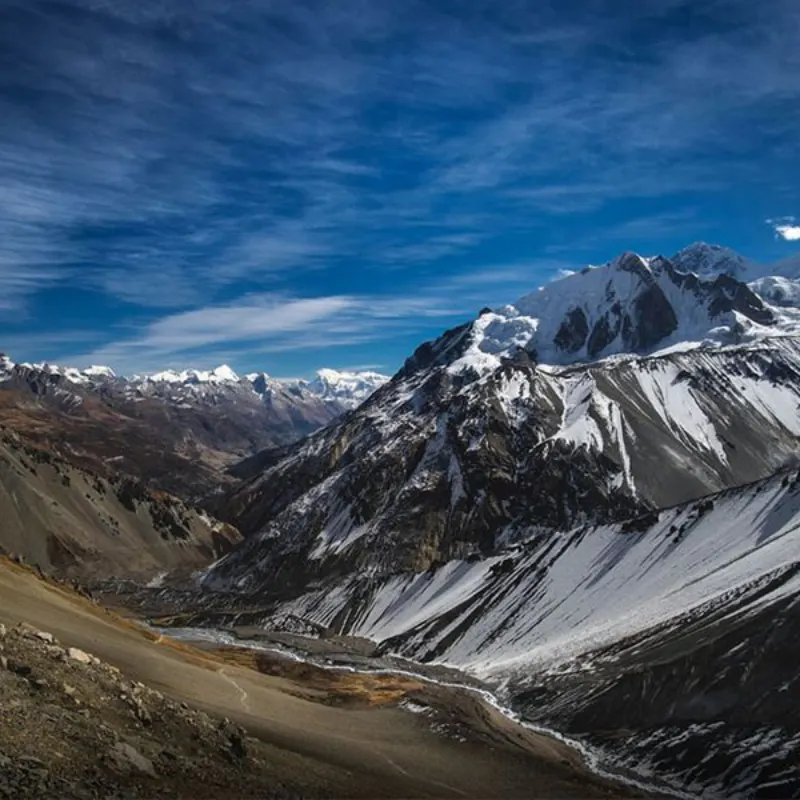
Opening the day with the Annapurnas in view and closing it by the Marsyangdi — the Annapurna Circuit delivers a new highlight almost every day. On this 13-day route the signature moments are these:
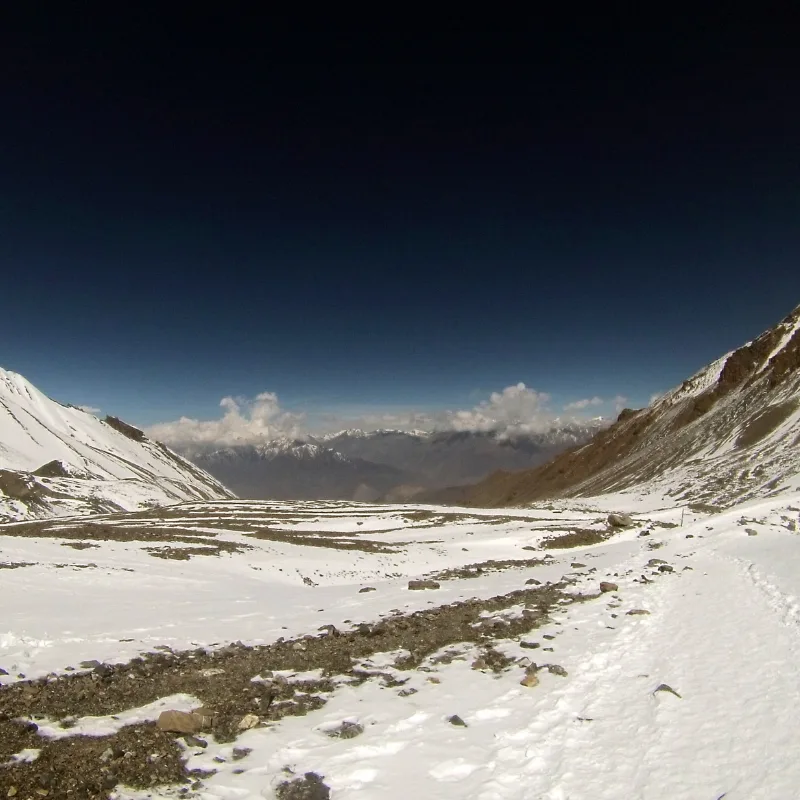
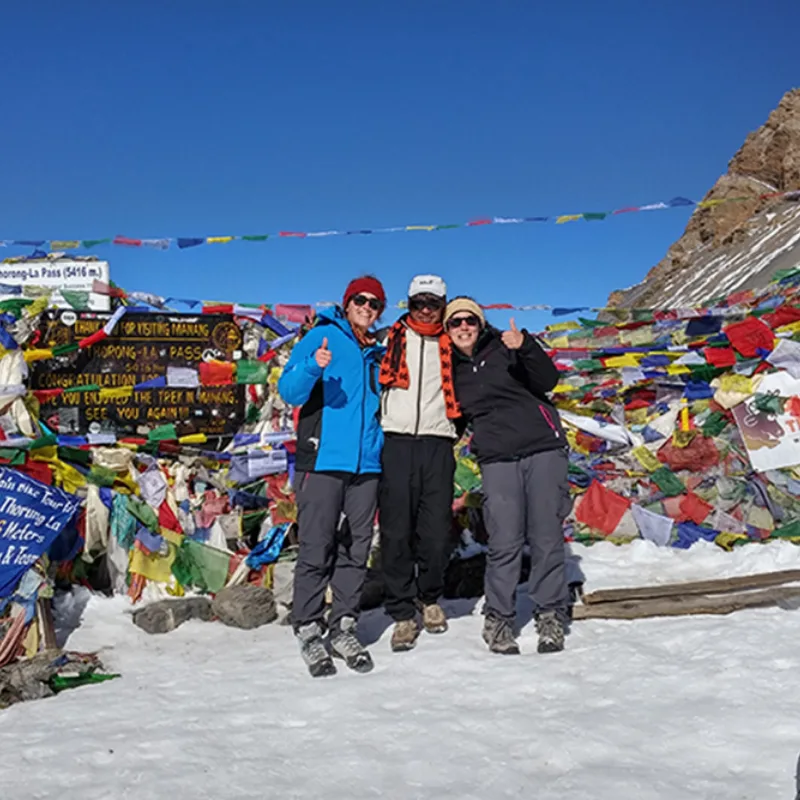
- Thorong La Pass — 5,416 m / 17,769 ft: the world’s highest trekking pass on a teahouse route, crossed pre-dawn on Day 11 with sunrise over the Himalaya.
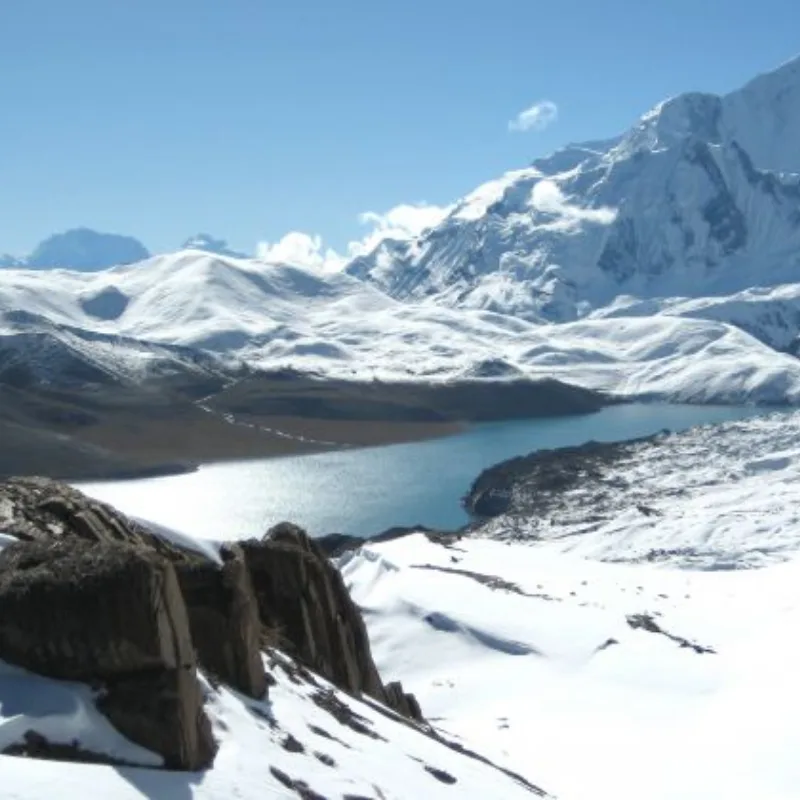
- Tilicho Lake — 4,919 m / 16,138 ft: a glacial lake regarded as one of the highest in the world, reached on a Day 8 summit from Tilicho Base Camp.
- Tilicho Base Camp — 4,150 m / 13,615 ft: a rocky high camp where blue sheep often graze and yaks haul supplies for local herders.
- Manang — 3,540 m / 11,614 ft: the biggest teahouse village in the upper valley, with a full acclimatization day, Gangapurna Lake and Braga Monastery.
- Upper Pisang — 3,300 m / 10,826 ft: a classic Gurung village below Annapurna II and Pisang Peak, reached via Bhratang and Dhukur Pokhari.
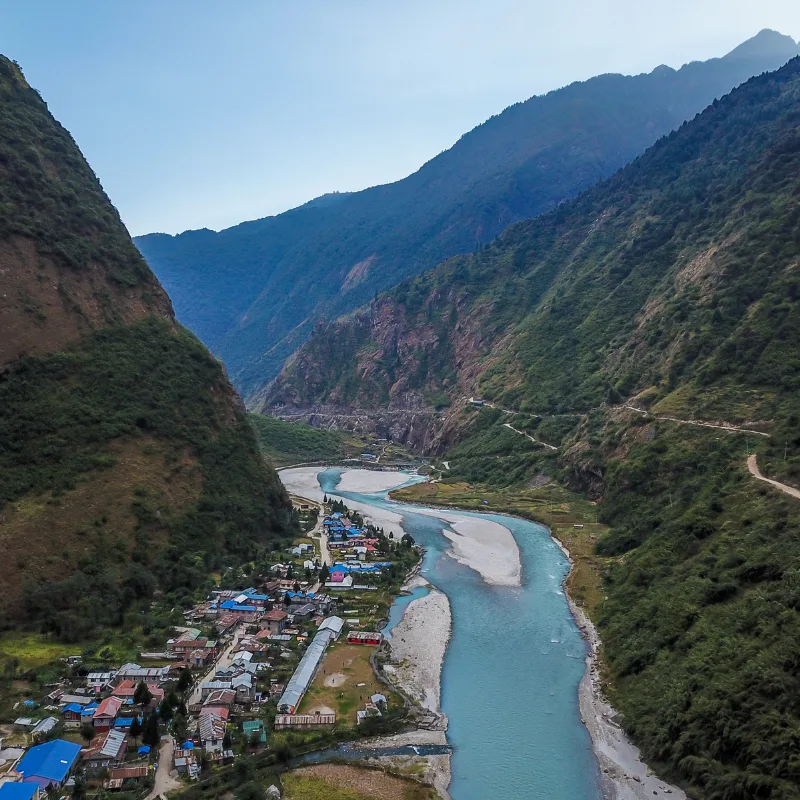
- Chame — 2,670 m / 8,760 ft: the district capital, with views of Lamjung Himal and Annapurna II and natural hot springs nearby.
- Muktinath — 3,800 m / 12,467 ft: a sacred temple of both Hindus and Buddhists, where eternal flames burn beside 108 water spouts.
- The Mustang change: crossing the pass drops you into the arid rain shadow of Mustang, a dramatic geological contrast to the forested valley you climbed.
- A road-supported classic: the jeep to Tal and the drive back from Muktinath to Pokhara keep a 5,416 m / 17,769 ft adventure inside 13 days.
Annapurna Circuit Trekking Overview
The Annapurna Circuit Trekking is a 13-day trek that circles Nepal’s Annapurna massif, climbing from subtropical Marsyangdi valley villages to the Thorong La Pass at 5,416 m / 17,769 ft, one of the highest trekking passes on Earth, with a high-altitude detour to Tilicho Lake at 4,919 m / 16,138 ft, one of the world’s highest lakes. Graded challenging, it suits fit trekkers comfortable with 5–10 hour walking days, steep ascents and multiple nights above 4,000 m / 13,123 ft.
The journey starts in Kathmandu with a bus to Besisahar and then a jeep to Tal at 1,700 m / 5,577 ft. The trail climbs the Marsyangdi valley through Dharapani, Danakyu, Chame and Upper Pisang to Manang at 3,540 m / 11,614 ft, where a full acclimatization day at Gangapurna Lake prepares the body for altitude. The route then branches west to Tilicho Base Camp at 4,150 m / 13,615 ft, summits Tilicho Lake at 4,919 m / 16,138 ft on Day 8, and returns east through Yak Kharka and Thorong Phedi before the pre-dawn crossing of Thorong La at 5,416 m / 17,769 ft on Day 11. The descent ends at sacred Muktinath at 3,800 m / 12,467 ft, then drives through Jomsom, Tatopani and Pokhara back to Kathmandu.
With Nepal Lion Tours, the package starts from USD 986 per person and includes a licensed English-speaking trekking guide, all permits (ACAP and TIMS), teahouse accommodation in twin-sharing rooms, breakfast, lunch and dinner on trekking days, private transfers for the Besisahar–Tal jeep and the Muktinath–Pokhara drive, and a down jacket, sleeping bag and duffel bag for the trail.
What Makes the Annapurna Circuit Trekking Special?
Few treks on Earth pack a full mountain circuit, a high-altitude lake and a 5,416 m / 17,769 ft pass into one itinerary. The Annapurna Circuit crosses an entire mountain wall, visiting Tilicho Lake at 4,919 m / 16,138 ft, one of the world’s highest lakes, and climbing Thorong La Pass, one of the world’s highest trekking passes. The scenery shifts from rice terraces and pine forest below 2,700 m / 8,858 ft to the arid, wind-scoured Mustang rain shadow beyond the pass — two different climate zones in a single route. The Manang acclimatization day, the Braga Monastery, the blue sheep at Tilicho Base Camp, pre-dawn Thorong La and the flame of Muktinath temple give the trek a constant change of rhythm.
Guide’s Note — Nepal Lion Tours “We have crossed Thorong La many times and still tell every group the same thing: the pass is a team effort, not a race. From our experience operating Annapurna Circuit departures, the trekkers who pace themselves in Manang and treat the Tilicho day as training for the pass almost always summit Thorong La feeling strong, while those who push too hard too early often struggle. We recommend spreading your energy over the first five days — the mountains will still be there on Day 8 and Day 11.” — Nepal Lion Tours Trekking Guide
Why Choose the Annapurna Circuit Trekking?
The Annapurna Circuit is the classic full-circuit journey of the Annapurna region, offering more variety in 13 days than most single-valley treks manage in three weeks. The trail is well established with teahouses every few hours, so there is no need to camp. The route is road-supported at both ends — a jeep from Besisahar to Tal saves a long valley walk, and the drive from Muktinath to Pokhara substitutes for the classic Jomsom descent — which keeps the trek focused on the best sections. At 5,416 m / 17,769 ft, the Thorong La crossing is a genuine Himalayan achievement, yet the acclimatization structure built into the itinerary, including a full rest day at Manang, makes it achievable for a fit trekker with a steady pace.
Who Is This 13-Day Annapurna Circuit Trek Suitable For?
- Fit first-time altitude trekkers who want a real Himalayan pass without mountaineering skills — the trail is walking, not climbing.
- Experienced trekkers ticking off the classic Annapurna Circuit and Thorong La at 5,416 m / 17,769 ft.
- Couples and small groups travelling privately with their own dates and pace from 2 trekkers.
- Photographers chasing the contrast between forest valley, high lake landscape and the Mustang rain shadow.
- Cultural travellers who want Hindu temple towns like Manang’s Braga and Muktinath’s sacred flames alongside the mountains.
- Nature lovers hoping to spot blue sheep, Himalayan griffons and yaks in the upper valleys.
- Trekkers combine the trek with Pokhara or a Chitwan safari before or after in Nepal.
No technical climbing is involved, and no previous high-altitude trekking is required — but the 9–10 hour pass day and two nights above 4,000 m / 13,123 ft mean basic stamina and a realistic attitude to altitude are important.
Quick Facts
Trek Fact | Details |
|---|---|
Trek Name | Annapurna Circuit Trekking |
Duration | 13 days / 12 nights |
Region | Annapurna, Gandaki, Nepal |
Maximum Altitude | 5,416 m / 17,769 ft at Thorong La Pass |
Highest Lake Reached | Tilicho Lake — about 4,919 m / 16,138 ft |
Difficulty | Challenging |
Main Highlight | Thorong La crossing plus Tilicho Lake |
Start / End | Kathmandu to Kathmandu |
Route | Tal – Danakyu – Chame – Upper Pisang – Manang – Tilicho Base Camp – Shree Kharka – Yak Kharka – Thorong Phedi – Thorong La – Muktinath – Pokhara |
Typical Walking | 5–10 hours per day |
Best Season | Spring–Autumn (March–May, September–November) |
Price From | USD 986 per person |
Accommodation | Teahouse lodges plus hotels in Pokhara and Kathmandu |
Guide | Licensed English-speaking trekking guide |
Annapurna Circuit Trekking Route and Elevation
The route follows the Marsyangdi river west and north for a week, then loops over the pass and down the Kali Gandaki side of the Annapurnas. Road transfers bookend the trek — a jeep climb from Besisahar to Tal at the start and a long drive from Muktinath via Jomsom and Tatopani to Pokhara at the end — so the walking concentrates on the best valley, lake and pass sections.
Annapurna Circuit Route at a Glance
Day | Route | Altitude (Day High Point) | Highlights |
|---|---|---|---|
Day 1 | Kathmandu → Besisahar (bus) → Tal (jeep) | 1,700 m / 5,577 ft | Marsyangdi valley entry, first teahouse village |
Day 2 | Tal → Danakyu via Dharapani | 2,300 m / 7,545 ft | Riverside trail, Dharapani, mountain views |
Day 3 | Danakyu → Chame | 2,670 m / 8,760 ft | Lamjung Himal, Annapurna II, hot springs near Chame |
Day 4 | Chame → Upper Pisang | 3,300 m / 10,826 ft | Pisang Peak, Annapurna II panoramas |
Day 5 | Upper Pisang → Manang | 3,540 m / 11,614 ft | Ghyaru and Ngawal viewpoints |
Day 6 | Acclimatization in Manang | 3,540 m / 11,614 ft | Gangapurna Lake, Braga Monastery, optional Ice Lake hike |
Day 7 | Manang → Tilicho Base Camp | 4,150 m / 13,615 ft | Khangsar, blue sheep, yak country |
Day 8 | Tilicho Base Camp → Tilicho Lake → Shree Kharka | 4,919 m / 16,138 ft | Summit of Tilicho Lake, return to Shree Kharka |
Day 9 | Shree Kharka → Yak Kharka | 4,050 m / 13,287 ft | High, rocky, open terrain |
Day 10 | Yak Kharka → Thorong Phedi or High Camp | 4,540 m / 14,895 ft | Final night before the pass |
Day 11 | Thorong Phedi → Thorong La → Muktinath | 5,416 m / 17,769 ft | Pre-dawn pass crossing, descent to Muktinath at 3,800 m / 12,467 ft |
Day 12 | Muktinath → Pokhara (drive via Jomsom, Tatopani) | 822 m / 2,697 ft | Kali Gandaki gorges, hot springs, Pokhara rest |
Day 13 | Pokhara → Kathmandu (drive) | Kathmandu 1,400 m / 4,593 ft | Return to Kathmandu, farewell |
Annapurna Circuit Elevation Profile
The profile is a long staircase with two summits. It begins at Tal at 1,700 m / 5,577 ft and climbs steadily for six days up the Marsyangdi to Manang at 3,540 m / 11,614 ft, rising roughly 300–500 m / 984–1,640 ft most days — a pace designed for acclimatization. The first real summit is the Tilicho day, which climbs from Tilicho Base Camp at 4,150 m / 13,615 ft to Tilicho Lake at 4,919 m / 16,138 ft and back down to Shree Kharka in about 6–7 hours.
The second and higher summit is Thorong La at 5,416 m / 17,769 ft, reached on Day 11 by a pre-dawn climb of roughly 850–900 m / 2,789–2,953 ft from Thorong Phedi at 4,540 m / 14,895 ft. The descent on the far side is the most dramatic of the trip — from 5,416 m / 17,769 ft down to Muktinath at 3,800 m / 12,467 ft in the same day. The elevation profile and a trekking map are available with your Nepal Lion Tours materials to plan your pace in advance.
How to Get to the Annapurna Circuit Trekking
Unlike treks that start in Pokhara, the Annapurna Circuit starts from Kathmandu, with a road transfer north up the Marsyangdi valley to the trailhead. There is no flight on the next step of this route, which makes the itinerary more weather-resistant than flight-dependent treks and keeps the schedule predictable.
Kathmandu to Besisahar: Flight or Road?
The main travel options for the first leg to the trailhead are:
Option | Approx. Travel Time | Best For |
|---|---|---|
Tourist bus to Besisahar | Around 5–6 hours | Budget-conscious travellers |
Private vehicle to Besisahar | Around 5–6 hours | Flexible or private travel |
Fly Kathmandu → Pokhara, then drive | 25–30 minutes, then around 3–4 hours by road | Travellers who want a shorter single road stretch |
Road times are approximate and affected by traffic, weather and road construction. There is no commercial airport at Besisahar, so the practical choices are a tourist bus, private vehicle or a flight to Pokhara combined with a shorter drive. For most travellers the direct tourist bus or private vehicle is simplest, since it moves all the way from Kathmandu toward the trailhead in one go.
Besisahar to Tal: Into the Marsyangdi Valley
From Besisahar, a 4-wheel-drive jeep carries the group up the valley to Tal at 1,700 m / 5,577 ft, where the trek begins. The gravel road climbs alongside the Marsyangdi river, and the 2–3 hour jeep ride saves what used to be a full day of walking. Nepal Lion Tours arranges this private transfer as part of the package, and your guide coordinates the roadhead so the group is settled in teahouses by the evening of Day 1.
Guide’s Note — Nepal Lion Tours “From our experience operating Annapurna Circuit departures, the bus and jeep drive on Day 1 can feel longer than the walking does. We recommend a light breakfast in Kathmandu, plenty of water on the bus, and loose-fitting layers for the jeep section — the valley warms up quickly below 2,000 m. We usually reach Tal in the afternoon, which leaves time for a walk along the Marsyangdi before dinner.” — Nepal Lion Tours Trekking Guide
Returning to Kathmandu After the Trek
The return is a two-day drive. On Day 12, the group leaves Muktinath and drives through Jomsom and Tatopani to Pokhara, about 8 hours on the mountain road, with a rest night in Pokhara. On Day 13, the group drives from Pokhara to Kathmandu, about 6–8 hours by tourist bus or private vehicle. Travellers in a hurry can instead take the domestic flight from Pokhara to Kathmandu in about 25–30 minutes, and Nepal Lion Tours can arrange this as an optional upgrade.
A Practical Tip for International Travellers
Do not book an international departure too close to the end of the trek. The Pokhara–Kathmandu drive on Day 13 takes 6–8 hours depending on traffic, so it is wiser to return to Kathmandu with a full day to spare before flying home. Access on this trek is straightforward and entirely road-supported, so with that one buffer day the route is easy to manage even for first-time visitors to Nepal.
Annapurna Circuit Trekking Difficulty, Fitness & Altitude
The Annapurna Circuit is graded challenging, and the grade is honest. There is no technical rock or snow climbing, but trekkers face 5–10 hour days, two sustained steep ascents above 4,000 m / 13,123 ft, and the highest trekking pass in the inventory. Basic walking stamina plus a disciplined, slow pace — not mountaineering skill — is what carries most trekkers over the top.
Where the Effort Actually Is?
Three sections demand the most from trekkers:
- The Tilicho day (Day 8): from Tilicho Base Camp at 4,150 m / 13,615 ft up to Tilicho Lake at 4,919 m / 16,138 ft and back to Shree Kharka — about 6–7 hours at the trip’s second-highest altitude.
- The Thorong La crossing (Day 11): a pre-dawn ascent of roughly 850–900 m / 2,789–2,953 ft from Thorong Phedi at 4,540 m / 14,895 ft (or higher from High Camp) to Thorong La at 5,416 m / 17,769 ft, followed by a long descent to Muktinath at 3,800 m / 12,467 ft — a 9–10 hour day in cold morning air.
- The long valley days: Days 2, 3, 4 and 5 average 5–7 hours each with steady, unrelenting climbs — no single brutal staircase, but a constant uphill rhythm.
Outside those sections the trail is mixed: forested valley paths, stone-flagged village stairways, dusty high-desert tracks and river crossings, all negotiable in good walking shoes.
Guide’s Note — Nepal Lion Tours “The Thorong La start is short compared with some Himalayan expeditions, but the cold and the dark make preparation everything. From our experience, groups that are packed, dressed and standing outside with headlamps as dawn breaks cross the top in good spirits, while groups that leave late fight both the cold and the clock. We recommend testing your layers before Day 11 and carrying a warm hat, gloves and a thermos — the wind on the pass is the real challenge, not the altitude alone.” — Nepal Lion Tours Trekking Guide
How to Prepare for the Annapurna Circuit Trekking
- Walk regularly for 8–10 weeks before the trek, building to 5–7 hours of continuous walking.
- Practise hills and stairs — the Marsyangdi valley climbs are steady and endless, so uphill conditioning pays off most.
- Strengthen your legs with squats, lunges and step-ups for the long descents from Thorong La and Tilicho.
- Take longer weekend walks with a loaded daypack of 8–10 kg / 18–22 lb to get used to the carry.
- Front-load your endurance, because the hardest physical day of the trek is Day 11, not Day 1.
- Avoid last-minute overtraining — arrive rested, not exhausted.
How Difficult Is the Annapurna Circuit Compared with Other Treks?
The Annapurna Circuit is the most demanding trek in the Annapurna region set. It pushes higher than Annapurna Base Camp at 4,130 m / 13,550 ft and far higher than Poon Hill at 3,210 m / 10,531 ft, and its 5,416 m / 17,769 ft pass places it alongside major Himalayan routes. However, its 13-day length is shorter than the classic 14–18 day circuit often quoted, because road access cuts out the valley approaches. Trekkers who can walk 5–7 hours day after day and are comfortable with altitude will manage comfortably; the pass day alone is not the whole story.
Altitude, Acclimatization & Safety
The Annapurna Circuit spends three nights above 4,000 m / 13,123 ft and crosses 5,416 m / 17,769 ft on Day 11, so altitude awareness is the main safety factor on the route. The itinerary is deliberately structured to minimise risk, but every trekker should understand how the body responds.
Annapurna Circuit Altitude Profile
- Kathmandu — about 1,400 m / 4,593 ft: overnight city, altitude not a factor.
- Tal — 1,700 m / 5,577 ft: trailhead village on the Marsyangdi.
- Dharapani — about 1,860 m / 6,102 ft: early valley stop on Day 2.
- Chame — 2,670 m / 8,760 ft: district capital, first serious overnight gain.
- Upper Pisang — 3,300 m / 10,826 ft: above the treeline feeling begins.
- Manang — 3,540 m / 11,614 ft: acclimatization base with the rest day on Day 6.
- Tilicho Base Camp — 4,150 m / 13,615 ft: rugged high camp, blue sheep territory.
- Tilicho Lake — about 4,919 m / 16,138 ft: high point of the lake excursion on Day 8.
- Shree Kharka — roughly 4,000 m / 13,123 ft (not listed on the page): overnight return from Tilicho Lake.
- Yak Kharka — 4,050 m / 13,287 ft: high open grazing country.
- Thorong Phedi — 4,540 m / 14,895 ft: base for the pass; the optional High Camp is higher still, commonly around 4,800–4,920 m.
- Thorong La — 5,416 m / 17,769 ft: the trek’s highest point on Day 11.
- Muktinath — 3,800 m / 12,467 ft: descent end and sacred temple town.
- Pokhara — 822 m / 2,697 ft: low-altitude rest night on Day 12.
How the Body Adapts to Altitude
The body acclimatizes best when asked to climb slowly and steadily. This itinerary caps daily gains at a conservative 300–500 m / 984–1,640 ft on most days and adds a full rest day at Manang precisely so that the pre-dawn Thorong La climb on Day 11 is manageable. On the trail: keep a conversational pace, drink 3–4 litres of fluids a day, eat regularly even without appetite, sleep low where the itinerary allows, and tell your guide immediately if you feel unwell.
Symptoms of Altitude Sickness to Watch For
- Headache that does not clear with rest or paracetamol
- Loss of appetite and nausea
- Unusual tiredness or weakness
- Dizziness or poor sleep
- Shortness of breath at rest
More concerning signs that require immediate attention:
- Confusion, clumsiness or loss of balance
- Vomiting that persists
- Bluish or grey lips and fingertips
- Increasing breathlessness even when sitting still
- Inability to walk a straight line
If any of these appear, the response is the same: stop ascending, tell your guide, and be ready to descend. With the ACAP–TIMS registration system on the route and a guide who is trained to spot symptoms early, Nepal Lion Tours keeps trekkers safe.
How Nepal Lion Tours Supports Altitude Safety
- A gradual route progression with capped daily gains and a full acclimatization day at Manang (Day 6).
- Experienced, licensed guides who monitor pace, hydration and symptoms throughout the Manang and Thorong La sections.
- Early communication encouraged — small complaints are always taken seriously before they become problems.
- No sleeping at the pass: the itinerary climbs 5,416 m / 17,769 ft in daylight and sleeps at Muktinath at 3,800 m / 12,467 ft that night.
- Health and safety briefing before the trek, plus advice on travel insurance that covers trekking above 5,000 m and emergency evacuation.
Best Time to Trek Annapurna Circuit
The best time for the Annapurna Circuit is spring (March–May) and autumn (September–November), the two seasons the page lists in its fact box as Spring-Autumn. Both offer stable weather and the clearest mountain views at the crucial Thorong La and Tilicho Lake sections. Treks run year-round, with winter and monsoon offering different trade-offs.
Season | Months | Weather & Trail Conditions | Overall |
|---|---|---|---|
Autumn | September–November | Clear, dry trails; Thorong La snow usually limited | Best overall |
Spring | March–May | Warmer days, some afternoon cloud; rhododendrons in bloom lower down | Highly recommended |
Winter | December–February | Cold — well below 0 °C above 4,000 m / 13,123 ft; snow possible on the pass | Good with preparation |
Monsoon | June–August | Wet, slippery trails; higher passes can cloak in cloud | Less suitable |
Autumn — September to November
Autumn is the classic season for the Annapurna Circuit. Between September and November, the monsoon drains away and the skies sharpen, giving the clearest possible views of Annapurna II, Lamjung Himal, Pisang Peak and Dhaulagiri. October typically offers the driest trails and stablest weather, while November brings colder mornings but thinner crowds. This is the busiest time on the route, so booking teahouses ahead at Manang and Thorong Phedi is wise in October.
Spring — March to May
Spring runs a close second. From March to May, days warm quickly, trails dry after winter, and the rhododendron forests between Danakyu and Chame flower in pink and red. Mornings stay clear for the pre-dawn Thorong La crossing, though afternoon clouds builds more often than in autumn. The Tilicho Base Camp trail at 4,150 m / 13,615 ft can still hold snow patches in March, so Nepal Lion Tours advises flexible dates and checking current conditions before April.
Winter — December to February
Winter trekking is possible but serious. From December to February, temperatures drop below -10 °C at Manang and Thorong Phedi, and snow can settle on Thorong La at 5,416 m / 17,769 ft for days at a time. Trails are quiet, teahouses cheaper, and clear days reward the prepared with extraordinary views — but the pass crossing requires patience and a guide willing to turn back if conditions are unsafe. Nepal Lion Tours runs winter departures only with careful weather checks.
Monsoon — June to August
Monsoon (June–August) is the least suitable season. Trails turn slippery, leeches appear in the lower forests below Dharapani, and the high passes frequently sit in cloud, hiding the views that make the circuit special. Some trekkers still go for the emerald green valleys and quiet teahouses, but the Thorong La window is unreliable. Unless you have a fixed date, Nepal Lion Tours recommends the dry seasons.
Which Season Should You Choose?
Choose autumn (September–November) if clear, reliable views at Thorong La are your priority — it is the best overall window. Choose spring (March–May) for warm days, flowering forests and still-excellent mornings. Choose winter if you want solitude and are prepared for real cold, and avoid the monsoon unless you have no choice. Whatever the season, weather in the Himalaya changes quickly — check the forecast for Manang and Mustang in the week before you fly, and leave a day of flexibility at the end of the trek.
Guide’s Note — Nepal Lion Tours “On clear autumn mornings the view from Thorong La typically opens up in layers — first Dhaulagiri’s massif, then the Mustang desert far below, then the Annapurnas behind you. In our experience late September and October give the most reliable pass mornings, but even in spring the pre-dawn climb is often a sea of headlamps above the clouds. We plan the next day with a decision point: if the guide judges conditions poorly, we hold at Thorong Phedi rather than risk a storm near 5,416 m.” — Nepal Lion Tours Trekking Guide
Annapurna Circuit Permits & Regulations
The Annapurna Circuit enters the Annapurna Conservation Area, so trekkers need the applicable permits before they start walking at Tal. Nepal Lion Tours arranges both permits as part of pre-trek preparation, and your guide carries the paperwork for the checkpoint at Tal where permits are checked on Day 1.
Annapurna Circuit Permits at a Glance
Requirement | Who Needs It? | Who Arranges It? |
|---|---|---|
ACAP — Annapurna Conservation Area Permit | Foreign and SAARC trekkers entering the Annapurna Conservation Area | Nepal Lion Tours |
TIMS Card (Trekkers’ Information Management System) | Trekkers on applicable Annapurna routes | Nepal Lion Tours |
Annapurna Conservation Area Permit (ACAP)
The ACAP is the entry permit for the Annapurna Conservation Area, which covers the entire circuit from Tal to Muktinath. It is issued against your passport number, checked at the Tal checkpost, and costs around NPR 3,000 for foreign trekkers and NPR 1,000 for SAARC nationals (government fees can be revised, so confirm the current rate at booking). Nepal Lion Tours arranges the ACAP before the trek so there is no queue or confusion on Day 1.
TIMS Card (Trekkers’ Information Management System)
The TIMS Card records your trekking route and emergency contact details in the official trekkers’ database, supporting safety and search coordination on routes like the Annapurna Circuit. The fee varies by nationality and current regulations, and the card is checked alongside the ACAP at Tal. Nepal Lion Tours handles TIMS registration as part of the pre-trek paperwork; you simply carry your original passport for identification at the checkpost.
Do You Need a Restricted-Area Permit?
No, not for the standard Annapurna Circuit route. The classic Manang – Thorong La – Muktinath alignment is not a restricted area, so no special permit is needed to walk it. Restricted-area permits apply only to treks that branch into Upper Mustang or the Manaslu region, which the standard circuit does not enter. Regulations can change and modified itineraries may differ, so Nepal Lion Tours confirms current requirements before each departure.
Who Arranges the Permits?
Nepal Lion Tours arranges the ACAP and TIMS Card as part of your booking, so you pick up a prepared set of documents before the trek. You only need to carry your original passport for the Tal checkpoint. Because government fees and rules can be revised, the final cost and any changes are confirmed with you before departure.
Food & Accommodation on the Annapurna Circuit Trekking
The Annapurna Circuit runs through the finest teahouse network in Nepal, with lodges every few hours from Tal to Muktinath. Accommodation is simple, twin-sharing and locally operated, and meals come from the lodge kitchens, which keeps the trek lightweight and flexible.
Teahouse Accommodation on the Annapurna Circuit
- Rooms: basic twin-sharing rooms with foam mattresses; private twin rooms widely available at valley lodges.
- Bathrooms: shared facilities at smaller stops; attached/private bathrooms common in Chame, Manang and Jomsom.
- Hot showers: available at most teahouses for a small fee, typically paid on the spot.
- Electricity: solar power at most lodges; plug points in dining rooms, with charging generally fine below 4,000 m / 13,123 ft.
- Heated dining rooms: the fireplace or stove room is the warm hub in the evenings — the meeting point for every group.
- Wi-Fi: free Wi-Fi exists at larger villages like Chame, Manang and Muktinath, but it is slow; connections thin out at Tilicho Base Camp and Thorong Phedi.
- Bedding: a pillow and blanket are provided, but a warm sleeping bag (loaned by Nepal Lion Tours) makes nights above 3,000 m / 9,843 ft comfortable. High Camp lodges are the most basic on the route, with shared everything.
What Food Is Available on the Annapurna Circuit?
Lodge kitchens on the Annapurna Circuit serve a remarkably varied menu, typically 10–12 dishes. Standard choices include dal bhat, momos, noodles, fried rice, pasta, soups, potatoes, eggs, porridge, pancakes, toast and roti. Dal bhat (lentil soup with rice) is the trekkers’ favourite because it is hot, filling, often free of added fat and easy to refill — Nepal Lion Tours guides recommend it for energy before and after the Thorong La climb. Vegetarian food is the default and richly available; tell Nepal Lion Tours in advance about vegan, gluten-free or allergy needs so kitchens can prepare alternatives.
What Food and Accommodation Are Included?
Included in the Trek Package | Usually Paid Separately |
|---|---|
Teahouse accommodation in twin-sharing rooms | Hot showers and heater fees as charged by lodges |
Breakfast, lunch and dinner on trekking days (from Day 1 dinner to Day 13 breakfast; on Day 1 lunch and dinner) | Drinks, bottled water, desserts and extra snacks |
Tea or coffee with meals at most lodges | Wi-Fi where lodges charge separately |
Hotels in Pokhara and Kathmandu on Days 12–13 | Phone calls, laundry and personal expenses |
Staff food, accommodation and insurance | Tips for guide and porter teams |
The exact split can vary by departure, so confirm your inclusions at booking — Nepal Lion Tours lists them clearly in your confirmation.
Drinking Water on the Trek
Do not treat tap water on the Annapurna Circuit as safe to drink without treatment. Use bottled water, boiled water or treated water from lodge kitchens, or carry a reusable bottle and purification tablets/filter from Kathmandu. Drinking 3–4 litres a day matters most above 4,000 m / 13,123 ft, on the Tilicho and Thorong La days. Refilling from lodge urns reduces plastic on the trail.
Staying Comfortable at Teahouses
- Carry your own water bottle or thermos and refill at the dining-room urn at every stop.
- Sleep in your built-for-the-trek sleeping bag — the difference is obvious at Thorong Phedi and Tilicho Base Camp.
- Pack a power bank because wall sockets are limited and shared.
- Keep a set of warm layers and a torch by your bed for pre-dawn starts like the Thorong La crossing.
- Bring small change in Nepali rupees for the odd hot shower or extra treat.
- Tell Nepal Lion Tours your dietary needs before the trek so lodge kitchens are ready.
Why Book with Nepal Lion Tours?
Nepal Lion Tours is a registered trekking company based in Kathmandu that operates the Annapurna Circuit on private departures, with one contact from enquiry to return. Seven reasons trekkers choose us for this 13-day route:
- Local, licensed English-speaking guides.
Every departure is led by a government-licensed guide who knows the Manang valley, Tilicho and Thorong La route personally — the same guides who read the weather at the pass and the snow on the high trail.
- A registered trekking company you can verify.
Nepal Lion Tours is a registered Nepali operator with its base in Kathmandu; licence and company details are provided to travellers on request.
- Private departures from two trekkers.
The Annapurna Circuit runs with a minimum of just 2 trekkers, so couples, friends and families get their own dates, their own pace and no waiting for group minimums.
- A classic itinerary with two signature summits.
This is the 13-day circuit that joins Tilicho Lake at 4,919 m / 16,138 ft and Thorong La at 5,416 m / 17,769 ft into one journey — the two experiences most trekkers come specifically to do.
- Private transfers and straightforward logistics.
The Besisahar–Tal jeep and the Muktinath–Pokhara drive are arranged privately, so no part of the road-supported start or return depends on public buses once you are on trek.
- Budget-friendly pricing without removing the main experiences.
From USD 986 standard and USD 1,331 luxury, the difference lies in comfort (hotels, rooms, service class), not in cutting Tilicho or Thorong La from the route.
- A local team you can contact before and during your trek.
One call — WhatsApp at +977-9851039020 — reaches the office that arranged your trek, before you fly and while you are on the trail.
Book the Annapurna Circuit Trekking
A 13-day circuit, a pass at 5,416 m / 17,769 ft, a lake at 4,919 m / 16,138 ft, and a climate change in the middle of a single trek — the Annapurna Circuit is the big-achievement trek of the Annapurna region, and spring and autumn dates fill early in Manang’s teahouses.
Trek at a Glance
- Duration: 13 days / 12 nights
- Price: From USD 986 per person (standard), tiered by group size — 1 trekker USD 986, 2–4 trekkers USD 937, 5–9 trekkers USD 887, 10+ trekkers USD 838; luxury from USD 1,331 with 1 trekker USD 1,331, 2–4 USD 1,264, 5–9 USD 1,198, 10+ USD 1,131
- Difficulty: Challenging
- Maximum Altitude: 5,416 m / 17,769 ft at Thorong La Pass
- Accommodation: Teahouse lodges plus hotels in Pokhara and Kathmandu
- Meals: Breakfast, lunch and dinner on trekking days
- Permits & Registration: ACAP and TIMS, arranged by Nepal Lion Tours
- Transportation: Private transfers for the Besisahar–Tal jeep and Muktinath–Pokhara drive; tourist bus or private vehicle for Kathmandu–Besisahar and Pokhara–Kathmandu
- Guide: Licensed English-speaking trekking guide throughout
- Cancellation: Free cancellation up to 14 days before departure (subject to booking terms)
Ready to Start Your Annapurna Adventure?
Send your preferred travel date and group size through the booking form or WhatsApp at +977-9851039020, and Nepal Lion Tours will confirm teahouse availability in Manang and Thorong Phedi before you commit. Whether you are travelling solo, as a couple, with friends, or with family, we will help you prepare for a smooth and enjoyable trek — from the Kathmandu briefing to the view from Thorong La. Your pass is waiting — choose your dates and start planning your trek today.
Related Annapurna Treks
If the Annapurna Circuit tempts you but the 13 days or the 5,416 m / 17,769 ft pass feel too big, the Annapurna region offers a ladder of shorter, lower-altitude treks:
Trek | Duration | Difficulty | Max Altitude | Best For |
|---|---|---|---|---|
Ghorepani Poon Hill Trekking | 4 days | Easy–Moderate | 3,210 m / 10,531 ft | Short getaway focused on the sunrise viewpoint |
Poon Hill Teahouse Trekking | 7 days | Easy–Moderate | 3,210 m / 10,531 ft | Slower-paced, more time in villages |
Annapurna Panorama View Trek | 9 days | Easy–Moderate | 3,210 m / 10,531 ft | Wider foothill scenery, villages and views |
Annapurna Base Camp Trek | 10–12 days | Moderate | 4,130 m / 13,550 ft | Reaching the heart of the Annapurna amphitheatre |
Annapurna Circuit Trek | 14–18 days | Moderate–Challenging | 5,416 m / 17,769 ft | The longer, more leisurely classic circuit |
All of these run through the same teahouse network and can be combined with Pokhara or a Chitwan Jungle Safari. Nepal Lion Tours can also extend the 13-day circuit to the classic 14–18 day full route if you want the complete valley approaches included.
Trip Essentials
Packing advice, required equipment & gear recommendations
Essential
Annapurna Circuit Trekking Packing List
This is a teahouse trek, not a camping expedition — you sleep and eat at lodges every night — but the Annapurna Circuit still needs a serious kit because it crosses 5,416 m / 17,769 ft in cold conditions. Nepal Lion Tours provides a down jacket, sleeping bag, duffel bag and trekking map for the trail.
Hiking Gear
- Waterproof trekking boots that are broken in, with good ankle support for the long Thorong La descent
- Trekking poles — strongly recommended for the 850–900 m pre-dawn climb and the descent to Muktinath
- A 25–35 litre daypack with a rain cover, carried by you each day
- A headlamp with spare batteries — essential for the pre-dawn Thorong La start
- A reusable water bottle or thermos (1–2 litres) plus purification tablets/filter
- Sun hat, sunglasses and sunscreen — the sun is intense above 4,000 m / 13,123 ft
- Small first-aid basics: blister plasters, painkillers, any personal medication
Clothing: Use Layers Rather Than Bulk
Base layers - 1–2 merino or synthetic tops for warmth without sweat - Trekking underwear and socks — bring 3–4 pairs (wool/synthetic, not cotton)
Mid-layers - A fleece jacket for village evenings and pass mornings - Light trekking trousers that dry quickly, plus warm thermal bottoms for nights at Thorong Phedi
Outer layers - A waterproof and windproof shell jacket — the wind on Thorong La at 5,416 m / 17,769 ft is the real danger - A warm down jacket (loaned by Nepal Lion Tours) for mornings and evenings
Trekking clothes - 2–3 short- or long-sleeve trekking shirts and 1 pair of quick-dry trousers - Rain trousers for wet valley days in spring and monsoon
Headwear and gloves - A warm beanie or balaclava — plus a sun hat for daytime - Gloves: a warm pair for the pass and a thin pair for everyday walking
Sleeping and Evening Comfort
- Sleeping bag rated to around -10 °C (loaned) — nights at Tilicho Base Camp and Thorong Phedi are genuinely cold
- A thin inner liner or sheet for cleanliness in teahouse beds
- Earplugs and a sleep mask — teahouse walls are thin in villages like Manang
- Warm socks and a fleece top to sleep in
Toiletries and Personal Health Items
- Travel towel (fast-drying) and toiletries — many lodges sell basics but prices rise with altitude
- Toilet paper (a small emergency stash) and hand sanitiser
- Lip balm with SPF and moisturiser — lips crack fast above 4,000 m / 13,123 ft
- Personal medication plus basic painkillers and tablets for sore throats and stomach issues
- Anti-diarrhoeal tablets and rehydration salts — food changes, stomachs protest
- Vitamin and electrolyte sachets for the pass days
- A small sewing kit and duct tape for gear repairs
- Blister plasters, antiseptic cream and light bandages
- Sunscreen with high SPF — ultraviolet is strong at altitude even in winter
- Earplugs and eye drops for dust and tired eyes
- A small note of your insurance, medical and emergency contacts
- Period products if needed — available in large towns, scarce on the trail
Electronics
- Smartphone with offline maps loaded (many valleys along the Marsyangdi have limited signal)
- Power bank (10,000–20,000 mAh) — charging points are shared and sometimes charged for
- Camera or GoPro plus spare batteries/cards — protect from cold at Thorong La
- Universal adapter (Nepal uses type C/D plugs) and cables
Charging is available at most teahouses up to Manang; beyond that, solar and shared sockets make a power bank essential for the Thorong Phedi night.
Documents and Money
- Your original passport — required for the ACAP/TIMS check at Tal
- Permits (ACAP and TIMS) prepared by Nepal Lion Tours
- Travel insurance documents, including the emergency number — must cover trekking above 5,000 m
- 1–2 passport photos — useful for permit registration
- Cash in Nepali rupees — for hot showers, drinks, extra snacks and tips; ATM access is limited once you leave Kathmandu and Pokhara
- A credit/debit card as backup for hotels in the cities
How Much Should You Pack?
Lighter is better on the Annapurna Circuit. Your main duffel (loaned, with a porter) should stay under 10–12 kg / 22–26 lb; your daypack carries just the day’s essentials — water, layers, snacks, rain shell, first-aid and camera. The classic sleep-low-walk-high structure means you unpack at the same teahouse for nights, so keep your sleeping layer and toiletries accessible. Pack for the pass, not for the valley — the warm jacket, gloves and thermos pay for themselves when the wind starts at 5,416 m / 17,769 ft.
Read Before You Book
Permits, terms, medical considerations & advisory guidelines
Advisory
What to Know Before Booking
The Annapurna Circuit Trekking is a longer, high-altitude trek with varied terrain, changing weather and a challenging mountain pass, so good preparation is important. Here are the practical things worth knowing before you book.
Accommodation and Facilities
Expect basic, locally run teahouses for most of the route, with the biggest villages — Chame, Manang and Muktinath — offering the best rooms and attached bathrooms. The simplest lodges sit at Tilicho Base Camp, Shree Kharka and Thorong Phedi, where shared bathrooms, solar power and no mobile signal are normal. This is part of the experience, and Nepal Lion Tours sets expectations before you book so nothing comes as a surprise.
Food and Dietary Requirements
The menu repeats across lodges — dal bhat, momos, noodles, fried rice, pasta and eggs — and portions are generous. Vegetarian travellers eat very well; vegan and gluten-free travellers need notice so Nepal Lion Tours can confirm kitchen options. Bring snacks you trust (energy bars, nuts, chocolate) for the long pass days, when appetite often fades at altitude.
Altitude, Health and Insurance
The Annapurna Circuit reaches 5,416 m / 17,769 ft and spends three nights above 4,000 m / 13,123 ft — altitude is the biggest single factor on this trek. Travel insurance is strongly recommended and must cover trekking in Nepal above 5,000 m, including medical treatment and helicopter evacuation; check altitude limits and exclusions carefully before buying.
Money and Tipping
Carry cash in Nepali rupees for everything not in the inclusions — hot showers, heater fees, drinks, bottled water, Wi-Fi and tips. Many lodges above Chame have little or no card payment. Tipping your guide and porter is customary; Nepal Lion Tours can advise appropriate amounts at the pre-trek briefing.
Culture and Responsible Trekking
- Dress modestly in villages and at Muktinath temple — shoulders and knees covered near religious sites.
- Ask before photographing people, monks and temple interiors.
- Carry out your rubbish — keep the Tilicho and Thorong La sections as clean as you found them.
- Fill your water bottle rather than buying plastic at every stop.
- Do not feed wild animals (including the blue sheep at Tilicho Base Camp) and keep food in your pack.
- Support local lodges by eating and sleeping where your guide directs — that sustains the valley economy.
Route Options
- Full classic circuit (14–18 days): add the valley approaches around the road sections for the complete experience.
- Skip Tilicho Lake: save a day and shift to Shree Kharka → Yak Kharka directly if time is short (you would miss 4,919 m / 16,138 ft, though).
- Stay at High Camp on Day 10: shorten the pre-dawn climb but add altitude with a more basic lodge — Nepal Lion Tours advises based on your acclimatization.
- Fly Pokhara → Kathmandu on Day 13: optional upgrade that turns the final drive into a 25–30 minute flight.
Booking and Before You Arrive
Make sure you understand:
- Your inclusions — which meals, rooms, transfers and permits are inside the price; you will get a written confirmation.
- The tiered pricing — USD 986 / 937 / 887 / 838 by group size (standard) applies from the first booking.
- The luxury upgrade — from USD 1,331, for higher-comfort rooms, hotels and service.
- Your insurance — checked at briefing; confirm coverage above 5,000 m.
- Visa and arrival — Nepal visa on arrival is standard; your passport needs 6 months’ validity.
- Permit fees — government rates can change; final figures confirmed at booking.
- Fitness honestly — if in doubt, add training or choose a shorter, lower trek.
A Few Final Tips
Book well ahead for October departures, when Manang’s teahouses fill fast. Talk to Nepal Lion Tours about your walking pace — private departures adjust the routine to your group. Above all, treat acclimatization as the itinerary’s plan, not an optional extra: the rest day at Manang (Day 6) is what makes Day 11 possible.
Day-by-Day Itinerary
Explore each day's route, trekking elevation, and activities
Our adventure begins early in the morning. After breakfast in Kathmandu, we board the bus and begin the scenic journey toward Tal Village.
Although the drive is lengthy, the beautiful landscapes make it enjoyable. Along the route, you will pass green hills, flowing rivers, cultivated farmland, and small traditional settlements. You may also spot impressive waterfalls and distant snow-covered mountains.
The first major stop is Besisahar. From there, we continue by jeep toward Tal Village. Upon entering the village, your Annapurna trekking permit will be checked at the designated checkpoint.
After reaching Tal, settle into the teahouse and prepare for the trekking days ahead.
Today marks the beginning of the main trekking section. After breakfast in Tal, we follow the river trail and pass through scenic villages, including Dharapani.
The route offers beautiful views of green hills, waterfalls, and impressive mountains in the distance. The trail includes both uphill and downhill sections, but the walking remains manageable.
After stopping for lunch along the way, we continue through peaceful pine forests until reaching Danakyu, a small and quiet mountain settlement.
Once there, settle into the teahouse, enjoy a warm meal, and rest for the next day's journey.
After breakfast, we leave Danakyu and continue trekking toward Chame. The trail passes through lush forests dominated by tall pine trees.
Along the way, we pass small settlements such as Timang and Thanchok. The route contains a mixture of climbs and descents, while the surrounding scenery becomes increasingly impressive.
During clear weather, you may see snow-covered peaks including Lamjung Himal and Annapurna II. We take a break for lunch along the route before continuing toward Chame.
After several hours of trekking, we arrive at Chame, the main town of the area. The settlement has several shops and teahouses and provides beautiful views of the surrounding mountains.
Spend the night in Chame and recover for the next day's trek.
Today we continue from Chame to Upper Pisang. After breakfast, the trail follows the river and passes through beautiful pine woodland.
As you walk, you will encounter dramatic rocky cliffs and may see eagles soaring above the valley. The route passes through settlements such as Bhratang and Dhukur Pokhari.
The surrounding scenery includes spectacular snow-covered peaks, particularly Annapurna II and Pisang Peak.
After having lunch along the trail, we continue climbing toward Upper Pisang. Situated higher than Lower Pisang, Upper Pisang offers excellent views of the Himalayan mountains.
In the evening, relax at the teahouse, enjoy a warm meal, and admire the sunset over the surrounding peaks.
After breakfast, we depart from Upper Pisang and head toward Manang, surrounded by spectacular Himalayan scenery.
The trail passes through beautiful pine forests and traditional villages such as Ghyaru and Ngawal. Along the route, you can observe old stone-built houses, agricultural fields, and colorful prayer flags.
Today's journey is somewhat longer, but the magnificent mountain views make the effort worthwhile. Depending on the area and conditions, you may also encounter yaks or mountain goats grazing on the hillsides.
Following lunch along the way, we continue toward Manang, a larger mountain settlement known for its teahouses, bakeries, and shops.
After arriving, enjoy a warm meal and relax before continuing into the higher sections of the trek.
Today is set aside for acclimatization in Manang. The purpose of staying at this altitude is to allow your body to gradually adapt to the thinner air before continuing toward higher elevations.
Rather than spending the entire day resting, we take a short hike around the area. Popular options include walking toward Gangapurna Lake or visiting Braga Monastery.
If you have additional energy, you can take the longer side trip to Ice Lake (Kicho Tal). The climb is more demanding, but reaching the top provides views of two clear alpine lakes surrounded by snowy Annapurna peaks.
After enjoying the day's mountain scenery, return to Manang and spend the remaining time relaxing. You can also visit one of the local bakeries and enjoy some refreshments.
A good night's rest will help prepare you for the more demanding high-altitude sections ahead.
After breakfast, we leave Manang and make our way toward Tilicho Base Camp, the overnight point for the visit to Tilicho Lake.
The trail passes through small settlements including Khangsar and Shree Kharka. Throughout the journey, you can enjoy impressive views of snow-covered mountains and dramatic rocky cliffs.
Wildlife such as blue sheep and yaks may be visible on the surrounding hills. The path contains several uphill and downhill sections and becomes narrow in certain areas, so careful walking is important.
After several hours on the trail, we reach Tilicho Base Camp, where a few teahouses provide accommodation for the night.
Rest and prepare yourself for the following day's visit to Tilicho Lake.
Today is one of the most exciting sections of the journey. We start early from Tilicho Base Camp and hike toward Tilicho Lake, one of the world's highest lakes.
The trail climbs steadily and can be physically demanding in places. However, the spectacular scenery makes the effort worthwhile. Along the route, you will see towering snowy mountains, rugged cliffs, and may have opportunities to spot blue sheep on the surrounding slopes.
After spending time at the beautiful Tilicho Lake, we begin the descent toward Shree Kharka.
Upon reaching the village, settle into the teahouse, enjoy a warm meal, and rest for the following day's trek.
After breakfast, we leave Shree Kharka and continue toward Yak Kharka.
The trail travels across open hills and fields with a mixture of uphill and downhill sections. Along the way, you will enjoy views of snow-covered mountains and rivers, while yaks and blue sheep may be seen in the surrounding landscape.
After several hours of walking, we arrive at Yak Kharka, a small and peaceful settlement with a few comfortable teahouses.
Spend the evening enjoying a warm meal and getting plenty of rest before heading toward the higher elevations.
Today we leave Yak Kharka and continue climbing toward Thorong Phedi or High Camp.
The route becomes more rugged as we travel through rocky mountain terrain. You may encounter yaks and blue sheep along the trail. The journey also includes a small bridge crossing and areas affected by landslides, so a slow and careful pace is recommended.
Once we reach Thorong Phedi, we can rest there if needed. Depending on the group's condition and itinerary, some trekkers continue farther to High Camp, which is situated at a greater elevation.
Staying at High Camp can make the following day's crossing of Thorong La Pass somewhat easier.
After dinner, rest well and prepare for the major challenge of the trek.
Today is one of the most challenging and memorable days of the trek. We wake before sunrise and begin the ascent from Thorong Phedi toward Thorong La Pass, the highest point of the journey.
The trail is steep and may be covered with snow, requiring a slow and steady pace. As we climb higher, spectacular views of the surrounding snow-covered mountains open up around us.
Eventually, we reach Thorong La Pass at 5,416 m. Take some time to enjoy the achievement, capture photographs beside the famous pass sign, and admire the colorful prayer flags.
After reaching the highest point, begin the long descent toward Muktinath, a beautiful settlement and important pilgrimage destination.
After the demanding day's walk, check into the teahouse, enjoy a warm meal, and take time to recover.
After breakfast, we leave Muktinath and begin the drive toward Pokhara.
The journey first descends through the dry mountain landscapes, passing settlements such as Jomsom and Tatopani. Along the way, you can see apple orchards, rivers, villages, and changing mountain scenery.
Although some parts of the road can be rough and bumpy, the surrounding views make the journey enjoyable. We stop along the way for lunch before continuing toward Pokhara.
After the long drive, we arrive in Pokhara, a beautiful lakeside city known for Phewa Lake, cafés, and restaurants.
Once there, relax and enjoy some well-deserved rest after completing the major trekking sections.
Your Annapurna Circuit Trek with Tilicho Lake is now nearing its completion.
After breakfast, we leave Pokhara and begin our return journey to Kathmandu.
The drive takes approximately 6–8 hours, following roads through green hills, rivers, farmland, and small countryside settlements.
We make stops along the way for lunch and refreshments. During the journey, you can observe rural Nepalese life and enjoy the changing scenery outside the window.
After completing the long drive, we arrive back in Kathmandu and transfer to the hotel.
Take the evening to relax, enjoy a meal, and reflect on the memorable experiences from your Annapurna Circuit and Tilicho Lake adventure.
Want to customize this itinerary?
Tailor duration, lodges, acclimatization days, or add private helicopter flights.
Inclusions & Exclusions
Everything that is covered and what you'll need to budget separately
What is Included
Fully covered in your package price
- 12 nights’ accommodation in mountain teahouses – Twin-sharing rooms in local mountain teahouses along the trekking trail.
- 13 days of guide service – A licensed, English-speaking local guide, with salary, insurance, meals, and accommodation fully covered.
- Annapurna Conservation Area Permit – The required trekking permit will be arranged for you before departure, so you do not need to handle the paperwork.
- Kathmandu–Pokhara–Kathmandu tourist bus – Ground transportation as outlined in the itinerary.
- Meals during the trek – 13 breakfasts, 13 lunches, and 12 dinners, with meals selected from the available teahouse menus.
What is Excluded
Personal expenses & optional extras
- Porter for 13 days – USD 299 (Optional) – A porter can be arranged upon request.
- Personal expenses and travel insurance – Any personal costs incurred during the trip, along with your own travel insurance.
- Private Jeep – USD 440 (Optional) – Private Jeep transportation can be arranged at an additional cost.
- Hot and cold beverages – Any hot or cold drinks purchased during the trek.
- Tips for the guide and porter (if hired) – Tipping is customary in Nepal and is entirely at your discretion as a gesture of appreciation for good service.
- Personal expenses – Drinks, snacks, hot showers, Wi-Fi, charging, laundry, souvenirs, and other personal purchases along the trail.
Our Customer Reviews
Authentic experiences and feedback from our travelers
Write a Review
Share your adventure experience with other travelers
Thank You!
Your review has been submitted and is awaiting approval.
Please Wait
You've submitted several reviews recently. Please wait a few minutes before trying again.
Oscar Bergstrom
A jeep trip sounded a bit lazy to me at first, but it opened up a lot of country. Tilicho Lake was the part I had built up in my head, and it still surprised me. The food afterwards, after Tilicho Base Camp, tasted especially good. The jeep gave us access to villages that felt far away from the main road. The weather changed quickly, so we learned to take the forecast with a pinch of salt. The packed lunches were simple but did the job. Bring an appetite and a willingness to try things.
Elena Hayes
I kept notes as we went, mostly so I could remember what worked and what I would do differently. Danakyu gave us the clearest view of the mountains on the whole trip. I was looking forward to Thorong La Pass, and it did not disappoint. The trip was a proper pause, not just a break. I would pack for colder weather than you think you need. I would bring a cushion next time, but the bumpy parts were worth it. The teahouse had a great common room where everyone swapped stories at night. The trip changed pace often, which kept it interesting. The children loved the guide, and he was great with them. The transfers were on time, and the briefings were clear enough without being endless. We saw more of the country than we could have on foot. Tip: Leave a little space in your bag for things you will inevitably buy.
Felix Engstrom
We were not sure about spending so long in a vehicle, but the scenery kept it interesting. Annapurna Circuit gave us the clearest view of the mountains on the whole trip. The day we did Tilicho Lake was probably my favourite. The small details made a difference, from the morning tea to the evening briefing. The jeep was the right way to cover that much ground in the time we had.
Amelie Van Leeuwen
We were not sure about spending so long in a vehicle, but the scenery kept it interesting. We reached Chame earlier than planned, which gave us time to sit and take it in. The day we did Chame was probably my favourite. One afternoon was too cloudy for the planned view, but the backup plan was good. A good mix of adventure and comfort for us. Tip: Pack more layers than you think you need and fewer outfits for the evening.
Ingrid Smit
We were not sure about spending so long in a vehicle, but the scenery kept it interesting. The food afterwards, after A road-supported classic, tasted especially good. I did not know much about Tilicho Base Camp before the trip, and now it is one of my favourite memories. I liked that the food was local rather than international hotel fare. The simple routine of walk, eat, sleep, repeat was exactly what I needed. One of the drivers had a great sense of humour and kept us entertained. The architecture near Tilicho Base Camp was more interesting than I expected. Mornings were usually clearer, and the colours were softer before the sun got high. The team was flexible when our plans changed slightly. A trip to remember.
Frequently Asked Questions
Essential information on preparation, route specifics, safety standards, and logistical details.