Everest Three Passes Trek — 22 Days | Nepal Lion Tours
A Challenging Journey Through the High Passes of the Everest Region.
Everest Basecamp Three Passes Trek
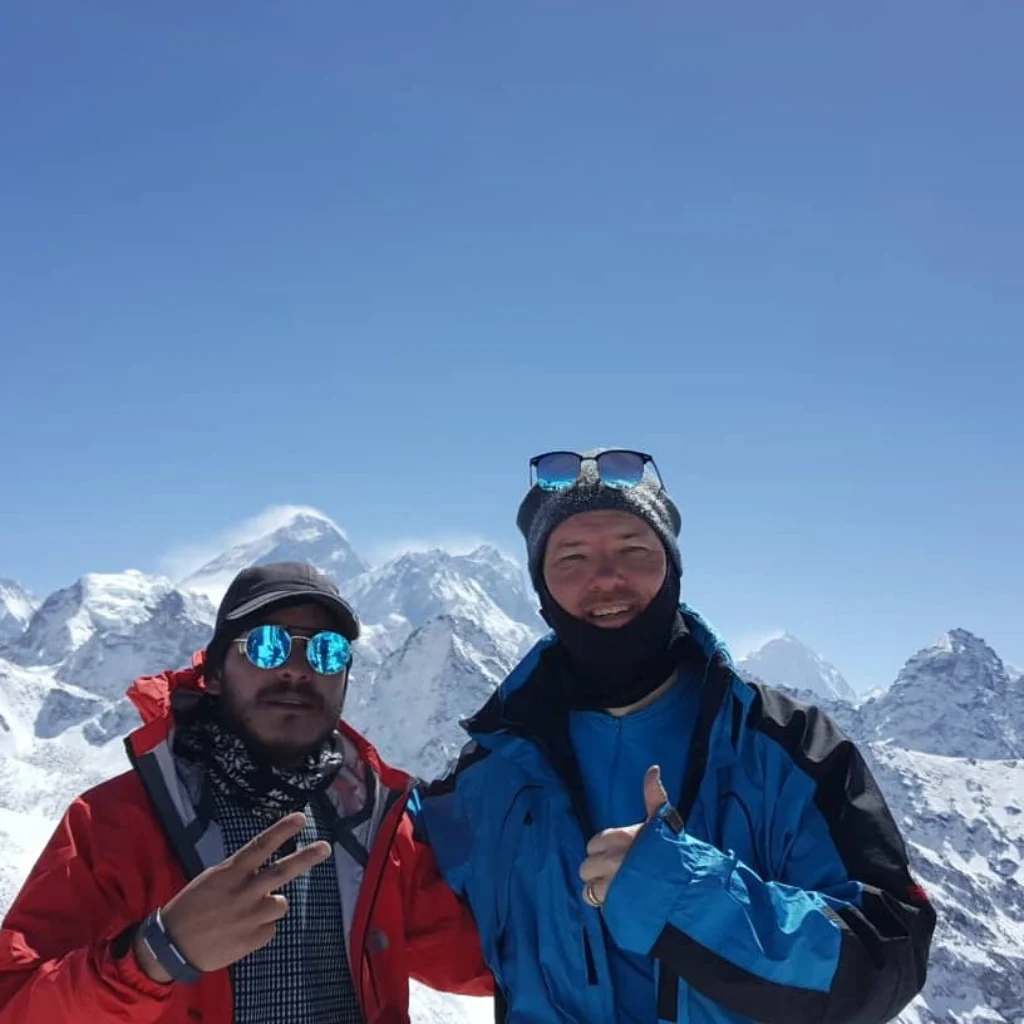
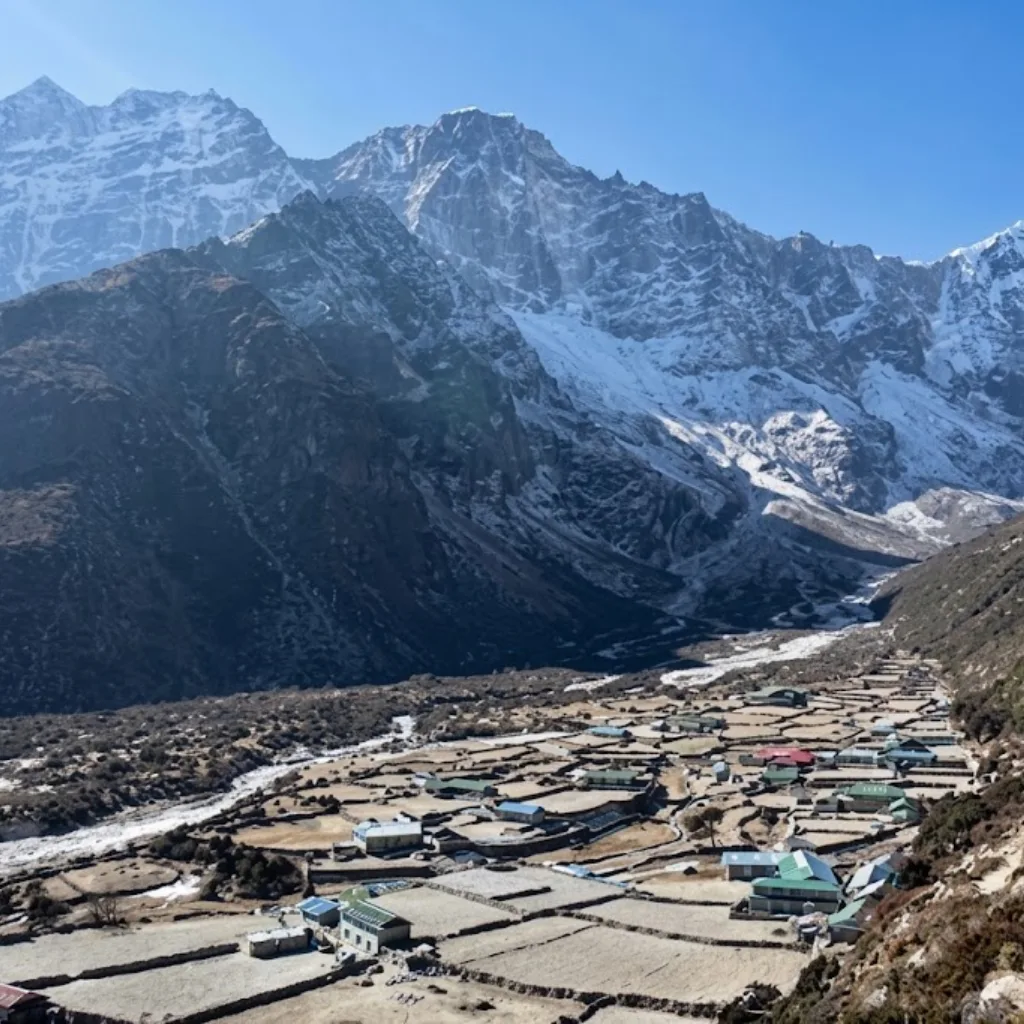

Tour Highlights
The Everest Three Passes Trek stacks the Everest region’s greatest hits into one continuous circuit:
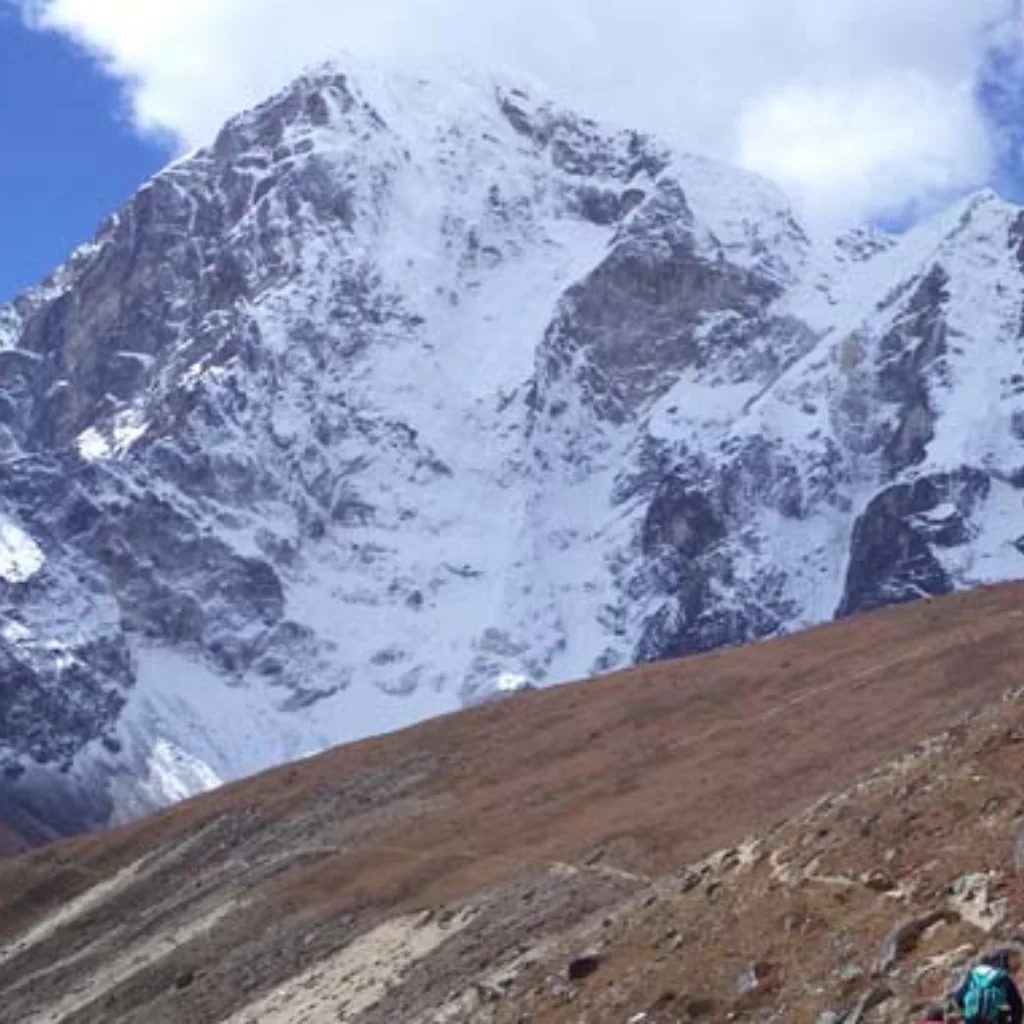
- Renjo La — 5,388 m / 17,677 ft: The first pass, with the classic panorama of Everest, Cho Oyu, Makalu and Nuptse laid out above the Gokyo Lakes.
- Cho La — 5,380 m / 17,651 ft: The second and steepest pass, with a glacier traverse between the Ngozumpa and the Khumbu — the genuine crux of the circuit.
- Kongma La — 5,535 m / 18,160 ft: The third pass and the highest, crossing into the Imja Valley with Makalu and Ama Dablam towering over the descent.
- Gokyo Lakes — 4,790 m / 15,715 ft: A chain of turquoise glacial lakes beneath Cho Oyu — among the most photographed sights in Nepal.
- Gokyo Ri — 5,357 m / 17,575 ft: The viewpoint that rivals Kala Patthar, with Everest, Lhotse and 8,201 m Cho Oyu across the world’s second-longest glacier system.
- Kala Patthar — 5,545 m / 18,192 ft: The famous sunrise ridge facing the full north face of Mount Everest.
- Everest Base Camp — 5,364 m / 17,598 ft: Standing on the Khumbu Glacier moraine at the foot of the world’s highest mountain.
- Chhukung Ri — 5,550 m / 18,209 ft: The trek’s highest point, facing the Lhotse massif across the Imja Valley.
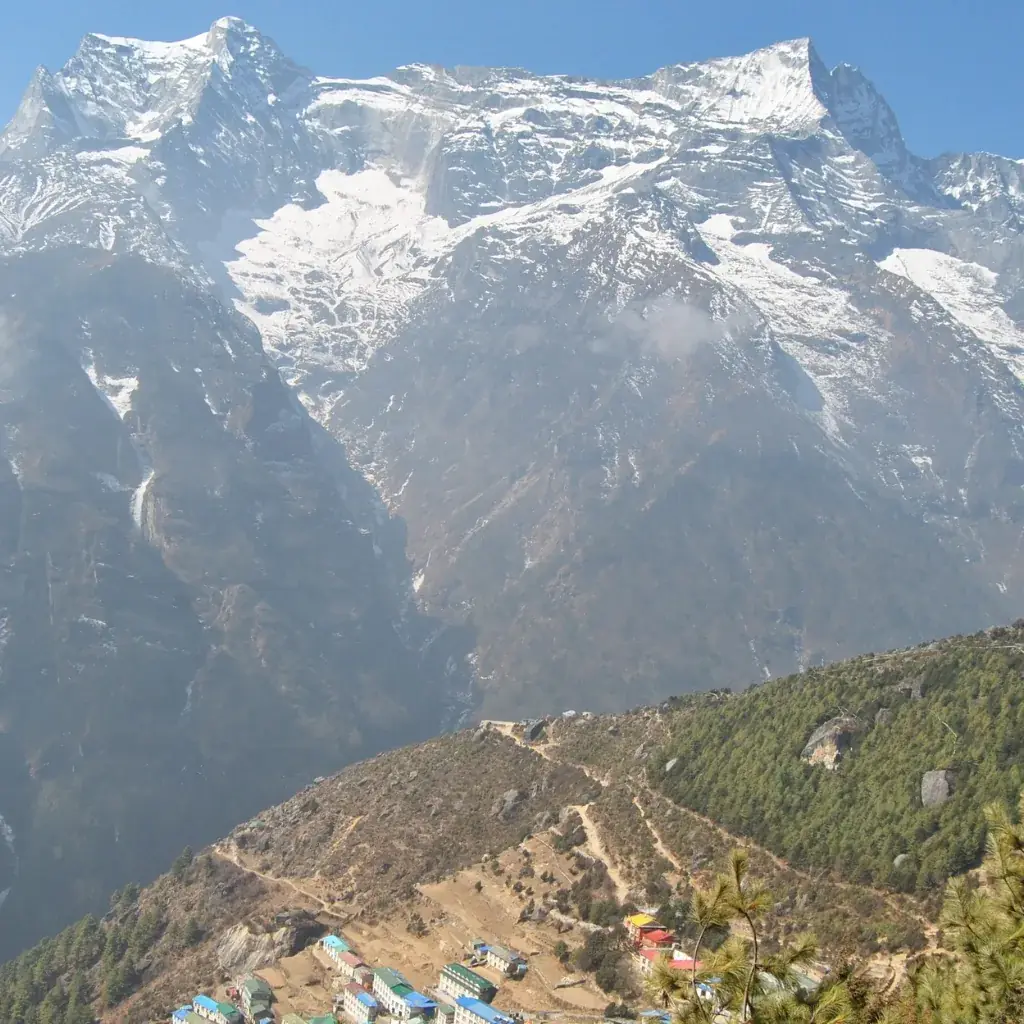
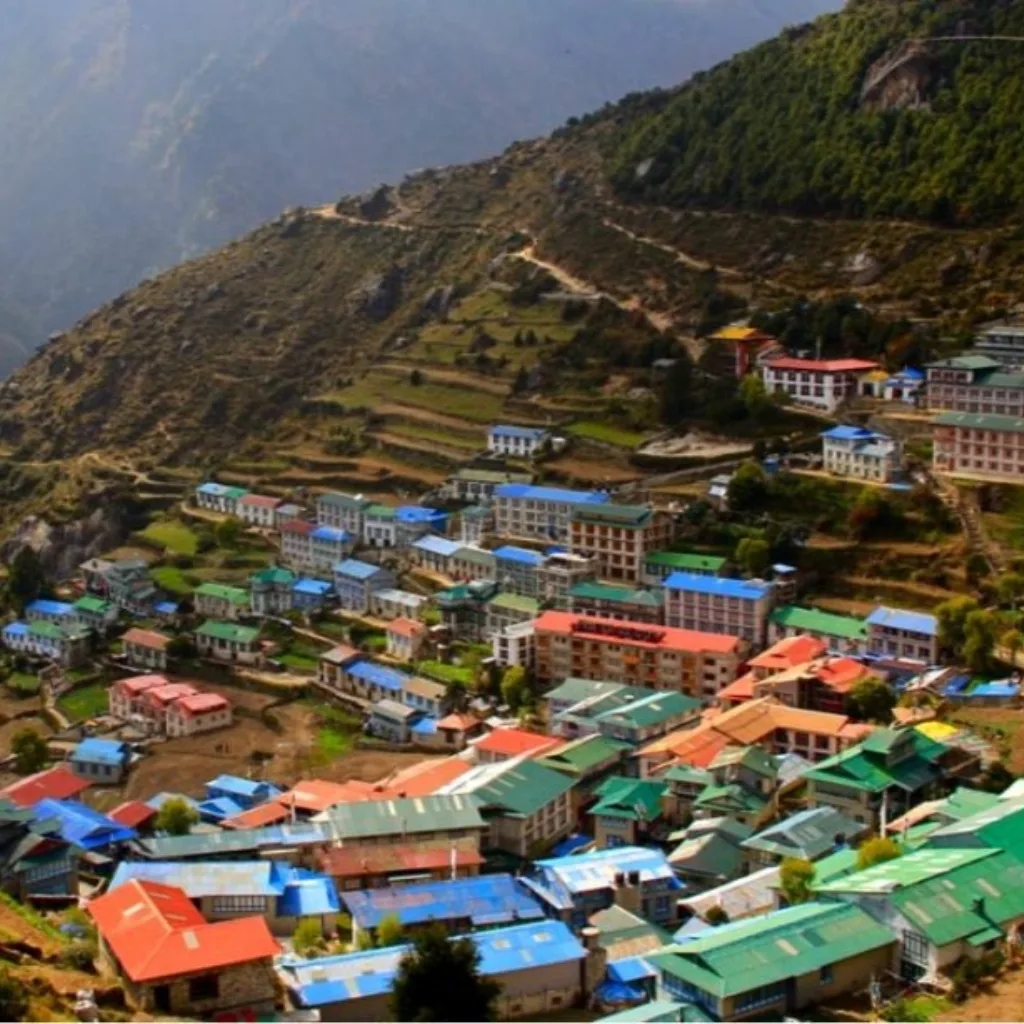
- Namche Bazaar and Thame: The cultural centres of the Khumbu — including the Sherpa village that gave birth to Tenzing Norgay.
- Quiet high trails: Between Thame and Gokyo, and again over Kongma La, you walk stages that see a fraction of the main-trail traffic.
Everest Three Passes Trek Overview
The Everest Three Passes Trek is a 22-day high-altitude circuit in Nepal’s Everest (Khumbu) region that crosses the three great passes of the Khumbu — Renjo La (5,388 m), Cho La (5,380 m) and Kongma La (5,535 m) — in a loop through Gokyo Valley, Everest Base Camp, Kala Patthar and the Imja Valley. Graded challenging, it is the fullest expression of Everest-region trekking: longer, higher and far quieter than the classical Base Camp route.
The journey begins in Kathmandu with the early flight to Lukla (2,860 m), then follows the Dudh Koshi to Namche Bazaar before leaving the crowded main trail behind. From Thame and Lungden the route climbs over Renjo La into the Gokyo Lakes, crosses Cho La into the Lobuche basin, visits Everest Base Camp and Kala Patthar, and returns over Kongma La through the alpine Imja Valley and Tengboche to Lukla.
With Nepal Lion Tours, the package starts from USD 2,327.50 per person, including the Kathmandu–Lukla return flights, licensed English-speaking guide, teahouse accommodation, all meals on the trail, all required permits and two nights of Kathmandu hotel.
What Makes the Everest Three Passes Trek Special?
Most Everest trekkers walk out to Base Camp and retrace their steps. The Three Passes Trek crosses the roof of the Khumbu three times instead. Each pass is a summit-less threshold with its own character — Renjo La with the full Gokyo panorama of Everest and Cho Oyu, Cho La with its glacier traverse above the Ngozumpa, and Kongma La with Makalu rising directly ahead.
The reward is circuit, not backtracking. You see the Khumbu from every side: the turquoise Gokyo Lakes, the immense walls of Cho Oyu and Lhotse, the moraine field at Everest Base Camp, the sunrise ridge of Kala Patthar, and the high Imja settlements of Chhukung and Dingboche — with the trail almost empty between Thame and Gokyo.
Why Choose the Everest Three Passes Trek?
The 22-day Three Passes itinerary is the definitive Khumbu experience for trekkers with time and training. It combines every major Everest-region highlight — three crossings above 5,300 m, Gokyo Valley, Base Camp, Kala Patthar and Tengboche — in one continuous route, with the solitude of the Renjo and Kongma approaches that most trekkers never see.
This version paces the circuit across three weeks with four acclimatization layers built in: two nights in Namche, a rest day in Thame, a rest day at Gokyo, and a descent to lower altitudes after each pass. That structure, combined with a licensed high-altitude guide, is what makes crossing 5,300–5,500 m repeatedly achievable for fit trekkers.
Who Is This 22-Day Everest Three Passes Trek Suitable For?
The Everest Three Passes Trek is a good choice for:
- Experienced, well-prepared trekkers seeking Nepal’s most complete Everest-region route
- Fit trekkers who have already completed a high-altitude trek and want the next level
- Those with 3–4 weeks of holiday who want quality, not just a tick-box Base Camp dash
- Trekkers who value quiet trails — the Renjo La and Kongma La approaches are famously uncrowded
- Photography and mountain lovers chasing Gokyo Lakes, pass panoramas and Kala Patthar light
- Travellers who want teahouse-based logistics rather than expedition camping
The route sleeps at up to 4,900 m, climbs to 5,550 m and demands sustained high-altitude walking, so genuine preparation and a training block are necessary. It is not a first trek — but for trekkers who have earned a month in the mountains, it is the one to do.
Guide’s Note — Nepal Lion Tours “From our years of operating Three Passes departures, the trekkers who finish strongest are the ones who treat the first week as warm-up, not race. The effort lives in week two — Gokyo to Chhukung — and arriving at that point with reserves makes the passes feel like achievements rather than ordeals.” — Our leading trekking guides, Nepal Lion Tours
Quick Facts
| Trek Fact | Details |
|---|---|
| Trek Name | Everest Three Passes Trek |
| Duration | 22 days / 21 nights |
| Region | Everest (Khumbu), Koshi, Nepal |
| Maximum Altitude | 5,550 m / 18,209 ft at Chhukung Ri; the three passes cross at 5,388 m, 5,380 m and 5,535 m |
| Difficulty | Challenging |
| Main Highlight | Crossing Renjo La, Cho La and Kongma La + Gokyo Lakes, Everest Base Camp and Kala Patthar in one circuit |
| Start / End | Kathmandu to Kathmandu (flights to and from Lukla) |
| Route | Kathmandu – Lukla – Phakding – Namche – Thame – Lungden – Renjo La – Gokyo – Cho La – Lobuche – Gorak Shep – Kongma La – Chhukung – Dingboche – Kyangjuma – Namche – Lukla – Kathmandu |
| Typical Walking | 3–9 hours per day, with acclimatization days in Namche, Thame and Gokyo |
| Best Season | Spring (Mar–May) and Autumn (Sep–Nov) |
| Price From | USD 2,327.50 per person (group discounts available; luxury tier available) |
| Accommodation | Teahouse lodges throughout, hotels in Kathmandu |
| Guide | Licensed English-speaking trekking guide |
Everest Three Passes Trek Route and Elevation
The Three Passes is a high-altitude circuit, not an out-and-back. From Lukla the route climbs the Dudh Koshi to Namche, then turns north-west via Thame to climb Renjo La into the Gokyo Valley. From Gokyo it crosses Cho La to reach the Lobuche basin, spends two high days at Gorak Shep visiting Everest Base Camp and Kala Patthar, then crosses Kongma La into the Imja Valley, before descending through Dingboche, Tengboche and Kyangjuma back toward Lukla.
The design means you sleep progressively higher, with climb-high-sleep-low days built around the passes, and you never repeat a stretch of high-altitude trail.
Everest Three Passes Trek Route at a Glance
| Day | Trek Route | Altitude | Highlights |
|---|---|---|---|
| 1 | Kathmandu arrival, hotel and pre-trek briefing | 1,400 m / 4,593 ft | Guide meeting, gear check, flight briefing |
| 2 | Fly to Lukla, trek to Phakding | 2,610 m / 8,563 ft overnight | Lukla landing, first Dudh Koshi trail stages |
| 3 | Phakding → Monjo → Namche Bazaar | 3,440 m / 11,286 ft overnight | Suspension bridges, park gate, Namche Hill climb |
| 4 | Acclimatization: Everest View Hotel / Khumjung walk | 3,440 m overnight | Khumjung village, EBC-era hotel viewpoint |
| 5 | Namche → Thame | 3,844 m / 12,612 ft overnight | Leave the main trail; Tenzing Norgay’s birthplace |
| 6 | Acclimatization day in Thame | 3,844 m overnight | Monastery above town, Teng Kangpoche views |
| 7 | Thame → Lungden | 4,380 m / 14,370 ft overnight | Old Sherpa villages, first real solitude |
| 8 | Lungden → Renjo La Base | 4,900 m / 16,076 ft overnight | Deserted valley below Nangpa La (Tibet trade route) |
| 9 | Cross Renjo La → Gokyo Lakes | 5,388 m / 17,677 ft high point | The classic pass panorama; overnight at 4,790 m |
| 10 | Rest day at Gokyo Lakes | 4,790 m overnight | Lakes and Ngozumpa Glacier exploration |
| 11 | Gokyo Ri climb → Dragnag | 5,357 m / 17,575 ft high point | The Gokyo Ri viewpoint; glacier traverse across the moraine |
| 12 | Cross Cho La → Dzongla | 5,380 m / 17,651 ft high point | The circuit’s crux pass; overnight 4,830 m |
| 13 | Dzongla → Lobuche | 4,940 m / 16,207 ft overnight | Rejoin the main Khumbu trail; Ama Dablam views |
| 14 | Lobuche → Gorak Shep, climb Kala Patthar | 5,545 m / 18,192 ft high point | The famous Everest sunrise ridge; overnight 5,164 m |
| 15 | Gorak Shep → Everest Base Camp → Gorak Shep | 5,364 m / 17,598 ft high point | Khumbu Glacier moraine to Base Camp |
| 16 | Descend to Lobuche | 4,940 m / 16,207 ft overnight | Optional second Kala Patthar; easy day before Kongma |
| 17 | Cross Kongma La → Chhukung | 5,535 m / 18,160 ft high point | The third and highest pass; Imja Valley descent |
| 18 | Climb Chhukung Ri → Dingboche | 5,550 m / 18,209 ft high point | The trek’s highest point; Lhotse-facing ridge |
| 19 | Dingboche → Pangboche → Tengboche → Kyangjuma | 3,550 m / 11,647 ft overnight | Famous monastery, Ama Dablam valley, long descent |
| 20 | Kyangjuma → Namche → Monjo → Phakding | 2,610 m / 8,563 ft overnight | Retrace Namche Hill, last forested valley day |
| 21 | Phakding → Lukla | 2,860 m / 9,383 ft overnight | Final trail day, last night in the mountains |
| 22 | Fly Lukla → Kathmandu, departure | 1,400 m / 4,593 ft | Morning flight, free Thamel afternoon |
The Three Passes Explained
| Pass | Altitude | Crossed On | Character |
|---|---|---|---|
| Renjo La | 5,388 m / 17,677 ft | Day 9 | Long steady climb; the most famous pass panorama; snow possible year-round |
| Cho La | 5,380 m / 17,651 ft | Day 12 | Steepest ascent and glacier traverse; the genuine crux — crampons can be needed |
| Kongma La | 5,535 m / 18,160 ft | Day 17 | Highest pass; steep approach, glacial lakes on the descent; rarely crowded |
Everest Three Passes Trek Elevation Profile
The altitude story climbs through the first week — Lukla (2,860 m) to Namche (3,440 m), Thame (3,844 m) and Lungden (4,380 m) — before the passes begin. The route then spends eight consecutive days between 4,700 m and 5,550 m, from the Renjo La crossing on Day 9 to the Chhukung Ri climb on Day 18, before descending steadily through the Tengboche valley back to Lukla.
That sustained high-altitude block is the defining feature of the route. Three days exceed 5,300 m on the passes alone, two more climb to 5,500 m + viewpoints (Kala Patthar, Chhukung Ri), and five nights are spent above 4,700 m. The itinerary cushions this with climb-high-sleep-low passes, rest days in Namche, Thame and Gokyo, and descending nights after each pass — the same rhythm professional mountaineers use.
How to Get to the Everest Three Passes Trek
The Everest Three Passes Trek begins with the famous flight from Kathmandu to Lukla — the mountain airstrip carved into the Khumbu hillside that is the gateway to the entire Everest region. Your flight, transfers and trailhead logistics are all arranged as part of the package, so getting to the route is handled end to end.
All Everest plans respect the same weather reality: Lukla flights depend on mountain conditions, and the itinerary is scheduled to give the route maximum flexibility. Every departure begins with a pre-trek briefing in Kathmandu where flight details are confirmed.
Kathmandu to Lukla: Flight or Road?
| Option | Approx. Travel Time | Best For |
|---|---|---|
| Direct flight Kathmandu → Lukla | 25–35 minutes | Most trekkers; the standard in quiet seasons |
| Flight via Ramechhap (Manthali) | ~4-hour road transfer + 25–35 min flight | Common in busy autumn/spring — confirmed at booking |
| Helicopter transfer | ~30–40 minutes | Private or flexible groups (extra cost) |
During peak seasons the Kathmandu–Lukla schedule can operate through Ramechhap (Manthali), about 4 hours by road from Kathmandu. When this applies, Nepal Lion Tours arranges the road transfer, so the change is handled for you: you are met, driven, flown and delivered to the Lukla trailhead in sequence.
Whichever routing applies, keep your passport, valuables and a warm layer in hand luggage — flight days are weather- and schedule-dependent by nature.
Guide’s Note — Nepal Lion Tours “The crossing of the passes means nobody rushes the first flight days. In our experience it pays to keep the first two trail days relaxed — the acclimatization plan that gets you over Renjo La on Day 9 is built in Namche, Thame and Lungden in the days before, not improvised at the pass itself.” — Our leading trekking guides, Nepal Lion Tours
Everest Three Passes Trek Difficulty, Fitness & Altitude
The Everest Three Passes Trek is graded challenging — the most demanding standard trek Nepal Lion Tours operates. There is no technical climbing, but the route spends more than a week above 4,700 m, crosses three passes above 5,300 m, and climbs two viewpoints to 5,545 m and 5,550 m. Sustained altitude plus three weeks of walking make this a serious physical undertaking — and one of the most rewarding in the Himalaya.
Cho La carries the technical reputation of the three: its approach is steep, and in early/late season a short fixed-rope section and crampons can be required across the glaciated top. Renjo La and Kongma La are steep but non-technical, demanding slow, deliberate pacing rather than gloves-and-rope work.
Where the Effort Actually Is?
- The first week (Days 2–7): Long valley days building fitness before altitude — the Namche Hill climb on Day 3 is the first real test.
- Days 8–9 (Renjo La): A steady, sustained climb to 5,388 m — the pass is long rather than steep, and the snow likelihood keeps the pace honest.
- Day 11 (Gokyo Ri): A steep early-morning viewpoint climb at 5,357 m, then a glacier-moraine traverse to Dragnag.
- Day 12 (Cho La): The crux day — 8–9 hours, the steepest ascent, and a glaciated summit traverse that can need crampons and a handline.
- Days 14–15 (Kala Patthar and Base Camp): The two high objectives from Gorak Shep — Kala Patthar is steep pre-dawn; the Base Camp day is long glacial moraine walking.
- Day 17 (Kongma La): The highest pass (5,535 m) after a big rest at Lobuche — steep approach, potentially icy, with magnificent views on the way down.
The descent days from Day 19 onward are long and downhill, which surprises many trekkers — hardened knees carry you from the Imja Valley all the way back to Lukla.
Guide’s Note — Nepal Lion Tours “Three Passes is the trek where our guides earn their winter mountaineering experience. Cho La especially — we always carry a short rope and a pair of crampons in the kit, and while most crossings in good season are straightforward, trekkers should expect a glacial, cold pass top. The pacing is everything: nobody climbs a pass fast at 5,300 m, and nobody should try.” — Our leading trekking guides, Nepal Lion Tours
How to Prepare for the Everest Three Passes Trek
- Build a 8–10 week training block: 3–4 days a week of 60–90 minute hikes with sustained elevation gain
- Do longer weekend outings (10–15 km) with a loaded 10 kg pack to build endurance and joint strength
- Add stairs, step-ups and strength work for the legs — every pass and 500 m descent feeds off quad strength
- Practise carrying a daypack at altitude on an overnight hill trek before Nepal if you can
- Train the mind as well as the legs: two weeks above 4,000 m is as much patience as strength
- Arrive in Kathmandu rested — the final 10 days before departure should be easy, not a last-minute sprint
How Difficult Is the Everest Three Passes Trek Compared with Other Treks?
Within the Everest region, the Three Passes Trek sits at the top of the teahouse-served ladder. It is harder than the classical Everest Base Camp Trek (14 days) — which reaches a similar maximum altitude but spends far fewer nights above 4,700 m — and much harder than the Everest Panorama Trek (6 days, max 3,880 m), which barely touches altitude at all. The Three Passes is the natural bridge between the Base Camp trek and the climbing-peak treks such as Island Peak, which add technical climbing to a similar high-altitude base.
If you have completed a Base Camp-style trek comfortably, the Three Passes is the next chapter. If you are considering it as a first long trek, allow generous training time and consider the 15-day Gokyo Cho La Pass route first.
Altitude, Acclimatization & Safety
Altitude is the defining challenge — the route lives between 4,700 m and 5,550 m for over a week.
Everest Three Passes Trek Altitude Profile
- Kathmandu — 1,400 m / 4,593 ft: Arrival and briefing; sleep low before flying to Lukla.
- Lukla — 2,860 m / 9,383 ft: Flight gateway; step off the plane above the treeline.
- Phakding — 2,610 m / 8,563 ft: Night 1 on the trail, sleeping lower than Lukla.
- Namche Bazaar — 3,440 m / 11,286 ft: Two nights; the great acclimatization hub of the Khumbu.
- Thame — 3,844 m / 12,612 ft: Two nights; an acclimatization stop most EBC trekkers miss entirely.
- Lungden — 4,380 m / 14,370 ft: The last village before the passes; above the main tourist flow.
- Renjo La Base — 4,900 m / 16,076 ft: The staging camp below Nangpa La before the first pass.
- Gokyo Lakes — 4,790 m / 15,715 ft: Two nights; turquoise lakes and the Ngozumpa Glacier.
- Dragnag — 4,700 m / 15,420 ft: The overnight before Cho La.
- Lobuche — 4,940 m / 16,207 ft: Two nights split across the circuit; the gateway to Gorak Shep.
- Gorak Shep — 5,164 m / 16,942 ft: The highest overnight settlement on the route.
- Kala Patthar — 5,545 m / 18,192 ft: Viewpoint above Gorak Shep facing the Everest north face.
- Everest Base Camp — 5,364 m / 17,598 ft: The moraine objective of Day 15.
- Chhukung — 4,720 m / 15,486 ft: The overnight below Kongma La, deep in the Imja Valley.
- Chhukung Ri — 5,550 m / 18,209 ft: The trek’s highest point, facing the flank of Lhotse.
- Dingboche — 4,410 m / 14,469 ft: The first comfortable descent after Kongma La.
How the Body Adapts to Altitude — Across Three Passes
Acclimatization across three passes is a gradual adjustment, played correctly through climb-high-sleep-low: each pass day climbs to 5,300–5,500 m and descends to sleep at 4,700–4,900 m, and three generated rest days (Namche, Thame, Gokyo) give the body time to catch up. That rhythm is why this route works at all — and why the design neither shortcuts the passes nor starts them too high.
Practically, this means walking at a conversational pace every single day, drinking consistently, eating full meals regardless of appetite, and respecting the guide’s authority on pace and turnaround points. Headaches and poor appetite at 5,000 m are common; what matters is honest reporting and early response.
Symptoms of Altitude Sickness to Watch For
Mild symptoms, common and usually settling with rest and fluids:
- Headache
- Loss of appetite
- Nausea
- Unusual fatigue or sleepiness
- Dizziness
More concerning symptoms requiring action — stop ascending, seek advice, descend if persistent:
- Headache that worsens despite rest
- Vomiting
- Confusion, difficulty walking or poor coordination
- Shortness of breath even at rest
- Bluish or grey lips or fingertips
At the altitudes of this trek, serious altitude illness is uncommon with proper pacing — but three repeated crossings above 5,300 m mean the marginal days (Cho La, Kongma La) get extra attention from the guide.
How Nepal Lion Tours Supports Altitude Safety
- Four acclimatization layers: two nights in Namche, rest days in Thame and Gokyo, descending nights after each pass.
- Licensed Everest-region guides experienced on all three passes, carrying a full first-aid kit and altitude protocols.
- Rope and crampons in the kit for the glacier traverse at Cho La when conditions require.
- Transparent symptom policy: zero pressure to push on — passes are crossed when the group is ready, and turnaround is never failure.
- Insurance guidance: coverage for high-altitude trekking to 5,500 m and helicopter evacuation is required — the only practical evacuation above Gorak Shep.
Best Time to Cross the Everest Three Passes
The best seasons for the Everest Three Passes Trek are autumn (September–November) and spring (March–May). The passes add one extra constraint beyond a normal EBC trek — snow on the high crossings — so the clear, settled shoulders of the year are not just preferable, they are close to essential for a clean, comfortable circuit.
| Season | Months | Weather & Trail Conditions | Pass Conditions | Overall |
|---|---|---|---|---|
| Autumn | Sep–Nov | Dry, clear post-monsoon air; cold but settled high up | Generally firm and icy-free early; the safest window | Best overall |
| Spring | Mar–May | Stable and milder lower down; warmer days | Snow possible on passes; manageable in the established season | Highly recommended |
| Winter | Dec–Feb | Very cold at 4,000 m+; clear skies; quieter trails | Ice and crampon work likely on Cho La and Kongma La | Suitable for experienced, equipped trekkers |
| Monsoon | Jun–Aug | Wet valleys, cloud, leeches; flight cancellations likelier | Snow and poor visibility; passes demanding | Least suitable |
Autumn — September to November
Autumn is the best window. Post-monsoon air is dry and crystalline, and October–November bring the most stable weather and the clearest sky for the three pass panoramas — which matters enormously when every pass and viewpoint is above 5,300 m. Expect the busiest trails of the year at Namche and Gorak Shep, and book well ahead for the best teahouse rooms. The passes themselves are typically at their most straightforward.
Spring — March to May
Spring is the second prime season. Days are warmer in the valleys, rhododendrons bloom below Tengboche, and April–May sees Everest Base Camp come alive with expedition teams. Expect residual snow on Renjo La, Cho La and Kongma La, generally manageable after morning sun, with crampons possibly needed on Cho La’s glacier. Views are excellent, especially in the mornings.
Winter — December to February
Winter rewards prepared, well-equipped trekkers with empty trails and crystalline solitude. But the passes genuinely freeze — ice and crampon work are likely on Cho La, Kongma La can hold deep snow, and nights at Gorak Shep and Gokyo are severely cold. This is a season for trekkers with prior high-altitude and winter pass experience, not for first attempts.
Monsoon — June to August
Monsoon is not a recommended Three Passes season. Rain and cloud in the valleys, leeches on the lower forest trails, unreliable views on every viewpoint, and snow and poor visibility on the passes combine with the flight-risk of the season. Hardier trekkers do it, but the odds stack against the signature moments.
Which Season Should You Choose?
Choose autumn for the most reliable pass crossings and the clearest panoramas in a year. Choose spring for milder temperatures, rhododendrons and Base Camp season energy — accepting more snow on the passes. Winter is for experienced trekkers who want the circuit almost to themselves and do not mind ice and deep cold; monsoon is best avoided.
Guide’s Note — Nepal Lion Tours “One honest word from our guides: choos autumn or spring and the passes treat you fairly; wander into winter unseasoned and Cho La can teach you things you did not sign up for. Most Three Passes departures we run land in October and November, and the ratio of celebration to struggle in those groups says everything.” — Our leading trekking guides, Nepal Lion Tours
Everest Three Passes Trek Permits & Regulations
The Everest Three Passes Trek operates almost entirely inside Sagarmatha National Park, a UNESCO World Heritage Site, so trekkers need the Sagarmatha National Park Entry Permit and the Khumbu Pasang Lhamu Rural Municipality Permit, checked along the trail near Monjo. Since April 2023 a licensed guide is mandatory on this route, and permits are issued through registered trekking agencies.
All required permits for this package are arranged by Nepal Lion Tours as part of the pre-trek preparation — you simply carry your passport for the checks.
Everest Three Passes Trek Permits at a Glance
| Requirement | Who Needs It? | Who Arranges It? |
|---|---|---|
| Sagarmatha National Park Entry Permit | Foreign trekkers entering the park | Nepal Lion Tours |
| Khumbu Pasang Lhamu Rural Municipality Permit | All trekkers in the Khumbu | Nepal Lion Tours |
| Licensed trekking guide | Mandatory for foreign trekkers since April 2023 | Included with every Nepal Lion Tours trek |
Fees are based on current Nepali authority information (2026) and can be revised. Confirm the applicable fee and requirements when booking.
Sagarmatha National Park Entry Permit
The Sagarmatha National Park Entry Permit applies because the route runs through the heart of the park — the gate straddles the trail near Monjo on Day 3. Current fees are around NPR 3,000 for foreign nationals and NPR 1,500 for SAARC nationals, valid for a single entry.
The permit is checked by park staff, so you carry it with your passport on the trail. Nepal Lion Tours arranges it before departure — the gate becomes a brief stamp and photo stop rather than an obstacle.
Khumbu Pasang Lhamu Rural Municipality Permit
The Khumbu Pasang Lhamu Rural Municipality fee is the local permit that funds trail maintenance and services across the Everest region, replacing the TIMS card in the Khumbu. It is around NPR 3,000 per person and collected as you enter the area.
A TIMS card is not required on this standard Everest-region route; the Khumbu municipality fee stands in its place, keeping the paperwork lighter than in other regions of Nepal.
Do You Need a Restricted-Area Permit?
No, not for the standard Everest Three Passes route.
The circuit stays on the established Khumbu trails and does not enter Nepal’s designated restricted trekking areas, so the permit stack stays at the two permits above. This applies to the classic Renjo–Cho–Kongma circuit as described on this page. Any modified itinerary entering restricted valleys, or combining with a climbing peak such as Island Peak, would add requirements — your trekking company confirms these before departure.
Who Arranges the Permits?
When you book the Everest Three Passes Trek with Nepal Lion Tours, the team arranges the Sagarmatha National Park permit, the Khumbu Pasang Lhamu municipality permit and your licensed guide as part of the trek paperwork. Carry your original passport at all times — it is checked at the park gate near Monjo and again en route. Permit fees and rules can be revised by the authorities, and the final charges are confirmed before departure.
Food & Accommodation on the Everest Three Passes Trek
The Everest Three Passes Trek is a teahouse-based circuit — every night is spent in a family-run lodge with meals in its communal dining room, from Phakding all the way up to the high stops at Gokyo and Gorak Shep. Comfort is best at Namche, Thame and Dingboche; it is genuinely simple at Lungden, the Renjo La base, Dragnag and Chhukung — but nowhere on the route requires camping, and the quality of the small valley lodges is one of the region’s quiet strengths.
Your guide coordinates rooms, meal times and wake-up calls throughout, and the staff at each lodge handle food, bedding and boiled water as part of the operation.
Teahouse Accommodation on the Everest Three Passes Trek
- Rooms: Simple twin bedrooms with wooden beds, blankets and pillows; Namche and Thame lodges are the most comfortable.
- Bathrooms: Shared by default in most lodges; private attached rooms occasionally available in larger settlements.
- Hot showers: Usually a paid solar-heated extra; scarce and coldest at Gokyo and Gorak Shep.
- Electricity & charging: Available at dinner time; paid per device and solar-limited at the high stops.
- Dining room: The only warmed room in most lodges — your social and mealtime centre.
- Wi-Fi: Available at many teahouses for a fee; strong in Namche, intermittent above Dingboche.
- Bedding: Blankets are standard; Nepal Lion Tours provides a down jacket and all-season sleeping bag for the cold nights at the high stops.
What Food Is Available on the Trek?
The Khumbu teahouse menu is more varied than non-trekkers expect, with most food transported up by porter and yak:
- Dal bhat: The trekking staple — rice, lentils and curry, served with refills traditionally
- Sherpa stew and thukpa: Hearty noodle soups perfect for cold evenings
- Momos: Steamed dumplings, a lodge favourite at every village
- Fried rice, noodles and chow mein: Quick, filling everyday options
- Pasta and pizza: Available at many Khumbu lodges, a comfort-win above 4,000 m
- Potatoes, eggs and fresh-baked bread: Common at the simplest stops
- Porridge, muesli, pancakes and toast: Standard breakfasts
- Namche’s bakeries: Cakes, pastries and real coffee — a genuine indulgence
At the outlying settlements of Lungden, Dragnag, Chhukung and the Renjo La base, the menu narrows and alternatives genuinely shrink — this is alpine supply-line territory, and dal bhat remains the guaranteed, energy-dense choice. Vegetarian food is widely available; tell your guide about vegan, gluten-free or allergy needs well in advance so the smaller lodges can plan.
What Food and Accommodation Are Included?
| Included in the Trek Package | Usually Paid Separately |
|---|---|
| All meals on the trail (breakfast, lunch, dinner plus a daily tea or coffee) | Hot shower fees at teahouses |
| Teahouse accommodation through the trek | Drinks and snacks beyond the daily tea/coffee |
| 2 nights Kathmandu hotel + airport transfers | Charging fees, Wi-Fi fees at teahouses |
| Complimentary welcome or farewell dinner in Kathmandu | Meals in Kathmandu outside the free nights, souvenirs |
| All required permits, flights, guide and porter team | Tips for guides and porters |
Exact coverage is confirmed in writing at booking, so nothing ambiguous reaches the trail.
Drinking Water on the Trek
Do not drink tap water anywhere on the route. Use boiled, filtered or purified water throughout — teahouses sell bottled and boiled water, with boiled water the most reliable option above Dingboche. Carry a wide-mouth bottle with purification tablets or a filter for the sustainable approach most trekkers now choose. The remotest stops (Lungden, Renjo La base, Dragnag) all sell or boil water — top up early in the day.
Staying Comfortable at Teahouses
- Carry a refillable water bottle and buy/boil water as you go
- Bring a sleeping bag liner inside the provided down sleeping bag for warmth and hygiene
- Pack a power bank, since lodge charging is paid and solar-limited at the high stops
- Keep small denomination cash for showers, Wi-Fi and extra drinks — ATMs exist in Namche but are unreliable above
- Dress in layers for the dining room, which cools sharply once the stove dies down
- Give your guide dietary requirements before departure so lodges can prepare ahead
Why Book with Nepal Lion Tours?
A three-pass circuit deserves a team that runs it all season. Here is what Nepal Lion Tours brings to the Everest Three Passes experience:
- Guides with real pass experience > Nepal Lion Tours guides are government-licensed and Khumbu specialists — several have winter-trekked the very passes on this route, experience that shows on Cho La. Since 2023 a licensed guide is also the legal requirement on this route.
- A registered trekking company you can verify > Nepal Lion Tours is a registered company based in Kathmandu; company and licence details are available to any traveller who wants to verify before booking.
- Small private groups, solo-up > From a single trekker to about 10, groups stay small — easier pacing at the passes, warmer dynamics in the dining rooms, and faster decisions when weather matters.
- Proper acclimatization across three passes > Two nights in Namche, rest days at Thame and Gokyo, descending nights after every pass, and a licensed guide empowered to flex the plan. This is how three 5,300 m crossings happen safely.
- Everything arranged end to end > Lukla flights (Kathmandu or Ramechhap routing), permits, transfers, briefings, teahouse bookings and the porter team — all handled with clear instructions at every step.
- Honest pricing without cutting essentials > From USD 2,327.50 the package includes flights, permits, guide, teahouses, meals and gear — the essential backbone of a three-week circuit, present in full.
- A local team you can contact before and during the trek > WhatsApp support at +977-9851039020 means questions are answered before you land and real-time help is one message away while you are on the trail.
Book the Everest Three Passes Trek
This is the Everest region in full — three passes, the Gokyo Lakes, Base Camp, Kala Patthar and Tengboche, in one continuous three-week circuit. Flights, permits, guide, lodges and meals are all arranged around you.
Trek at a Glance
- Duration: 22 days / 21 nights
- Price: From USD 2,327.50 per person (group discounts from 2 pax; luxury tier available)
- Difficulty: Challenging
- Maximum Altitude: 5,550 m / 18,209 ft at Chhukung Ri; three passes above 5,300 m
- Accommodation: Teahouse lodges, with hotels in Kathmandu
- Meals: All on-trek meals plus a daily tea or coffee, with a complimentary Kathmandu welcome or farewell dinner
- Permits & Registration: Sagarmatha National Park + Khumbu Pasang Lhamu municipality fees
- Transportation: Kathmandu–Lukla return flights, private airport transfers
- Guide: Licensed English-speaking trekking guide (Chinese, Korean or Hindi guides available on request)
- Cancellation: Free cancellation up to 14 days before departure
Ready to Start Your Everest Region Adventure?
Secure your dates via the booking form or reach the team directly on WhatsApp at +977-9851039020 — solo, couple or group, the departure is arranged around you. Group pricing drops to USD 1,978 at 10 or more travellers.
Book the Everest Three Passes Trek, and the team that crosses these passes every season handles everything else.
Related Everest Region Treks
For trekkers planning around the Everest region, these companion itineraries cover every level of time and ambition:
| Trek | Duration | Difficulty | Max Altitude | Best For |
|---|---|---|---|---|
| Everest Panorama Trek | 6 days | Easy–Moderate | 3,880 m / 12,730 ft | The shortest taste of the Khumbu and its views |
| Everest View Trek | 8 days | Moderate | 3,880 m / 12,730 ft | A relaxed panorama trek with extra Khumbu days |
| Gokyo Cho La Pass Everest Base Camp Trek | 15 days | Challenging | 5,357 m / 17,575 ft | Lakes, one pass and EBC in half the time |
| Everest Base Camp Trek — Classical | 14 days | Strenuous | 5,545 m / 18,192 ft | The classic Base Camp/Kala Patthar route |
| Pikey Peak Trekking | 7 days | Easy | 4,060 m / 13,320 ft | Flight-free Everest-region views by road |
For trekkers building a longer Nepal itinerary, the Three Passes circuit combines naturally with Kathmandu sightseeing on either end or a Chitwan Jungle Safari.
Everest Three Passes Trek Packing List
The trek is teahouse-based, but it is the coldest and highest route Nepal Lion Tours operates — sustained nights above 4,700 m, three glaciated passes and pre-dawn viewpoint climbs demand genuine warmth. Nepal Lion Tours provides the down jacket, all-season sleeping bag, duffel bag and trekking map, plus a mobile SIM card on arrival.
Hiking Gear
- Daypack (30–40 litre) for water, layers, snacks and camera
- Trekking poles — near-essential for the pass descents and the long final traverse
- 2 litre water bottle or hydration bladder with purification tablets
- Headlamp with spare batteries — needed for pre-dawn Kala Patthar, Gokyo Ri and Chhukung Ri
- Dry bags or plastic liners for clothes and electronics
- Sun protection: sunglasses, sun hat, SPF 50+ sunscreen and lip balm
Clothing: Use Layers Rather Than Bulk
Base layers: 2–3 sets of merino or synthetic thermals, plus thermal leggings.
Mid-layers: 1–2 insulating fleeces or a thin down/Primaloft jacket for the cold days.
Outer layers: Waterproof and windproof shell jacket; waterproof over-trousers for wind, sleet and pass conditions.
Trekking clothes: 2–3 quick-dry trekking trousers and t-shirts, plus a clean set for evenings.
Headwear and gloves: Warm beanie, sun hat, light gloves, and expedition-grade gloves for the pass mornings.
Footwear: Well-broken-in waterproof boots, plus camp slippers or sandals for the evenings.
Sleeping and Evening Comfort
- Provided all-season sleeping bag + a silk liner for warmth and hygiene
- Down jacket provided; wear it indoors as soon as the sun drops
- Warm socks and sleepwear — the dining room cools sharply after dinner
- Small quick-dry towel
Toiletries and Personal Health Items
- Toiletries: toothbrush, toothpaste, biodegradable soap, hand sanitizer, wet wipes, lip balm, moisturizer (the air above 4,000 m is very dry)
- Personal medication and copies of prescriptions; paracetamol/ibuprofen, blister patches, electrolytes
- Basic cold-and-cough remedies, throat lozenges
- Earplugs for busy teahouse walls and early starts
Electronics
- Phone plus a large power bank (20,000 mAh) — solar charging is scarce at the high stops
- Camera with spare batteries (cold drains them fast) and spare memory cards
- Universal travel adapter for Nepal’s 3-pin sockets
- Optional e-reader or book for long lodge evenings
- Wi-Fi is available for a fee at most teahouses; plan communication for Namche and the bigger villages
Documents and Money
- Valid passport, valid 6+ months — needed for the park permit check at Monjo
- Passport photos for permit processing where required
- Travel insurance certificate covering high-altitude trekking to 5,500 m and helicopter evacuation — mandatory
- Cash in Nepali rupees for showers, Wi-Fi, drinks, boiled water and tips — withdraw enough in Kathmandu or Namche
- Cards as a backup; keep money and documents dry and on your person
How Much Should You Pack?
Every kilogram gets carried or ported across the Khumbu for three weeks, so lighter is better. Your daypack holds what you need while walking — water, layers, snacks, camera — while the duffel with the sleeping bag and spare clothes travels with the porters to each teahouse.
A practical target is a duffel of 10–15 kg for the porter transport plus a daypack of 5–7 kg on your back. With the down jacket and sleeping bag provided, the two bulkiest items are already handled.
What to Know Before Booking
The Everest Three Passes Trek rewards planning. Here are the key points to understand before you book.
Trip Essentials
Packing advice, required equipment & gear recommendations
Essential
Everest Three Passes Trek Packing List
The trek is teahouse-based, but it is the coldest and highest route Nepal Lion Tours operates — sustained nights above 4,700 m, three glaciated passes and pre-dawn viewpoint climbs demand genuine warmth. Nepal Lion Tours provides the down jacket, all-season sleeping bag, duffel bag and trekking map, plus a mobile SIM card on arrival.
Hiking Gear
- Daypack (30–40 litre) for water, layers, snacks and camera
- Trekking poles — near-essential for the pass descents and the long final traverse
- 2 litre water bottle or hydration bladder with purification tablets
- Headlamp with spare batteries — needed for pre-dawn Kala Patthar, Gokyo Ri and Chhukung Ri
- Dry bags or plastic liners for clothes and electronics
- Sun protection: sunglasses, sun hat, SPF 50+ sunscreen and lip balm
Clothing: Use Layers Rather Than Bulk
Base layers: 2–3 sets of merino or synthetic thermals, plus thermal leggings.
Mid-layers: 1–2 insulating fleeces or a thin down/Primaloft jacket for the cold days.
Outer layers: Waterproof and windproof shell jacket; waterproof over-trousers for wind, sleet and pass conditions.
Trekking clothes: 2–3 quick-dry trekking trousers and t-shirts, plus a clean set for evenings.
Headwear and gloves: Warm beanie, sun hat, light gloves, and expedition-grade gloves for the pass mornings.
Footwear: Well-broken-in waterproof boots, plus camp slippers or sandals for the evenings.
Sleeping and Evening Comfort
- Provided all-season sleeping bag + a silk liner for warmth and hygiene
- Down jacket provided; wear it indoors as soon as the sun drops
- Warm socks and sleepwear — the dining room cools sharply after dinner
- Small quick-dry towel
Toiletries and Personal Health Items
- Toiletries: toothbrush, toothpaste, biodegradable soap, hand sanitizer, wet wipes, lip balm, moisturizer (the air above 4,000 m is very dry)
- Personal medication and copies of prescriptions; paracetamol/ibuprofen, blister patches, electrolytes
- Basic cold-and-cough remedies, throat lozenges
- Earplugs for busy teahouse walls and early starts
Electronics
- Phone plus a large power bank (20,000 mAh) — solar charging is scarce at the high stops
- Camera with spare batteries (cold drains them fast) and spare memory cards
- Universal travel adapter for Nepal’s 3-pin sockets
- Optional e-reader or book for long lodge evenings
- Wi-Fi is available for a fee at most teahouses; plan communication for Namche and the bigger villages
Documents and Money
- Valid passport, valid 6+ months — needed for the park permit check at Monjo
- Passport photos for permit processing where required
- Travel insurance certificate covering high-altitude trekking to 5,500 m and helicopter evacuation — mandatory
- Cash in Nepali rupees for showers, Wi-Fi, drinks, boiled water and tips — withdraw enough in Kathmandu or Namche
- Cards as a backup; keep money and documents dry and on your person
How Much Should You Pack?
Every kilogram gets carried or ported across the Khumbu for three weeks, so lighter is better. Your daypack holds what you need while walking — water, layers, snacks, camera — while the duffel with the sleeping bag and spare clothes travels with the porters to each teahouse.
A practical target is a duffel of 10–15 kg for the porter transport plus a daypack of 5–7 kg on your back. With the down jacket and sleeping bag provided, the two bulkiest items are already handled.
Read Before You Book
Permits, terms, medical considerations & advisory guidelines
Advisory
Accommodation and Facilities
Comfort is genuine at Namche, Thame and Dingboche and genuinely basic at the outlying stops of Lungden, the Renjo La base, Dragnag, Chhukung and Gorak Shep — twin rooms, shared toilets and solar-heated showers are the norm. The provided sleeping bag and down jacket remove the bulk of the cold risk, and the dining rooms of even the smallest lodges are warm and welcoming.
Food and Dietary Requirements
Dal bhat is the reliable energy meal and is available everywhere the route goes. Menus are most varied in Namche and the bigger villages, and genuinely narrow at the high and remote stops — which is normal for a route this remote. Vegetarian is easy throughout; vegan, gluten-free and allergy needs should be given to the team early so the smaller lodges can prepare.
Altitude, Health and Insurance
The route reaches 5,550 m / 18,209 ft and crosses three passes above 5,300 m, so insurance covering high-altitude trekking to 5,500 m and helicopter evacuation is required for booking. Above Gokyo and Gorak Shep, helicopters are the only practical evacuation route — which is exactly what this cover is for. Declare existing conditions when booking; altitude responses can be unpredictable.
Money and Tipping
Carry enough rupees for teahouse extras, boiled water, hot showers, Wi-Fi and tips. Tipping in Nepal is customary and works out to roughly USD 10–15 per day for a guide and a little less per porter, split among the group at the end. Reward service that matches the standard you experienced — amounts are always at your discretion.
Culture and Responsible Trekking
The route passes through one of the world’s most distinctive Buddhist mountain cultures:
- Pass mani walls, chortens, gompas and prayer wheels on the right (clockwise) and never sit on mani stones
- Dress modestly around monasteries and villagers; keep voices low near religious sites
- Ask before photographing people, monks or monastery interiors
- Carry out everything you bring in, and use reusable bottles to cut plastic
- Buy local — tea, snacks and crafts at the village lodges keep families and porters in work
Pass Conditions and Route Flex
The passes are weather-dependent. Cho La can require a short rope and crampons across its glacier, Kongma La can hold snow, and any of the three can sit above the clouds in unsettled weather. The itinerary is designed with a full buffer — rest days at Gokyo and Lobuche can flex — and your guide will adjust starts, pacing or, in rare cases, the pass plan itself. Flexibility is part of the adventure, not a failure of it.
Route Options
The same team runs the full ladder of Everest routes: the Everest Panorama Trek (6 days) for a fast taste, the Classical Base Camp Trek (14 days) for the mainstream route, the Gokyo Cho La Pass EBC Trek (15 days) for a single-pass version of this circuit, and this 22-day Three Passes circuit for the complete journey. It is easier to choose the right route at booking than to change mid-trek.
Booking and Before You Arrive
Make sure you understand before booking:
- Lukla flights may operate from Kathmandu or Ramechhap by season; the road transfer is arranged when needed
- Flights are weather-dependent — and so are the passes; the itinerary’s schedule allows for both
- Food and extra accommodation in Kathmandu beyond the two free nights, plus hot showers and drinks, are not included
- Your passport needs 6+ months of validity and Nepal visa-on-arrival applies to most nationalities
- The full inclusions list is confirmed in writing at booking
A Few Final Tips
Hydrate from the moment you land in Kathmandu, walk at the guide’s conversational pace every single day — especially the light ones — and never be shy about telling the team how you feel. Three passes reward patience more than speed. Save your camera batteries for Renjo La, Gokyo Ri and the Kala Patthar pre-dawn, and book your autumn or spring windows as far ahead as you reasonably can.
Day-by-Day Itinerary
Explore each day's route, trekking elevation, and activities
Upon your arrival in the Kathmandu you will be greeted by a representative from Lion Trekking for the transfer to your hotel. After check in and time to freshen up you meet your trekking guide as well as other group participants. The guide will go through the preparations for the trip. Overnight at Hotel
We make an early morning start to the domestic airport for the flight to Lukla (2,840m/9,317ft), the gateway to the Khumbu Region. This is an exciting flight, with a glimpse of Everest in the distance. On arrival at Lukla, we meet our trekking staff and porters before setting off for our first stop at Phakding, where we stay overnight.
Today we continue up the banks of the Dudh Koshi, crossing it twice by suspension bridges before reaching the Khumbu National Park. After completing trekking formalities we trek on to cross the confluence of the Dudh Koshi and the Bhote Koshi on a high suspension bridge before climbing steeply for about two hours up what is known as ‘Namche Hill’ to reach Namche Bazaar. Namche is a prosperous trading town and the capital of the Khumbu Region.A lot of local trade is completed here, many Tibetans cross over the nearby border to trade their wares and the local market is a fascinating place to just sit and watch local life go by. This is a good place to buy genuine Tibetan artefacts. Just across the valley to the east the impressive peaks of Thamserku and Kangtega can be seen.
Today we rest to allow our bodies to become better acclimatised to the altitude of 3,450m. We spend some time on a side trek up to Khumjung perhaps visit the local school then carry on to visit the Everest View Hotel (3,900m) built by the Japanese to accommodate expensive guests before returning to Namche for lunch. The afternoon is free for shopping or exploring this ancient settlement.
Today we leave the main Everest Base Campa trail behind us as we trek north-west towards Tibet. We may meet Tibetans with their yaks who have come over the high passes and down the valley to trade their goods in Namche Bazaar. Thame is famous for being the birthplace of Tenzing Norgay.
Today, we take another rest day and enjoy the local atmosphere of our surroundings. Thame is a relaxing place and this day is essential for acclimatization in readiness for the large height gain we make tomorrow to reach Lungden . There are some particularly good views from here of the peaks of Teng Kangpoche and Kwangde Ri to the south. We often visit the monastery above the town, which is not only interesting but also helps us acclimatise.
Now we have left the well worn Everest Base Camp trail there are very few other trekkers on this route we will not find many more until we arrive at Gokyo, as Thame tends to be the limit of exploration for most people. The high valley above and beyond the village remains the simple domain of yaks, the odd farmer and local Sherpas. Most of this area has been unaffected by trekking there are some very old, authentic Himalayan villages to discover on the way before we eventually reach the small village of Lungden, for the night.
The trek today is a short and steady one on a easy going path.Our campsite tonight is set a beautiful, deserted valley, just below Nangpa La(pass). This pass lies on an ancient and important trade route between Tibet and Nepal. It is still used today, despite attempts by authorities to control the flow of goods and migrants over the Tibetan border.
The ascent of the Renjo La is tough for most of us, unlike the locals who frequently cross over with yaks. With the thinning air in mind we make an early start to give ourselves plenty of time. Once on top of the pass, the views towards Everest to the east are breathtaking with Everest, Cho Oyu, Gyanchung Kang, Makalu, Nuptse and Ama Dablam all laid out in their majestic glory before us. We need to take some time here just to take it all in before we begin the descent to Gokyo Lakes. The trail is fairly rough and steep at first, we continue down a blunt ridge to eventually reach more level ground. From here trek the north side of the Dudh Pokhari on our way eastwards towards our overnight at Gokyo Lakes.
It is timely to take a well earned rest day today considering yesterdays exploits and we have tough days ahead. Gokyo is a great place to relax with time to soak up the breathtaking scenery. For those who want to stretch their legs after a leisurely breakfast a wander down to one of the lakes is one option, or take a gentle stroll up and onto the moraine at the edge of the vast Ngozumpa Glacier.
Today, we make our first climb of the 3 passes in our itinerary – from the top of the pass there is perhaps the finest viewpoint in the world with stunning views of Everest and other peaks such as Cho Oyu. We start early to catch the sun as it rises in the east to highlight Everest in an incandescent orange glow. The climb up to the pass takes around two hours. Every high pass in Nepal is draped with prayer flags, a sign of the repeated homage and respect Sherpas and porters pay to their gods. After time at the pass we retrace our steps back to Gokyo for lunch. After lunch we head for the far side of the glacier across the moraine and sandy trails to the small settlement of Dragnag it takes around three hours.
Today is another big day as we tackle the second of the three high passes. We need to set off very early in the morning to give ourselves enough time to cross the Cho La before a descent to our overnight stay at Dzongla. The trail is very gradual at first along the river and up a small valley to eventually reach a sandy ridgeline. Cho La can be clearly seen ahead along with some impressive 6,000m peaks to the north and south: Nirekha Peak, Kangshung Peak and Cholatse, among them. From the ridge there is a gradual descent on a grassy path before our lunch stop below the pass. After lunch, the ground becomes steeper and rockier time to pack away our trekking poles. The route bends and crosses over boulders at first, before a climb up onto stonier ground before a final steep section to reach the pass. It might be necessary to fix a short section of rope and we may have to fix crampons if the route is icy. The top of the pass is glaciated we need to negotiate the top for around 20 minutes before a descent. Dzongla is clearly in view now as we gently pick our way down the pass and into a beautiful valley with a stream that we follow along to reach our campsite and time to relax and rest up.
There are more superb views today, including a great view of the north face of Ama Dablam. After leaving Dzongla the trail descends slightly, then contours steadily around a tor known as Awi Peak, we continue on to reach the main Khumbu Valley trail and to Lobuje. It will probably feel like a bustling city arriving in Lobuje,it is a busy place where all base camp trekkers stay en route to Everest.
Today to Gorak Shep would be fairly short around three hours if it were not for the climb of Kala Pattar – the Black Rock. This is best tackled in the late afternoon enablng us to be on the top in the early evening to catch sunset over the mighty Everest with the perfect light for photographs. Time to truly reflect on the experience so far before a journey back to camp and a warm bowl of soup before dinner.
We Contour along the side of the valley and up on to the moraine of the Khumbu Glacier that weaves between mounds of rubble reaching base camp near the foot of the Khumbu icefall in around three hours. Base Camp is spread over quite a wide area, we spend some time wandering through it soaking up the atmosphere and getting a sense of what it must be like for the mountaineers camped there for two whole months, whilst attempting the mountain. We take lunch here before we make the return trek to Gorak Shep.
In the morning there is still time to make another side trek to Kala Pattar as there is no need to rush it is an easy day as we retrace our steps back to reach Lobuje for the night. Tomorrow we have another big day, as we plan to tackle the third of the High Passes for the last of our 3 Peaks.
The Kongma La is a challenging pass and often underrated the trek in is a more interesting way to approach the Imja Valley than either via Dugla and Dingboche the usual route taken by most trekking parties. The path is steep on the way up to the top of the pass. From the top the views are truly spectacular, especially towards Makalu in the east with Ama Dablam’s North Ridge and Nuptse towering immediately over our heads. We trek down past some glacial lakes and yak pastures on the descent to finally reach Chukkung a small settlement around 4 hours from the pass.
We need to be up early today for the last of our ascents after breakfast we strike out on our final challenge. From the Chukkung the path quickly leads upwards, crossing open grassy slopes and heading straight towards the towering massif of Lhotse that stands steadfast behind our mountain. Two weeks into the trek we feel more like mountain goats, well acclimatized and very fit, this peak should be easier to negotiate as we zig-zag our way to the top and yet it is as daunting as any taken so far. With the warming sun and clear air we make the final steps up rocky blocks. At the top there are yet more prayer flags to greet us and seal our triumph. The views from the top are as spectacular as ever and it is here we can see just how far we have come. We can trace out our journey across the Khumbu with the Dudh Khosi flowing south towards Lukla and down south to the terai (almost at sea level) beyond, to the west lies Cho La and Gokyo towards Tibet.Behind us stands the gigantic wall of Lhotse so great that it masks our view of Everest which now hides behind it. No matter we are repaid with views of Makalu to the east and the great mountains of the Upper Hongu with Chamlang and Baruntse clearly visable. It is hard to imagine a better climax than this as we stand amongst these towering giants. Time to descend from our high point, for some food before an easy trek down to Dingboche.
Today we Follow the main Everest trail down the beautiful and scenic valley passing through Pangboche at the base of Ama Dablam before crossing the river and climbing up to the monastery at Thyangboche. We spend time here exploring the famous monastery. A circuit of the monastery, with its many prayer wheels there is also a splendid bakery here!!. From Thyangboche, a steep descent of around 500m leads us through rhododendron bushes alive with birds and fir trees to the Dudh Koshi at Phunki Dingma.We then climb up the opposite bank with our new found fitness and energy compared with those toiling in the opposite direction and yet to become accustomed to the rarefied air. We spend the night at Kyangjuma.
We continue on the path that leads back to Namche Bazaar. There is enough time in Namche to relax here spend time in the local bakery, or even to check the Internet. We journey down a steep descent of Namche Hill and on to the suspension bridge over the Dudh Koshi to the small village of Monjo. We are now back on familiar paths, there is no rush with perhaps a tea whenever we fancy a break. We arrive in Phakding for our last tented camp.
The trail today flattens out we need to cross the river twice before a climb up the hillside, past numerous teahouses to Lukla. Our last day is very steady trekking and what appeared to be thin air a couple of weeks back now feels positively normal with energy for our party this evening with our Nepalese crew.
An early morning flight back to the big city. We are met at the domestic airport in Kathmandu for the transfer to our hotel. The afternoon is free with time to explore the temples, or simply browse the bookshops and shop in the Thamel area. Evening is free.
Want to customize this itinerary?
Tailor duration, lodges, acclimatization days, or add private helicopter flights.
Inclusions & Exclusions
Everything that is covered and what you'll need to budget separately
What is Included
Fully covered in your package price
- Pick-up or Drop-off service from and to Airport(in our own vehicle)
- Transportation from Kathmandu to Lukla and back to Kathmandu(by flight)
- Food all along the trip(Breakfast, Lunch, Dinner and a cup of coffee or tea) and accommodations during the trip in hotels with family environment
- One licensed English or Chinese or Korean or Hindi along with Nepali speaking trekking guide
- Transportation, food, accommodation and insurance of Guide during the trip
- Down jacket, all-season sleeping bag, duffel bag and trekking map(in case if you don’t have your own. Down jacket, sleeping bag and duffel bag must be returned after completion of the trip)
- First Aid Medical Kit(Carried by the guide)
- the required permits and paperworks
- 2 Night Hotel Free
What is Excluded
Personal expenses & optional extras
- International Airfare
- Visa Charges
- Hotel Expenses(In Kathmandu)
- our travel and medical insurance
- Personal Expenses such as shopping, bar bills, hot shower,telephone, laundry, titbits etc
- Food and accommodations in Kathmandu
- Services not mentioned or not promised by the agent/agency
- Emergency expenses such as expenses on charted flights/helicopter
Our Customer Reviews
Authentic experiences and feedback from our travelers
Write a Review
Share your adventure experience with other travelers
Thank You!
Your review has been submitted and is awaiting approval.
Please Wait
You've submitted several reviews recently. Please wait a few minutes before trying again.
Nadia Bakker
The flight in was a highlight before the trip had even properly started. For me, The Everest Three Passes Trek stacks the Everest region’s greatest hits into one continuous... was the standout. The walk to Renjo La was tougher than the profile suggested, but worth it. The booking details were accurate, and there were no surprise costs. Highly recommended.
Philip Strand
We had limited time, so flying in and walking out was the perfect compromise. The timing of Kongma La worked out perfectly with the weather. The guide knew a lot about Dragnag and told us the kind of details you do not find in guidebooks. The guide handled the permits and paperwork, which saved us a lot of time. We ordered too much on the first night and learned to share after that. The sounds of the place stay with me more than the photos, especially the bells and the birds. A solid trip from start to finish. Tip: If you are travelling with children, build in a slower day halfway through.
Noah Schipper
Every turn seemed to offer a different frame, especially around Renjo La Base Camp. Renjo La Base Camp was the part I had built up in my head, and it still surprised me. Namche Bazaar and Thame was even better than the photos suggest. The little tea houses along the way were often better than the bigger stops. We loved it.
Paul Mercier
The idea started over a map and a cup of tea, and a few months later we were actually there. We took a short detour near Ascent of Gokyo Ri and found a quiet spot with a great view. Quiet high trails was the moment the trip really clicked for me. The trip reminded me that discomfort is often part of the best memories. Our guide shared stories about growing up in the area, which added a lot. The architecture near Ascent of Gokyo Ri was more interesting than I expected. The transfers were organised well, and we never had to chase anyone for information. We ordered too much on the first night and learned to share after that. I would pack for colder weather than you think you need. A great option if your time is limited but your curiosity is not.
Frequently Asked Questions
Essential information on preparation, route specifics, safety standards, and logistical details.