Everest View Hotel Helicopter Tour — 2 Days | Nepal Lion Tours
Everest view Hotel Luxury Helicopter Tour with overnight
Everest view Hotel Luxury Helicopter Tour with overnight
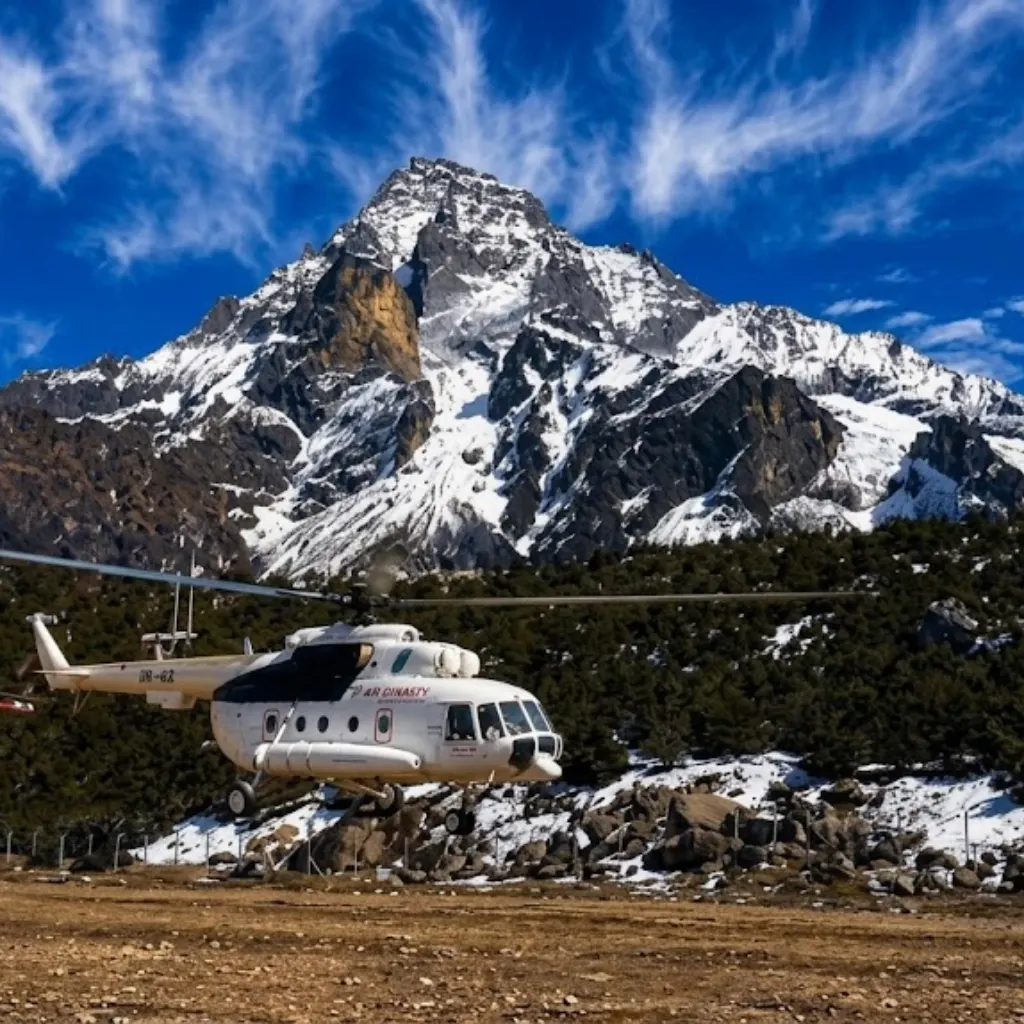
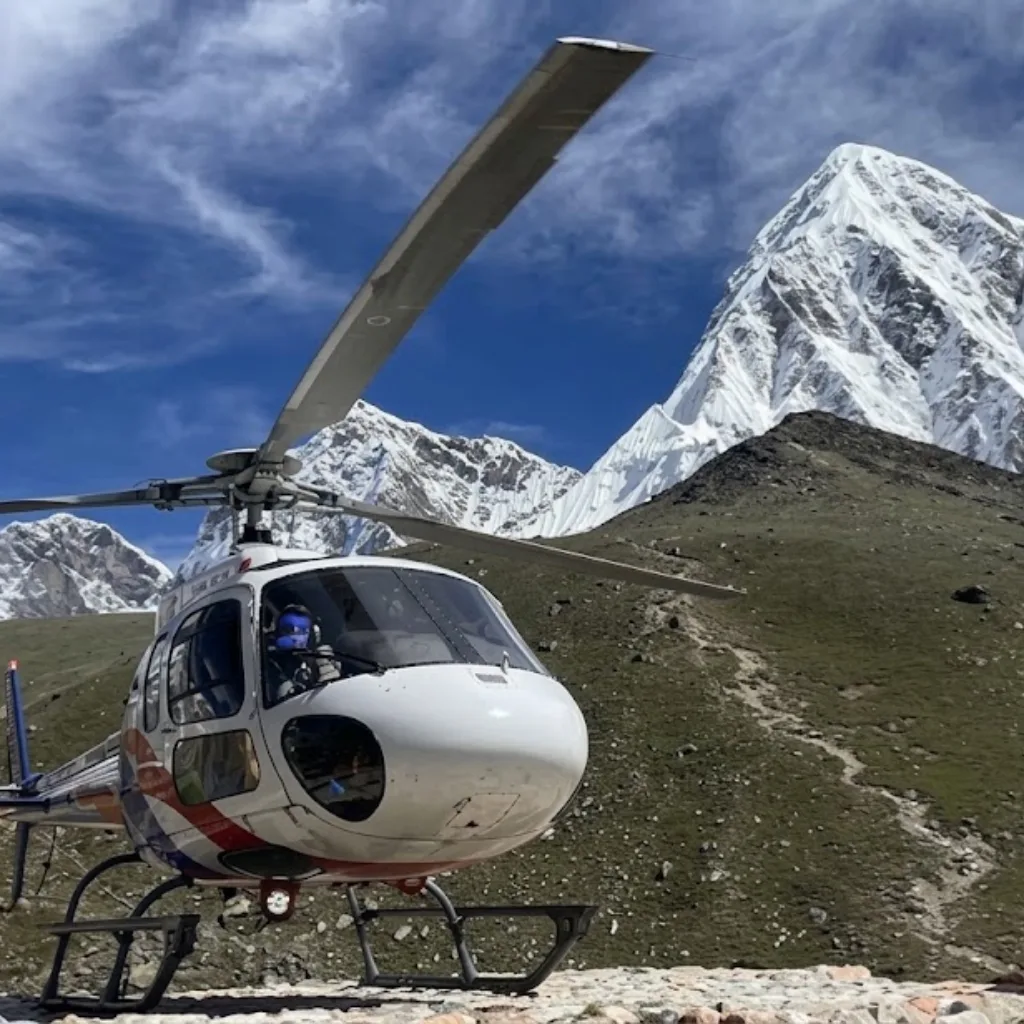

Tour Highlights
The Everest View Hotel Helicopter Tour delivers the Everest region’s most famous panorama — plus an overnight to enjoy it — with two short scenic flights bookending a full mountain day. These are the moments that make the trip.
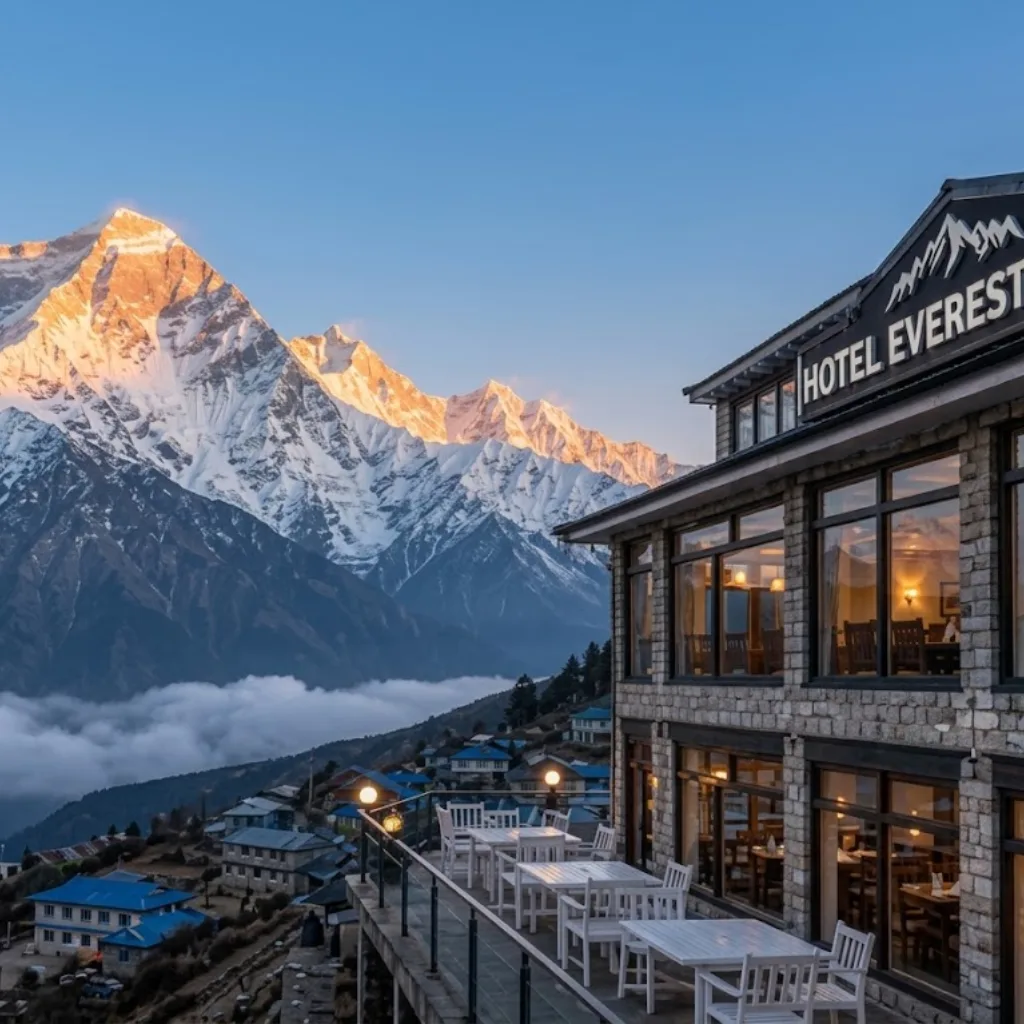
- Overnight at Hotel Everest View (3,880 m / 12,730 ft) — the world-famous hotel on a ridge above the Khumbu, with rooms and a terrace that look across the valley at Everest’s entire south face.
- Himalayan sunset at 5:30 PM — the peaks catch warm golden and orange tones as the light falls, the tour’s signature evening moment.
- Sunrise over Everest at 5:45 AM — Everest, Lhotse and Ama Dablam glow as the first rays cross the range, on a morning you can photograph from your doorstep.
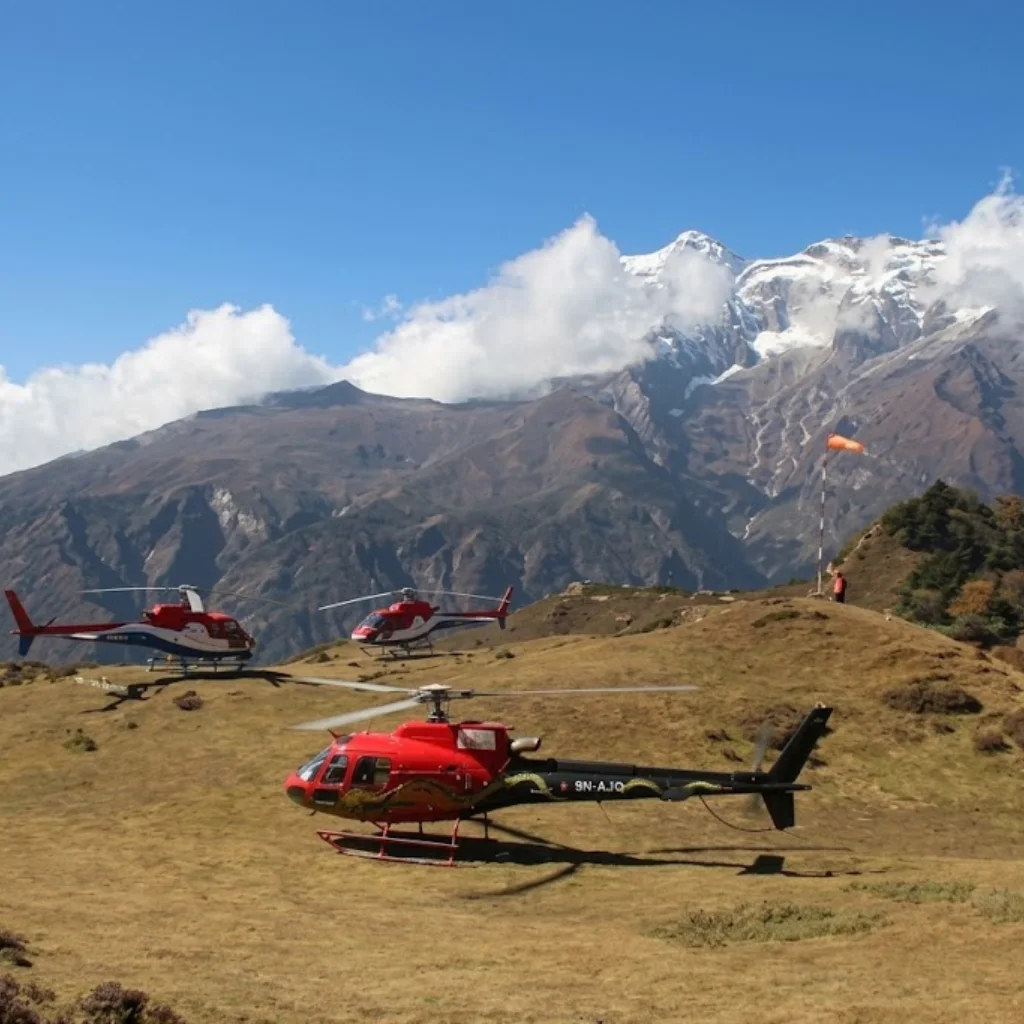
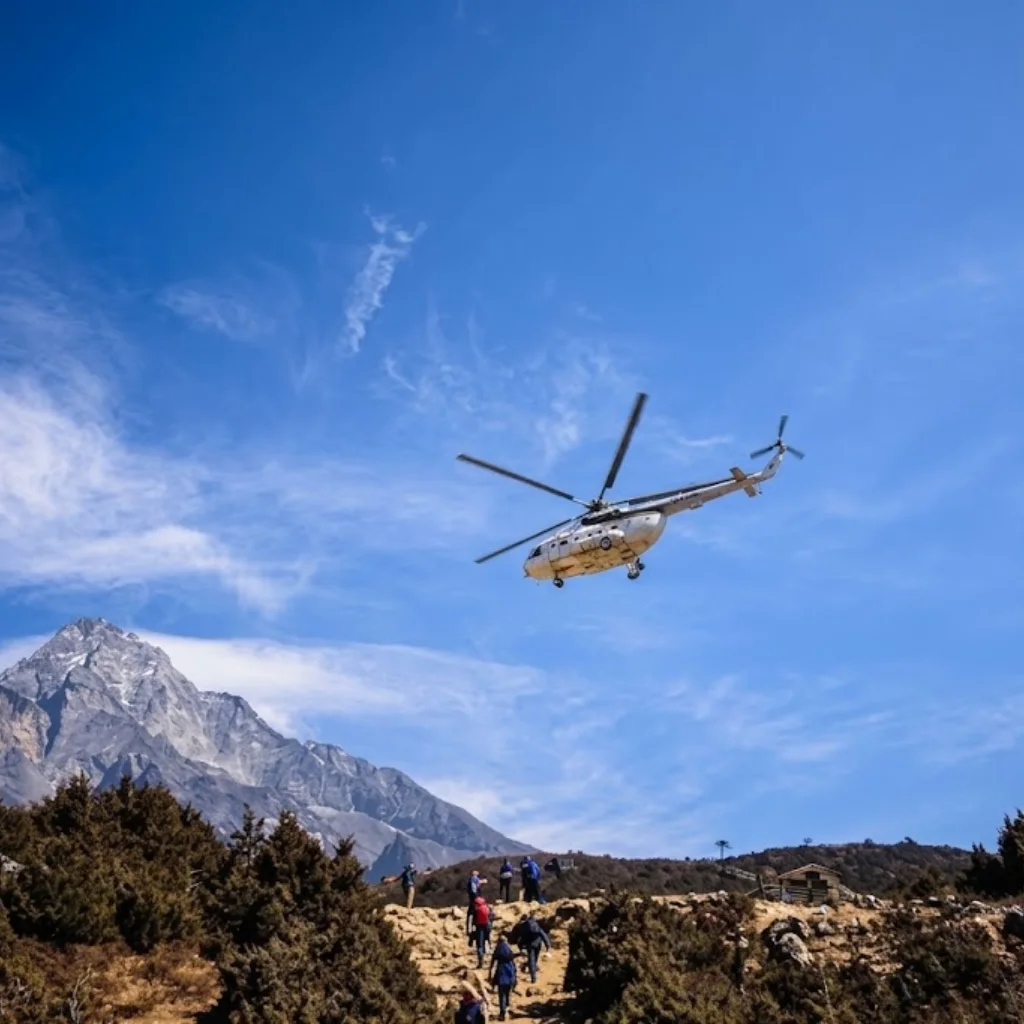
- Private helicopter transfers from Kathmandu — a chartered aircraft, your own schedule, and aerial views of the Kathmandu Valley, terraced hills and the upper Khumbu glaciers.
- Full-board mountain dining — welcome drink, lunch, dinner and breakfast at the hotel, with Nepali and international dishes served above the cloud line.
- Short guided walks to nearby viewpoints — gentle ridge strolls that stretch the legs and open up even wider angles on the Everest panorama.
- Views of Everest, Lhotse, Nuptse and Ama Dablam — four of the Himalaya’s most iconic summits on one terrace horizon, day and night.
- The Khumbu’s alpine valleys on the flight path — glaciers, Sherpa settlements and forested ridges unreachable by road.
- A 2-day, no-trekking itinerary — completely flat on physical effort, with the altitude reached by helicopter, not by climbing — one of the easiest ways to stand face to face with Mount Everest.
Everest View Hotel Helicopter Tour Overview
The Everest View Hotel Helicopter Tour is a 2-day / 1-night private-helicopter itinerary in the Everest (Khumbu) region built around an overnight at the famous Everest View Hotel (3,880 m / 12,730 ft). You fly out of Kathmandu in the morning, spend the afternoon, sunset, night and sunrise on the hotel terrace with Mount Everest (8,849 m / 29,032 ft) filling the skyline straight across the valley, and return by helicopter the next morning. The tour is graded easy: there is no trekking, no camping and no carrying, and it suits anyone comfortable with flying who wants the biggest Khumbu views without the multi-day walk.
Day 1 begins with a 06:30 AM check-in at the Kathmandu domestic helipad, the pre-flight formalities and a pilot safety briefing, then a 07:00 AM private-helicopter departure. The roughly 2-hour flight crosses the Kathmandu Valley, terraced hills, winding rivers and alpine valleys, with views of Mount Everest, Lhotse, Nuptse and Ama Dablam, before landing at the Everest View Hotel at around 09:00 AM. The afternoon is free for a short guided walk, terrace photography and lunch, followed by the 05:30 PM Himalayan sunset, a 07:00 PM dinner and an overnight stay in the hotel. Day 2 opens with the 05:45 AM sunrise over Everest, breakfast with the range in front of you, check-out by 08:30 AM, a scenic 09:00 AM flight, and arrival back at the Kathmandu helipad around 10:00 AM — flying legs of roughly 2 hours outbound and 1 hour back, with all timings weather-dependent.
With Nepal Lion Tours, the package starts from USD 2,185 per person (Standard tier, 5% off the USD 2,300 list price) or USD 2,950 per person (Luxury tier). It includes the private-helicopter transfers, one night of accommodation and full board at Hotel Everest View (welcome drink, lunch, dinner and breakfast), an experienced and licensed pilot, oxygen for emergency use, comprehensive helicopter insurance, all airport and handling charges, and the required Everest-region, Sagarmatha National Park, Khumbu Pasang Lhamu and helicopter landing permits.
What Makes the Everest View Hotel Helicopter Tour Special?
The signature difference is simple: you sleep in the view. On the normal 1-day Everest helicopter circuits — including our own morning Gokyo and Kala Patthar tour — you touch the high Khumbu and fly home the same morning. This tour does not. It puts you down at Hotel Everest View in the mid-morning and leaves you at 3,880 m for close to 24 hours, which means you get the entire day in strong mountain light, the golden sunset at 05:30 PM when the peaks turn pink, the after-dark sky above the glaciated valleys, and the 05:45 AM sunrise when Everest and Lhotse catch the first light — two classic photographic moments instead of one.
The setting itself does the work. Hotel Everest View sits on a 3,880 m ridge above the Khumbu, and its terrace looks almost level at Everest’s south face across the valley. Guests watch Lhotse (8,516 m / 27,940 ft), Nuptse (7,861 m / 25,791 ft) and Ama Dablam (6,812 m / 22,349 ft) change colour over the course of an afternoon without moving from a chair. No other stop in the region pairs that panorama with a heated hotel room and a full-board dining room at the same altitude.
Finally, there is the private-helicopter character of the whole trip. The aircraft is chartered for your departure only, so the schedule, the scenic routing and the landing are yours, and both flying days begin early, when Khumbu air is at its most stable.
Why Choose the Everest View Hotel Helicopter Tour?
If Everest is your reason for coming to Nepal but the 12–14-day Base Camp trek does not fit your dates, knees or holiday budget, this is the alternative that still means standing in front of the mountain rather than watching it from an aeroplane window. The whole experience is contained in two mornings, with the middle day and night spent exactly where the panoramic postcards are taken.
Practically, the tour is also unusually light on logistics: no permits to chase (they are included and arranged by Nepal Lion Tours), no fit-in-camping-kit baggage, a fixed morning schedule, and Kathmandu hotel pickup and drop-off by private vehicle. It pairs naturally with a Kathmandu sightseeing day or a Chitwan safari, and because it ends by mid-morning on Day 2, you can catch an afternoon international flight out of Tribhuvan with a comfortable buffer.
Who Is This Overnight Helicopter Tour Suitable For?
- First-time Nepal visitors who want to see Everest up close without committing to a trek.
- Couples and honeymooners looking for a once-in-a-lifetime romantic backdrop.
- Families wanting a big mountain experience where no one has to walk far (children generally from around age 8 by operator policy — confirm exact minimums at booking).
- Travellers short on time who have only 2–3 days in Nepal and want them to count.
- Older or less mobile travellers who manage a hotel terrace and short gentle walks but not long trails.
- Photographers chasing the two golden lights — sunset and sunrise — around the same panorama.
- Travellers who want Everest views without the Base Camp crowds, choosing the hotel terrace over the Longu-ek trail head above Gorak Shep.
- Travellers nervous about high-altitude treks who still want to experience the Khumbu safely with oxygen on board and a short, managed stay at 3,880 m.
The one honest caveat before booking: you sleep at 3,880 m, and you arrive there in about two hours of flying, so a small minority of guests feel the altitude during the night. The tour is still graded easy because there is no physical exertion, but it is a night at genuine high altitude — check the Difficulty section below and talk to us if you have any medical history that touches on altitude.
Guide’s Note — Nepal Lion Tours — From our experience flying overnight guests into the Khumbu, the moment that stays with people is stepping onto the terrace at 3,880 m in the middle of the morning with Everest, Lhotse and Ama Dablam already in full daylight. Because you arrive by helicopter you gain what a trek cannot offer in the same way: the whole afternoon at the hotel and a second morning of sunrise. We recommend requesting one of the east-facing rooms — they catch the first sunlight directly. — Nepal Lion Tours
Quick Facts
Everest View Hotel Helicopter Tour at a Glance
| Tour Fact | Details |
|---|---|
| Tour Name | Everest View Hotel Luxury Helicopter Tour with Overnight |
| Duration | 2 days / 1 night |
| Region | Everest (Khumbu), Koshi, Nepal |
| Maximum Altitude | 3,880 m / 12,730 ft at Hotel Everest View |
| Difficulty | Easy (no trekking) |
| Main Highlight | Overnight at Hotel Everest View with Himalayan sunset and sunrise |
| Start / End | Kathmandu (domestic helipad) to Kathmandu |
| Route | Kathmandu → Everest View Hotel (3,880 m) → Kathmandu |
| Flying Time | Roughly 2 hours outbound, 1 hour return |
| Best Season | Spring (March–May) and Autumn (October–November) |
| Price From | USD 2,185 per person (Standard); USD 2,950 per person (Luxury) |
| Accommodation | Everest View Hotel, one night |
| Meals | Full board at the hotel (welcome drink, lunch, dinner, breakfast) |
| Guide | Licensed pilot and English-speaking team; guided terrace walks |
Everest View Hotel Helicopter Tour Route and Elevation
The route is a clean out-and-back: Kathmandu (1,400 m / 4,593 ft) → Everest View Hotel (3,880 m / 12,730 ft) → Kathmandu, with the night spent at the far end so the mountain does not have to be reached more than once. There is no road section on the itinerary — the helicopter is the transport and the aircraft the entire connection to the Khumbu.
Everest View Hotel Helicopter Tour Route at a Glance
| Time | Tour Leg | Altitude | Highlights |
|---|---|---|---|
| Day 1, 06:30 AM | Check-in at Kathmandu domestic helipad | 1,400 m / 4,593 ft | Pre-flight formalities, pilot safety briefing |
| Day 1, 07:00 AM | Private helicopter flight to the Everest region | 1,400 → 3,880 m | Kathmandu Valley, terraces, alpine valleys, Everest, Lhotse, Nuptse, Ama Dablam |
| Day 1, 09:00 AM | Arrival at Everest View Hotel | 3,880 m / 12,730 ft | Settle in, welcome refreshments, terrace panorama |
| Day 1, 10:30 AM – 05:00 PM | Explore and relax | 3,880 m | Guided walk, photography, lunch on the terrace |
| Day 1, 05:30 PM | Himalayan sunset experience | 3,880 m | Golden light over the peaks |
| Day 1, 07:00 PM | Dinner and overnight | 3,880 m | Nepali and international cuisine, hotel room |
| Day 2, 05:45 AM | Sunrise over Mount Everest | 3,880 m | First light on Everest, Lhotse, Ama Dablam |
| Day 2, 07:30 AM | Breakfast with Himalayan views | 3,880 m | Final terrace time |
| Day 2, 08:30 AM | Check out and prepare | 3,880 m | Helicopter departure coordination |
| Day 2, 09:00 AM | Scenic flight back to Kathmandu | 3,880 → 1,400 m | Glaciers, valleys, Sherpa settlements, forests |
| Day 2, 10:00 AM | Arrival at Kathmandu helipad | 1,400 m / 4,593 ft | Tour concludes |
Everest View Hotel Helicopter Tour Elevation Profile
The elevation story of this tour is one vertical jump and one gentle return. Kathmandu sits at 1,400 m / 4,593 ft; the helicopter climbs to the Khumbu and lands on the hotel’s doorstep at 3,880 m / 12,730 ft in roughly two hours of flying; the night is spent at that same altitude; and Day 2 descends back to Kathmandu in about an hour. Unlike a trek, where altitude is gained over days with overnight stops in between, here the exposure is concentrated: you arrive at 3,880 m, stay there, and descend — with no further summit beyond the hotel.
Physically, this is the easy version of the Khumbu. There are no ascents, no staircases and no long downhill, and the only walking is a short guided ridge stroll. What the profile means honestly is that your body reaches overnight altitude quickly, so the day at the hotel is paced gently: hydrate through the afternoon, eat lightly but normally, and let the hotel’s heated rooms do the work of keeping you comfortable through the night. A trek through the same region would reach 3,880 m only on its third or fourth day; passengers who keep the afternoon relaxed usually sleep through the night without issues.
For reference, the same altitude also defined the classic panorama treks, and the region’s highest viewpoints sit well above it — Kala Patthar reaches 5,545 m / 18,192 ft and Everest Base Camp 5,364 m / 17,598 ft. This tour deliberately stops below both, which is one reason it stays graded easy.
How to Get to the Everest View Hotel Helicopter Tour
The entire tour is helicopter-based: the starting point is the Kathmandu domestic helipad at Tribhuvan International Airport, and the Everest View Hotel is reached by chartered helicopter, not by road. There is no long bus journey, no flight connection to catch at Lukla and no trailhead drive — you board in Kathmandu and step off at the hotel.
Getting from Kathmandu to the Everest View Hotel
| Option | Approx. Travel Time | Best For |
|---|---|---|
| Private helicopter (included in this tour) | Around 2 hours of flying | The fastest and most comfortable way to 3,880 m — the tour’s own transport |
| Kathmandu–Lukla flight + Day Trek route | 1 day return via the Panorama Trek route | Trekkers who want the same hotel as a reward for walking the ridge trails |
| Overland + trekking (Everest Panorama route) | 6 days | Fit travellers who prefer to earn the view on foot |
The private-helicopter option is the point of the package: no other transport gives the same combination of speed, comfort and aerial scenery. The morning after, the same aircraft carries you back, so the tour’s logistics reduce to two fixed flight windows plus the schedule at the hotel. All flight timings are approximate and can shift with weather, visibility, air traffic and landing-site conditions — morning departures are chosen deliberately because Khumbu flying conditions are generally most reliable in the early hours.
Meeting Your Pilot and the Check-In Routine
Guests are collected from their Kathmandu hotel by the tour’s luxury private vehicle (included) and brought to the domestic helipad for the 06:30 AM check-in. You complete the required pre-flight formalities, and your pilot runs the safety briefing and explains the planned flight route before take-off at 07:00 AM. On return, the same private vehicle takes you back to your Kathmandu accommodation. Confirm your exact pickup time at booking — it is set around the helipad schedule and your hotel’s location.
A Practical Tip for International Travellers
Arrive in Nepal at least one day before the tour. Domestic helipad checks are time-critical and international flight delays can ripple into a domestic charter day, so build that buffer in. On the return, the tour lands in Kathmandu around 10:00 AM, which comfortably allows an afternoon international departure — but keep the Day 2 morning free and do not book an early-morning flight out on the same day.
Guide’s Note — Nepal Lion Tours — From our experience operating Everest-region flights, the two practical habits that make this tour run smoothly are an on-time morning start and one light bag. We recommend our hotel pickups arrive at the helipad about 20–30 minutes early — a relaxed check-in sets the tone for the whole program — and we always message guests the evening before with the exact pickup window. The helicopter has a luggage allowance like any aircraft, so pack a soft carry bag rather than large hard cases and keep the terrace layers in your hand. — Nepal Lion Tours
Everest View Hotel Helicopter Tour Difficulty, Fitness & Altitude
The tour is officially graded easy, and in physical terms it is: no walking demands, no steep trail, no long downhill — the only effort is boarding the helicopter and taking a short guided stroll. What this easy grade does not mean is “no altitude”. The tour asks something different of you: a night spent at 3,880 m / 12,730 ft after a fast arrival by air. For most travellers this is comfortable; for a minority, it is the one thing to take seriously.
Where the Effort Actually Is?
There are two real considerations, and neither is hiking. The first is the early-morning routine: rising for a 06:30 AM check-in on Day 1 and a 05:45 AM sunrise on Day 2 means early nights, and most passengers are surprised how much the two early starts shape the trip. The second is altitude, not exertion — you reach 3,880 m in about two hours of flying rather than over days of walking, so gentle pacing through the afternoon (water, easy meals, minimal rushing) matters more than fitness. Cold at dawn on the terrace is the third, mildest factor: gloves and a warm layer for the 05:45 AM sunrise are genuinely useful.
Guide’s Note — Nepal Lion Tours — Strictly, the two travel days are lighter than most city walking routines, because the helicopter does everything an Everest trek would put into a week. From our experience, guests who sleep well are the ones who treat the 3,880 m arrival with respect: water over the afternoon, a proper early dinner, and layers in the room for the dawn. We also recommend telling us in advance about any sleep-breathing or heart conditions — it costs nothing to be cautious at this altitude, and it lets the hotel prepare exactly the right room. — Nepal Lion Tours
How to Prepare for the Everest View Hotel Helicopter Tour
- Treat the altitude seriously, not the walking: the meaningful preparation is being rested and hydrated before the night at 3,880 m, not gym work.
- Arrive in Kathmandu a day early: an acclimatization-friendly start at 1,400 m plus a full hotel night beats a red-eye arrival into a flight morning.
- Manage the early starts: plan the night before Day 1 as an early one; the two sunrise-oriented mornings reward it.
- Stay hydrated through the afternoon: drink steadily at the hotel, avoid heavy alcohol, and keep daytime caffeine modest.
- Pack warm dawn layers: even in the best seasons, 05:45 AM at 3,880 m is cold; a hat, gloves and a warm mid-layer make the sunrise effortless.
- Do not overtrain before travel: no amount of fitness reduces altitude exposure; the tour is designed so you do not need to be in trekking shape.
How This Tour Compares with Longer Everest Treks
Measured against a classic 12–14-day Everest Base Camp trek, this tour removes every physical demand: no daily walking hours, no acclimatization day in Namche, no staircases and no tent nights. Its maximum sleeping altitude of 3,880 m sits well below the trek’s 5,545 m Kala Patthar viewpoint and its 5,164 m Gorak Shep overnight, and the single night at that altitude is brief by mountain standards. What you trade is the trek’s journey — the ridge-by-ridge arrival, the Sherpa villages, the slow build of the mountains — for a compressed, comfortable version of its best view. Both are legitimate Everest experiences; this one is simply the one that fits into a long weekend.
Altitude, Acclimatization & Safety
The signature altitude of the tour is the overnight at 3,880 m / 12,730 ft, reached by helicopter in about two flying hours. The descent back to Kathmandu is equally quick, which means the body’s altitude exposure is an overnight stay rather than days of climbing. Symptoms at this height, if they appear, are usually mild and short-lived — but they deserve attention because you sleep at altitude rather than merely visiting it.
Everest View Hotel Helicopter Tour Altitude Profile
- Kathmandu — 1,400 m / 4,593 ft: helicopter departure point, typical overnight altitude for arriving travellers.
- Everest View Hotel — 3,880 m / 12,730 ft: the tour’s maximum altitude and its only overnight, reached in roughly two hours of flying.
How the Body Responds to Overnight Altitude Exposure
At 3,880 m the air holds roughly a third less oxygen than at sea level, so the body’s response during a 24-hour stay is mild but real. Heart and breathing rates edge up, sleep can feel lighter than usual, appetites flatten, and some guests wake briefly in the night — all normal responses, not danger signs. The practical response is to pace: drink water regularly through the afternoon, eat a normal dinner, avoid alcohol, and sleep in the hotel’s heated room. Most guests find the stay comfortable precisely because the exposure is brief — you arrive rested, spend one night, and return to 1,400 m by mid-morning.
Symptoms of Altitude Sickness to Watch For
Mild symptoms that are common and usually settle with hydration, rest and pacing:
- Mild headache
- Slight breathlessness on the guided walk
- Poor appetite
- Restless or light sleep
- Mild dizziness when moving quickly
More concerning symptoms that need immediate attention and rapid descent:
- Worsening headache that does not ease with rest
- Nausea or vomiting
- Clumsiness or unsteady walking
- Confusion or drowsiness
- Shortness of breath even at rest
If anyone in your group develops the concerning symptoms, inform the hotel staff and pilot immediately; the helicopter provides the fastest possible route to lower altitude, and the day starts early enough that the return leg is normally available the same morning.
How Nepal Lion Tours Supports Your Safety
- Oxygen on board: an oxygen cylinder is carried on the helicopter for emergency use.
- Licensed mountain-experienced pilot: a government-licensed (CAAN) pilot with high-altitude flying experience commands every flight.
- Managed, brief altitude stay: the single night at 3,880 m is short by mountain standards, and no time is spent above the hotel.
- Comprehensive helicopter insurance: included in the package in line with Nepal Civil Aviation requirements.
- Clear communication: guests are encouraged to report any symptom at any point; the team can shorten or adjust plans rather than push through.
- Travel insurance advice: a policy covering helicopter evacuation and medical treatment is mandatory for this tour and must be confirmed before departure.
Best Time to Take the Everest View Hotel Helicopter Tour
The package lists spring–autumn as its season, and those windows are correct: autumn (October–November) and spring (March–May) give the Khumbu its clearest skies and most reliable morning flying windows, which matters doubly when a whole day and night at 3,880 m depends on the weather holding. The tour can run in other months, but winter adds severe cold and snow cover, and the monsoon brings clouds and rain that frequently disrupt flying.
| Season | Months | Weather & Flight Conditions | Mountain Views | Overall |
|---|---|---|---|---|
| Autumn | October–November | Clear, dry and stable | Excellent | Best overall |
| Spring | March–May | Clear mornings; expedition season at base camp | Very good | Highly recommended |
| Winter | December–February | Cold and crisp; snow and ice possible | Good on clear days | Good with preparation |
| Monsoon | June–August | Cloud, rain and morning mist | Frequently limited | Least reliable |
Autumn — October to November
Autumn is the classic best window. Post-monsoon air is dry, stable and cold enough to keep clouds off the peaks well into the morning, exactly what the tour’s schedule needs. Everest, Lhotse, Nuptse and Ama Dablam are at their sharpest, the sunset light runs long and clear, and overnight skies above 3,880 m are famously star-filled. October is peak season, so the hotel books out — reserve well ahead for the terrace-end rooms.
Spring — March to May
Spring is the runner-up season and becoming the smarter choice for many travellers. Early-morning visibility is very good, temperatures at the hotel are the friendliest of the year, and the lower valleys are in bloom. Spring is also Everest expedition season, when base camp is active; you will likely spot climbing teams’ flights and tents on the glacier from the terrace — a connection to the mountain’s history that autumn misses.
Winter — December to February
Winter operates with preparation. Days are crisp and clear more often than not, but dawn at 3,880 m is genuinely cold, snow can close lower approaches, and a shorter daylight window knocks the schedule’s margins. This is the quietest, most private option, and the hotel runs reduced but complete service — ideal for guests who love cold, clean air and empty panoramas, and who pack a proper down layer.
Monsoon — June to August
Monsoon is the least reliable window and the one the tour genuinely avoids. Cloud, rain and morning mist frequently shorten or postpone flying, and the risk of being weather-held at the hotel rises sharply. If summer dates are the only option, book flexible plans and travel insurance that covers weather delays — and accept that the sunrise might be traded for a cloud-bank sunrise.
Which Season Should You Choose?
Autumn wins outright for guaranteed clarity, spring wins for warmth and flowers, winter wins for solitude and drama, and monsoon is the window to avoid. A practical rule from our side: the tour depends on two morning windows of stable weather, so travel in the outer months only with flexible dates and a couple of spare days in Kathmandu. The weather forecast is checked repeatedly in the 48 hours before departure as well as in the morning itself, and all timings stay approximate because they follow the sky, not the clock.
Guide’s Note — Nepal Lion Tours — On clear autumn and spring mornings the view from the hotel terrace typically opens up completely by the time breakfast is served, which is one reason we keep the Day 2 flight at 09:00 rather than immediately after sunrise: it gives guests the full golden-light hour with the range in front of them. We also steer guests on the terrace towards the viewpoint side at sunset — the western light wraps around Pumori and Nuptse before the main face of Everest, and it is the easiest photograph of the trip. — Nepal Lion Tours
Everest View Hotel Helicopter Tour Permits & Regulations
The tour enters the Sagarmatha National Park, a UNESCO World Heritage Site that protects the upper Khumbu, and overnighting at Hotel Everest View means the standard Khumbu permit set applies — the same two permits used by every trekking route in the region. Nepal Lion Tours arranges them all as part of the package, so nothing is left for guests to chase.
Everest View Hotel Helicopter Tour Permits at a Glance
| Requirement | Who Needs It? | Who Arranges It? |
|---|---|---|
| Sagarmatha National Park Entry Permit | Foreign and SAARC visitors entering the park | Nepal Lion Tours (included) |
| Khumbu Pasang Lhamu Rural Municipality Permit | All visitors in the Khumbu (replaces the TIMS card here) | Nepal Lion Tours (included) |
| Helicopter landing permits | The helicopter at the Everest View Hotel landing site | Nepal Lion Tours (included) |
Sagarmatha National Park Entry Permit
Sagarmatha National Park covers the highest national-park terrain on Earth, from monsoon forests up through alpine meadows to the Everest massif, and its entry permit is the first paperwork of the tour. The current fee standard for the park is NPR 3,000 per person for foreign nationals and NPR 1,500 for SAARC nationals, with children under ten free in most cases — amounts set by the national park authority, and worth confirming at booking because fees are revised from time to time. You do not need to do anything beyond carrying your passport for identification: the permit is issued to your name and handled by Nepal Lion Tours before your flight.
Khumbu Pasang Lhamu Rural Municipality Permit
Alongside the national park permit, every visitor in the Khumbu needs the Khumbu Pasang Lhamu Rural Municipality permit. This is the local-government permit that replaces the old trekking TIMS card in the Khumbu: it records your details for the mountain communities the region’s tourism supports, funds local trails and services, and is now the standard second document on every route from Lukla up. Its fee is currently NPR 3,000 foreign / NPR 2,000 SAARC — confirm at booking, as municipal rates can change. It is included in this package and arranged by Nepal Lion Tours together with the national park permit.
Do You Need a TIMS Card or a Restricted-Area Permit?
No to both. The standard Everest (Khumbu) itinerary does not require the trekkers’ TIMS card — the Khumbu Pasang Lhamu permit replaced it in this region — and the Route to Hotel Everest View lies entirely outside any restricted area, so no Restricted Area Permit applies. If you extend into a modified itinerary that crosses a restricted zone or adds an overland approach through the Gaurishankar Conservation Area, an extra permit can apply, and Nepal Lion Tours will flag this to you when we design the variation.
Who Arranges the Permits?
Nepal Lion Tours arranges the full set — Sagarmatha National Park, Khumbu Pasang Lhamu and the helicopter landing permits — as part of pre-trip preparation, and the fees are included in the price you see. All we ask is a copy of your passport in good time before departure. Regulations and fees in Nepal can be revised by the authorities at short notice, so confirm the current amounts at booking — and if trails open or close, devise and share.
Food & Accommodation on the Everest View Hotel Helicopter Tour
The overnight element changes the food-and-lodging story completely: instead of teahouse rooms, this tour sleeps in a genuine mountain hotel and eats at a dining room where the window view has a price tag of its own at ground level. Everything at the hotel is arranged by Nepal Lion Tours as part of the full-board package.
A Night at the Everest View Hotel
Hotel Everest View, opened in 1971 with the help of Swiss alpine-hotel expertise, was built as the world’s highest-situated hotel at 3,880 m, and its rooms are legendarily simple in the right way: comfortable beds, private facilities, heating against the Khumbu’s cold, and the panorama through the window. The terrace and dining room look almost level at Everest’s south face across the valley, and rooms are quiet, warm and — after the sun sets — dark enough for serious star-gazing. It is a hotel, not a teahouse: expect staff who are used to hosting once-in-a-lifetime guests, and expect to be reminded why people climb mountains just to stand where your breakfast table already is.
What Food Is Available at Hotel Everest View?
- Nepali staples — dal bhat (rice and lentil soup, the Himalaya’s energy dish), curries and rice-based platters.
- Tibetan and Sherpa classics — momos (steamed dumplings), thukpa and noodle soups that warm after the dawn terrace.
- International favourites — pasta, grilled dishes, soups and Western-style breakfast plates.
- Breakfast spreads — eggs, bread, porridge, tea and coffee for the high-altitude morning.
- Tea and coffee throughout the day — the dining room effectively doubles as the lounge between meals.
- Vegetarian options are standard, and vegan, gluten-free and allergy-aware requests are handled with advance notice to Nepal Lion Tours.
What Food and Accommodation Are Included?
| Included in the Tour | Usually Paid Separately |
|---|---|
| One night at Hotel Everest View | Additional hotel nights (e.g. weather-delay extensions) |
| Welcome drink on arrival | Alcoholic and soft drinks, bottled water and snacks beyond the included meals |
| Lunch, dinner and breakfast at the hotel | Lunches and dinners in Kathmandu |
| Kathmandu hotel pickup and drop-off by private vehicle | Personal expenses (laundry, Wi-Fi extras, telephone calls) |
| Helicopter transfers, permits and flying crew | Tips and gratuities for the pilot, driver and hotel staff |
| Oxygen for emergency use, helicopter insurance, taxes and handling | Travel insurance (mandatory, not included) |
Confirm the final inclusion list with Nepal Lion Tours at booking whenever you are tailoring the package — the same structure applies with rice at each end.
Drinking Water at 3,880 m
Drinking water at high altitude behaves predictably: do not assume tap water is suitable. The hotel supplies safe, treated drinking water for guests within the billed services, and bottled or boiled alternatives are standard policy across the Khumbu. The altitude advice stands — drink steadily through the afternoon and evening rather than gulping water — and a reusable bottle is welcome at the hotel, keeping both you and the ridge cleaner.
Staying Comfortable at Altitude
A few habits make the 3,880 m night genuinely restful: keep a water bottle in the room; eat a normal dinner but skip heavy drinking; have a warm layer and hat ready for the 05:45 AM sunrise; and use the afternoon to move slowly. The hotel’s warmth does the rest. If you are a cold sleeper, fur-up layers in the room beat a heavy jacket on the terrace — and the early morning flight home keeps even that overnight burden as light as you make it.
Why Book with Nepal Lion Tours?
Every element of the Everest View Hotel Helicopter Tour — the flights, the permits, the hotel, the schedule — is run by a single Kathmandu-based team, which is exactly what a two-day mountain program needs: one plan, one point of contact, and no hand-offs between agencies.
1. Local, licensed, English-speaking guides and pilots
The flying crew holds current CAAN licences and mountain operating experience, and the accompanying team speaks fluent English. You plan the day with people who have flown this exact ridge dozens of times. Practical knowledge counts at 3,880 m more than it does anywhere else on the itinerary.
2. A registered trekking company you can verify
Nepal Lion Tours is a registered travel operator based in Kathmandu, and its business and licence details are available on request. Booking a chartered helicopter into a UNESCO park should mean dealing with a company you can check, not a WhatsApp number with no address behind it.
3. Private departures from just one person up
The helicopter is chartered for your party’s schedule, so couples, families and small groups fly together on dates they choose rather than joining fixed seats on someone else’s trip. The package’s price tiers scale down per person as your group grows.
4. The overnight at Hotel Everest View — this package’s signature stop
The one itinerary in the site’s heli lineup that spends a full day, sunset, night and sunrise at 3,880 m on the Everest terrace. No other tour here gives you both golden lights at the world’s most famous hotel.
5. Private transfers and straightforward logistics
Hotel pickup by private vehicle, helipad check-in, permits pre-arranged, luggage allowance managed for you. Two days, two flights, one hotel — the whole tour runs on a short, reliable schedule.
6. Budget-friendly pricing that keeps 5% off the standard tier
Against a 1-day Everest circuit, the cost difference buys a second flight day and the overnight itself; on the Standard tier the published USD 2,300 list price drops to USD 2,185 (5% off), and per-person rates fall further with group size.
7. A local team you can contact before and during your tour
From the first WhatsApp message to the helipad farewell, there is a named contact in Kathmandu who answers, because for this tour everyone else is either on the aircraft or on the ridge. That single point of contact also runs the weather checks that decide whether your two mornings fly.
Book the Everest View Hotel Helicopter Tour
Few itineraries in Nepal compress this much mountain into two days. The helicopter is private, the hotel looks at Everest as if it were a window property, and the sunrise is included by default — because you slept there. Now the only remaining decisions are the date and the tier.
Everest View Hotel Helicopter Tour Pricing at a Glance
| Travellers | Standard (per person) | Luxury (per person) |
|---|---|---|
| 1 person | USD 2,185 (list USD 2,300 — 5% OFF) | USD 2,950 |
| 2–4 people | USD 2,076 | USD 2,803 |
| 5–9 people | USD 1,967 | USD 2,655 |
| 10+ people | USD 1,857 | USD 2,508 |
The published list price for the Standard tier is USD 2,300, with the 5% discount applied to USD 2,185 for a single traveller; per-person rates drop further at 2–4, 5–9 and 10+ travellers, while the Luxury tier runs from USD 2,950 per person on the same group sliding scale. The final price can vary depending on group size, dates, services and requested itinerary changes.
Trip snapshot: 2 days / 1 night · maximum altitude 3,880 m / 12,730 ft · easy difficulty · private helicopter · full board at Hotel Everest View · Sagarmatha, Khumbu Pasang Lhamu and landing permits included · free cancellation up to 14 days before departure (subject to booking terms).
Ready to Start Your Everest Adventure?
Send us your preferred travel date and group size through the booking form or WhatsApp at +977-9851039020, and we will confirm rates, the helicopter schedule and your hotel pickup by return. The private departure runs on your group alone, so whether you are travelling solo, as a couple, with friends, or with family, we will help you prepare a smooth two-day plan — including what to do the day before and after in Kathmandu. Your Everest sunrise is waiting at the end of a very short flight — choose your dates and start planning your tour today.
Related Everest Region Helicopter Tours & Treks
The Everest View Hotel Helicopter Tour stands apart in the region’s line-up as the only overnight helicopter itinerary — but the same 3,880 m hotel and its panorama feature in a number of Nepal Lion Tours packages, and the 1-day helicopter circuits make natural companions if your plan pulls you back toward Kathmandu earlier.
| Trek / Tour | Duration | Difficulty | Max Altitude | Best For |
|---|---|---|---|---|
| Everest View Hotel Helicopter Tour (this tour) | 2 days | Easy | 3,880 m | The overnight panorama at the world-famous hotel |
| Everest Base Camp Helicopter Tour with Kala Patthar Landing | 1 day | Easy | 5,545 m | A single-morning Everest circuit with the classic viewpoint landing |
| Luxury Everest, Gokyo and Kala Patthar Helicopter Tour | 1 day | Easy | 5,545 m | Two famous viewpoints plus a Hotel Everest View breakfast in one day |
| Everest Panorama Trek | 6 days | Easy–Moderate | 3,880 m | The same hotel reached on foot by the shortest route to big Everest views |
| Everest Base Camp Trek via Kala Patthar | 12 days | Moderate | 5,545 m | The classic EBC trek with the Kala Patthar sunrise |
| Gokyo Lake Luxury Trek with Helicopter Return | 12–14 days | Moderate | 5,357 m (Gokyo Ri) | Turquoise lakes, Cho La views and a helicopter finish |
Travellers with a day to spare can pair the overnight tour with the Everest Base Camp Helicopter Tour with Kala Patthar Landing on the day before or after, or with a Kathmandu sightseeing day. Those who want the walking version of the same hotel can cross over to the Everest View Hotel Luxury Trek, which reaches 3,880 m on foot over the classic panorama trail — the perfect stepping stone between a helicopter morning and a full Base Camp expedition.
Trip Essentials
Packing advice, required equipment & gear recommendations
Essential
Everything in this tour happens at a hotel and on a helicopter, which makes packing unusually simple: a soft carry-on bag, layered clothing and the warm dawn layer you will want on the terrace. Sit on the Day-2 sunrise point the night before and you will have exactly one item you must not forget — the sunrise layer.
Essential Carry
- Valid passport — required for permit issuance and identity checks.
- Travel insurance documents, including high-altitude helicopter evacuation cover (mandatory).
- Cash in Nepali rupees (NPR) for tips and personal extras.
- A reusable water bottle for the hotel and the flight.
- Prescription medicines in original packaging, plus any personal medication.
Clothing: Use Layers Rather Than Bulk
Base layers — a light merino or synthetic top; moisture management beats cotton at altitude.
Mid layers — a fleece or insulated jacket; this is the piece that makes the sunrise terrace comfortable.
Outer layers — a windproof shell; the 05:45 AM ridge wind is the coldest moment of the tour.
Comfort clothes — trousers and a light shirt or jumper for the dining room in the evening.
Headwear and gloves — a warm beanie and light gloves for dawn; a cap with a brim for the brighter afternoon.
Footwear — comfortable walking shoes with grip for the short guided stroll; you will not need trekking boots.
High-Altitude Comfort at the Landings
- Sunglasses — the high-altitude sun is intense, and the terrace is fully exposed.
- Sunscreen (SPF 30 or higher) and lip balm with SPF.
- A small torch or headlamp — the walk from dining room to room after dinner is outside.
- A light warm layer is left in the room for the 05:45 AM sunrise, so you do not carry it around the hotel.
Toiletries and Personal Health Items
Toothbrush and toothpaste, basic toiletries, personal medication, a small first-aid basics kit (plasters, headache tablets with doctor’s knowledge), moisturiser for dry mountain air, and any specific items you need for comfort at 3,880 m. The hotel provides room basics, so a minimal wash bag is plenty.
Electronics
Camera or smartphone for the terrace and sunset, a power bank (charging is available at the hotel but outlets are few), and chargers. Keep electronic baggage light — the helicopter has a luggage allowance, and the photos, not the gadgets, are what you carry home.
Documents and Money
Passport with a spare photocopy, travel insurance policy, at least two forms of payment for Kathmandu expenses, and a moderate cash reserve in NPR for tips at the hotel and helipad. Tell Nepal Lion Tours about any dietary or medical needs before departure so the hotel can prepare.
How Much Should You Pack?
One soft carry-on-style bag per person is the right size, plus a small day bag if you like having the camera within reach. The hotel handles daytime storage, the helicopter has a standard allowance, and the tour’s whole character is light and fast — heavy cases feel out of place at the helipad. Pack the sunrise layer on top where you can reach it, and resist the urge to carry the “just in case” items: at a hotel at 3,880 m, the just-in-case bench is always the same as the everyday one.
Read Before You Book
Permits, terms, medical considerations & advisory guidelines
Advisory
A two-day helicopter tour sounds short on paper; in practice it is a tiled schedule of fixed windows — helipad check-in, two flight mornings, the hotel’s dinner and the 05:45 AM sunrise. The fewer surprises you carry into those windows, the smoother the whole trip runs.
Helicopter Operations and Weather
All timings are approximate and may change with weather, visibility, air traffic, landing-site conditions and aviation regulations. Flights in the Everest region are generally scheduled in the morning because mountain visibility and flying conditions are best then — which is exactly why this tour uses early windows on both days. If weather closes in, the operator works to reschedule rather than fly, and guests should carry travel insurance that covers weather delays and the possibility of an extra hotel night.
Departure Times and Meeting Points
Check-in at the Kathmandu domestic helipad is 06:30 AM on Day 1, after a private-vehicle hotel pickup arranged on the schedule set at booking. Day 2 runs from the 05:45 AM sunrise through check-out at 08:30 AM and the 09:00 AM flight home, landing around 10:00 AM — a timing that comfortably suits an afternoon international departure, but not an early-morning one on the same day.
Health, Altitude and Insurance
You sleep at 3,880 m, reached by about two hours of flying. Altitude responses in a 24-hour stay are usually mild, but travel insurance with high-altitude coverage and helicopter evacuation is mandatory for this tour and must be confirmed before departure; it is not included in the package. Anyone with a history of altitude sickness, heart or respiratory conditions should check with a doctor before booking and inform Nepal Lion Tours in advance.
Money and Tipping
Prices are quoted in USD and collected in line with the booking terms; the hotel and helipad extras in Nepal run on NPR, so carry a modest cash reserve. Tipping the pilot, driver and hotel staff is optional but customary — the guidance for this tour is around 5–10% of your package value split across the crew, at your discretion.
Culture and Responsible Tourism
- The Khumbu is Sherpa country, with Buddhist monasteries and a community that has hosted every Everest expedition for a century.
- Greet people with “Namaste”, and photograph people and monasteries with permission.
- Conversations at altitude move slower; patience is both polite and sensible.
- Take photographs — the views are the point of the tour — but leave the ridgeline as immaculate as the hotel keeps it.
- Prefer a reusable bottle and avoid single-use plastic at the hotel.
- Respect the hotel’s quiet hours at 3,880 m: the mountain nights are treasured by every guest staying there.
Route Options
The option is largely about how much Everest you want: the overnight tour itself (this package), the 1-day Everest Base Camp helicopter tour with Kala Patthar landing, the 1-day Everest, Gokyo and Kala Patthar circuit, or the Everest Panorama Trek version that reaches the same hotel on foot. Each can be combined with Kathmandu sightseeing, a Chitwan safari, or the Gokyo lake lakes and Cho La trek in the same holiday.
Booking and Before You Arrive
Before you travel, make sure you understand:
- The current Sagarmatha and Khumbu permit set — included in the price and arranged by Nepal Lion Tours.
- The Standard vs Luxury tier difference and the 5%-off Standard pricing.
- Hotel pickup time is set around the 06:30 AM helipad check-in.
- Luggage limits for the chartered helicopter — pack a soft carry bag.
- Weather flexibility — mornings fly first; extensions are possible but weather-dependent.
- Mandatory insurance with helicopter evacuation cover.
- Passport validity and the Nepal entry visa (not included in the package).
A Few Final Tips
The tour rewards the night before it starts and the day after it ends. Sleep early before Day 1, drink water through the afternoon, pick the east-facing room if you can, and leave a clear afternoon in Kathmandu after the 10:00 AM landing — the terrace at 3,880 m stays in your memory longer than any museum ticket does.
Day-by-Day Itinerary
Explore each day's route, trekking elevation, and activities
06:30 AM – Check-in at Kathmandu Helipad
Arrive at the domestic helipad in Kathmandu for check-in and complete the required pre-flight formalities. Your pilot will provide a safety briefing and explain the planned flight route before your private helicopter adventure begins.
07:00 AM – Private Helicopter Flight to the Everest Region
Take off from Kathmandu and enjoy spectacular aerial views of the Kathmandu Valley, terraced hills, winding rivers, and surrounding foothills. As you continue toward the Khumbu region, the scenery transforms into dramatic alpine valleys, glaciers, and towering Himalayan peaks, including Mount Everest, Lhotse, Nuptse, and Ama Dablam.
09:00 AM – Arrival at Everest View Hotel
Land at the renowned Everest View Hotel at approximately 3,880 meters. After arrival, settle into your accommodation and enjoy welcome refreshments while taking in panoramic views of Mount Everest and the surrounding Himalayan peaks.
10:30 AM – 05:00 PM – Explore and Relax
Spend the day enjoying the peaceful mountain environment around the hotel. Take a short guided walk to nearby viewpoints, photograph the spectacular Everest panorama, or relax on the terrace while enjoying lunch with uninterrupted Himalayan views. The afternoon provides plenty of time to appreciate the high-altitude scenery at a comfortable pace.
05:30 PM – Himalayan Sunset Experience
As evening approaches, enjoy a spectacular Himalayan sunset from the hotel. Watch the changing light illuminate the snow-covered peaks with warm golden and orange tones, creating a memorable mountain experience.
07:00 PM – Dinner and Overnight Stay
Enjoy dinner featuring a selection of Nepali and international cuisine. After dinner, retreat to your comfortable room and spend the night surrounded by the peaceful Himalayan landscape.
05:45 AM – Sunrise Over Mount Everest
Wake early to witness the first rays of sunlight reaching the Himalayan peaks. From the hotel, enjoy spectacular views of Mount Everest, Lhotse, Ama Dablam, and the surrounding mountains as they gradually glow in the morning light. This is also an excellent opportunity for photography.
07:30 AM – Breakfast with Himalayan Views
Enjoy breakfast while overlooking the magnificent Everest range. After breakfast, take some time to relax on the terrace, breathe in the crisp mountain air, and enjoy your final moments in the Khumbu region.
08:30 AM – Check Out and Prepare for Departure
Complete the hotel check-out process and prepare your belongings for the return journey. Your team will coordinate the helicopter departure and ensure everything is ready for your flight back to Kathmandu.
09:00 AM – Scenic Helicopter Flight to Kathmandu
Board your private helicopter and begin the scenic return flight. Fly above glaciers, alpine valleys, Sherpa settlements, forests, and rugged mountain landscapes while enjoying one final aerial perspective of the Everest region before descending toward Kathmandu.
10:00 AM – Arrival in Kathmandu
Land safely at the Kathmandu domestic helipad, concluding your 2-day luxury Everest helicopter experience with an overnight stay at Everest View Hotel.
Flight Information
All timings are approximate and may change according to weather conditions, visibility, air traffic, landing-site conditions, and applicable aviation regulations. Flights in the Everest region are generally scheduled during the morning when mountain visibility and flying conditions are typically more suitable.
Want to customize this itinerary?
Tailor duration, lodges, acclimatization days, or add private helicopter flights.
Inclusions & Exclusions
Everything that is covered and what you'll need to budget separately
What is Included
Fully covered in your package price
- Luxury private vehicle for airport pick-up and drop-off.
- One night of luxury accommodation at Hotel Everest View.
- Helicopter transfer from Kathmandu to Hotel Everest View and return to Kathmandu.
- Welcome drink on arrival, along with breakfast, lunch, and dinner at Hotel Everest View.
- Experienced and licensed helicopter pilot.
- Applicable government taxes and service charges.
- Required helicopter landing permits.
- Everest region entry permits.
- Sagarmatha National Park permit.
- Khumbu Pasang Lhamu Rural Municipality permit.
- Oxygen cylinder available onboard for emergency use.
- Comprehensive helicopter insurance coverage.
- All applicable airport and handling charges.
What is Excluded
Personal expenses & optional extras
- Nepal entry visa fee.
- International airfare to and from Nepal.
- Mandatory travel insurance, including high-altitude helicopter evacuation coverage.
- Lunch and dinner in Kathmandu.
- Personal expenses, including laundry, Wi-Fi, telephone calls, and similar services.
- Alcoholic beverages, soft drinks, bottled water, and snacks beyond the meals included in the package.
- Additional hotel nights in Kathmandu or at Hotel Everest View caused by weather delays.
- Tips and gratuities for the guide, pilot, and hotel staff, which are optional but appreciated.
- Any services, costs, or expenses not specifically listed under Package Includes.
Our Customer Reviews
Authentic experiences and feedback from our travelers
Write a Review
Share your adventure experience with other travelers
Thank You!
Your review has been submitted and is awaiting approval.
Please Wait
You've submitted several reviews recently. Please wait a few minutes before trying again.
Mathilde Holmgren
There is something about being away from routine for a while that resets your perspective. We were lucky with the conditions for Private helicopter transfers from Kathmandu. We had planned to pass through Domestic Helipad quickly, but stayed much longer. I found myself checking my phone less and paying attention to the small details more. I think about it more often than I expected to.
Hugo Jansen
We took the helicopter option to save time, and it was worth every penny. We had planned to pass through Kathmandu for check quickly, but stayed much longer. A 2-day, no-trekking itinerary gave us the best story of the trip. One of the drivers had a great sense of humour and kept us entertained. The trip made me realise how little I actually need day to day. Packing and unpacking every day got old, but the logistics themselves were fine. Weather delayed us by a morning, but the team handled the change well. The weather was better than forecast, which helped a lot. We ordered too much on the first night and learned to share after that. Packing light was the right call, especially on the days with a lot of moving around. We would go again. Tip: Bring a small first-aid kit and any medication you might need.
Astrid Hartmann
The flight in was a highlight before the trip had even properly started. We stopped at Complete The Required Pre for tea and ended up talking to a local family for an hour. The food afterwards, after Short guided walks to nearby viewpoints, tasted especially good. I came back with a different idea of what a good holiday looks like. Bring more storage than you think you need.
Chloe Lindner
We took the helicopter option to save time, and it was worth every penny. I was looking forward to Himalayan sunset at 5, and it did not disappoint. We stopped at Everest view Hotel for tea and ended up talking to a local family for an hour. The simple routine of walk, eat, sleep, repeat was exactly what I needed. Weather delayed us by a morning, but the team handled the change well. A good rain jacket and warm layers were the most useful things we brought. Well worth it.
Maya Girard
This was our first proper trip together as a family in a few years, and it worked out well. The morning we spent at Everest Region Take off was calm and unhurried, which was exactly what we needed. We met some interesting people during These are the moments that make the trip. We ate a lot of dal bhat and never got tired of it. The trip changed pace often, which kept it interesting. The children loved the guide, and he was great with them. Weather delayed us by a morning, but the team handled the change well. The guide handled the permits and paperwork, which saved us a lot of time. We packed far too many snacks, but they disappeared quickly. It was not cheap, but it saved us days and gave us views we would not have seen otherwise.
Marcus Brandt
This one had been on our list for a while, and it mostly lived up to the hype. The group was in a good mood after Views of Everest, Lhotse, Nuptse and Ama Dablam, and it carried into the evening. We stopped at Check for tea and ended up talking to a local family for an hour. Weather delayed us by a morning, but the team handled the change well. We were a bit tired by the end of most days, but in a good way. We loved it. Tip: Pack more layers than you think you need and fewer outfits for the evening.
Frequently Asked Questions
Essential information on preparation, route specifics, safety standards, and logistical details.