Short Tamang Heritage Trail Trek – 7 Days | Nepal Lion Tours
A Short Himalayan Journey Through Authentic Tamang Villages, Rich Culture, Mountain Scenery, and Natural Hot Springs
Short Tamang Heritage Trail Trekking- 7 Days


Tour Highlights
The 7-day Tamang Heritage Trail Trek layers cultural immersion over an accessible mountain route: four moderate walking days, viewpoints above 3,000 m / 9,843 ft, and a night in a different Tamang village almost every evening.
- Taruche Viewpoint — 3,135 m / 10,285 ft: the trek’s high point, climbed early on Day 5 from Nagthali; clear-sky views of Ganesh Himal (7,422 m / 24,350 ft), Langtang Lirung (7,227 m / 23,711 ft), Langtang Ri (7,205 m / 23,638 ft), Langtang II (6,571 m / 21,558 ft), Gang Benchen and Kabang Ri, with Shishapangma (8,027 m / 26,335 ft) visible over the Tibetan border on the clearest mornings.
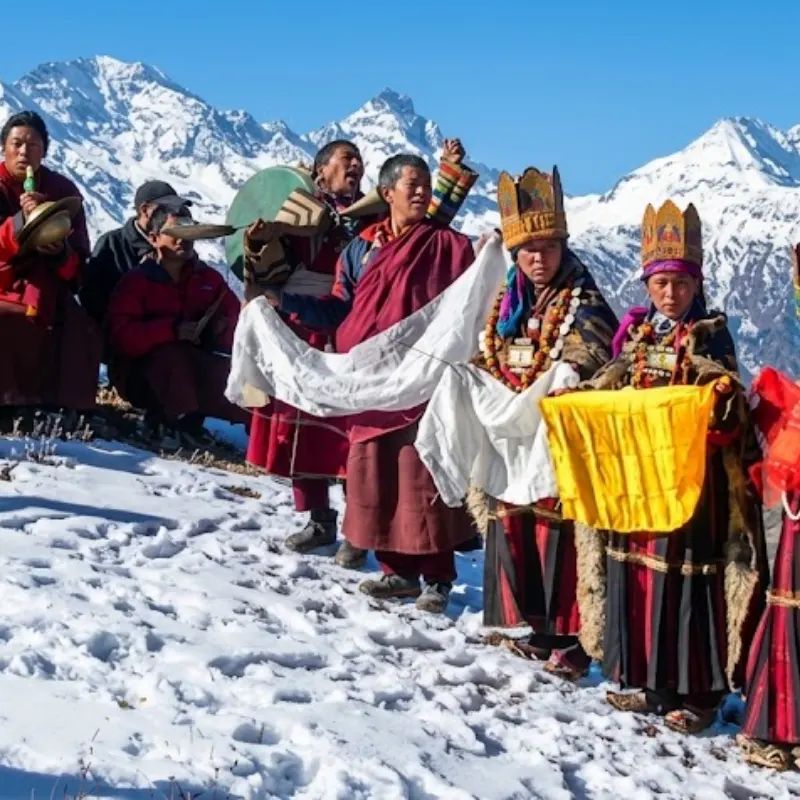
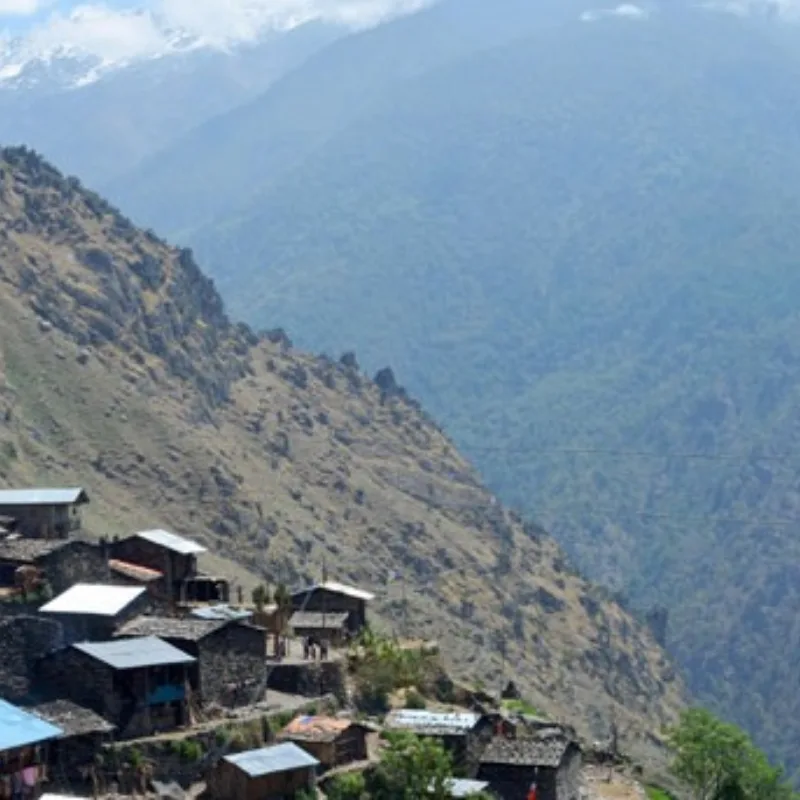
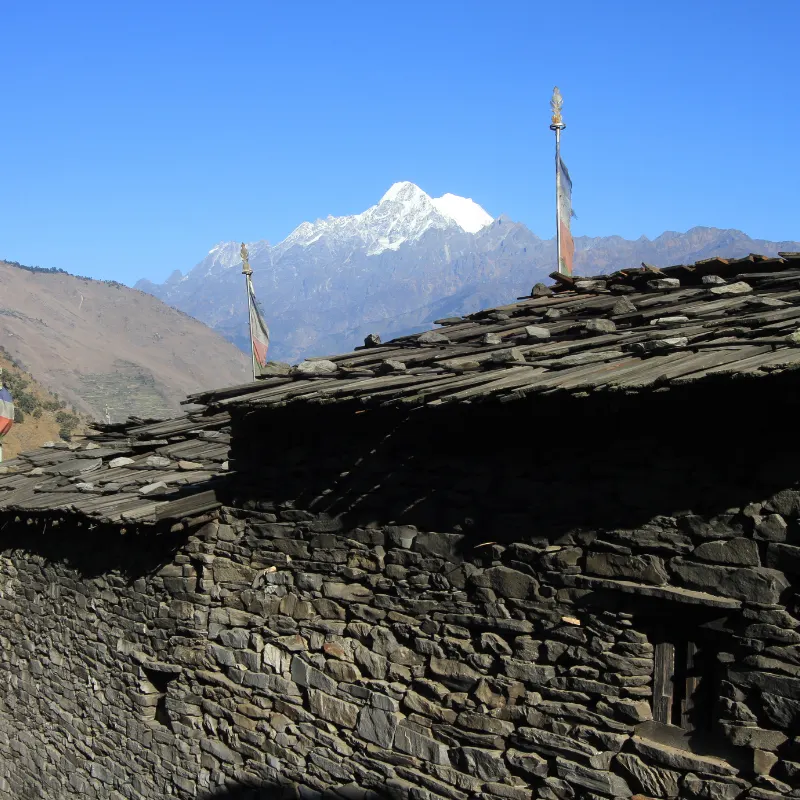
- Gatlang — 2,200 m / 7,217 ft: the first trekking village, a classic Tamang settlement of slate-roofed stone houses with a monastery and the sacred Parvati Kunda lake reached by a short after-hours walk.
- Nagthali — 2,607 m / 8,553 ft: the highest overnight stop, a small ridge-top community of prayer flags, chortens and a Buddha shrine where the clear, cold night sky is part of the experience.
- Thuman — 2,400 m / 7,874 ft: a Tibetan-influenced Tamang village with an old monastery, known for its warm hospitality, song and dance traditions, and beautiful downhill approaches through forest.
- Bridim and Dukuchu Monastery — ~2,345 m / 7,693 ft: a distinctive village with a steep, layered layout and an active monastery that is one of the route’s most authentic cultural stops.
- Rongga Bhanjyang — ~2,250 m / 7,382 ft: the pass climbed on Day 3 out of Syabrubesi, the first open viewpoint over the Ganesh Himal, Gosaikunda range and Goljung valley.
- Chilime and the Bhotekoshi River: a long suspension bridge, Chortens, mani walls and the Chilime Hydropower Project, one of the largest villages on the whole trail.
- Short, comfortable and flight-free: 4 trekking days of 4–5 hours, tea house/lodge accommodation every night, and private road transport from Kathmandu — which makes this among the shortest and simplest cultural treks in Nepal.
Short Tamang Heritage Trail Trek Overview
The Short Tamang Heritage Trail Trek is a 7-day cultural trek in Nepal’s Langtang region, a compact sampler of the longer Tamang Heritage Trail through the traditional stone villages of Gatlang, Nagthali, Thuman and Bridim, with a sunrise viewpoint at Taruche Viewpoint (3,135 m / 10,285 ft). It is graded moderate, reaches a maximum altitude of 3,135 m / 10,285 ft, and is built around the living Tamang Buddhist culture along the Nepal–China border, not around high passes or technical terrain.
The route starts in Kathmandu, transfers by private vehicle to the trailhead at Syabrubesi (1,550 m / 5,085 ft) across a 5–6 hour road journey, then strings together 4 days of walking through Tamang villages, sacred lakes, chortens, mani walls, rhododendron forests and the Bhotekoshi River corridor, before driving back to Kathmandu and closing with a farewell dinner. The trekking days run 4–5 hours each, which keeps the package gentle on the legs while still reaching a true Himalayan viewpoint.
With Nepal Lion Tours, the Short Tamang Heritage Trail Trek package starts from USD 565 per person. This includes a licensed English-speaking trekking guide, tea house/lodge accommodation, all meals (breakfast, lunch and dinner), private road transfers, Langtang National Park permits, a loaned down jacket, sleeping bag and duffel bag, and a complimentary welcome or farewell dinner. It is one of the most accessible cultural treks from Kathmandu precisely because it needs no flights and no restricted-area permits.
What Makes the Short Tamang Heritage Trail Trek Special?
The defining experience is the early morning walk to Taruche Viewpoint (3,135 m / 10,285 ft), the route’s high point on the ridge above Nagthali. From here, weather permitting, the view sweeps across the Ganesh Himal, Langtang Lirung, Langtang Ri, Langtang II, Gang Benchen and Kabang Ri, and far toward the Gosaikunda region and the snowy peaks of Tibet, including Shishapangma (8,027 m / 26,335 ft) on the clearest mornings.
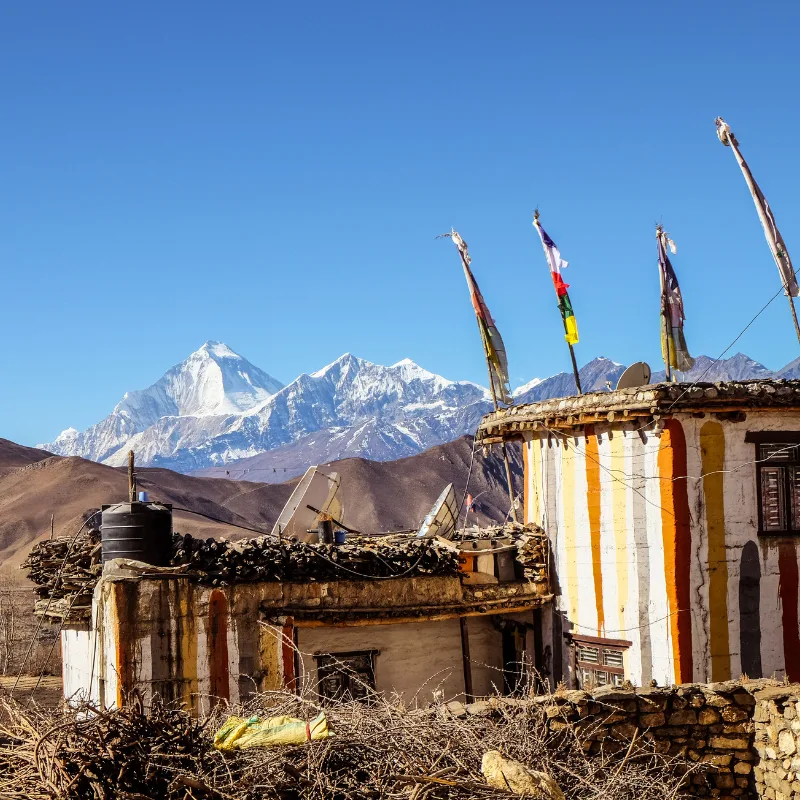
Beyond the viewpoints, the trek is a slow walk through Tamang daily life. Every night is spent in a family-run tea house or guesthouse — in Gatlang with its monastery and the sacred Parvati Kunda lake, in cold ridge-top Nagthali, in Tibetan-influenced Thuman, and in Bridim with its Dukuchu Monastery. Along the trail you pass prayer flags, mani walls, chortens and terraced farmland, and in the villages you can still meet the Tamang shamans and Buddhist lamas who anchor this culture.
The package also carries real history under the scenery: the trail routes through villages rebuilt after the 2015 earthquake, and Tatopani is remembered as the old hot-springs stop whose springs were damaged in that disaster. That resilience, plus the near-border setting, gives the trek a rare sense of place that the busier Everest and Annapurna trails rarely offer.
Why Choose the Short Tamang Heritage Trail Trek?
The biggest practical advantages are distance and duration. Syabrubesi is reachable by an ordinary road journey of about 5–6 hours from Kathmandu, with no domestic flight involved, so there is no weather-dependent flight leg to buffer. The trek itself runs 4–5 walking hours per day for just 4 trekking days, which makes it realistic for a one-week Nepal holiday that still includes an arrival and a departure day.
The maximum altitude of 3,135 m / 10,285 ft at the viewpoint is modest by Himalayan standards, with all overnight villages below 2,700 m / 8,858 ft, so acclimatization pressure is low and the route suits trekkers who want scenery and culture without the altitude stakes of Everest or Annapurna treks. It is also cheaper than most Himalayan treks, starts from USD 565 per person, and gives you Ganesh Himal and Langtang panoramas that the longer, busier trails often bury behind crowds.
Finally, the route is culturally unique. Few other Nepali treks place Tamang homestay warmth, Tibetan-border Buddhism and earthquake-recovery stories this close together in a single week — and that combination is exactly what the Tamang Heritage Trail was created to protect and share.
Who Is This 7-Day Cultural Trek Suitable For?
- First-time trekkers with reasonable fitness who want a genuine mountain trek without harsh altitude or long days.
- Travellers with limited time — a full Kathmandu-to-Kathmandu experience in one week, including arrival and departure days.
- Budget-conscious trekkers — from USD 565 per person, with everything on the trail included.
- Couples and honeymooners looking for quiet villages, homestay warmth and near-empty ridges.
- Families with older children — short walking days and family-run guesthouses make it very manageable.
- Culture-focused travellers — shamans, monasteries, mani walls and Buddhist border life every single day.
- Photographers — the Taruche sunrise, Terraced hillsides and traditional slate-roofed stone houses are ideal subjects.
- View-hunters — Ganesh Himal, Langtang Lirung and Langtang Ri from multiple viewpoints on every walking day.
No previous trekking experience is required, and the route involves no technical sections. The one stamina caveat is that the trail is consistently uphill and downhill on stone and dirt paths, so regular walking fitness and comfortable footwear matter more than mountaineering skill.
Guide’s Note — Nepal Lion Tours “The Tamang Heritage Trail is the quiet side of the Langtang region — in all our departures, trekkers are surprised by how few people we meet on the ridge above Nagthali compared with the sunrise crowds of other viewpoint treks. The 4–5 hour walking days mean most groups reach the tea house comfortably before dark.” — Nepal Lion Tours, Langtang Team
Short Tamang Heritage Trail Trek Quick Facts
Trek Fact | Details |
|---|---|
Trek Name | Short Tamang Heritage Trail Trek |
Duration | 7 days (8 itinerary days including arrival and departure; 4 trekking days) |
Region | Langtang, Rasuwa, Nepal |
Maximum Altitude | 3,135 m / 10,285 ft at Taruche Viewpoint |
Difficulty | Moderate |
Main Highlight | Taruche Viewpoint sunrise over Ganesh Himal and Langtang ranges |
High Overnight | 2,607 m / 8,553 ft at Nagthali |
Start / End | Kathmandu to Kathmandu |
Route | Syabrubesi – Gatlang – Nagthali – Thuman – Bridim – Syabrubesi |
Typical Walking | 4–5 hours per day |
Best Season | Autumn (Sep–Nov); Spring (Mar–May) |
Price From | USD 565 per person |
Accommodation | Tea houses and village guesthouses; hotel in Kathmandu |
Guide | Licensed English-speaking trekking guide |
Tamang Heritage Trail Route and Elevation
The Short Tamang Heritage Trail is a compact loop-with-spokes built around the Tamang Heritage Trail proper: it starts and ends at Kathmandu, uses a 5–6 hour private road transfer to and from Syabrubesi (1,550 m / 5,085 ft), and then walks the classic heritage villages — Gatlang, Nagthali, Thuman and Bridim — before returning down the Bhotekoshi River corridor to Syabrubesi. The elevation profile rises steadily from the river to a ridge high point of 3,135 m / 10,285 ft at the Taruche Viewpoint, then rolls back down to the trailhead without ever sleeping above 2,607 m / 8,553 ft.
Tamang Heritage Trail Route at a Glance
Day | Trek Route | Altitude | Highlights |
|---|---|---|---|
1 | Arrival in Kathmandu | 1,400 m / 4,593 ft | Airport transfer, briefing, welcome dinner |
2 | Kathmandu to Syabrubesi (drive) | 1,550 m / 5,085 ft | Dhunche, Langtang National Park checkpoint, Langtang Khola |
3 | Syabrubesi to Gatlang | 2,200 m / 7,217 ft | Rongga Bhanjyang, Goljung, Parvati Kunda option |
4 | Gatlang to Nagthali | 2,607 m / 8,553 ft | Thangbuchet, Chilime, Tatopani, Brimdang |
5 | Nagthali to Thuman | 3,135 m / 10,285 ft view | Taruche Viewpoint sunrise, descent to Thuman |
6 | Thuman to Syabrubesi | 2,345 m / 7,693 ft | Bridim, Dukuchu Monastery, Wangal, Bhotekoshi |
7 | Syabrubesi to Kathmandu (drive) | 1,400 m / 4,593 ft | Park checkpoint, farewell dinner |
8 | Final departure | 1,400 m / 4,593 ft | Airport transfer |
Tamang Heritage Trail Elevation Profile
The profile is gentle in structure but constant in motion. From Kathmandu (1,400 m / 4,593 ft) the road climbs to Dhunche and drops to Syabrubesi (1,550 m / 5,085 ft) at the Langtang Khola. The first walking day rises steeply to Rongga Bhanjyang (~2,250 m / 7,382 ft), eases through Goljung, and finishes in Gatlang (2,200 m / 7,217 ft) — a net climb of roughly 650 m / 2,133 ft in one go, the most sustained ascent of the trek.
Day 4 undulates down to the Bhotekoshi River, past Chilime and Tatopani, before a final climb to ridge-top Nagthali (2,607 m / 8,553 ft). Day 5 opens with the trek’s one true high-altitude push to Taruche Viewpoint (3,135 m / 10,285 ft) — a climb of roughly 500–600 m ahead of breakfast — then rewards the effort with a long forested descent to Thuman (2,400 m / 7,874 ft). Day 6 is mostly downhill toward Syabrubesi, dropping through Bridim and the Bhotekoshi gorge.
What this profile means physically: the ascent days are demanding because they are executed on stone steps and dirt switchbacks, not because of altitude. Because no night is spent above 2,607 m / 8,553 ft and the viewpoint day is only a morning excursion, acute mountain sickness risk is low on this route. Your trekking company will provide a map and elevation profile before departure, and your guide paces each day so the group reaches the tea house in daylight.
How to Get to the Short Tamang Heritage Trail Trek
Getting to the Short Tamang Heritage Trail is simple because everything happens by road from Kathmandu. There is no airport leg on this package — unlike Everest treks that depend on flights to Lukla — so the only transfer risk is normal Himalayan road traffic, and even that is a familiar, well-serviced route north through the Trishuli River valley toward the Tibetan border.
Kathmandu to Syabrubesi: Flight or Road?
The option is road — there is no practical scheduled flight that serves Syabrubesi. The trailhead is reached by private vehicle in about 5–6 hours (longer with roadworks or weather), and this transfer is included in the package.
Option | Approx. Travel Time | Best For |
|---|---|---|
Private vehicle (included) | 5–6 hours | Most travellers — flexible stops, direct to trailhead |
Local jeep/bus share | 6–8+ hours | Backpackers keeping costs minimal |
Flight | Not available | N/A — no airport at Syabrubesi |
The drive follows the Prithvi Highway north from Kathmandu, turns onto the road through Betrawati and Dhunche, and climbs winding, partly unpaved sections into the Langtang foothills before dropping to Syabrubesi on the Langtang Khola. On the way you pass countryside settlements, terraced farms, rivers, waterfalls and ridges, and the final approach runs through the Langtang National Park checkpoint. Because this is a private vehicle, the group can stop for photos, snacks and stretch breaks, and the whole transfer usually lands in Syabrubesi by early to mid afternoon.
Syabrubesi to the Trailhead
Syabrubesi itself is the trailhead — the trek begins the following morning directly from the village. There is no further road access needed for the walking days; the heritage trail leaves the settlement through terraced fields on foot. Staying in Syabrubesi the night before and after the trek means the group starts Day 3 well rested and finishes Day 6 with only a short walk back to the same lodges.
The only note for trekkers arriving by road is timing: dhunche checkpoint formalities and road conditions can add to the schedule, so the transfer should be treated as a full morning-and-afternoon affair, not a rushed hop. Your guide coordinates the private vehicle and the park permit checks for you.
Guide’s Note — Nepal Lion Tours “From our experience running Short Tamang Heritage Trail departures, the Kathmandu–Syabrubesi road section is one of the longest parts of the itinerary, and we recommend treating it as part of the adventure rather than just transport. We depart early, stop for a relaxed lunch in the Trishuli valley, and most groups are checked into Syabrubesi lodges by mid afternoon with plenty of daylight left.” — Nepal Lion Tours, Langtang Team
Returning to Kathmandu After the Trek
The return mirrors the approach: on Day 7 the group drives back from Syabrubesi to Kathmandu in about 5–6 hours, stopping at the Langtang National Park checkpoint where park officials may inspect luggage to confirm no protected natural materials are being taken out. You will be transferred to your hotel in Kathmandu, and in the evening the team hosts a farewell dinner to close the trek.
Because the route is self-contained in Nepal’s road network, returning travellers can connect onwards with a Kathmandu sightseeing day, a different trek, or a Chitwan / Pokhara extension, all arranged through the same local office.
A Practical Tip for International Travellers
Do not book international departure flights on the same night you arrive back in Kathmandu. The Kathmandu–Syabrubesi drive can stretch to 6–7 hours with traffic and road conditions, and Nepal’s international departures deserve a calm buffer. The package ends with Day 8’s airport transfer, so the safest plan is to keep at least one full Kathmandu night after the trek before flying home — that also leaves time for the farewell dinner and some souvenir shopping.
Short Tamang Heritage Trail Trek Difficulty, Fitness and Altitude
The Short Tamang Heritage Trail Trek is graded moderate, but moderate here does not mean flat — the trail is constant uphill and downhill on stone steps, dirt paths and farm tracks, with the two ascent days being genuinely tiring. There is nothing technically required, no ropes, no exposed ledges and no high passes, and with an average of 4–5 walking hours per day the workload is well within reach of an active beginner with a modest training base.
Where the Effort Actually Is?
The two demanding sections are the climb from Syabrubesi to Rongga Bhanjyang and Gatlang on Day 3 — a roughly 650 m / 2,133 ft net ascent on switchbacks — and the early hike from Nagthali up to Taruche Viewpoint (3,135 m / 10,285 ft) on Day 5, which combines a 500–600 m climb with a pre-dawn start and honest cold. After those, the descent days through Bridim and the Bhotekoshi gorge are scenic but knee-work-heavy, so comfortable, well-broken-in footwear is the single most important item in the packing list.
Every other day is a moderate walk of 3–5 hours through villages and forest, and tea houses along the way mean the group never carries more than a daypack for long stretches. The terrain mix — terraces, stone paths, forest trails, dirt roads and a suspension bridge — keeps the trail interesting without ever feeling exposed.
How to Prepare for the Tamang Heritage Trail
- Walk regularly for 30–60 minutes, 4–5 times per week, for 4–6 weeks before departure.
- Practicing hills and stairs — the Day 3 climb and Day 5 viewpoint push are the places that pay off the most.
- Build leg and core strength with squats, lunges and step-ups to protect your knees on the long descents.
- Take one longer weekend hike carrying a small loaded daypack to test boots, fit and stamina.
- Get used to early starts — the Taruche Viewpoint hike begins before breakfast and in darkness.
- Avoid last-minute heroics — a steady, consistent six-week base beats a frantic fortnight of overtraining.
How Difficult Is the Tamang Heritage Trail Compared with Longer Treks?
This trail is less difficult than the mainstream Langtang Valley Trek because it stays below 3,200 m / 10,499 ft, has shorter walking days and contains no pass crossing. By comparison, Everest base camp or Annapurna circuit itineraries add thousand-metre gains, passes above 4,500 m / 14,764 ft and weeks of consecutive long days. The trade-off is that the heritage trail is technically simple but endlessly up and down — so it asks for good walking fitness and strong preparation rather than high-altitude resilience.
If you handle a half-day of continuous uphill walking comfortably, you will handle this trek. If you are entirely new to day-hiking, a month of hill walking beforehand makes the difference between enjoying the viewpoints and grinding through them.
Guide’s Note — Nepal Lion Tours: “In our experience, most trekkers find Day 3 and the Day 5 viewpoint morning the two honest efforts, and everything else comfortably manageable. We pace the group with conversation-tempo walking, encourage early nights at Nagthali, and our guide carries oxygen and a first-aid kit as standard — but the fastest way to enjoy this trek is to arrive with baseline hill fitness rather than relying on the guide to tow you up the switchbacks.” — Nepal Lion Tours, Langtang Team
Altitude, Acclimatization and Safety
The route’s altitude is modest but real. The highest point is Taruche Viewpoint at 3,135 m / 10,285 ft, reached only as a morning excursion, and the highest overnight is Nagthali at 2,607 m / 8,553 ft. Because the trek never sleeps high and gains altitude gently over four days, acute mountain sickness is possible but unlikely, and the itinerary is naturally progressive.
Tamang Heritage Trail Altitude Profile
- Kathmandu — 1,400 m / 4,593 ft: arrival, briefing and welcome dinner.
- Syabrubesi — 1,550 m / 5,085 ft: trailhead on the Langtang Khola; night 1 of the trek.
- Rongga Bhanjyang — ~2,250 m / 7,382 ft: Day 3 pass, the first open Ganesh Himal viewpoint.
- Gatlang — 2,200 m / 7,217 ft: night 2, in the first Tamang village.
- Chilime / Tatopani — ~2,260 m / 7,415 ft: mid-day 4 villages beside the Bhotekoshi River.
- Nagthali — 2,607 m / 8,553 ft: night 3, the highest overnight of the trek.
- Taruche Viewpoint — 3,135 m / 10,285 ft: morning high point on Day 5; no night spent here.
- Thuman — 2,400 m / 7,874 ft: night 4, Tibetan-influenced Tamang village.
- Bridim — ~2,345 m / 7,693 ft: Day 6 stop at the Dukuchu Monastery village.
- Syabrubesi — 1,550 m / 5,085 ft: night 5, end of the walking route.
How the Body Adapts to Altitude
Above roughly 2,500 m / 8,202 ft, the body needs time to adapt to thinner air because oxygen pressure drops. On this trek the response is simple: ascend gradually, walk at a pace where you can still hold a conversation, drink plenty, eat regularly, and sleep early. Because the route gains altitude over four separate days and the single high excursion is a three-and-back morning hike, most trekkers adapt easily. If you feel any symptom beyond mild headache or tiredness, tell your guide immediately — the group is never more than a day’s walk from lower ground, and the jeep route back to Kathmandu is reachable by vehicle from Syabrubesi.
Symptoms of Altitude Sickness to Watch For
Mild symptoms (normal, worth monitoring): headache, loss of appetite, disturbed sleep, mild fatigue, slight breathlessness on steep ground.
More concerning symptoms (act immediately): vomiting, worsening headache at rest, confusion, breathlessness at rest, unsteady walking.
On this route the practical response is to stop ascending, rest, drink, and if symptoms persist, descend — your guide carries a first-aid kit, monitors the group, and will make the call to return toward Syabrubesi if needed.
How Nepal Lion Tours Supports Altitude Safety
- Licensed, English-speaking guide on every departure, carrying a first-aid kit.
- Progressive itinerary that never sleeps above 2,607 m / 8,553 ft.
- Short walking days — the group arrives in daylight with energy to spare.
- Early communication culture — trekkers are asked to report any symptom, no matter how small.
- Travel insurance strongly recommended to cover medical treatment and road evacuation — reviewed with you before the trek.
Best Time to Trek the Tamang Heritage Trail
The best time to trek the Tamang Heritage Trail is autumn (September to November) for the clearest, driest weather, with spring (March to May) a close second when rhododendrons bloom and the ridges stay warm. Because the route is road-accessible and the walking is low-altitude, the trail is trekkable outside these windows too — winter brings cold clear mornings and snow dust on the viewpoint, while the monsoon keeps the views hidden under heavy clouds.
Season | Months | Weather & Trail Conditions | Overall |
|---|---|---|---|
Autumn | Sep–Nov | Clear, dry days; warm sun, cool nights | Best overall |
Spring | Mar–May | Reliable weather; rhododendrons in bloom | Highly recommended |
Winter | Dec–Feb | Cold, crisp; frost and occasional snow above 2,600 m | Good with preparation |
Monsoon | Jun–Aug | Rain, cloud, leeches, slippery stone paths | Less suitable |
Autumn — September to November
Autumn is the premier season for the Tamang Heritage Trail. The monsoon has washed the dust from the air, days are long and dry, and the Taruche Viewpoint frequently opens onto the full sweep of Ganesh Himal, Langtang Lirung and the Tibetan peaks with textbook clarity. Daytime temperatures sit pleasantly warm for walking, while Nagthali nights drop to near freezing, which is comfortable with a proper sleeping bag — one of the items Nepal Lion Tours loans you. Trails are dry and firm, tea houses are welcoming, and it is the most reliable season for the viewpoint sunrise.
Spring — March to May
Spring is the highly recommended alternative. March brings the first warm, stable weeks after winter; April and early May flood the hillsides with rhododendron bloom along the forest sections below Thuman and Bridim, and the higher ridges still carry snow dressing that frames the mountain views beautifully. Daytime warmth increases through the season, and by late May mist can begin to creep back in ahead of the monsoon. It is an excellent season for photographers and for trekkers who prefer greener, flower-filled trails.
Winter — December to February
Winter trekkers trade warmth for solitude and clarity. Days are short, mornings at Nagthali and Taruche are frosty (temperatures can drop below freezing), and light snow can dust the ridge-top trails. Long-range views are often superb on clear days because the air is so dry, and the villages are at their quietest. It suits experienced hill-walkers with proper cold-weather layers; the lodges keep their dining rooms warm, but insulated sleepwear and the loaned sleeping bag matter here.
Monsoon — June to August
Monsoon is the least favourable season. Daily rain, heavy cloud and leeches make the stone paths slippery and the viewpoints frequently obscured. Because the trail sits in a steep valley, the monsoon clouds tend to sit low over Nagthali and the passes. If your dates are fixed in this window, early June or early September are the compromise edges, and it is worth confirming trail conditions with the Nepal Lion Tours office before you book.
Which Season Should You Choose?
Choose autumn if clear views and dry trails are the priority; choose spring if you want rhododendron blooms and warmer days; choose winter for solitude and crisp panoramas; and avoid the core monsoon months unless dates force the issue. Weather in the Himalayas can change quickly even in the best season, so check the forecast with your guide close to departure and pack expectations for one cool, cloudy day regardless.
Guide’s Note — Nepal Lion Tours “On clear autumn mornings the view from Taruche Viewpoint typically opens over the Ganesh Himal first, then the Langtang Lirung wall as the sun lifts — and because we reach the viewpoint before breakfast, our groups almost always have the ridge to themselves. It is a genuinely special morning and the moment most trekkers remember for years.” — Nepal Lion Tours, Langtang Team
Tamang Heritage Trail Permits and Regulations
The Short Tamang Heritage Trail runs entirely inside Langtang National Park, so trekkers need two standard documents: a Langtang National Park Entry Permit and a TIMS (Trekkers’ Information Management System) card. The route is not a restricted area, so no Restricted Area Permit is required, and both required documents are arranged in advance by Nepal Lion Tours as part of the booking.
Tamang Heritage Trail Permits at a Glance
Requirement | Who Needs It? | Who Arranges It? |
|---|---|---|
Langtang National Park Entry Permit | All foreign, SAARC and Nepali trekkers entering the park | Nepal Lion Tours |
TIMS Card (Trekkers’ Information Management System) | Trekkers on the Langtang routes | Nepal Lion Tours |
Licensed guide | Required for foreign trekkers (mandatory since April 2023) | Nepal Lion Tours |
Langtang National Park Entry Permit
The Langtang National Park Entry Permit is the basic admission to the park through which the entire trail runs. It is issued by the Department of National Parks and Wildlife Conservation, and the standard fee is NPR 3,000 for foreign nationals, NPR 1,500 for SAARC nationals and NPR 100 for Nepali citizens, with children under 10 generally free. The same permit covers other Langtang region routes, including Gosaikunda and Helambu, and it can be obtained from the Nepal Tourism Board office in Kathmandu or at the park gate — Nepal Lion Tours arranges it before you leave the city, so the Dhunche / park checkpoints are a formality rather than a queue.
TIMS Card (Trekkers’ Information Management System)
The TIMS card is Nepal’s trekker registration system, logging your name, nationality, route, emergency contacts and insurance details against a central record used by local authorities and rescue coordination. On the Langtang routes TIMS is still required (unlike Everest, where a municipality fee replaced it). The card costs NPR 1,000 via a registered agency or NPR 2,000 when arranged independently — through Nepal Lion Tours it is processed in Kathmandu as part of the group booking, and the digital e-TIMS system (QR-coded permits) used since 2026 makes checkpoint verification fast.
Do You Need a Restricted-Area Permit?
No — the standard Short Tamang Heritage Trail route is not in a restricted zone. The villages you walk through — Syabrubesi, Gatlang, Chilime, Tatopani, Nagthali, Thuman and Bridim — fall inside Langtang National Park rather than a restricted border area, so no special Restricted Area Permit or government-issued trekking pass is required. Rules can change and border-adjacent routes can be reviewed by the authorities, so the Nepal Lion Tours office confirms current requirements at booking.
Who Arranges the Permits?
Nepal Lion Tours arranges both permits as part of your pre-trek preparation, which is one of the quiet conveniences of booking a package. You simply carry your original passport on the trail — it is requested at the park checkpoint — and keep your permit and TIMS card on you while walking, exactly as you would be asked to in any national park. Park fees and regulations are set by the government and can be revised, so the exact figures above are confirmed with you at booking before departure.
Food and Accommodation on the Tamang Heritage Trail
On the Tamang Heritage Trail, food and lodging are a highlight in their own right: every night is spent in a family-run tea house or village guesthouse, and meals are the classic Nepali mountain fare prepared by the hosting Tamang families. The package covers breakfast, lunch and dinner plus a cup of tea or coffee during the trip, with a hotel in Kathmandu on the first and final nights, and your guide coordinates every stop.
Tea House Accommodation on the Tamang Heritage Trail
- Twin-sharing guesthouse rooms with beds, blankets and simple furniture; private rooms are not guaranteed in every village.
- Shared bathrooms in most villages; attached bathrooms are the exception rather than the rule.
- Hot showers are available at some lodges for a fee; water heating is often solar, so ask your guide about timing.
- Charging points in dining rooms; carry a power bank because sockets are limited.
- Heated dining rooms in every village lodge — the social and practical heart of each tea house.
- Wi-Fi is limited to a few guesthouses close to district roads; expect to be offline during the walking days.
- Bedding provided, but the district gets cold at night — the loaned sleeping bag from Nepal Lion Tours makes the biggest comfort difference at Nagthali (2,607 m / 8,553 ft).
Village lodges range from the well-established guesthouses of Syabrubesi and Thuman to the simpler, characterful homestays of Nagthali and Bridim, so facilities get notably more basic as the trail climbs. All are locally operated, family-run and genuinely welcoming — which is the point of the heritage trail.
What Food Is Available on the Trail?
Tea houses serve a filling, safe and vegetarian-friendly mountain menu, almost always cooked to order. Typically available: dal bhat (rice and lentil soup — the trekking staple), momos (dumplings), noodle soups, fried rice, chow mein, pasta, soup, potatoes, eggs, porridge, pancakes, chapati and toast. Dal bhat is the local favourite because it is hearty, re-energising and usually served with unlimited refills — the Tamang families who run the lodges cook it beautifully. Vegetarian options are available everywhere; if you need vegan, gluten-free or allergy-sensitive meals, tell Nepal Lion Tours in advance so each tea house can be prepared.
What Food and Accommodation Are Included?
Included in the Trek Package | Usually Paid Separately |
|---|---|
All meals during the trek (breakfast, lunch, dinner) | Hot shower fees at some lodges |
A cup of tea or coffee with meals | Extra drinks, snacks, bottled water |
Tea house/lodge accommodation in shared twin rooms | Private room supplements |
Hotel in Kathmandu on Day 1 and Day 7 | Kathmandu meals outside the welcome/farewell dinners |
Welcome dinner and farewell dinner | Laundry, phone calls, shopping |
Down jacket, sleeping bag, duffel bag (loaned) | Tips for guide and porters |
The full inclusion list — including permit fees, private transfers, guide support and gear — is confirmed in writing at booking so there are no surprises on the trail.
Drinking Water on the Trek
Do not assume tap water in the villages is safe to drink. The standard options are boiled water (available at most tea houses, often for a small fee), bottled water, or treated water using purification tablets or a filter bottle. Plan for around 2 litres per person per day when walking, drink regularly rather than waiting for thirst, and choose a reusable bottle to cut plastic waste in a national park. If your filter or tablets run out, tea houses sell boiled water and bottles most days.
Staying Comfortable at Tea Houses
- Carry a personal water bottle (2L capacity is a good target) and refill at each stop.
- Use the loaned sleeping bag inside the provided bedding — the overnight low point is Nagthali’s cold ridge.
- Bring a power bank since dining-room sockets are shared.
- Carry enough cash in Nepali rupees for showers, extra drinks and Wi-Fi where charged.
- Pack quick-dry trekking clothes, not cottons, to stay comfortable in cold evenings.
- Tell your guide about any dietary needs early so tea house kitchens are ready.
Why Book with Nepal Lion Tours?
Nepal Lion Tours operates the Short Tamang Heritage Trail as a complete, guided package, and the difference from arranging it solo is in the details: permits pre-arranged, transfers handled, gear loaned, and a local guide who knows the village families and the checkpoint routine. Here is what a booking actually includes beyond the obvious.
- Local, licensed English-speaking guides.
Every departure is led by a government-licensed guide who knows the Tamang villages by name and can translate culture, history and practical detail in real time. Chinese, Korean and Hindi-speaking guides are also available on request.
- A registered trekking company you can verify.
Nepal Lion Tours is a legally registered trekking company based in Kathmandu, and company and licence details are provided to any traveller on request.
- Private departures from two trekkers.
The trek runs on your own dates, at your own pace, with a private vehicle and a private guide — no waiting to fill a group.
- A heritage route with genuine local depth. The itinerary is built around the villages that define the Tamang Heritage Trail — Gatlang, Nagthali, Thuman and Bridim — rather than a busier valley route, which is the reason the trail stays quiet.
- Private road transfers and straightforward logistics.
The Kathmandu–Syabrubesi road journey is a private, included transfer, with checkpoint and permit formalities handled by the team.
- Budget-friendly pricing without cutting core experiences.
From USD 565 per person, the package still includes full board, permits, transfers, guide and loaned gear.
- A local team you can contact before and during your trek.
From your first question to your airport transfer, the same Nepal Lion Tours team in Kathmandu stays reachable — including during the trek itself.
From our experience, trekkers who book the guided package consistently mention two things they did not expect: how smoothly the border checkpoint formalities run when someone else handles the permits, and how much warmer the trail becomes when your guide is welcomed into each family-run lodge. Book your preferred date through the booking form or WhatsApp at +977-9851039020.
Book the Short Tamang Heritage Trail Trek
Something special happens on a Tamang Heritage Trail departure: the mountains are close, the villages are warm, and the whole trek fits inside a single week. It is the kind of itinerary that works as a first Himalayan trek, a cultural deep-dive, or a short window in a longer Nepal holiday — and it is ready to book today.
Trek at a Glance
- Duration: 7 days (Day 1 arrival to Day 8 departure; 4 trekking days)
- Price: From USD 565 per person (group discounts to USD 480 for 10+)
- Difficulty: Moderate
- Maximum Altitude: 3,135 m / 10,285 ft at Taruche Viewpoint
- Accommodation: Tea houses and village guesthouses; hotel in Kathmandu
- Meals: Full board on the trail, plus welcome and farewell dinners
- Permits & Registration: Langtang National Park Permit and TIMS arranged by NLT
- Transportation: Private vehicle, Kathmandu to Syabrubesi and return
- Guide: Licensed English-speaking trekking guide
- Cancellation: Free cancellation up to 14 days before departure (subject to booking terms)
Ready to Start Your Langtang Adventure?
Secure your dates through the booking form or message the Nepal Lion Tours team directly on WhatsApp at +977-9851039020. Whether you’re travelling solo, as a couple, with friends, or with family, the team will confirm permits, gear and transfers for your chosen date and prepare you for a smooth and enjoyable trek. Taruche Viewpoint is waiting — choose your dates and start planning your Tamang Heritage Trail adventure today.
Related Langtang Treks
The Short Tamang Heritage Trail Trek sits among a family of Langtang region packages from Nepal Lion Tours, ranging from quick valley-vista treks to full round routes that combine heritage, high viewpoints and sacred lakes. If your dates allow a few extra days, these are the natural next steps.
Trek | Duration | Difficulty | Max Altitude | Best For |
|---|---|---|---|---|
Langtang Valley View Trekking | Short | Easy–Moderate | ~3,870 m (Kyanjin Gompa) | A fast look at the Langtang Valley |
Langtang and Tserko Ri View Treks | 8 days | Moderate | ~4,985 m (Tserko Ri) | High viewpoint panoramas |
Langtang Valley Trekking | 11 days | Moderate | ~3,870 m (Kyanjin Ri 4,773 m option) | The classic Langtang Valley journey |
Gosaikunda Trekking | 7 days | Moderate | ~4,380 m (Gosaikunda Lake) | Sacred lakes and pilgrimage trails |
Joint Treks of Langtang and Poon Hill | 12 days | Moderate | 3,210 m (Poon Hill) + Langtang | Two regions in one tour |
If you want to combine regions, the Short Tamang Heritage Trail pairs naturally with a Chitwan jungle safari, an Annapurna foothills trek, or a Kathmandu cultural day, all of which Nepal Lion Tours arranges on the same itinerary. Alternatively, the 14-day Langtang Tamang Heritage Trail Trekking and the 16-day Langtang Gosainkunda and Helambu Round Trek extend the same cultural route into a fuller Himalayan circuit.
Trip Essentials
Packing advice, required equipment & gear recommendations
Essential
Tamang Heritage Trail Packing List
Packing for the Short Tamang Heritage Trail is straightforward because this is a tea house trek, not a camping expedition — you never need a tent or a stove, and on most days the daypack carries everything you need while the duffel bag travels with your group. Nepal Lion Tours provides the down jacket, an all-season sleeping bag, a duffel bag and a trekking map, so the list below covers what you should bring yourself.
Hiking Gear
- Comfortable, broken-in trekking boots with good ankle support and grip — the single most valuable item.
- Light trekking shoes or sandals for evenings and river crossings.
- Trekking poles (one or two) to protect knees on the long descents.
- A 25–35 litre daypack for water, layers, snacks and camera.
- Headlamp or torch with spare batteries — essential for the pre-dawn Taruche walk.
- Water bottles or a hydration bladder (2 litre capacity, or carry purification tablets).
- A mobile SIM — the Nepal Lion Tours package includes a working SIM card and map.
Clothing: Use Layers Rather Than Bulk
Base layers: moisture-wicking tops and bottoms that dry quickly; avoid cotton next to the skin.
Mid-layers: a fleece or wool sweater for morning and evening warmth.
Outer layers: a lightweight, packable rain jacket and windproof shell — the mountains can turn wet quickly.
Trekking clothes: 2–3 sets of quick-dry trousers and shirts, plus a hat for sun.
Headwear and gloves: a warm wool or fleece hat, light sun hat, and a pair of gloves for cold Nagthali mornings.
Sleeping and Evening Comfort
- The loaned all-season sleeping bag goes inside the tea house bedding.
- A sleeping-bag liner for hygiene and extra warmth if you prefer.
- Warm sleeping socks and a fleece layer for after-walk relaxation.
- A small cushion or washbag to keep toiletries organised.
Toiletries and Personal Health Items
- Toilet paper, hand sanitiser and a small personal first-aid kit.
- Sunscreen and lip balm with SPF — the sun is strong even in cool weather.
- Insect repellent (less critical than the monsoon treks, still worth having).
- Personal medications plus a small pharmacy: painkillers, rehydration salts, blister plasters.
- Wet wipes or a travel towel for guesthouse bathrooms.
- Biodegradable soap and toiletries.
- Vaseline or anti-chafe balm for long walking days.
- Lozenges for dry mountain air.
- Prescription glasses/contact supplies, with a spare set.
- Earplugs and an eye mask for shared-room nights.
- A small washbag that packs flat.
- Travel insurance documents and emergency contact numbers on paper.
Electronics
- A power bank (10,000–20,000 mAh) — dining-room sockets are few and shared.
- Universal adapter and charging cables.
- Camera or phone with spare memory card and batteries.
- Offline maps loaded before departure, since village Wi-Fi is limited.
Documents and Money
- Original passport — required at the Langtang National Park checkpoint.
- Permit and TIMS card carried with you while walking.
- Cash in Nepali rupees for showers, drinks, Wi-Fi and tips (tea houses rarely take cards).
- A credit/debit card as backup for Kathmandu hotels and restaurants.
- Printed booking and contact details for the Nepal Lion Tours office.
How Much Should You Pack?
Less is more. Target 8–12 kg / 18–26 lb in the main duffel and keep the daypack under 5 kg / 11 lb, because on combined driving and walking days your shoulders will thank you. Put your water, layers, snacks and camera in the daypack, and keep the duffel for sleep clothes and evening layers. If you want extra carrying help, Nepal Lion Tours can arrange a porter as an optional add-on for a small extra charge — worth considering for Nagthali morning when the pre-dawn climb is easiest with a light load.
What to Know Before Booking
A few practical notes make the difference between a smooth heritage trek and a frustrating one. Read these before you confirm your Short Tamang Heritage Trail Trek dates.
Accommodation and Facilities
Trekking nights are in family-run tea houses and guesthouses with twin-sharing rooms; Kathmandu nights are in hotels. Facilities get simpler as the trail climbs — expect shared bathrooms at Nagthali and Bridim, solar-heated water at many lodges, and limited Wi-Fi and sockets in the villages. The loaned sleeping bag and down jacket cover the cold that this simplicity brings, and your guide manages expectations at every check-in.
Food and Dietary Requirements
All trail meals are cooked to order and vegetarian-friendly; vegan and gluten-free are achievable with advance notice. Tell Nepal Lion Tours about any allergy or restriction when booking so the village kitchens can prepare. Do not expect a menu of options at every stop — tea house cooking follows local ingredients — but dal bhat, momos and noodles are staples everywhere.
Altitude, Health and Insurance
The trek is low-risk for altitude because it never sleeps above 2,607 m / 8,553 ft, but the Taruche Viewpoint climb to 3,135 m / 10,285 ft is real. Travel insurance is strongly recommended and must cover trekking in Nepal, medical treatment and road evacuation; check altitude limits and exclusions, and bring any personal medications in your daypack.
Money and Tipping
Carry cash in Nepali rupees for showers, drinks, bottled water, Wi-Fi where charged and porter/guide tips. Budget roughly a few thousand NPR per person for the whole trek. Cards work in Kathmandu but are rarely accepted in the trail villages, so plan cash first and top up in town before driving north.
Culture and Responsible Trekking
- Respect the chortens, mani walls and prayer flags — always pass them on the left and never climb on them.
- Ask before photographing villagers, monks or ceremonies; a small offering or a purchase from their tea house is appreciated.
- Dress modestly in villages and cover up at monasteries and the Dukuchu Monastery.
- Support family-run lodges with food and drink rather than carrying all your supplies.
- Carry out what you carry in — the trail sits inside a national park.
- Be patient and warm — hospitality is the Tamang Heritage Trail’s real treasure, and it flows both ways.
Route Options
The core itinerary can be adjusted to taste: adding a rest day in Gatlang with a Parvati Kunda excursion, lingering at the Nagthali ridge, or extending into the full Langtang Valley (Kyanjin Gompa) are all common modifications. The 14-day Tamang Heritage Trail Trekking, the 11-day Langtang Valley Trekking and the 16-day Langtang Gosainkunda and Helambu Round Trek are the natural longer sisters of this route, and Nepal Lion Tours builds any of them from the same base.
Read Before You Book
Permits, terms, medical considerations & advisory guidelines
Advisory
Booking and Before You Arrive
- Book early for the autumn high season — tea house space in Nagthali is limited.
- Provide your flight and arrival details so the airport pickup is seamless.
- Confirm permit fees and current regulations with the office at booking.
- Understand that wildlife, weather and trail conditions vary — days can be beautiful and plain.
- Share dietary needs and any medical conditions with your guide before departure.
- Pack for one cold morning regardless of season.
- Keep your passport handy for checkpoints.
A Few Final Tips
Start each walking day well hydrated and well fed, walk at your guide’s pace, and keep a power bank and headlamp ready for the pre-dawn viewpoint climb. If you felt unsure about fitness, remember the evenings are as much the reward as the summits — the tea house dinners and village conversations are the real heart of the Tamang Heritage Trail.
Day-by-Day Itinerary
Explore each day's route, trekking elevation, and activities
Upon your arrival at Tribhuvan International Airport, our representative will welcome you and transfer you to your hotel in Kathmandu. After check-in and some time to rest, you will receive a detailed briefing about the Short Tamang Heritage Trail Trek.
During the briefing, your trekking team will explain the route, important trekking guidelines, and preparation requirements. You will also have time to clarify any questions and purchase any last-minute items needed for the journey. In the evening, enjoy a welcome dinner as an introduction to Nepalese hospitality.
We begin our journey early in the morning with a scenic drive from Kathmandu toward Syabrubesi. Following the Prithvi Highway initially, the route gradually turns toward the Langtang region, passing through countryside settlements, forests, terraced farmland, rivers, waterfalls, ridges, and picturesque mountain landscapes.
The road consists of both paved and rough sections, making the journey adventurous as we gradually approach Syabrubesi. Along the way, we pass through Dhunche, one of the major settlements in the Langtang region.
Before reaching Syabrubesi, we stop at the Langtang National Park checkpoint, where officials verify trekking documents and provide information about park regulations. The required Langtang National Park Permit and TIMS Card will be arranged in advance by our team.
Eventually, we arrive at Syabrubesi, situated along the Langtang Khola, where we spend the night.
After breakfast, we start our first day of trekking toward the traditional Tamang village of Gatlang. The trail initially climbs steeply as we make our way toward Rongga Bhanjyang at around 2,250m.
From the ridge, the route descends toward Goljung Village, where we can take a short rest and observe the surrounding rural lifestyle. We then continue along a gradually ascending trail toward Gatlang.
Gatlang is a beautiful settlement predominantly inhabited by the Tamang community and is well known for its traditional houses and cultural heritage. In the afternoon or evening, there is an opportunity to visit Parvati Kunda and an old monastery.
The surrounding landscape also provides beautiful views of the Ganesh Himal, Gosaikunda, and Langtang mountain ranges.
Today takes us through several culturally significant settlements along the Tamang Heritage Trail, including Thangbuchet, Chilime, Gonggang, Tatopani, and Brimdang.
After breakfast, we walk through peaceful woodland toward Chilime, passing Thangbuchet and following sections of the Bhotekoshi River. Chilime is one of the largest villages along the Tamang Heritage Trail and is also known for its hydropower project. The village spreads across the hillside with its distinctive traditional character.
We then cross a long suspension bridge before climbing through terraced farmland toward Gonggang. Along the trail, you will encounter Buddhist chortens, prayer flags, mani walls, and other cultural features.
Our route continues toward Tatopani, whose name means “hot water” in Nepali. Although the area was historically famous for its natural hot springs, the springs were affected by the 2015 earthquake. Nevertheless, the village remains an important cultural stop with warm local hospitality.
From Tatopani, we continue through forests and a mixture of uphill and downhill sections before reaching Brimdang. We then climb toward Nagthali, enjoying views across the surrounding valleys and Tamang settlements.
Upon reaching Nagthali, prayer flags, chortens, and a Buddha shrine welcome us. Due to its elevation, the evening temperature can be quite cold.
We begin the morning with an early hike toward Taruche Viewpoint, also known as Nagthali Viewpoint. Located close to the Nepal–China border, this elevated viewpoint provides expansive views across the Himalayan landscape and toward parts of the Tibetan region.
From the viewpoint, you can admire the Ganesh Himal and Langtang ranges, along with numerous snow-covered peaks. Depending on weather and visibility, mountains such as Kabang Ri, Gang Benchen, Langtang Ri, Langtang Lirung, and Langtang II can be seen from the area. The Gosaikunda region is also visible from this viewpoint.
After spending time enjoying the mountain panorama and taking photographs, we continue toward Thuman, another traditional Tamang settlement.
Thuman is characterized by traditional houses, Buddhist prayer flags, and an old monastery. The village provides an excellent opportunity to experience the local Tamang lifestyle, culture, and hospitality.
After breakfast, we begin our final trekking day toward Syabrubesi. The trail passes through beautiful rhododendron forests, open meadows, and traditional Tamang settlements.
We descend from Thuman toward the Bhotekoshi River and continue to Bridim, a culturally rich Tamang village in the Langtang region. The village has a distinctive layout and offers another opportunity to experience traditional local life.
While in Bridim, you can visit Dukuchu Monastery before continuing through forested trails toward Wangal. From there, the route gradually leads back to Syabrubesi.
As we approach the end of the trek, enjoy the surrounding views of the Ganesh Himal and Langtang ranges before arriving at Syabrubesi for an overnight stay.
After breakfast, we leave Syabrubesi and retrace our route toward Kathmandu. The drive takes us through the scenic hills and rural landscapes of the Langtang region before reconnecting with the main highway.
At the Langtang National Park checkpoint, officials may inspect luggage and verify that no protected natural materials are being taken out of the national park.
We continue our drive through the countryside and eventually arrive in Kathmandu, where you will be transferred to your hotel.
In the evening, our team will organize a farewell dinner to celebrate the successful completion of your Short Tamang Heritage Trail Trek and share the memories of your Himalayan adventure.
Your Short Tamang Heritage Trail adventure comes to an end today. According to your flight schedule, our representative will transfer you to Tribhuvan International Airport for your onward journey.
We hope you return home with wonderful memories of the Tamang villages, Himalayan scenery, Buddhist heritage, and warm hospitality experienced during the trek.
Want to customize this itinerary?
Tailor duration, lodges, acclimatization days, or add private helicopter flights.
Inclusions & Exclusions
Everything that is covered and what you'll need to budget separately
What is Included
Fully covered in your package price
- Airport pickup and drop services on a private vehicle
- Transportation from Kathmandu to Lukla and back to Kathmandu (by flight)
- Food (Breakfast, Lunch, Dinner and a cup of coffee or tea) and accommodations during the trip in hotels and guesthouses with family environment
- One licensed English-speaking trekking guide (Chinese, Korean, Hindi speaking guides are also available)
- Transportation, food, accommodation and insurance of guide during the trip
- Down jacket, all-season sleeping bag, duffel bag (to be returned after completion of the trip)
- First Aid Medical Kit (Carried by the guide)
- All the required permits and paperworks
- Welcome or farewell dinner in Kathmandu at a cultural restaurant (complimentary)
- Mobile SIM Card (works nationwide) and a map of the trekking region
Optional Addons
- Porter extra charge
What is Excluded
Personal expenses & optional extras
- International airfare
- Visa charges
- Your travel and medical insurance
- Personal expenses such as shopping, bar bills, hot shower, telephone, laundry etc.
- Food and accommodation in Kathmandu (except mentioned)
- Other services that are not mentioned
- Tips for guides and porters
Our Customer Reviews
Authentic experiences and feedback from our travelers
Write a Review
Share your adventure experience with other travelers
Thank You!
Your review has been submitted and is awaiting approval.
Please Wait
You've submitted several reviews recently. Please wait a few minutes before trying again.
Nora Jansen
The jeep days covered a lot of ground and got us to places we would not have reached otherwise. Gatlang gave us the best story of the trip. I had low expectations for Kathmandu. After check and ended up loving it. Breakfasts were basic but filling, and the tea was always hot. The trip reminded me that discomfort is often part of the best memories. There was enough silence in the days to actually think, which is rare for me. The architecture near Kathmandu. After check was more interesting than I expected. The roads were rough in places, but our driver knew them well. Having a fixed plan made the trip feel relaxed rather than rigid. Mornings were cold, but the afternoons warmed up quickly. It gave me exactly the pause I needed.
Valerie Van Leeuwen
We travelled with our two kids, so I was a little worried about the pace. Thuman ended up being the part we talked about most afterwards. The morning we spent at Tribhuvan International Airport was calm and unhurried, which was exactly what we needed. The information before the trip was clear, and the packing list was accurate. The clouds cleared at exactly the right moment near Tribhuvan International Airport. The children loved the guide, and he was great with them. I came home with a longer list of things I want to do, not a shorter one. A practical choice that still felt like an adventure.
Noah Holm
We were not sure about spending so long in a vehicle, but the scenery kept it interesting. For me, Chilime and the Bhotekoshi River was the standout. We reached Gatlang earlier than planned, which gave us time to sit and take it in. The simple routine of walk, eat, sleep, repeat was exactly what I needed. A trip to remember.
Stella Visser
A jeep trip sounded a bit lazy to me at first, but it opened up a lot of country. We had a lot of fun with Rongga Bhanjyang, more than the itinerary suggested. There was a small viewpoint just past Taruche Viewpoint that was even better than the main stop. We stopped often enough that the long drives never felt endless. No regrets, and that is not something I say often.
Frequently Asked Questions
Essential information on preparation, route specifics, safety standards, and logistical details.