Lumbini Spiritual Tour
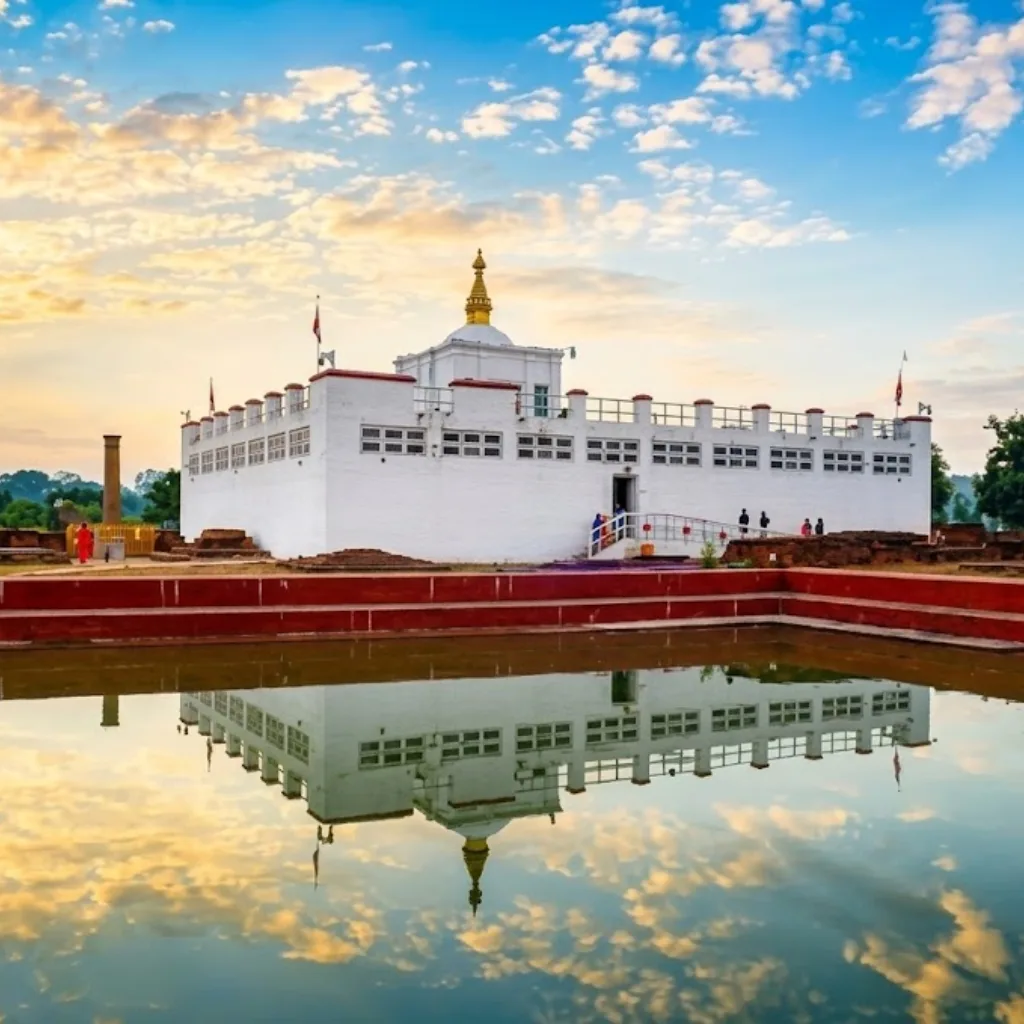

Tour Highlights
This is Nepal’s lowland pilgrimage: a bus journey into the farm-flat Terai, a full day inside the Buddha’s birthplace and its international monastery park, and a farewell evening of culture. The highlights run in this order:
- Maya Devi Temple — 150 m / 492 ft: the sanctum holding the marker stone of the Buddha’s traditional birth site, one of the holiest places in the world.
- The Ashoka Pillar — 150 m / 492 ft: Emperor Ashoka’s inscribed sandstone column of 249 BC, one of the oldest dated monuments in South Asia.
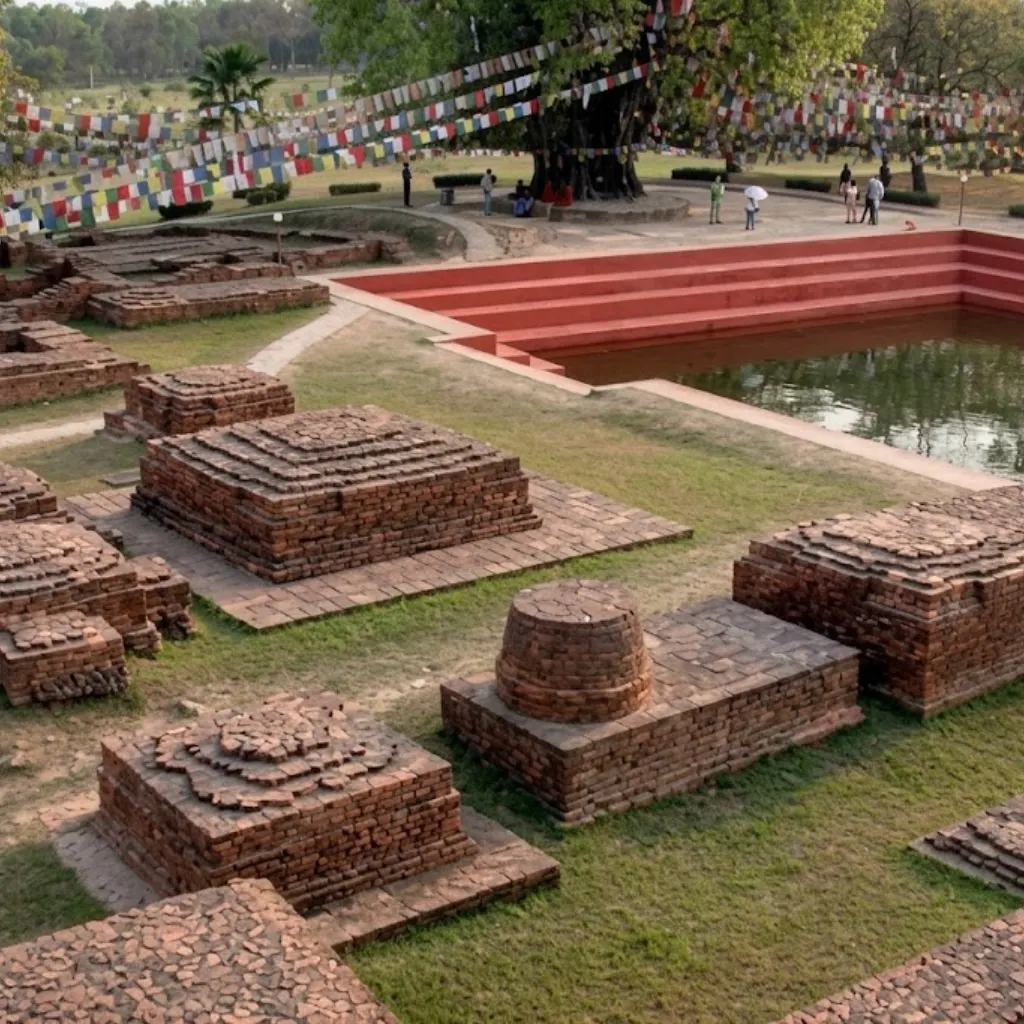
- The Sacred Garden — 150 m / 492 ft: the excavated archaeological zone, the holy pool (Puskarini) and the Bodhi tree around which pilgrims walk clockwise.
- Puskarini, the Sacred Pond — 150 m / 492 ft: the pool where tradition holds Maya Devi bathed before the birth; today its steps catch the morning pilgrims.
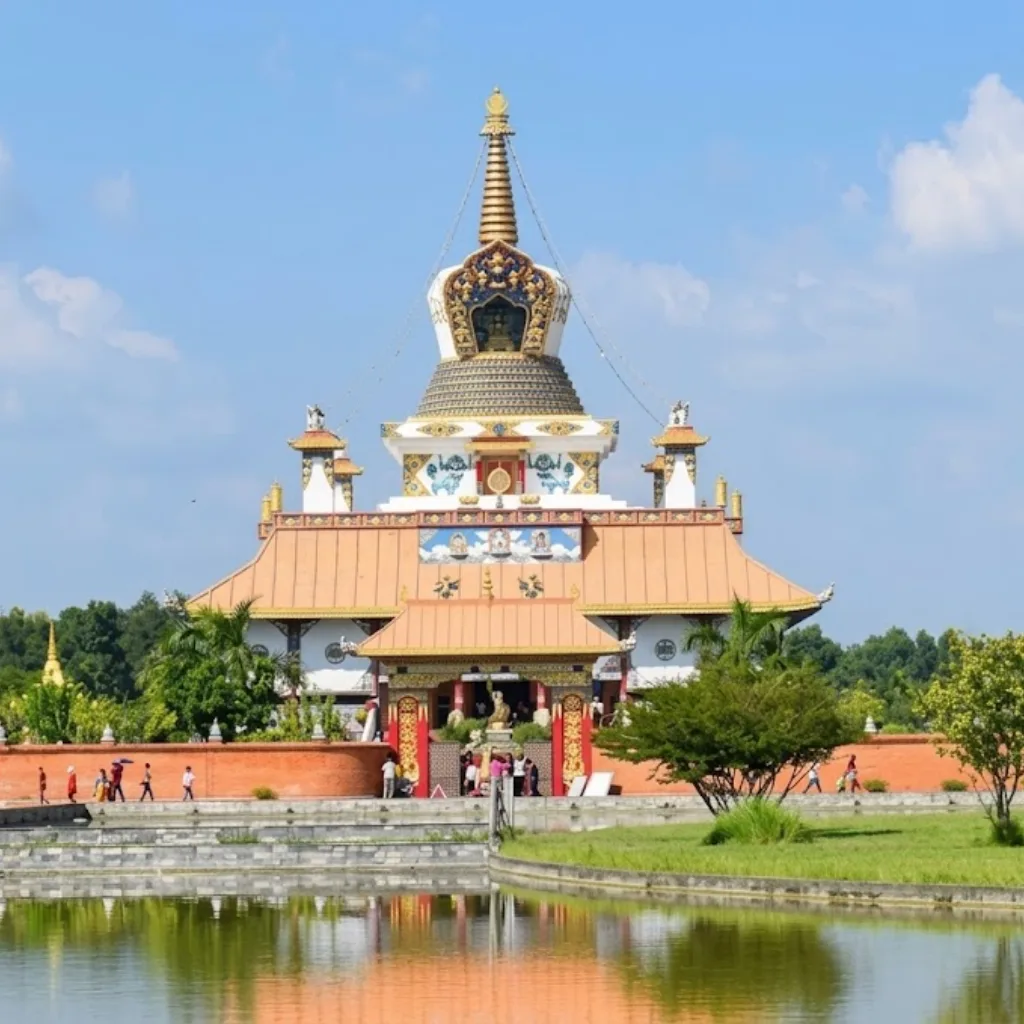
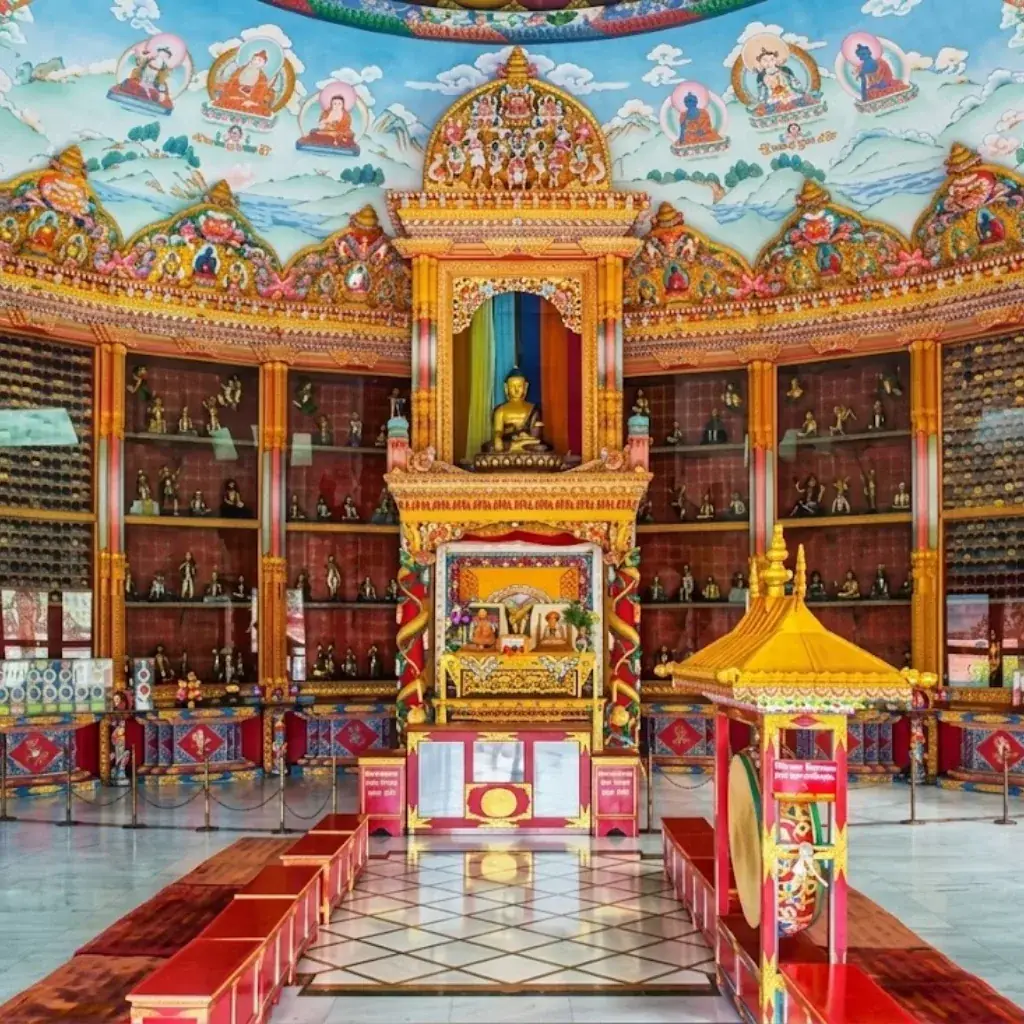
- The International Monastic Zone: Thai, Myanmar, Korean, Chinese, Japanese, Vietnamese and Bhutanese monasteries gathered in one eastern quarter of the Master Plan.
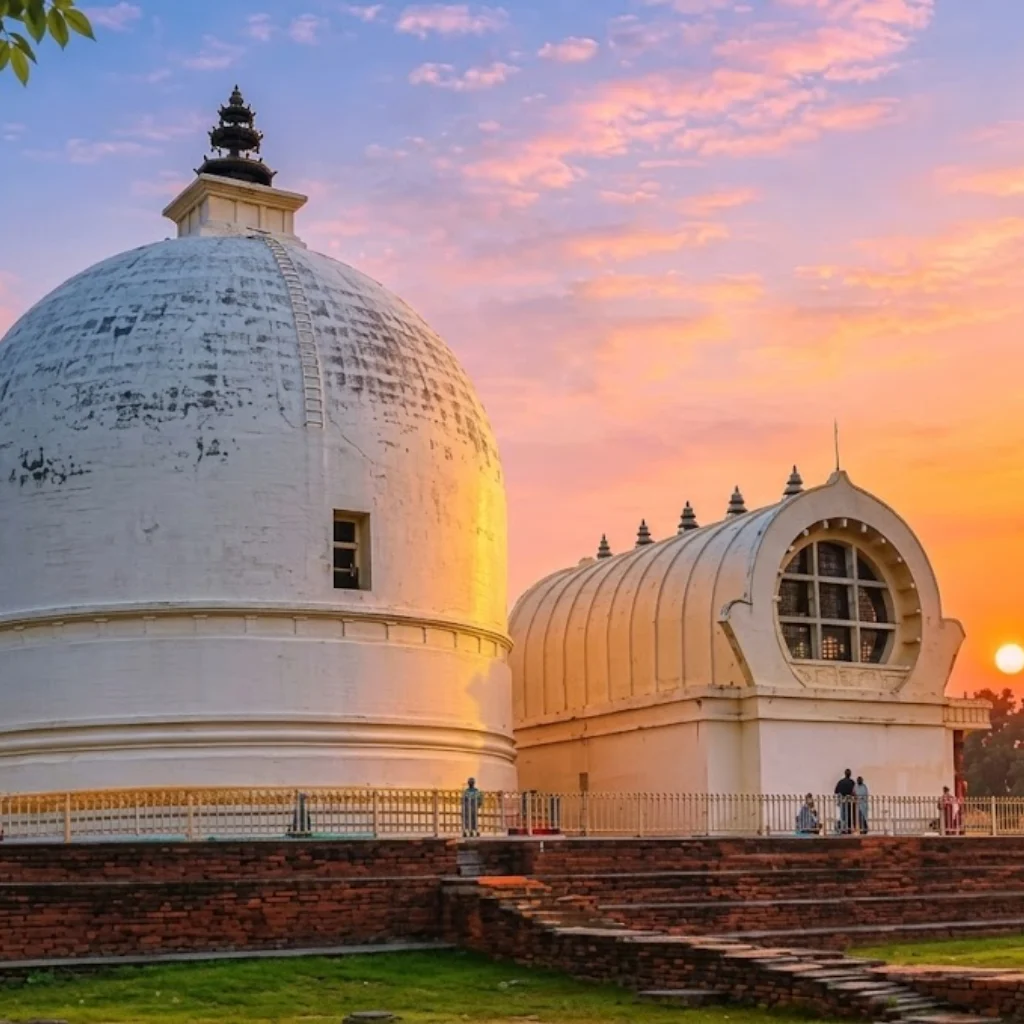
- World Peace Pagoda — 150 m / 492 ft: the Japanese-built peace stupa at the garden’s southern edge, a white landmark visible above the trees.
- UNESCO World Heritage Zone — 1997: the entire birthplace compound, protected and restored by international teams.
- The Farewell Dinner and Cultural Program: an authentic evening of Nepali food and dance that closes the tour.
- Easy Lowland Pilgrimage: flat walking, a 3-star bed-and-breakfast base, and private airport transfers at both ends.
Lumbini Spiritual Tour Overview
The Lumbini Spiritual Tour is Nepal Lion Tours’ 3-day, 2-night pilgrimage to the birthplace of the Buddha in Lumbini, Rupandehi District, Lumbini Province, Nepal — a UNESCO World Heritage Site since 1997 and the holiest place in Buddhism — travelling by standard tourist bus from Kathmandu across the Terai lowlands at just 150 m / 492 ft. It is graded Easy, includes two nights in a 3-star Lumbini hotel on bed-and-breakfast, a licensed English-speaking guide, private airport transfers, and a farewell dinner with an authentic cultural program, and it suits pilgrims, contemplative travellers and anyone wanting Nepal’s most meaningful lowland day trip.
The journey unfolds in three simple steps: a tourist-bus crossing of around 7-9 hours drops you into the farm-flat plains of Lumbini on Day 01; a full Day 02 explores the Sacred Garden — the Maya Devi Temple, the Ashoka Pillar, the sacred pool and the Bodhi tree — plus the international monastic zone and the World Peace Pagoda; and Day 03 carries you back across the Terai to Kathmandu, rounding off with the farewell dinner and cultural program that complete the tour.
With Nepal Lion Tours, the package starts from USD 275.50 per person (list USD 290, currently 5% off), with 2 nights in a 3-star Lumbini hotel on bed-and-breakfast, tourist-bus transport both ways, a government-licensed English-speaking guide, private airport transfers, a hemp souvenir purse and the farewell dinner. Two things to know up front: entrance fees to the Lumbini monuments and lunches and dinners on tour are the traveller’s own, and the package currently shows no guest reviews — it is one of our newer spiritual routes, and we publish honest reviews as they arrive.
What Makes the Lumbini Spiritual Tour Special?
It is the only short package we run to the actual birthplace of the Buddha — not a temple built in his honour, but the archaeological Sacred Garden where, according to tradition, Siddhartha Gautama was born around 623 BC beneath a branch of a Bodhi tree. The site is anchored by the Maya Devi Temple, whose sanctum holds the marker stone of the birthplace itself; the Ashoka Pillar, inscribed in 249 BC by the Emperor Ashoka, stands beside it as one of the oldest dated monuments in South Asia, and the whole zone is protected as UNESCO World Heritage.
The tour is also a rare chance to see the world’s Buddhism gathered in one park: the Kenzo Tange Master Plan arranges a western village of guest-houses and an eastern monastic zone where Thai, Myanmar, Korean, Chinese, Japanese, Vietnamese and Bhutanese communities have each built their own monasteries — from the golden spires of the Myanmar temple to the Great Lotus Stupa of Korea. Add the World Peace Pagoda, the cycle-rickshaw lanes of the Sacred Garden, and the farewell dinner’s cultural program, and the three days hold more faith-diversity than almost any equivalent journey in Nepal.
What’s Tucked Into the Tour?
The package includes private airport pick-up, hotel transfer and airport drop-off, standard tourist-bus transport from Kathmandu to Lumbini and back, two nights in a 3-star Lumbini hotel on a bed-and-breakfast basis, a government-licensed, English-speaking guide for the tour, all staff salaries, wages, food and equipment, a Best Heritage Tour hemp purse, and the farewell dinner with an authentic cultural programme on completion. That is the honest reading of the inclusions — and it is worth repeating clearly, because the small print matters here: entrance fees to the museums, monuments and monasteries in Lumbini are not included, lunch and dinner on the road and during sightseeing are not included, and Kathmandu accommodation before or after the tour is not included.
Also excluded are international airfare, Nepal visa fees, personal expenses (laundry, drinks, internet, hot showers, soft drinks and alcohol), tips for the guide and driver, any services beyond the itinerary, and — as listed on the package — government taxes and service charges, which we ask the team to confirm at booking since the 13% tax is usually built into prices in Nepal. What that means in practice is simple: carry a little cash for temple entries and meals, and everything else — beds, transport, guiding and the farewell evening — is handled.
Who Is This 3-Day Lumbini Spiritual Tour For?
- Buddhists and pilgrims — walking the birthplace of the Buddha is the journey’s whole purpose, inside the Sacred Garden itself.
- Spiritual and meditative travellers — the monasteries welcome visitors for prayer, reflection and quiet mornings.
- Culture and history lovers — a UNESCO site, an Ashokan inscription and excavations going back 2,500 years.
- Older travellers — Easy walking, flat ground, a 3-star hotel and private airport transfers throughout.
- Families — a gentle, meaningful lowland trip that combines easily with Chitwan’s safari wildlife.
- First-time visitors wanting beyond Kathmandu — the fullest contrast to the valley: living Buddhist faith on open plains.
No walking experience or altitude preparation is needed — the demands of this tour are heat, distance and an open mind, not climbs: the Terai is hot and flat, the bus days are long, and the reward is the quiet of the world’s most important Buddhist birthplace.
Guide’s Note — Nepal Lion Tours — Lumbini is the journey we send guests on when they want Nepal’s soul rather than its mountains. From our experience, the moment that stays with travellers is not the famous gate or the Ashoka Pillar — it is standing at the marker stone inside the Maya Devi Temple, in a place that has been continuously revered for over two millennia, often in complete silence. Our guides time the Sacred Garden visit for the cool morning hours, and we always remind guests to take off their shoes slowly — the threshold at the birthplace is walked by every tradition of the Buddhist world. — Nepal Lion Tours
Quick Facts
Lumbini Spiritual Tour at a Glance
| Fact | Details |
|---|---|
| Tour Name | Lumbini Spiritual Tour |
| Duration | 3 Days / 2 Nights |
| Region | Lumbini, Rupandehi District, Lumbini Province, Nepal |
| Maximum Altitude | 150 m / 492 ft (Terai lowlands) |
| Difficulty | Easy |
| Main Highlight | Birthplace of Buddha at Maya Devi Temple (UNESCO) |
| Start / End | Kathmandu to Kathmandu |
| Route | Kathmandu – Lumbini – Kathmandu by tourist bus |
| Travel Time | About 7-9 hours each way |
| Typical Walking | 2-4 hours per day, flat ground |
| Best Season | Autumn and Spring; winter is crisp and clear |
| Price From | USD 275.50 per person (5% off list USD 290) |
| Accommodation | 2 nights, 3-star hotel in Lumbini (bed & breakfast) |
| Guide | Government-licensed English-speaking tour guide |
| Group Size | 1-10 pax |
Lumbini Spiritual Tour Route and Elevation
The route is a straight lowland corridor rather than a mountain circuit: Kathmandu on its 1,350 m / 4,429 ft valley floor, a long bus descent through the Middle Hills into the Terai, and a flat 3-day loop around Lumbini at 150 m / 492 ft before the same crossing home. There is no climbing and no altitude to speak of — the elevation story of this tour is that it barely has one.
Lumbini Spiritual Tour Route at a Glance
| Day | Route | Elevation | Highlights |
|---|---|---|---|
| Day 01 | Kathmandu → tourist bus → Lumbini | 1,350 m → 150 m | Terai arrival, hotel check-in, evening introduction |
| Day 02 | Lumbini Sacred Garden and monasteries | 150 m throughout | Maya Devi Temple, Ashoka Pillar, monastic zone, Peace Pagoda |
| Day 03 | Lumbini → tourist bus → Kathmandu | 150 m → 1,350 m | Final visit, return crossing, farewell dinner |
Lumbini Spiritual Tour Elevation Profile
Nepal’s trekking itineraries climb; this one descends and levels out. The bus leaves Kathmandu at 1,350 m / 4,429 ft, drops through the Middle Hills on the Tribhuvan Highway, and reaches the Terai plains at roughly 150 m / 492 ft — Lumbini itself sits on flat, fertile farmland a few kilometres from the Indian border. The maximum altitude of the whole tour is that same 150 m / 492 ft, which makes this the lowest-elevation package Nepal Lion Tours operates.
What the profile means physically is simple: the challenge is not altitude but distance and temperature. The bus days of about 7-9 hours each way are the hardest part for most travellers, and the Terai heat of April-June is real lowland weather rather than mountain coolness. There is nothing to acclimatise to — which is exactly why the tour suits pilgrims and older travellers — and the only adjustments are to pace, shade and hydration, all of which the itinerary builds around a hotel-based day in the Sacred Garden.
How the Three Days Unfold
Day 01 is the crossing: an early tourist-bus departure from Kathmandu (approximately 7-9 hours with rest stops) rolls out of the valley, over the Middle Hills and down into the Terai, arriving in Lumbini in the late afternoon. You check into the 3-star hotel, take the first quiet wander towards the temple gardens if the light allows, and rest before the full day ahead.
Day 02 is the heart of the pilgrimage: the morning is spent inside the Lumbini Sacred Garden — the Maya Devi Temple and its marker stone, the Ashoka Pillar, the Puskarini sacred pool and the Bodhi tree — entered with a visitor ticket and walked in cool hours. The afternoon moves to the international monastic zone and the World Peace Pagoda, with the guide explaining each tradition, before returning to the hotel for the evening.
Day 03 starts with an optional final prayer or a last look at the garden, then boards the tourist bus back to Kathmandu, arriving in the evening. The tour closes with the farewell dinner and authentic cultural program, where the journey is officially handed back to you — full-circle from the LC departure to the return celebration.
How to Get to the Lumbini Spiritual Tour
Getting to Lumbini is a road journey, and the package deliberately uses the standard tourist bus rather than a private vehicle — a shared coach that keeps the price low and still lands you at a 3-star hotel with a guide waiting. Airport transfers at both ends are private and included.
Kathmandu to Lumbini: By Tourist Bus
| Option | Approx. Time | Best For |
|---|---|---|
| Tourist bus (included) | About 7-9 hours | The package standard — scheduled, simple, low cost |
| Private car / taxi | About 6-8 hours | Independent travellers wanting stops at their own pace |
| Domestic flight via Bhairahawa / flight + drive | Under 1 hour + transfer | Travellers on tight schedules (not included) |
The included tourist bus departs from Kathmandu in the early morning, runs comfortable seated coaches with rest stops on the Tribhuvan Highway, and arrives in Lumbini in the late afternoon. It is the same service pilgrims have used for decades, and the guide and hotel are waiting at the Lumbini end — so the hump of the journey is somebody else’s logistics. Note that including the International Airport fly-in option to Bhairahawa (Gautam Buddha Airport), the nearest airport to Lumbini, is possible but not part of this package unless requested.
Guide’s Note — Nepal Lion Tours — The tourist-bus crossing is the part travellers dread and then genuinely enjoy: the Tribhuvan Highway rolls through terraced hills, river valleys and finally the flat Terai, and the rest stops are part of the show — hot chai, samosas and the landscape changing from mountains to plains. From our experience operating this route, the trick is to sit left-side for the best hill views, keep the middle seat for a sleep, and let the guide do the hour-keeping. Arrive in Lumbini with the evening light, and Day 02 begins with the gardens already understood. — Nepal Lion Tours
On the Ground in Lumbini
The Sacred Garden is compact and walkable — about 2-3 km / 1.2-1.9 mi across — and the friendly standard is a cycle-rickshaw or pedal cart between the Maya Devi Temple, the monastic zone and the Peace Pagoda, especially in heat. Walking at an easy pace covers the whole garden comfortably in a morning; the guide sets the rhythm around the sun, and the hotel is a short drive from the garden gate, so the walking hours are genuinely 2-4 per day on flat ground.
Arriving in Kathmandu from Abroad
International flights land at Tribhuvan International Airport (KTM), about 30-45 minutes from the Thamel and Durbar Marg hotel belts — and this package uniquely includes private airport transfers, so arrival and departure logistics are fully handled. Most nationalities obtain a tourist visa on arrival, typically from about USD 30 for 15 days, with payment in cash or card and two passport photos. Join the tour from your Kathmandu hotel, and note that a practical tip for international travellers is to arrive in Kathmandu at least the day before and leave a day after the tour, giving the long bus days clean bookends.
Lumbini Spiritual Tour Difficulty, Fitness & Altitude
The tour is graded Easy, and for once the grade is genuinely flat: no altitude, no stairs to speak of, and no terrain beyond temple plazas and park lanes. What the journey actually demands is patience with the bus and respect for the Terai heat rather than endurance — two long seated days bracket one substantial walking day.
Where the Effort Actually Is?
The real effort is the road, not the trail: each bus crossing takes about 7-9 hours and requires sitting, patience and rest stops rather than fitness. On the ground, the pace is gentle — 2-4 hours of flat walking inside the Sacred Garden, broken by shade, temple courtyards and a rickshaw between the far monasteries. The one physical hazard to plan around is lowland heat, which saps energy faster than any climb at 150 m / 492 ft, so the guide schedules the garden walk for the morning and the cooler corners for the afternoon.
Guide’s Note — Nepal Lion Tours — In Lumbini the sun is the altitude, and the Terai teaches a different kind of respect than the mountains do. From our experience, travellers who struggle treat the garden like a midday checklist; the ones who thrive start at the Maya Devi Temple when the gate opens, work the monasteries in the shaded afternoon, and let a cycle-rickshaw handle the far lane. Two litres of water, a hat that shades the neck, and ten quiet minutes in a cool temple — that is the whole fitness plan for this tour. — Nepal Lion Tours
How to Prepare for the Tour
- Acclimatise to sitting — long bus journeys are the hardest part; plan a cushion and stretch breaks.
- Hydrate before the bus — two litres of water across each crossing keeps Terai heat at bay.
- Wear light, modest layers — loose cotton and covered shoulders for temples and the sun.
- Walk a little before you go — 30-60 minute flat strolls are plenty for the Sacred Garden.
- Carry a scarf or shawl — for temple thresholds and air-conditioned coaches alike.
- Allow a rest day either side — bookend the tour so the road days never run into your flight.
How Difficult Is This Tour Compared with Active Adventures?
Compared with Nepal’s treks — where days climb to 3,000 m / 9,843 ft and then beyond — the Lumbini tour is deliberately restful: no overnight altitude, no steep ascents, and no camping, with a hotel bed and breakfast every morning. Its closest relative is the Kathmandu heritage tour rather than a trek; the distinction is that Lumbini spends its walking time in a world-famous sacred garden on flat ground, and its endurance test is a coach seat, not a trail.
Altitude, Acclimatization & Safety
Maximum altitude on the tour is 150 m / 492 ft — effectively sea-level — so altitude sickness does not apply to this journey, and there is no acclimatisation process. The safety conversation for Lumbini is about heat, hydration and road time rather than thin air.
Lumbini Spiritual Tour Altitude Profile
- Kathmandu — 1,350 m / 4,429 ft: the valley start, already familiar to most arrivals.
- Terai Plains — 150 m / 492 ft: the flat crossing and the whole of Lumbini itself.
- Lumbini Sites — 150 m / 492 ft: Maya Devi Temple, Ashoka Pillar and monastic zone all at garden level.
How the Body Adapts to Altitude
There is nothing to adapt to below 1,400 m / 4,593 ft, and this tour never goes above it — so the practical advice is the opposite of the mountains: stay cool, drink water, and pace yourself for heat rather than height. Guests who feel tired on the garden day are usually dehydrated or sun-struck, not altitude-affected, and a hat, water and shade resolve both.
Symptoms of Altitude Sickness to Watch For
Altitude illness is not a practical concern at 150 m / 492 ft — the symptoms to watch on this tour are lowland ones instead: heat fatigue, mild headache from dehydration, and tiredness from the long coach days. The response is the same in either case: rest, drink water, tell the guide, and move your sightseeing into the shade or the hotel.
How Nepal Lion Tours Supports Safety
- Heat-aware planning — the garden visit runs in the cool morning and the shaded afternoon.
- Experienced licensed guide — trained in first aid and heat-safety basics, with the office reachable at all times.
- Hotel-based nights — a 3-star bed-and-breakfast with rest between the two long road days.
- Early communication — tell the guide anything; the response is to rest, rehydrate or adjust the route.
- Insurance note — travel insurance covering medical treatment in Nepal is strongly recommended, and the team coordinates any support through the local clinic network.
Best Time to Take the Lumbini Spiritual Tour
The best time is autumn (September to November) and spring (March to May), matching the package’s own season guide and the pilgrim calendar; winter (December to February) is a crisp, comfortable bonus season in the Terai, and the monsoon months are hot, green and quiet. Lumbini is a year-round destination — the walking is always flat — but the heat between April and June is the honest trade-off.
| Season | Months | Conditions in the Terai | Pilgrimage Mood | Overall |
|---|---|---|---|---|
| Autumn | Sep-Nov | Clear, post-monsoon, pleasant days | Festival-rich and busy | Best overall |
| Spring | Mar-May | Warm, with Vesak in April-May | The Buddha’s month, deeply special | Highly recommended |
| Winter | Dec-Feb | Crisp mornings, mild days, clear skies | Peaceful and thin-crowded | Excellent |
| Monsoon | Jun-Aug | Hot, humid, green, frequent showers | Quiet and verdant | Less suitable |
Spring in Lumbini — March to May
Spring warms the Terai into the pilgrim season proper, and its crown is Vesak (Buddha Jayanti) in April or May — the full-moon festival of the Buddha’s birth, enlightenment and passing, when Lumbini fills with saffron and maroon robes, prayer flags and international delegations. Walking the Sacred Garden during Vesak is the single most moving time to visit; the price is the building heat, so mornings are the morning’s work.
Autumn in Lumbini — September to November
Autumn is the clearest, most comfortable window: the monsoon has washed the sky, the plains are green and freshly cropped, and temperatures sit warm but tolerable. Buddhist communities mark the season with pilgrimage journeys, and the monasteries are active with study and celebration — the ideal balance of pleasant weather and living faith.
Winter in Lumbini — December to February
Winter turns the Terai crisp, clear and quiet: cold early mornings give way to mild, sun-warmed days, and the Sacred Garden empties to a trickle of pilgrims. It is the photographer’s season — low golden light off the Maya Devi Temple and clean skies above the Peace Pagoda — and easily the most comfortable for travellers who prefer their pilgrimages uncrowded.
Monsoon in Lumbini — June to Early September
The monsoon makes Lumbini green, steamy and nearly empty: daily showers wash the plains, the gardens thicken, and the monasteries keep their own unhurried rhythm. It is the budget and solitude season — temple visits under shared umbrellas — but the heat and humidity are real, and the long bus days feel warmer still.
Which Season Suits You Best?
Choose autumn for comfort and activity, spring for Vesak and the pilgrim climax, winter for crisp solitude, and monsoon only for flexible travellers who love deep green. Whichever you pick, your guide checks the forecast and plans the garden morning accordingly — the Terai rewards early starts in every season, and the long bus crossing is best begun before the day warms.
Guide’s Note — Nepal Lion Tours — From our experience, the Terai rewards travellers who treat Lumbini as a morning place: the gardens are at their most atmospheric between dawn and mid-morning, when the incense, the monks’ timing rituals and the low light belong to you. We schedule the Sacred Garden for the first hours of Day 02, keep the international monasteries for the mid-day when their gatehouses open fully, and always confirm the next day’s heat plan with the hotel — because in Lumbini, the weather is never the mountain’s business, it is the walker’s. — Nepal Lion Tours
Lumbini Spiritual Tour Permits & Regulations
Lumbini needs no trekking permit and no TIMS card — it is a heritage and pilgrimage site on open Terai plains — so the paperwork is light. The two practical requirements are the Sacred Garden visitor ticket and basic temple etiquette, neither of which the tour arranges for you: entrance fees are the traveller’s own on this package, and our guide handles the explaining rather than the paying.
Lumbini Spiritual Tour Permits at a Glance
| Requirement | Who Needs It? | Who Arranges It? |
|---|---|---|
| Sacred Garden visitor ticket | All visitors | Traveller pays locally (not included) |
| Monastic zone entry | All visitors | Some monasteries ask a small donation/ticket |
| Museum / archaeological site tickets | Interested visitors | Traveller pays locally |
| TIMS card | Not required | — |
| Restricted-area permit | Not required | — |
Lumbini Entry and Heritage Fees
The Lumbini Development Trust issues the Sacred Garden visitor ticket at the main gate, with a foreign-national rate that is periodically revised — and on this package it is paid locally rather than included, so carry a modest amount of NPR cash for the garden, the museums and any monastery donations. The one flat rule is that the Lumbini Museum, the World Peace Pagoda and the monastic zone each have their own small ticket or donation — your guide carries you through them in order, handing over at each counter, and it all comes to a few dollars.
Temple Etiquette at Maya Devi Temple and the Monasteries
The etiquette is easy and universal: remove shoes at the Maya Devi Temple threshold and at every monastery entrance — shoe racks are provided — keep shoulders and knees covered, walk the garden clockwise, and speak quietly near the marker stone. Photography is welcome in the open gardens but ask inside temples and at the prayer halls, and never touch the shrines or offerings. Pilgrimage etiquette rewards nothing so much as patience: the five-minute queue to the marker stone is itself part of the experience for most visitors.
How Nepal Lion Tours Arranges the Details
There are no permits for Nepal Lion Tours to pre-arrange on this route — the work is logistical instead: the hotel confirmed in Lumbini, the tourist-bus seats booked in advance and the guide assigned for the three days, plus the private airport transfers before and after. You carry your passport for the hotel and any gate identification, cash for the local tickets, and nothing else — the guide points out every counter as you reach it, so nothing is ever a hunt.
Food & Accommodation on the Lumbini Spiritual Tour
The accommodation is a single, straightforward proposition — two nights in a 3-star Lumbini hotel on a bed-and-breakfast basis — and the meals game is equally simple to describe: breakfast is included each morning, while lunches and dinners during the tour are the traveller’s own, with the farewell dinner provided on the final evening. It is a different rhythm from Nepal’s all-inclusive trekking packages, and the section below makes it precise.
Your 3-Star Hotel Nights in Lumbini
The Lumbini base is a 3-star hotel within easy reach of the Sacred Garden gate — en-suite rooms, air conditioning for the Terai evenings, a restaurant, and breakfast in the dining room each morning before the day’s visits. The property is the standard tier’s home; the Luxury tier uses superior-category hotels confirmed at booking (the site does not name them, so we confirm names in writing when you reserve). For a pilgrimage with two hotel-based nights, it is comfortably appointed rather than basic — and a genuine step up from any trail-side lodge.
Meals on the Lumbini Spiritual Tour
Breakfast is included on Day 02 and Day 03 mornings at the hotel, and the farewell dinner and cultural program close the tour on the final evening — everything in between is up to you. Lumbini’s dining is entirely pilgrim-friendly: the hotel restaurant plus a ring of simple eateries near the garden gate serve dal bhat, thali, momos, noodles, Indian and continental basics, and honest milky chai. Vegetarian food is standard and excellent — Buddhism’s home test — and vegan, Jain, gluten-free and allergy needs are easily met in the hotel kitchen with notice. The practical habit is to stock water and fruit before the morning garden walk, eat the midday meal near the monastic zone, and let the farewell dinner do the ceremony.
Drinking Water and Staying Hydrated
Use sealed bottled or filtered water throughout — the universal Nepal standard — and in the Terai heat it matters more than any other item on this page. Hotels provide safe water to fill a reusable bottle, the garden gates sell sealed bottles, and your guide keeps a supply in the hotel and on the site visits, so you never face a thirsty stretch between shrines. Two litres across the walking day is the rough rule, and on the long bus days the same amount again; in Lumbini it is easy to forget the lows, because there are no heights at all.
Why Book with Nepal Lion Tours?
Lumbini is easy to reach and easy to hurry through; the value of a guided, hotel-based package is that someone else holds the bus seats, the guide, the beds and the details, while you give the Sacred Garden the attention it deserves.
Seven Reasons to Book the Lumbini Spiritual Tour with Nepal Lion Tours
- Government-licensed English-speaking guides — locals with deep knowledge of Lumbini’s archaeology, faith traditions and the international monasteries’ schedules.
- A registered trekking and tour company you can verify — based in Kathmandu, with licence details provided to travellers on request.
- A signature pilgrimage itinerary — the Sacred Garden, the Ashoka Pillar and the monasteries toured deliberately, not rushed.
- Headed by the farewell dinner and cultural program — an authentic evening that closes the journey with Nepali food and dance.
- Private airport transfers and booked transport — the logistics of arrival, departure and the two long coach crossings handled for you.
- Budget-friendly pricing without cutting the essentials — from USD 275.50 per person including hotel, bus, guide and farewell dinner.
- A local team you can contact before and during the tour — from the first WhatsApp enquiry to the moment you are back at the airport.
This route currently shows no guest reviews on our site — it is one of our newer spiritual packages — and we publish honest reviews as they arrive rather than padding the page. The guiding, hotels and transport are the same standard as our established Kathmandu, Chitwan and Bardiya packages.
Book the Lumbini Spiritual Tour
Three days, one birthplace, two hotel nights on Terai plains at 150 m / 492 ft, and a farewell evening of culture — secured with a booking, presented with a passport, and run door-to-door from your Kathmandu hotel.
Lumbini Spiritual Tour Pricing
The price breaks down by tier and group size, with both tiers covering the same tourist-bus transport, guided sightseeing, 3-star-standard base, staff costs and farewell dinner — the difference is the hotel category, with the Luxury tier using superior accommodation confirmed at booking. List price is USD 290, currently shown at 5% off for solo travellers.
| Tier | 1 Pax | 2-4 Pax | 5-9 Pax | 10+ Pax |
|---|---|---|---|---|
| Standard | USD 275.50 | USD 262 | USD 248 | USD 234 |
| Luxury | USD 372 | USD 353 | USD 335 | USD 316 |
| Feature | Standard | Luxury |
|---|---|---|
| Price from (1 pax) | USD 275.50 | USD 372 |
| Accommodation | 3-star Lumbini hotel, bed & breakfast | Superior-category Lumbini hotel, bed & breakfast |
| Transport | Tourist bus both ways + private airport transfers | Same coach and private transfers |
| Guide, passport-required staffing, farewell dinner | Included | Included |
| Entrance fees and on-tour lunches/dinners | Paid locally (not included) | Paid locally (not included) |
| Best for | Pilgrims and value travellers | Comfort-focused and celebratory travellers |
Group discounts apply automatically as your party grows, the package is designed for 1-10 travellers, and the final price can vary depending on dates, services and requested itinerary changes — send us your group size for an exact quote, and note that the site lists taxes and service charges separately, which we confirm at booking.
Ready to Start Your Pilgrimage to the Birthplace of Buddha?
Send your preferred dates and party size through the booking form or WhatsApp at +977-9851039020, and the team confirms your hotel, bus seats, guide and airport transfers in writing. Free cancellation applies up to 14 days before departure, subject to booking terms. Whether you travel alone, as a couple, with family or with a meditation group, the Sacred Garden, the Ashoka Pillar and the peace pagoda are waiting — choose your dates and begin the crossing today.
Related Nepal Tours
Lumbini is the perfect lowland cornerstone for a wider Nepal itinerary — combine the birthplace of the Buddha with the valley’s heritage, the Terai’s safari parks, or the hill country’s short treks for a country in miniature.
| Trek | Duration | Difficulty | Max Altitude | Best For |
|---|---|---|---|---|
| Chitwan Jungle Safari Tour | 3 days | Easy | Lowland | Pairing Lumbini with rhinos and river safari |
| Kathmandu City Day Tour | 1 day | Easy | 1,350 m / 4,429 ft | Valley heritage before or after the pilgrimage |
| Kathmandu City Tour Luxury | 3 days | Easy | 2,175 m / 7,136 ft | UNESCO zones and a Nagarkot sunrise |
| Chisapani to Nagarkot Hiking | 3 days | Easy | 2,175 m / 7,136 ft | A forest-and-sunrise walk as a mountain counter |
| Ghorepani Poon Hill Luxury Trek | 6 days | Moderate | 3,210 m / 10,531 ft | The classic short trek with the famous sunrise |
The natural combinations are practical: Lumbini and the Chitwan Jungle Safari Tour sit on the same southwestern road and join into a plains-and-jungle week; Lumbini plus the Kathmandu City Tour Luxury contrasts the birthplace with the valley’s seven UNESCO zones; and adding the Chisapani to Nagarkot Hiking gives pilgrimage, jungle-walk and mountain-sunrise in a single journey — our team bundles any of these onto one itinerary and quote.
Trip Essentials
Packing advice, required equipment & gear recommendations
Essential
The tour is a hotel-and-coach package on hot, flat ground, so pack light, modest and sun-smart — Lumbini rewards loose clothing, a hat and a water bottle far more than trekking gear, and everything fits in one small suitcase and a day bag. A Nepal Lion Tours trek pack (daypack and map) is available with your gear list on request; the essentials are listed below.
Essential Clothing
- Light, loose, modest shirts or tops — cotton or quick-dry, with sleeves for the temples.
- Comfortable trousers or long shorts — knee coverage inside the monasteries.
- A lightweight scarf or shawl — temple shoulders, prayer hall thresholds and bus air-conditioning.
- A warm layer for the bus and winter mornings — the Terai nights can be genuinely cold in December.
- A hat and sunglasses — the lowland sun is the tour’s one weather adversary.
- Comfortable closed-toe walking shoes plus trusty sandals for the evenings.
Sacred-Garden Day Gear
- A small daypack (15-25 litres) for water, camera, shawl and tickets.
- A 1L+ refillable water bottle — filled at the hotel every morning.
- Sunblock and lip balm — reapplied through the garden walking hours.
- A thin scarf or sarong — to cover shoulders instantly at any shrine threshold.
- Small denomination NPR cash — the garden ticket, museums and monastery donations.
Travel Documents and Personal Items
- Passport with six months’ validity and a printed copy of your booking.
- Nepal visa (on arrival) with cash or card for the fee.
- Travel insurance certificate — medical cover for Nepal, strongly recommended.
- A photocopy of your passport for hotel and gate identification.
Toiletries and Personal Health Items
- Basic toiletries and personal medications — hotels provide the rest.
- Hand sanitiser and tissues — bus day and shrine-visit essentials.
- Insect repellent — the Terai evenings are the one place it earns its place.
- Hydration salts or sachets — useful after a hot garden morning.
- Plasters for the feet — flat walking can still chafe in the sun.
Electronics and Connectivity
- Smartphones with a local SIM or eSIM — coverage is strong across the Terai.
- Camera — the Maya Devi Temple at dawn and the Peace Pagoda are the keepsakes.
- Power bank and adapter — hotel charging is reliable; bus days are long.
- Earbuds or headphones — for the coach crossings between Kathmandu and the plains.
How Much Should You Pack?
Lighter is better. A small suitcase plus a day bag covers three days completely: no trekking gear, no cold-weather kit beyond one warm layer, and no sleeping equipment of any kind. The hotel handles laundry and comfort, the bus handles the distance, and the day bus only needs whatever you want between shrines. Pack for two worlds — the hot flat gardens and the air-conditioned coach — and the pilgrimage takes care of the rest.
Read Before You Book
Permits, terms, medical considerations & advisory guidelines
Advisory
Lighter is better. A small suitcase plus a day bag covers three days completely: no trekking gear, no cold-weather kit beyond one warm layer, and no sleeping equipment of any kind. The hotel handles laundry and comfort, the bus handles the distance, and the day bus only needs whatever you want between shrines. Pack for two worlds — the hot flat gardens and the air-conditioned coach — and the pilgrimage takes care of the rest.
What to Know Before Booking
The fine print is worth reading before you commit — the honest shape of the inclusions, the Terai weather, the money, the temples and the long road in between.
Accommodation and Facilities
The package’s base is two nights in a 3-star Lumbini hotel on bed-and-breakfast — en-suite rooms, air conditioning, restaurant and breakfast included. Flights and accommodation in Kathmandu before or after the tour are not included, and if you want a Premier Leisure or superior property for the Luxury tier, the team confirms the actual hotel names in writing when you book.
Food and Dietary Requirements
Breakfast is included at the hotel on both tour mornings and the farewell dinner on the final evening; other meals during the tour are the traveller’s own. Lumbini’s eating is vegetarian-friendly and international-adjacent — the hotel restaurant plus simple eateries by the garden gate — and vegan, Jain, gluten-free and allergy needs are handled by the hotel kitchen with notice at booking, so communicate everything up front, not in the Terai.
Altitude, Health and Insurance
There is no altitude on this tour — a maximum of 150 m / 492 ft — so the health conversation is heat, hydration and road time instead. Travel insurance covering medical treatment in Nepal is strongly recommended, especially because the two coach crossings and the lowland sun are the real demands; carry a water bottle, a hat and your regular medications in the day bag.
Money and Tipping
The entrance fees at Lumbini, the museums and the monasteries, plus lunches and dinners on tour, are paid as you go, so carry NPR cash — a combination of garden ticket (foreign rate), museum tickets and meals over two days comes to a modest total, and the guide gives you exact figures at each counter. Tipping follows standard Nepal practice; there is no set amount, and the team is paid properly as part of the package regardless. The site also lists government taxes and service charges as a separate item, which our team confirms at booking since the 13% tax is usually included in advertised prices.
Culture and Responsible Pilgrimage
Lumbini is a living holy site for a sixth of humanity, and it repays respect rather than spectacle:
- Remove shoes at the Maya Devi Temple and every monastery entrance.
- Dress modestly — shoulders and knees covered inside the shrines.
- Walk the garden clockwise and speak quietly near the marker stone.
- Ask before photographing monks, pilgrims and temple interiors.
- Do not touch offerings, flags or shrine objects.
- Leave the gardens as you find them — no litter, and keep to the paths.
Route Options
The standard tour is the fixed 3-day loop, but Lumbini opens honest variations: add a second Sacred-Garden evening for the sunset and the evening prayers, side-trip to Kapilavastu at Tilaurakot — the Buddha’s traditional childhood palace, about 30 km west — with its entry paid locally, combine with the Chitwan Jungle Safari Tour on the same southwestern road, or fly in via Bhairahawa (Gautam Buddha Airport) and bus out, which trims a road day — our team prices any of these as add-ons.
Booking and Before You Arrive
Book through the website form or WhatsApp +977-9851039020 with dates and party size. Confirmations arrive in writing with hotel, bus and guide details; free cancellation applies up to 14 days before departure, and payment terms follow the booking confirmation. Make sure you understand the three practicalities ahead of time: entrance fees and on-tour lunches/dinners are paid locally, the bus days are about 7-9 hours each way, and Kathmandu nights either side of the tour are not included — then the pilgrimage does the rest.
A Few Final Tips and the Bottom Line
Start the Sacred Garden day early in every season, keep water in your hand and a shawl in your bag, and give the marker stone its quiet moment — it is the point of the whole journey. Three days, one birthplace, two comfortable hotel nights and a farewell culture night at a price that starts from USD 275.50 per person — the Buddha’s Terai, done properly. Choose your dates, confirm your tier, and let Nepal Lion Tours handle the crossing.
Inclusions & Exclusions
Everything that is covered and what you'll need to budget separately
What is Included
Fully covered in your package price
- Private Airport Transfers: Private transportation for airport pick-up, hotel transfer, and airport drop-off.
- Tour Transportation: Standard tourist bus transportation from Kathmandu to Lumbini and from Lumbini back to Kathmandu.
- Lumbini Accommodation: Two nights’ accommodation in a 3-star hotel on a bed-and-breakfast basis.
- Professional Guide: Services of an experienced, government-licensed, English-speaking city tour guide.
- Staff Costs and Allowances: All staff salaries, wages, food, clothing, and required equipment.
- Souvenir: A Best Heritage Tour purse, an authentic Nepali product made from hemp.
- Farewell Dinner: Farewell dinner featuring an authentic cultural program upon completion of the tour.
What is Excluded
Personal expenses & optional extras
- International Airfare: International flight tickets to and from Kathmandu.
- Nepal Visa Fee: Nepal visa charges, which can be obtained upon arrival at Tribhuvan International Airport in Kathmandu or applied for manually from your home country.
- Entrance Fees: Entrance charges for monuments and attractions visited during sightseeing in Lumbini.
- Accommodation and Meals: Accommodation and meals in Kathmandu before and after the tour, as well as lunch and dinner during the tour.
- Personal Expenses: Personal clothing and gear, telephone calls, internet, toiletries, hot showers, laundry, soft drinks, and alcoholic beverages.
- Tips and Gratuities: Tips for the guide and driver.
- Additional Expenses: Any extra costs resulting from circumstances beyond our control or for services not specifically stated in the itinerary or included services.
- Taxes and Service Charges: Applicable government taxes (13%) and service charges (10%).
Our Customer Reviews
Authentic experiences and feedback from our travelers
Write a Review
Share your adventure experience with other travelers
Thank You!
Your review has been submitted and is awaiting approval.
Please Wait
You've submitted several reviews recently. Please wait a few minutes before trying again.
Linnea Bauer
We came for the wildlife, and we were not disappointed. The Ashoka Pillar was even better than the photos suggest. The kids were fascinated by Tradition, which kept them moving without complaint. The stars at night were incredible, especially away from the villages. A good reminder that the best sightings often happen when you stop rushing.
Louis Zimmermann
The mix of jeep drives, walks and river time kept every day different. The food afterwards, after The Sacred Garden, tasted especially good. The scale of But The Archaeological Sacred Garden Where is hard to capture in a photograph. I filled an entire card before we even reached the halfway point. I would pack for colder weather than you think you need. Hard to fault, honestly.
Emma Fontaine
The meals were simple in places but always fresh, which is what matters to me. We met another couple at Add the World Peace Pagoda who had done the same trip the year before, and they were right about it being a The Farewell Dinner and Cultural Program. I took a hundred photos during The Farewell Dinner and Cultural Program and kept about ten. We tried every local dish we could pronounce and were never disappointed. Exactly what we needed. Tip: Carry a reusable water bottle and a way to treat water.
Charlotte Lehman
This was our first proper trip together as a family in a few years, and it worked out well. The route through Siddhartha Gautama was born was the one I remembered most clearly afterwards. I took a hundred photos during The International Monastic Zone and kept about ten. There were a few long days, and we adjusted by starting a little earlier. I would pack for colder weather than you think you need. Packing and unpacking every day got old, but the logistics themselves were fine. We came for the animals and left with a much better understanding of the park.
Julia Gallagher
I had wanted to see a rhino in the wild for years, and this trip delivered. We were lucky with the conditions for The highlights run in this order. Lumbini Spiritual was one of those places that made the long travel 3 feel worthwhile. I would trade a bit of comfort for that kind of experience again. The teahouse arrangements were better than we expected for this route. We saw more of everyday life than we expected to. The early morning drives were cold, but the light and the animals made it worthwhile. Some trips are just places you visit; this one became part of how we talk about travel. Tip: Keep a copy of your documents separate from the originals.
Mia Bakker
Honestly, we booked it fairly last minute and it turned out better than expected. The kids rated Puskarini, the Sacred Pond as their favourite part. We were tired by the time we reached His Honour, and it still lifted our mood. The heat in the lower sections was more tiring than the altitude. I found the rhythm of the days surprisingly restorative. The days had enough free time that we never felt herded around. The river trip was a nice change from sitting in the jeep. We ordered too much on the first night and learned to share after that. The team handled a difficult moment with calm and professionalism. The stars at night were incredible, especially away from the villages. Easy recommendation from us.
Frequently Asked Questions
Essential information on preparation, route specifics, safety standards, and logistical details.