Dashain and Tihar 2026
Table of Contents
+
Nepal’s two biggest festivals fall in its two clearest trekking months, and that collision is the whole story of an autumn trip. Dashain runs 11–25 October 2026 and Tihar runs 7–11 November 2026, and the mountains put on their best weather of the year right between them. The trails stay open. What changes is everything around them — flights fill, the popular lodges sell out, and the offices that issue some permits take a week off in the middle of Dashain.
This guide gives you the real dates, the one time that is genuinely worth knowing, what closes and when, the weather and crowds you can expect, and the premium treks and helicopter trips that fit the festival window best. Every price below is taken from our current live packages, so you can plan with real numbers rather than vague ranges.
A quick word on timing. Dashain 2026 has already begun by the time you read this (15 October 2026). If you are heading out in the next few weeks, jump to the section on planning a late-October or November trip — it covers what is still very much bookable now. If you are planning for next autumn, read straight through; the dates shift a little each year, but the pattern does not.
Dashain and Tihar 2026 Dates in Nepal
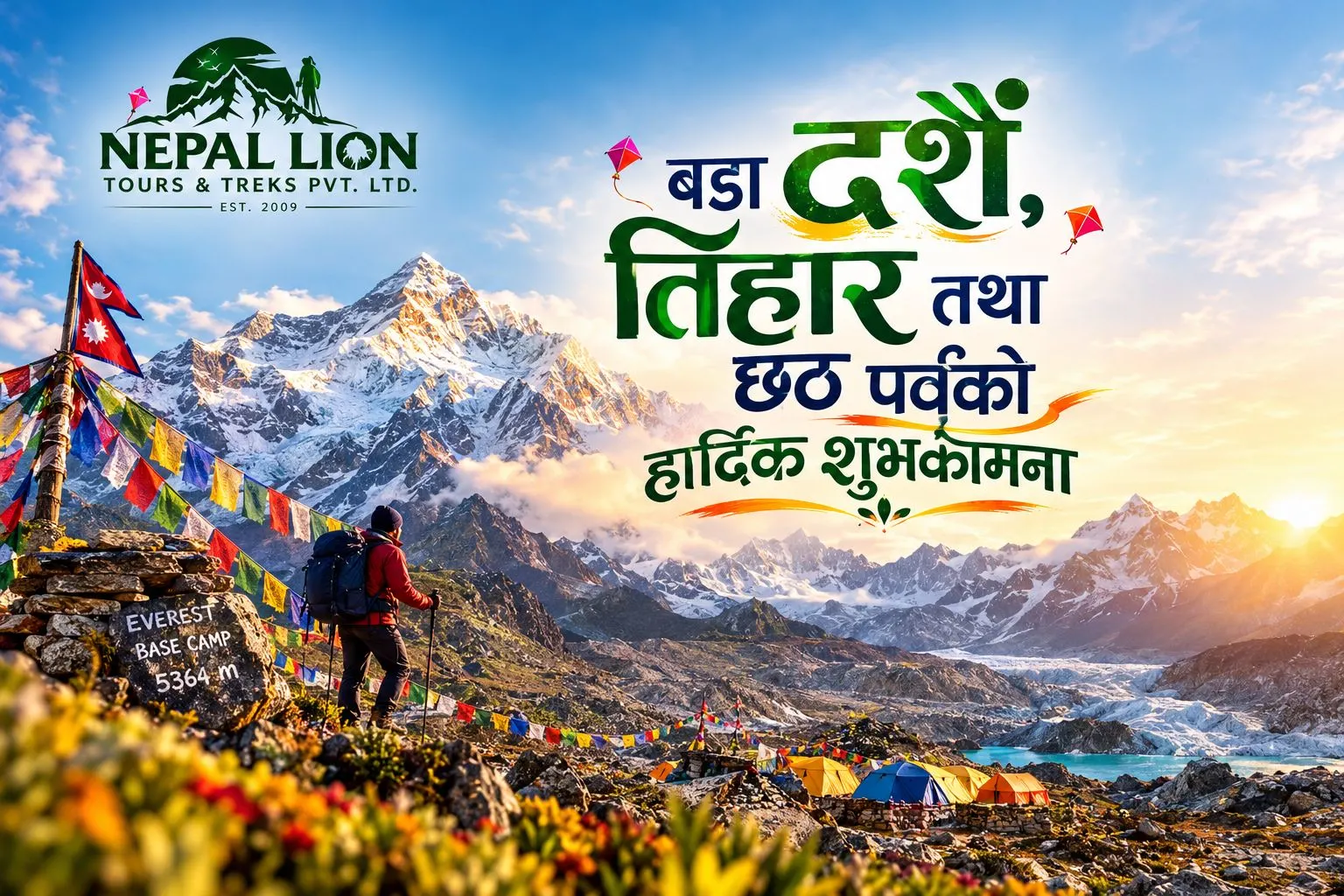
Dashain 2026: 11–25 October. Tihar 2026: 7–11 November. Dashain is the longest festival, fifteen days built around the goddess Durga, and Tihar is the five-day festival of lights that follows about two weeks later. The date that matters most for travel is Vijaya Dashami on Wednesday 21 October, the tika day when the whole country pauses for family.
Both festivals follow the lunar calendar, so the civil dates move a little year to year. The dates below are the official 2026 readings used by Nepal’s Calendar Determination Development Committee.
Dashain 2026: The Dates That Matter
- Ghatasthapana — Sunday 11 October 2026. The festival opens as the jamara barley shoots are sown and the sacred pot is placed at 11:47 am. It is the beginning of Navaratri, nine days of Durga worship.
- Phulpati — Saturday 17 October 2026. The fulpati procession marks the start of the main celebrations and opens the core holiday period.
- Maha Ashtami — Sunday 18 October 2026. The eighth day, dedicated to Durga, with Kalaratri observed that night.
- Maha Navami — Tuesday 20 October 2026. The ninth day, when tools and vehicles are blessed and travel inside the Kathmandu Valley slows right down.
- Vijaya Dashami — Wednesday 21 October 2026. The main tika day. The auspicious hour is 10:26 am, and the blessing continues through the day.
- Kojagrat Purnima — Sunday 25 October 2026. The full-moon close, when the goddess Laxmi is honoured and normal life resumes.
Tihar 2026: The Five Days of Lights
Tihar is the quieter, more intimate neighbour to Dashain, and for many travellers the more photogenic of the two. In 2026, Kukur Tihar and Laxmi Puja fall on the same day, which makes Sunday 8 November the standout evening of the festival.
- Kaag Tihar — Saturday 7 November 2026. The crow, messenger of Yama, is fed at dawn. The quietest day.
- Kukur Tihar — Sunday 8 November 2026. Dogs are garlanded and given tika, from pampered pets to street dogs.
- Laxmi Puja — Sunday 8 November 2026. In the evening, homes and shopfronts glow with oil lamps and marigold garlands to welcome the goddess of wealth. The loudest, brightest night.
- Gai Tihar, Govardhan Puja and Mha Puja — Monday 9 to Tuesday 10 November 2026. Cows are honoured, the Govardhan ritual is observed, and the Newar community celebrates Mha Puja and the start of Nepal Sambat.
- Bhai Tika — Wednesday 11 November 2026. Sisters apply the seven-colour saptarangi tika for their brothers. A family day, and a calm one on the trails.
The Vijaya Dashami Tika Time
The official tika hour for Vijaya Dashami 2026 is 10:26 am on Wednesday 21 October. Nepal’s Calendar Determination Development Committee set the time after the immersion of the Durga idol at 8:49 am, and devotees receiving tika face west. Although the auspicious moment is fixed, families exchange tika at any hour of the day.
If you are in Kathmandu, this is the morning to plan around, because every road near a family home fills from mid-morning. If you are on a trek, it barely interrupts the day — your guide will usually mark it with a small ceremony at the lodge. To be clear about one common mix-up: 10:26 am is the auspicious start of tika. Reports you may see quoting late-afternoon times are describing the close of the lunar tithi, not the blessing hour.
Can You Trek in Nepal During Dashain and Tihar?
Yes. The major trekking routes stay accessible through both festivals, subject to the usual weather and local conditions. Nepal does not shut down for Dashain or Tihar. Because the festivals land in peak season, lodges stay open and the trails are busy. The friction is administrative rather than physical: some permit offices close for part of Dashain, and domestic flights to the mountains get tight.
Treat the festivals as a scheduling puzzle rather than a shutdown. Sort out anything that needs a government office before the Dashain holiday period, book flights and lodges early, and keep a spare day around the two big family dates, and the festival becomes a bonus rather than a disruption.
Are the Trails and Teahouses Open?
Broadly, yes. On the Everest, Annapurna and Langtang routes, lodges operate through both festivals because the demand is too strong to close. A handful of small family-run teahouses shut for a day or two for their own celebrations, so your guide may shift one night’s stop by a single village. Higher-comfort lodges and the premium properties generally run full service, and their best rooms are the first to go — which is the main argument for booking your room category in advance.
Guide’s Note — Nepal Lion Tours “Every autumn we run private Dashain and Tihar departures, and the pattern is always the same: the trail itself is calm while the paperwork and the flights cause headaches. We collect guest permits before the Dashain holiday block and pre-book every lodge night, so nobody is walking to a second village at dusk. Lock the logistics early and the festival simply becomes part of the trip.” — Lead Trekking Guide, Nepal Lion Tours
Do Permits Stay Available During Dashain?
Permits are where the festival really bites. Nepal’s published public-holiday list for 2083 BS (2026–27) marks the main Dashain holiday period as 17–23 October 2026, and most government offices — including the permit-issuing desks — are closed across it. Individual offices can arrange their own cover, so local arrangements vary.
The practical rule is simple: have any permit that requires a Kathmandu office in hand before 17 October. That covers the TIMS card and the ACAP and national park permits. Two useful exceptions keep the festival window workable:
- Everest region. The Khumbu Pasang Lhamu Rural Municipality permit is bought on the ground at Lukla or Monjo, so the Everest corridor stays flexible through the holidays.
- Restricted areas. Upper Mustang, Upper Dolpo, Manaslu and Tsum need processing in Kathmandu on working days, so they must be arranged before the closure or after offices reopen.
Nepal Lion Tours arranges the applicable permits and registrations as part of pre-trek preparation and builds the holiday dates into your timeline from the first planning email. Government fees and rules can change from season to season.
The Best Time to Trek Nepal: Autumn and Festival Season
Autumn — late September to November — is the best time to trek in Nepal, and it is the same window the festivals fall into. The monsoon has usually withdrawn by early October, the skies clear, and the mountains show their least cloud of the year. Spring, from March to May, is the strong runner-up, with warmer nights and blooming rhododendrons.
October and November Weather
Expect the classic autumn rhythm: brilliant mornings, a little cloud building after midday, and a sharp drop in temperature once the sun leaves the valley. Down low, October days are warm and comfortable; above 3,500 m / 11,483 ft, the mornings are cold and the pre-dawn temperature routinely falls below freezing. That contrast — shirt-sleeve Kathmandu, frozen Poon Hill — is the thing to pack for.
October is generally the most popular month of the year for mountain views, because post-monsoon air is at its clearest and the winter jet stream has not yet pushed in the high cloud that builds through December. If your trip is built around big views, this is the month to choose.
Festival-Season Crowds
October is the busiest month on Nepal’s main routes, and the festival days sit right inside it. On the Everest Base Camp and Annapurna Base Camp trails you will share the path, and the popular lodges fill first. It is entirely manageable, but it rewards planning.
- Busiest: Everest Base Camp and Annapurna Base Camp, especially at Namche, Tengboche, Pheriche and the base-camp villages.
- Moderate: the Annapurna Circuit, busy at Thorong La but easy to escape on side trails.
- Quieter: Langtang, Manaslu and Upper Mustang — the pick if you value solitude.
- Crowd-free by design: helicopter itineraries, which skip the trail congestion altogether.
Why Festival Season Suits Luxury Travellers
Festival season rewards travellers who plan ahead, which is exactly what a premium operator is built to manage. When flights, permits and the best rooms are all scarce at once, private logistics turn a chaotic window into a smooth one. Three things in particular make the premium approach worth it at this time of year.
- Cultural access. With advance planning, a private departure can include a respectful invitation to a host family’s tika or a Tihar evening of bhailo singing. These are genuine invitations arranged through local relationships, not staged events, and availability always depends on the family rather than the operator.
- The best rooms, guaranteed early. When the popular lodges are full, securing the strongest available room in advance is the whole difference. Our premium departures lock in private bathrooms wherever a village provides them, plus hot showers and charging where available.
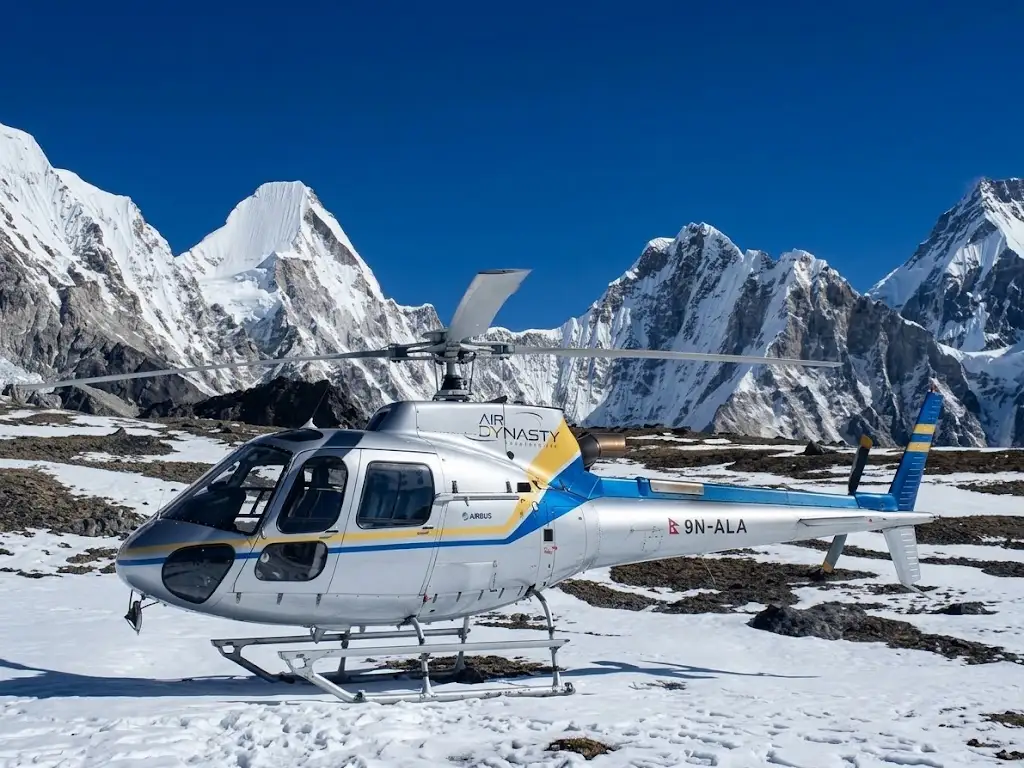
- Helicopter flexibility. A chartered helicopter opens a trip with a mountain flight or closes it with a spectacular return, cutting days and sidestepping road and flight congestion. Every helicopter leg is arranged through a licensed charter operator; it is a chartered flight, not an aircraft we fly ourselves.
Best Luxury Treks in Nepal for Dashain and Tihar 2026
Five treks cover the festival window best, from a compact five-day hill trip to the ten-day Everest Base Camp route. Each can run as a private departure for two or more travellers, with premium lodging, private transfers, a licensed English-speaking guide and your own pace. Prices below are the current “from” rates on our live packages.
Everest Base Camp Luxury Trek (10 Days)
The flagship autumn trek. You fly to Lukla, climb through Namche Bazaar, Tengboche and Dingboche, and stand at Everest Base Camp, 5,364 m / 17,598 ft, before the pre-dawn climb to Kala Patthar, 5,545 m / 18,192 ft, for the classic Everest sunrise. Because the Khumbu permit is bought on the ground, Everest is one of the most festival-friendly high routes. The premium version trims the fly-in day with a helicopter charter and uses the best lodges on the route. From USD 2,612.50 per person.
Annapurna Circuit Luxury Trek (13 Days)
A natural fit for Tihar. You cross the Thorong La at 5,416 m / 17,769 ft, pass through Manang and Muktinath, and finish in the warm Pokhara valley, where the festival lamps make the final days unusually atmospheric. The premium version upgrades the lower nights to the best lodges, adds a private vehicle on the road sections, and offers a helicopter return from Jomsom. From USD 936.70 per person.
Langtang Valley Trek with Helicopter Return (8 Days)
The smart choice for a quieter, more cultural trek close to Kathmandu. Langtang sees a fraction of the Everest traffic, the Tamang villages are deeply traditional, and the helicopter return from Kyanjin Gompa saves the long walk-out and drive, so the whole trip fits inside a festival window. The helicopter return is subject to weather and aircraft availability, as all mountain flights are. From USD 1,805 per person.
Upper Mustang Jeep Tour (7 Days)
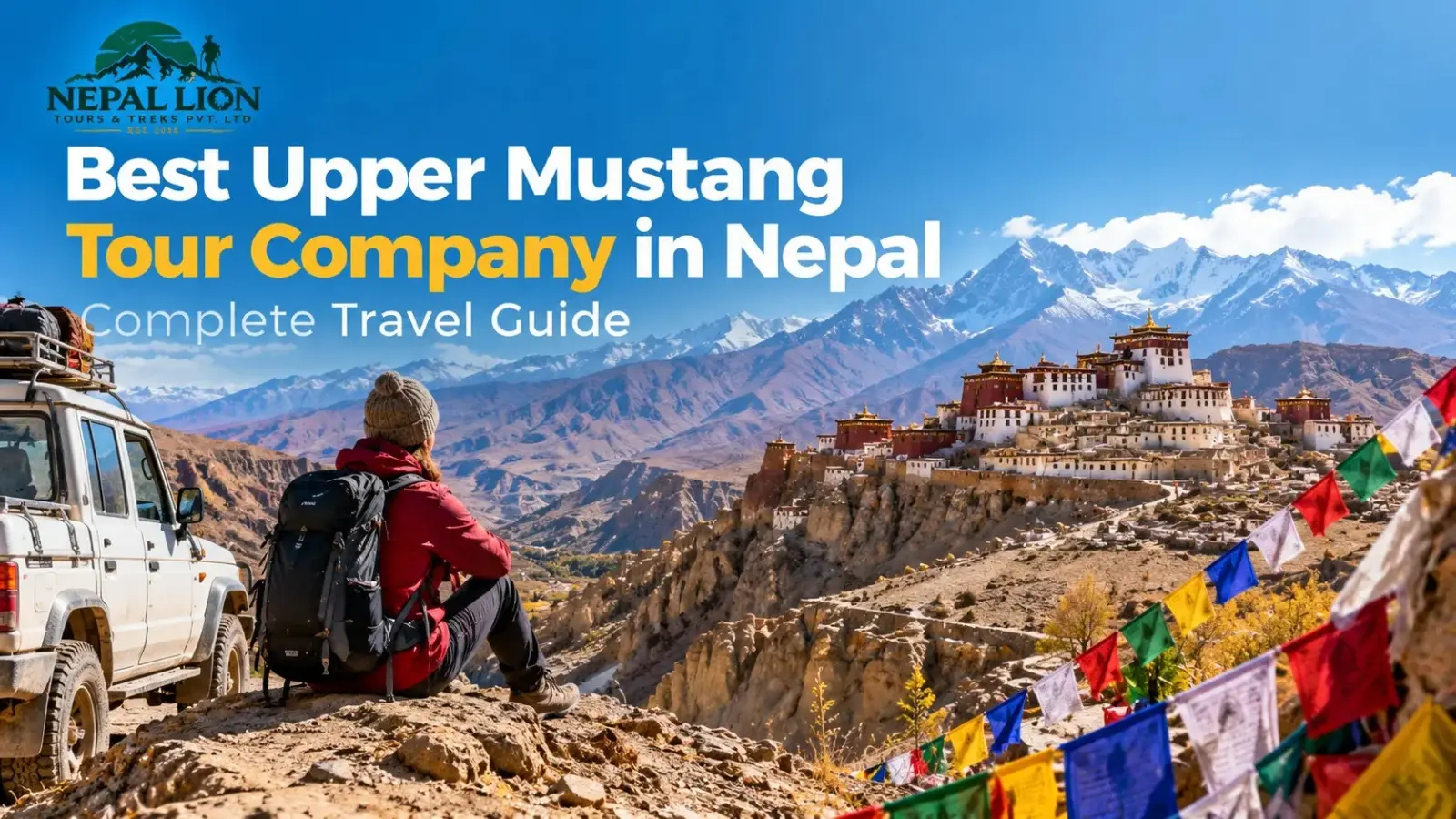
For Tihar, Upper Mustang offers something the rest of Nepal cannot: dry, desert-like terrain, Tibetan-influenced villages and the walled city of Lo Manthang, all in the rain shadow north of the Annapurnas. It is a restricted area, so the permit is arranged in Kathmandu before the festival. The premium version runs with a private 4WD and the best available lodges in Lo Manthang and Kagbeni. From USD 1,425 per person (Luxury tier from USD 1,924).
Ghorepani Poon Hill Luxury Trek (5 Days)
The most rewarding short option. You climb to Poon Hill at 3,210 m / 10,531 ft for sunrise over Dhaulagiri, Annapurna and Machhapuchhre — one of the finest panoramas in Nepal, and one autumn show at its best. The luxury version uses the best lodges in Ghorepani and Ghandruk and includes private transfers from Pokhara. From USD 750.50 per person.
Which Festival Trek Fits You?
| Trek | Duration | From (per person) | Best for |
|---|---|---|---|
| Everest Base Camp Luxury Trek | 10 days | USD 2,612.50 | High-altitude adventure, clearest Everest views |
| Annapurna Circuit Luxury Trek | 13 days | USD 936.70 | Variety, a warm Pokhara finish, Tihar |
| Langtang Valley with Helicopter Return | 8 days | USD 1,805 | Quiet culture close to Kathmandu |
| Upper Mustang Jeep Tour | 7 days | USD 1,425 | Desert scenery, Tibetan culture, non-trekkers |
| Ghorepani Poon Hill Luxury Trek | 5 days | USD 750.50 | A short break with a Himalayan sunrise |
Festival and Helicopter Experiences
If your festival window is short, a helicopter trip is the fastest way to stand among the high mountains. Each option below is a charter flight arranged through a licensed operator, paired with the best available ground arrangements.
Everest Base Camp Helicopter Tour with Kala Patthar Landing
The single-day version of the Everest experience. You fly from Kathmandu, land at Kala Patthar, 5,545 m / 18,192 ft, for the closest ground view of Everest, and return the same day. In October the views are at their sharpest, which is why the early-morning schedule matters. From USD 1,615 per person.
Everest View Hotel Luxury Helicopter Tour with Overnight
A charter flight paired with a night at Hotel Everest View, around 3,880 m / 12,730 ft, once listed among the highest-placed hotels in the world. You get sunrise on Everest from the terrace, a proper bed, and a return flight the next day — the gentlest way to sleep among the big peaks. From USD 2,185 per person.
Luxury Everest, Gokyo and Kala Patthar Helicopter Tour
The most complete short itinerary. This flight links the Gokyo lakes, the Gokyo Ri viewpoint at 5,357 m / 17,575 ft and Kala Patthar into one trip, showing you the Khumbu from three classic angles without the long walk between them. From USD 1,234.05 per person.
| Helicopter Experience | Duration | From (per person) | Best for |
|---|---|---|---|
| Everest Base Camp Helicopter Tour with Kala Patthar Landing | 1 day | USD 1,615 | A single-day Everest view |
| Everest View Hotel Luxury Helicopter Tour with Overnight | 2 days | USD 2,185 | Sunrise on Everest from a high lodge |
| Luxury Everest, Gokyo and Kala Patthar Helicopter Tour | 1 day | USD 1,234.05 | Three Khumbu viewpoints in one flight |
Mani Rimdu Festival 2026: The Everest Festival Trek
Mani Rimdu is the one festival that happens on the trail itself — at Tengboche Monastery in the Everest region, usually in late October or November. Unlike Dashain and Tihar, which are family-centred and nationwide, Mani Rimdu is a monastic festival of masked dance, empowerment rituals and all-night chanting, open to visitors and timed to the Himalayan lunar calendar, so the exact days are set year by year.
For a luxury traveller in November, it is the standout cultural trek. You walk to Tengboche at about 3,867 m / 12,687 ft, stay nearby in the best available lodges, and spend the festival days at the monastery watching the spectacular chham masked dances in the courtyard below Ama Dablam. Because it is a fixed-date event, accommodation in the Tengboche area is limited and fills very early — the clearest example in this guide of why festival-season planning matters. Our Mustang Tiji Festival trek is the equivalent fixed-date option in the Annapurna region.
If you want the festival and the trek in one trip, this is the itinerary to build around.
What a Luxury Festival Trek Costs in 2026
Luxury festival trips in Nepal run from around USD 750 for a short hill trek to more than USD 2,600 for a ten-day Everest Base Camp route. The honest range is wide, because price depends on altitude, duration, lodging standard, whether you fly, and how private you want the trip. Here is how our current packages line up.
- Short luxury trek (Ghorepani Poon Hill, 5 days): from USD 750.50 per person.
- Restricted-area jeep tour (Upper Mustang, 7 days): from USD 1,425 per person.
- Mid-duration trek (Langtang with helicopter return, 8 days): from USD 1,805 per person.
- High-altitude trek (Everest Base Camp Luxury, 10 days): from USD 2,612.50 per person.
- Helicopter day trips and overnights: priced per flight and per person on board; a private charter shared by a small group lowers the per-person cost.
The final price varies with group size, dates, services and any itinerary changes, and every quote is set out in writing before you commit.
What Is Included
A premium festival departure is built to remove the friction of peak season. Standard inclusions across our trekking packages are:
- A licensed, English-speaking trekking guide, with language-speaking leaders available on request.
- Premium lodge accommodation — the best available room at each stop, twin-sharing by default.
- Meals during the trek where specified in the itinerary.
- Applicable permits and registrations, arranged as part of pre-trek preparation.
- Private trailhead transfers as per the itinerary.
- Down jacket, sleeping bag, duffel bag and trekking map where the trek requires them.
- Purified drinking water on the trail.
What Costs Extra
It is just as useful to know what sits outside the price:
- International flights and Nepal visa fees.
- Travel insurance, which is strongly recommended.
- Personal expenses, drinks, hot showers, charging and tips.
- Helicopter charter unless the itinerary includes it.
- Any services not listed in the inclusions.
How to Plan a Festival Trek: A Practical Timeline
Planning a festival trek is mostly about sequencing: choose dates, secure flights, lock permits, then build the trail around the festival days. Do those four things in order and the rest is straightforward. Everything in the timeline below can be handled by Nepal Lion Tours, but it helps to know the order.
- Eight to ten weeks ahead — book flights, lodges and any helicopter legs. International flights, Lukla seats and the best lodge rooms sell out first in the festival window. In peak season, Lukla flights sometimes operate from Manthali (Ramechhap) instead of Kathmandu, adding a 4–5 hour road transfer before the flight; a helicopter charter avoids that uncertainty entirely.
- Before 17 October — collect every Kathmandu-issued permit. This is the hard deadline set by the Dashain holiday period. TIMS, ACAP and national park permits all belong on this list.
- Around the two family dates — allow a buffer. Keep a spare day either side of Vijaya Dashami on 21 October and Bhai Tika on 11 November. Roads and flights run slow, and a buffer turns a tight connection into a relaxed one.
If You Are Travelling in Late October or November 2026
If you are reading this during Dashain and still hoping to travel this autumn, the trip is not out of reach — the season runs right through November. What is realistic now:
- November is the easiest window to book. After Dashain wraps up on 25 October, demand eases a little and the mountain weather stays clear well into the month.
- Trek permits are straightforward again. With government offices back to normal after the Dashain holidays, TIMS and other permits can be arranged without the pre-17 October deadline.
- Tihar, 7–11 November, is the calmest festival window. The trails are quieter than in October, and the Tihar nights in Kathmandu and Pokhara are unforgettable.
- Short and flexible trips fill the fastest. A five-day Poon Hill trek or a helicopter itinerary can often be arranged on shorter notice than a ten-day Everest departure.
Send us your dates and we will tell you exactly what is still available for the season, usually within the same day.
Travel Insurance and Altitude
Travel insurance is essential for any trek in Nepal and should be arranged before you fly. The festival calendar does not change the risks of altitude, weather or the possibility of an evacuation, and the busiest season is not the time to travel uninsured.
Choose a policy that explicitly covers trekking in Nepal, medical treatment, and evacuation appropriate to your maximum altitude, and check the altitude limits and exclusions carefully. Helicopter evacuation from a high trail is expensive and is usually covered only if the policy names it and your altitude falls within the limit. Share your itinerary with your insurer so you can check the numbers against the policy.
What to Pack for a Festival Trek
Pack for a warm, bright day and a genuinely cold morning at altitude, and bring something smart for festival evenings in Kathmandu. The daily temperature range is dramatic, so layering is the whole strategy.
- Layering system: moisture-wicking base layer, insulating mid-layer, windproof and waterproof shell.
- Warm accessories: fleece or down hat, gloves, neck gaiter and warm socks for pre-dawn starts above 3,500 m / 11,483 ft.
- Sun protection: high-SPF sunscreen, lip balm and glacier sunglasses — the autumn sun at altitude is fierce even when the air is cold.
- Footwear: broken-in waterproof trekking boots plus camp shoes or sandals.
- A daypack: 25–35 litre capacity for water, layers, camera and snacks.
- Power and hydration: a 10,000–20,000 mAh power bank and refillable bottles with purification for the higher lodges.
- A smart outfit: something presentable for festival dinners and city evenings.
- Documents: passport, permits, insurance details and cash in Nepali rupees for remote areas.
Why Trek with Nepal Lion Tours
Nepal Lion Tours is a registered, Kathmandu-based operator built for private, premium festival departures. We plan the festival calendar into your trip from the first email, and the season’s logistics — flights, permits, lodges and transfers — are managed as one plan rather than left to you.
- Local, licensed English-speaking guides, government-licensed with genuine route knowledge and wilderness first-aid medical training.
- A company you can verify — Reg. No. 184920/074/075, based in Thamel, and a member of the Nepal Tourism Board and TAAN.
- Private departures from two trekkers, so you set your own dates and pace rather than joining a fixed group.
- Premium comfort in peak season — the best available lodges, private rooms wherever a village can provide them, and a schedule built around you.
- Permits and festival logistics handled, including the holiday deadlines that catch other travellers out.
- Helicopter charters arranged through a licensed operator when you want to save time.
- Free cancellation up to 14 days before departure, subject to booking terms.
Plan Your Dashain or Tihar 2026 Trek
The festival window is the clearest, busiest and most rewarding stretch of the Nepali trekking year, and the best lodges and flights go first. Whether you want to stand at Everest Base Camp, watch the masked dances of Mani Rimdu, or meet Dashain through a family tika in a hill village, the time to plan is now.
Send us your preferred travel date and group size through the booking form or WhatsApp at +977-9851039020. Tell us your dates, your fitness and your interests, and we will build a private festival itinerary around them — permits, lodges, transfers and any helicopter legs arranged in advance. Whether you are travelling solo, as a couple, with friends or with family, we will help you prepare for a smooth and memorable trek.
Your festival in the Himalayas is waiting — choose your dates and start planning today.
Admin
A passionate explorer and writer dedicated to sharing authentic stories, local insights, and expert travel guides from the heart of the Himalayas.
No comments yet
Be the first to share your thoughts and experiences on this story!